Intention to Evade Tax: A Prerequisite for Penalty under Section 129 of the GST Act, Allahabad High Court Rules
Intention to Evade Tax: A Prerequisite for Penalty under Section 129 of the GST Act, Allahabad High Court Rul…

The Allahabad High Court, in a landmark judgement, has clarified that the intention to evade tax is a prerequisite for the imposition of a penalty under Section 129 of the Goods and Services Tax Act, 2017. This ruling came in the case involving Bhawani Traders and the State of U.P., and it emphasizes the importance of proving intent in tax evasion cases.

Court Name : Allahabad High Court
Parties : Bhawani Traders Vs State of U.P.
Decision Date : 24 July 2023
Judgement ref : Writ Tax No. 854 of 2023
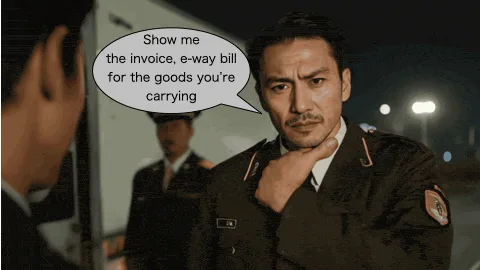
In this case, Assistant Commissioner (In-charge) Mathura slapped Bhawani Traders with a hefty penalty of Rs.48,53,940/-. He was claiming that Bhawani Traders did not own the goods in transit, despite the presence of tax invoices, e-way bills, and bilty.
Bhawani Traders challenged Assistant Commissioner's order. Bhawani Traders maintained that they are the rightful owners and had no intention of tax evasion.
The court, after careful consideration, highlighted the groundlessness of the revenue's claim, given the presence of e-way bills, which are legally acknowledged as ownership documents, with the goods in transit.
The court pointed out that the intention to evade tax is a prerequisite for the imposition of a penalty under Section 129 of the Act. Without evidence of such intent, the penalty was deemed unjustified.
The court, therefore, sided with the petitioner, nullifying the penalty order, and granted the writ petition. This judgement affirms that penalties cannot be imposed without solid grounds and clear evidence of tax evasion.
This ruling has significant implications for businesses involved in the transportation of goods, as it bolsters the legal standing of e-way bills and safeguards the rights of the owners of the goods.

Chief Justice's Court
Case :- WRIT TAX No. - 854 of 2023
Petitioner :- M/S Bhawani Traders
Respondent :- State of U.P. and Another
Counsel for Petitioner :- Shubham Agrawal
Counsel for Respondent :- C.S.C.
Hon'ble Pritinker Diwaker,Chief Justice
Hon'ble Ashutosh Srivastava,J.
Heard Sri Shubham Agarwal, learned counsel for the petitioner, Sri Ankur Agarwal, learned counsel representing the Respondent No.2 and learned Standing Counsel, who has accepted notice on behalf of the State Respondent No.1.
The writ petition is aggrieved by the penalty order dated 17.06.2023 passed by the Assistant Commissioner (In-charge) Mathura, Respondent No.2 in Form MOU-09 under Section 129(1) (b) of the Goods and Services Tax Act, 2017 whereby and whereunder penalty of Rs.48,53,940/- has been levied upon the petitioner by not treating the petitioner to be the owner of goods. Admittedly, the goods were duly accompanied by the tax invoice, e-way bill and bilty issued in the name of the petitioner as the consignor and the goods were in transit through the State of U.P. during its movement from Kolkata to New Delhi and as such, there was no intention to evade tax. It is further contended that the petitioner is the owner of the goods and is ready and willing to deposit penalty under protest under Section 129(1) (a) to get the goods released considering the perishable nature of the goods and diminishing of its value substantially with the onset of monsoons. Strong reliance has been placed upon the decision of this Court in Writ (Tax) No.178 of 2023 (M/s Sahil Traders Vs. State of U.P.) decided on 25.05.2023 which applies squarely to the case at hand. Sri Ankur Agarwal, learned counsel representing the revenue has vehemently opposed the writ petition by submitting that the petitioner has rightly been held not the owner of the goods and the penalty has rightly been imposed upon the petitioner under Section 129(1) (b). He, however, could not dispute the fact that intention to evade tax is a per-requisite for imposition of penalty under Section 129 of the Act. The E-way Bills being the documents of title to the goods were accompanying the goods hence, the conclusion of the revenue that the petitioner was not the owner of the goods is patently erroneous. Consequently, the penalty proceedings were liable to be initiated under Section 129(1)(a) and not 129(1)(b) as has been done in the present case.
In view of the above, expressing our full agreement with the view expressed by the Coordinate Bench of this Court in the case of M/s Sahil Traders (Supra) we set aside the impugned penalty order dated 17.06.2023 passed in Form MOU-09 under Section 129(1)
(b) of the Goods and Services Tax Act, 2017. The writ petition is allowed. The Respondent No.2 is directed to pass fresh order treating the petitioner to be eligible to the benefit of Section 129(1) (a) of the Act.
Sri Ankur Agarwal, learned counsel for the petitioner submits that the Respondent No.2 has already passed an order of assessment treating the petitioner to be entitled to benefit under Section 129(1) (a).
Be that as it may, the writ petitioner shall be at liberty to avail any remedy available to it to assail the assessment order.
Order Date :- 24.7.2023
(Ashutosh Srivastava,J.) (Pritinker Diwaker,C.J.)
×