Cooperative Federation's Tax Appeal Dismissed: No Substantial Legal Questions R…


Full News

Cooperative Federation's Tax Appeal Dismissed: No Substantial Legal Questions Raised
Cooperative Federation's Tax Appeal Dismissed: No Substantial Legal Questions Raised
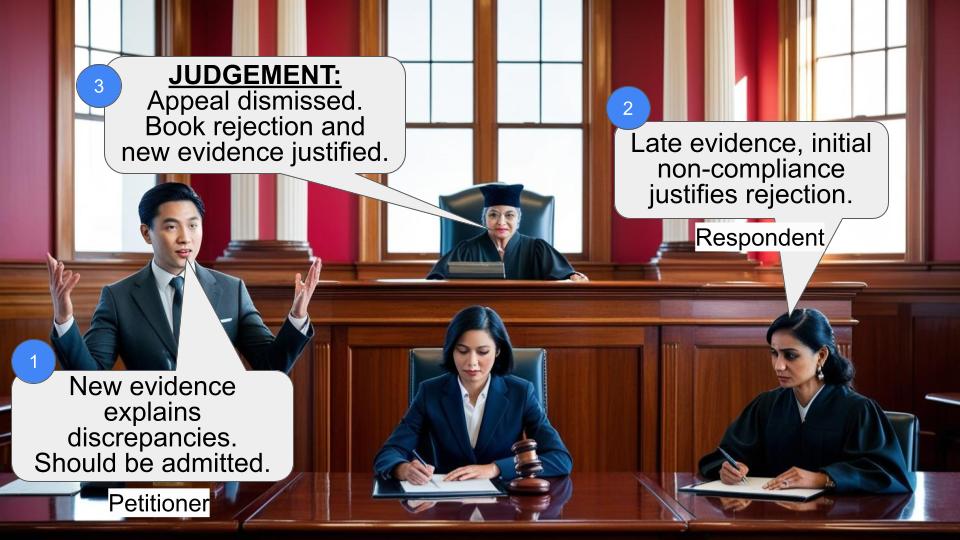
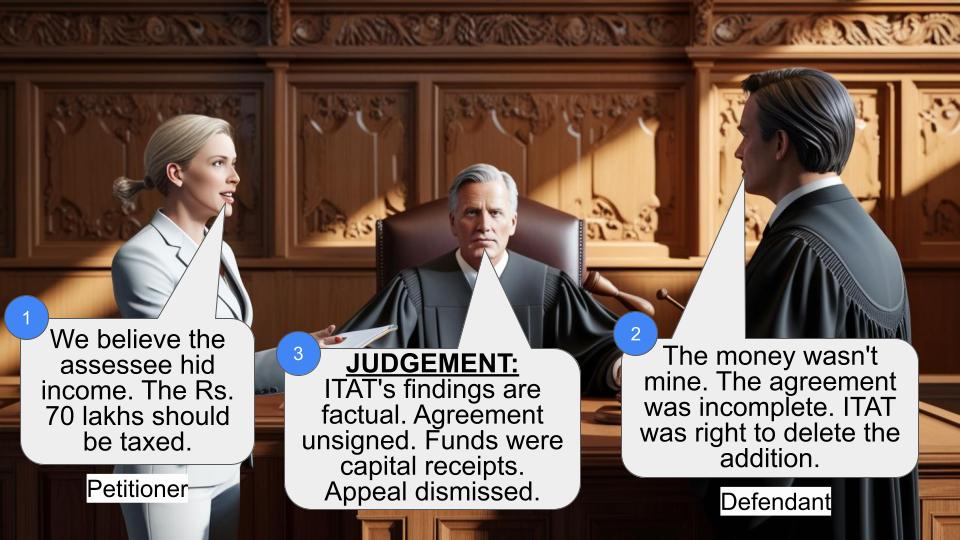
This case involves an appeal by the Punjab State Cooperative Federation against orders from the Income Tax Appellate Tribunal and the Commissioner of Income Tax (Appeals) regarding their tax assessment for the year 2009-2010. The High Court dismissed the appeal, finding that it didn't raise any substantial questions of law.
Get the full picture - access the original judgement of the court order here
Case Name:
Punjab State Cooperative Federation vs Commissioner of Income Tax (High Court of Punjab & Haryana)
ITA-158-2016 (O&M)
Date: 7th December 2016
Key Takeaways:
1. The court upheld previous rulings on the treatment of interest income from non-cooperative banks.
2. Proportionate disallowance of expenses under Section 43B (of Income Tax Act, 1961) was deemed appropriate.
3. Income from selling constructed houses was correctly classified as business income, not capital gains.
Issue:
Did the Income Tax Appellate Tribunal err in its rulings on various aspects of the appellant's tax assessment, particularly regarding deductions, expense disallowances, and income classification?
Facts:
- The case pertains to the assessment year 2009-2010.
- The appellant, Punjab State Cooperative Federation, appealed against orders from lower tax authorities.
- The appeal raised several questions about the treatment of various income sources and expense deductions.
- The appellant's objects include granting loans to members for house construction and building and selling housing complexes.
Arguments:
The appellant raised several arguments:
1. Income from non-cooperative banks should be eligible for deduction under Section 80P(2)(a)(i) (of Income Tax Act, 1961).
2. The 1% expense allowance for earning interest income under Section 57(iii) (of Income Tax Act, 1961) was disputed.
3. They challenged the proportionate disallowance of expenses under Section 43B (of Income Tax Act, 1961).
4. The appellant argued that income from selling old properties should be treated as long-term capital gains, not business income.
Key Legal Precedents:
1. ITA-17-2016 titled "The Punjab State Cooperative Federation of House Building Societies Ltd., Chandigarh Vs Commissioner of Income Tax-II, Chandigarh and another" dated 10.05.2016
This precedent covered questions (ii) and (iii) against the appellant's favor.
2. Sections 43B, 80P(2)(a)(i), and 57(iii) of the Income Tax Act, 1961 were key in this case
Judgement:
1. The court dismissed the appeal, finding no substantial questions of law.
2. Questions (ii) and (iii) were decided against the appellant based on the previous judgment in ITA-17-2016.
3. The court upheld the proportionate disallowance of expenses under Section 43B (of Income Tax Act, 1961).
4. The classification of income from selling constructed houses as business income was affirmed.
FAQs:
Q1: Why was the income from selling houses classified as business income?
A: The court found that since the appellant's objects include building and selling housing complexes, and they claimed expenses for these projects, the income from selling houses should be treated as business income, not capital gains.
Q2: What was the issue with the Section 43B (of Income Tax Act, 1961) disallowance?
A: The Assessing Officer was directed to restrict the disallowance of interest payable under Section 43B (of Income Tax Act, 1961) on a proportionate basis, as it wasn't possible to separately calculate the amount for income eligible and not eligible for deduction under Section 80P(2)(a)(i) (of Income Tax Act, 1961).
Q3: Can the appellant challenge the Assessing Officer's computation of the proportionate disallowance?
A: Yes, the court mentioned that if the appellant believes the Assessing Officer hasn't computed it correctly, they can challenge it separately.
Q4: Why were some questions not considered by the court?
A: Questions (i), (vi), and (vii) were deemed too general in nature and didn't require specific consideration by the court.

1. This is an appeal against the order of the Income Tax Appellate Tribunal dismissing the appellant/assessee’s appeal against the order of the Commissioner of Income Tax (Appeals) which in turn had only partly allowed the appellant’s appeal against the assessment order. The matter pertains to the assessment year 2009-2010.
2. According to the appellant, the following substantial questions of law arise in this appeal:-
“(i) Whether in the facts and circumstances of the case the orders (Annexure P-1), (Annexure P-2) and (Annexure P-3) are legally sustainable?
(ii) Whether on the facts and in the circumstances of the case, the learned Income Tax Appellate Tribunal is right in law in holding that the income earned from banks other than cooperative banks as interest on its bank accounts as income from other sources being attributable to its business income and thereby not allowing deduction u/s 80P(2)(a)(i) (of Income Tax Act, 1961)?
(iii) Whether in the facts and in the circumstances of the case the learned Income Tax Appellate Tribunal is correct in law in upholding the expenses of 1% of income attributable to the earning of interest income under the provision of Section 57(iii) (of Income Tax Act, 1961)?
(iv) Whether in the facts and circumstances of the case the learned Income Tax Appellate Tribunal has grossly erred in upholding the order of the Commissioner of Income Tax (Appeals) directing the Assessing Officer to allow proportionately the disallowance made u/s 43B (of Income Tax Act, 1961) more so when such disallowance is made while computing the business income and as per the under the said provisions of law such disallowance would enhance the business income of the appellant and thereby computing the deduction u/s 80P(2)(a)(i) (of Income Tax Act, 1961)?
(v) Whether in the facts and in the circumstances of the case the learned Income Tax Appellate Tribunal grossly erred in upholding the order of the Commissioner of Income Tax (Appeals) holding income as business income instead of income from long term capital gain as claimed by the appellant being the income as profits on the sale of old properties as long term capital gain and thereby disallowing the necessary deductions u/s 48 (of Income Tax Act, 1961) and applying special rate of tax thereof?
(vi) Whether in the facts and in the circumstances of the case the learned Income Tax Appellate Tribunal upholding the order of the CIT(A) on various issues is legally sustainable in law, the same being based on mere presumptions and surmises?
(vii) That the appellant assessee craves leave to alter, amend, delete or add to any of the above substantial questions of law during the pendency of the present appeal.”
3. Questions (i), (vi) and (vii) are only general in nature and do not require consideration.
4. Questions (ii) and (iii) are admittedly covered against the appellant in view of the judgement of a Division Bench of this Court dated 10.05.2016 in ITA-17-2016 titled as The Punjab State Cooperative Federation of House Building Societies Ltd., Chandigarh Vs Commissioner of Income Tax-II, Chandigarh and another. Questions (ii) and (iii) are, therefore, decided against the appellant.
5. Re: question (iv)
The Assessing Officer had disallowed certain expenses claimed by the appellant to be business expenses. The Assessing Officer, therefore, disallowed a sum of about ` 6.86 crores under Section 43B (of Income Tax Act, 1961) (in short the Act). The CIT (Appeals) granted partial relief in the following manner:-
“4.3 I have considered the submission of Ld. Counsel. In the case of the appellant, the entire interest payable does not pertain to incomes, eligible for deduction u/s 80P(2)(a)(i) (of Income Tax Act, 1961). Hence, if the disallowance of interest payable is made u/s 43B (of Income Tax Act, 1961), the appellant will be eligible for deduction u/s 80P(2)(a)(i) (of Income Tax Act, 1961) only in respect of the interest, which pertains to the income eligible for deduction under this section. As it will not be possible to separately work out the amount of interest payable u/s 43B (of Income Tax Act, 1961) in respect of the income eligible for deduction u/s 80P(2)(a)(i) (of Income Tax Act, 1961) and incomes not so eligible; the Assessing Officer is directed to restrict the disallowance of interest payable u/s 43B (of Income Tax Act, 1961) on proportionate basis only in respect of income, which is not eligible for deduction u/s 80P(2)(a)(i) (of Income Tax Act, 1961). Ground of appeal No. 4 is partly allowed.”
6. The Tribunal noted that the taxable income of about ` 94 lacs was mainly from capital gain, but that there were no facts available to ascertain how much money was borrowed for the purpose of acquiring the capital assets. It is, therefore, not possible to separately work out the amount of interest payable under Section 43B (of Income Tax Act, 1961) in respect of the income eligible for deduction under Section 80P(2)(a)(i) (of Income Tax Act, 1961) and income not so eligible. It is not that the authorities have refused the appellant the proportionate benefit of a deduction under Section 80P(2)(a)(i) (of Income Tax Act, 1961). What is done is that the Assessing Officer has been directed to restrict the disallowance of interest payable under Section 43B (of Income Tax Act, 1961) on a proportionate basis.
The deduction is only to the extent specified in sub section (2) thereof.
7. The learned counsel appearing on behalf of the appellant states that the Assessing Officer has not computed the same correctly. In that event, it is for the appellant to challenge the same separately.
8. The order of remand in this regard cannot be faulted. It does not raise a substantial question of law.
9. Re: Question (v)
The CIT (Appeals) and the Tribunal rightly upheld the assessment order for more than one reason. The appellant’s objects, inter alia, are to grant loans to its members for constructing houses as well as to build housing complexes and to sell the units therein. All the authorities under the Act have found as a question of fact that the appellant had claimed expenses in respect of these projects which were later sold. The conclusion, therefore, that they constitute business assets cannot be said to be perverse or absurd. The Tribunal, therefore, rightly came to the conclusion that the appellant being in the business of construction and sale of properties income from selling the houses that were constructed must be treated to be income from business and profession.
10. The appeal, therefore, does not raise a substantial question of law.
11. The appeal is accordingly dismissed.
(S.J. VAZIFDAR)
CHIEF JUSTICE
(DEEPAK SIBAL)
JUDGE
07.12.2016
×