


Court Allows Set-Off of Pre-1997 Unabsorbed Depreciation Against Other Income f…


Full News

Court Allows Set-Off of Pre-1997 Unabsorbed Depreciation Against Other Income for 8 Years
Court Allows Set-Off of Pre-1997 Unabsorbed Depreciation Against Other Income for 8 Years
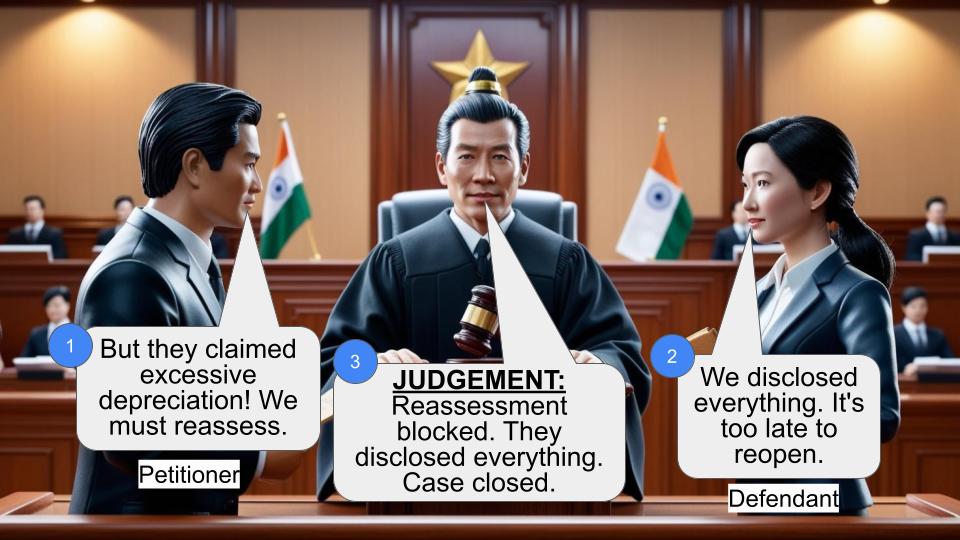
This case involves a dispute between the Commissioner of Income Tax and Pioneer Asia Packing (P) Ltd. regarding the set-off of unabsorbed depreciation against capital gains. The Income Tax Appellate Tribunal ruled in favor of the assessee (Pioneer Asia Packing), allowing the set-off of pre-1997 unabsorbed depreciation against other income for up to eight years. The High Court upheld this decision, dismissing the appeal filed by the revenue department.
Get the full picture - access the original judgement of the court order here
Case Name:
Commissioner of Income Tax vs. Pioneer Asia Packing (P) Ltd. (High Court of Madras)
Tax Case (Appeal) No.1423 of 2007
Date: 21st November 2007
Key Takeaways:
1. Unabsorbed depreciation brought forward as of April 1, 1997, can be set off against business income or income under any other head for the assessment year 1997-98 and seven subsequent years.
2. The amendment to Section 32(2) (of Income Tax Act, 1961) removed the deeming fiction of treating earlier years' unabsorbed depreciation as current year depreciation.
3. The period for absorbing unabsorbed depreciation against future profits was limited to eight years.
4. The Finance Minister's clarification and CBDT Circular No. 762 support this interpretation of the law.
Issue:
Can unabsorbed depreciation brought forward from before April 1, 1997, be set off against income under any head (including capital gains) for the assessment year 2000-01 and subsequent years?
Facts:
1. Pioneer Asia Packing (P) Ltd. is engaged in the business of packing and printing.
2. For the assessment year 2000-01, the company filed a return declaring nil income.
3. The assessee claimed a set-off of capital gains amounting to Rs. 10.57 lakhs against brought forward unabsorbed depreciation.
4. The Assessing Officer rejected this claim and assessed the capital gains to tax.
5. The Commissioner of Income Tax (Appeals) upheld the Assessing Officer's decision.
6. The Income Tax Appellate Tribunal accepted the assessee's view and remitted the case to the Assessing Officer for verification.
Arguments:
Assessee's Argument:
- Prior to 1996, unabsorbed depreciation could be set off against any other head of income and carried forward indefinitely.
- As per the Finance Act, 1996 amendment (effective from April 1, 1997), cumulated unabsorbed depreciation brought forward as on April 1, 1997, could be set off against taxable business profit or income under any other head for the assessment year 1997-98 and seven subsequent years.
Revenue's Argument:
- The amended provision of Section 32(2) (of Income Tax Act, 1961) is clear and unambiguous, and does not support the assessee's case for the assessment year 2000-01.
Key Legal Precedents:
While no specific case laws were cited, the judgment heavily relies on:
1. The amended provisions of Section 32(2) (of Income Tax Act, 1961), effective from April 1, 1997.
2. The clarification given by the Finance Minister in Parliament (222 ITR (stat) 36).
3. CBDT Circular No. 762 dated February 18, 1998 (230 ITR (stat) 12).
Judgement:
The High Court dismissed the appeal filed by the revenue department, upholding the Income Tax Appellate Tribunal's decision. The court found that:
1. The Tribunal correctly concluded that the assessee is entitled to set off unabsorbed depreciation brought forward as on April 1, 1997, against business profits.
2. The case was rightly remitted to the Assessing Officer for verification of the available depreciation up to April 1, 1997.
3. No substantial question of law was involved in the appeal.
FAQs:
1. Q: What was the main change introduced by the 1996 amendment to Section 32(2) (of Income Tax Act, 1961)?
A: The amendment removed the deeming fiction of treating earlier years' unabsorbed depreciation as current year depreciation and limited the carry-forward period to eight years.
2. Q: For how many years can pre-1997 unabsorbed depreciation be carried forward?
A: It can be carried forward for the assessment year 1997-98 and seven subsequent years, totaling eight years.
3. Q: Can unabsorbed depreciation be set off against income from other heads?
A: Yes, unabsorbed depreciation can be set off against business income or income under any other head for the specified period.
4. Q: What role did the CBDT Circular play in this case?
A: CBDT Circular No. 762 clarified the application of the amended Section 32(2) (of Income Tax Act, 1961), supporting the interpretation that favored the assessee.
5. Q: Why was the case remitted back to the Assessing Officer?
A: The case was remitted for verification of how much depreciation was available up to April 1, 1997, that could be included in the assessee's income.

1. The appeal is filed against the order of the Income Tax Appellate Tribunal Madras 'B' Bench dated 7.3.2007 made in I.T.A.No.896/Mds/2003 for the assessment year 2000-01.
2. The brief facts of the case as culled out from the statement of facts stated in the memorandum of appeal are as follows:
The assessee company is engaged in the business of packing and printing. For assessment year 2000-01, the assessee filed its return of income on 30.11.2000 declaring nil income. A notice under Section 148 (of Income Tax Act, 1961) was issued on 13.9.2002. The return filed on 30.11.2000 was considered as the return filed in response to notice under section 148 (of Income Tax Act, 1961). In the said return the assessee claimed set off of capital gains amounting to Rs.10.57 lakhs against the brought forward unabsorbed depreciation. The assessee's explanation that prior to 1996 unabsorbed depreciation could be set off against any other head of income and could be carried forward individually. But as per the amendment under Finance Act, 1996 w.e.f. 01.04.1997 the cumulated unabsorbed depreciation brought forward as on 01.04.1997 could be set off against the taxable business profit or income under any other head for the assessment year 1997-98 and seven subsequent years was rejected and the assessing officer brought the capital gains of Rs.10,51,894/- and assessed to tax and completed the assessment. Against that order, the assessee preferred an appeal before the Commissioner of Income-tax (Appeals) and the Commissioner of Income-tax (Appeals) upheld the order of the assessing officer and dismissed the appeal filed by the assessee on the ground that the unambiguous amended provision did not support the case of the assessee. Against that order, the assessee preferred an appeal before the Income-tax Appellate Tribunal. The Income-tax Appellate Tribunal accepted the view of the assessee and remitted the case to the assessing officer for verification as to how much depreciation was available upto 1.4.1997, that could be allowed against the income of the assessee. The correctness of the said order is canvassed by the revenue by filing the present appeal by formulating the following question of law.
"Whether on the facts and in the circumstances of the case the Income-tax Appellate tribunal was right in law in remitting back the matter to the file of the assessing officer for verification, even though the law laid down by clear and unambiguous words in section 32(2) (of Income Tax Act, 1961), is applicable to the assessment year 2000-01?"
3. We heard the argument of the learned counsel for the revenue and perused the materials on record.
4. We are not able to see any illegality or irregularity in the order of the Tribunal, as contended by the learned Senior Standing Counsel for the Revenue. As per the amended provisions of section 32(2) (of Income Tax Act, 1961), with effect from 01.04.1997, if the income from business for the assessment year is insufficient to absorb the depreciation allowance of that assessment year, the amended provision permits absorption of depreciation allowance of a business against profits and gains of any other business of the same assessment year. When the depreciation allowance of a business of the assessment year is not absorbed by any other business of the same assessment year, then the remaining unabsorbed depreciation allowance could be set off against the income under any other head, that is assessable for the same assessment year. In the event of depreciation allowance of the year is unable to be absorbed by any other business income or from income under any other head in the same assessment year, the remaining unabsorbed depreciation allowance shall be carried forward to the following year and (a) unabsorbed allowance shall be set off against the profits and gains of any business carried by a person. (b) If the unabsorbed depreciation allowance cannot be wholly set off so, it shall be allowed to be carried forward for the following eight assessment years immediately succeeding the assessment year in which it was first computed. The proviso provides that the business to which depreciation allowance is related to must be carried on in the succeeding year so as to allow such set off. Thus, by the amendment, the deeming fiction of treating the earlier years' unabsorbed depreciation as current year depreciation was removed. The period available for absorbing the unabsorbed depreciation against the profit of the succeeding years was limited to eight years. The clarification of the Finance Minister in the Parliament is also to the effect that inasmuch as the cumulated unabsorbed depreciation brought forward as on 01.04.1997 could still be set off against the taxable business profit or income under any other head for the assessment year 1997-98 and seven subsequent years vide 222 ITR (stat) 36. Circular of the Central Board of Direct Taxes No.762 dated 18.02.1998 (230 ITR (stat) 12) also clarifies the issue to the following effect :
Sub-section (2) of section 32 (of Income Tax Act, 1961), as it existed upto assessment year 1996-97, provided that the unabsorbed depreciation of a year shall be added to the amount of the allowance for depreciation of the following previous year and deemed to be part of that allowance. Therefore, the unabsorbed depreciation allowance, if any, of the assessment year 1996-97 shall be added to the amount of the allowance for depreciation of assessment year 1997-98 and deemed to be part of the allowance for this year. In other words, the unabsorbed depreciation allowance of assessment year 1996-97 shall be added to the allowance of 1997-98 and will be deemed to be the allowance of that year. The limitation of eight years shall start from the assessment year 1997-98.
5. In view of the above position of law, we are of the view that the Tribunal has rightly come to the conclusion that the assessee is entitled to the unabsorbed depreciation brought forward as on 01.04.1997 and could be set off against the business profits and in order to give effect to that finding, the case was remitted to the file of the assessing officer for verification as to how much depreciation was available upto 01.04.1997 that could be included in the income of the assessee.
6. For the fore-going reasons, the appeal is dismissed as no question of law, much less a substantial question of law is involved.
(K.R.P.,J.) (C.V.,J.)
21.11.2007
Index: Yes
Internet: Yes
To
1. The Asst.Registrar, Income-tax Appellate Tribunal, Chennai
2. The Commissioner of Income-tax (Appeals) V Chennai
3. The Asst.Commissioner of Income-tax Company Circle V(2), Chennai- 34.
K.RAVIRAJA PANDIAN, J.
and
CHITRA VENKATARAMAN, J.
Dated : 21.11.2007
×
Similar Ripples
Questions
Court Allows Set-Off of Pre-1997 Unabsorbed Depreciation Against Other Income for 8 Years
Write your CommentSimilar Posts


Generic
- Reportdata/5161.pdf
