


Court Dismisses Revenue’s Appeal on Bogus LTCG Claims


Full News

Court Dismisses Revenue’s Appeal on Bogus LTCG Claims
Court Dismisses Revenue’s Appeal on Bogus LTCG Claims
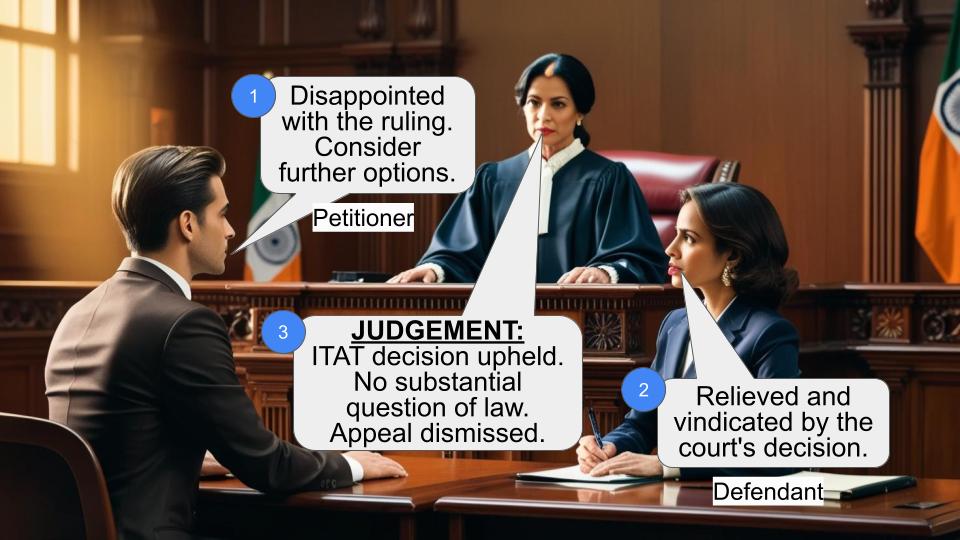
In the case of Principal Commissioner of Income Tax & Ors. vs. Krishna Devi & Ors., the court dismissed the Revenue’s appeal, which challenged the Income Tax Appellate Tribunal’s (ITAT) decision to delete additions made by the Assessing Officer (AO) under Section 68 (of Income Tax Act, 1961). The court found that the AO’s reliance on the Investigation Wing’s report, without independent corroboration, was insufficient to prove the transactions were bogus.
Get the full picture - access the original judgement of the court order here
Case Name:
Principal Commissioner of Income Tax & Ors. Vs. Krishna Devi & Ors. (High Court of Delhi)
ITA 125/2020
Date: 15th January 2021
Key Takeaways:
- The court emphasized the necessity of independent verification and corroboration of evidence by the AO.
- The decision underscores the importance of not solely relying on investigation reports without further inquiry.
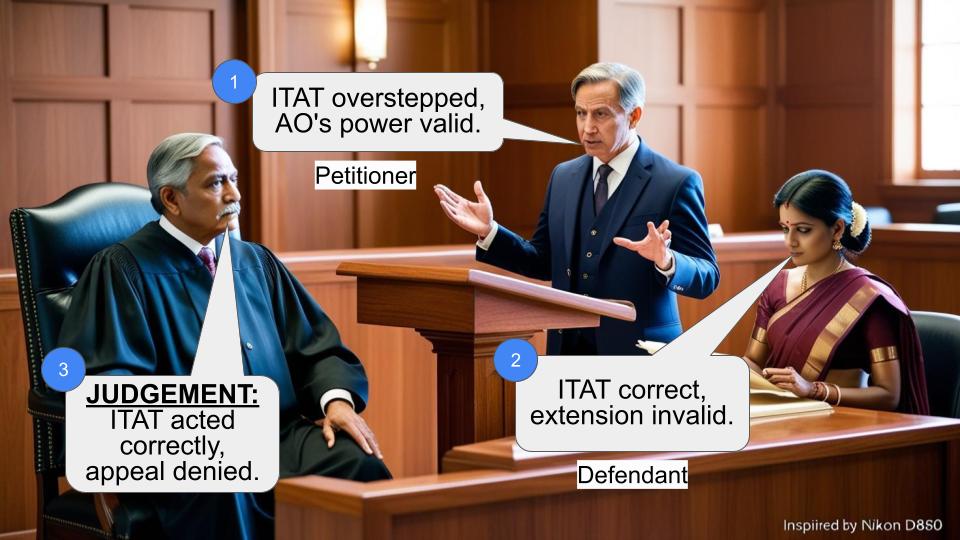
- The judgment highlights the role of ITAT as the final fact-finding authority in tax disputes.
Issue
Was the AO justified in concluding that the transactions were bogus based solely on the Investigation Wing’s report without further corroboration?
Facts
- The Respondent, Krishna Devi, declared income from Long Term Capital Gains (LTCG) as exempt under Section 10(38) (of Income Tax Act, 1961).
- The AO added this amount to her income, alleging it was a bogus LTCG from penny stocks.
- The AO’s assessment was based on a report from the Investigation Wing, which was not independently verified.
- The ITAT ruled in favor of the Respondent, leading to the Revenue’s appeal.
Arguments
- Revenue’s Argument: The AO had sufficient grounds to conclude the transactions were accommodation entries, citing the Investigation Wing’s report and the unusual spike in share prices.
- Respondent’s Argument: The AO failed to conduct an independent inquiry and relied solely on uncorroborated reports, which should not be the basis for such conclusions.
Key Legal Precedents
- Section 68 (of Income Tax Act, 1961): Pertains to unexplained cash credits, placing the onus on the taxpayer to explain the nature and source of the credits.
- Suman Poddar v. ITO and Sumati Dayal v. CIT: Cited by the Revenue but found not applicable due to different factual circumstances.
Judgement
The court dismissed the Revenue’s appeal, affirming the ITAT’s decision. It held that the AO’s conclusions were based on assumptions without independent evidence. The court found no substantial question of law to consider, as the ITAT’s findings were based on a thorough examination of the evidence.
FAQs
Q1: Why was the AO’s reliance on the Investigation Wing’s report insufficient?
A1: The court found that the AO did not conduct any independent inquiry or corroborate the report with additional evidence, which is necessary to substantiate claims of bogus transactions.
Q2: What does this decision mean for taxpayers?
A2: It reinforces the principle that tax authorities must provide concrete evidence and conduct thorough investigations before making additions to a taxpayer’s income.
Q3: How does this case affect future tax assessments?
A3: It sets a precedent that reliance on investigation reports without further inquiry is inadequate, potentially influencing how tax authorities approach similar cases.

CM APPL. 6933/2020 (for condonation of delay in re-filing)
CM APPL. 7056/2020 (for condonation of delay in re-filing)
CM APPL. 7057/2020 (for condonation of delay in re-filing)
1. For the reasons stated in the applications, the delay of 11 days in re-
filing ITA 125/2020 and the delay of 13 days in re-filing ITA 130/2020 &
ITA 131/2020, is condoned.
2. The applications stand disposed of.
ITA 125/2020, ITA 130/2020 & ITA 131/2020
3. The present appeals under Section 260A (of Income Tax Act, 1961)
[hereinafter referred to as the ‘Act’] are directed against the common order
dated 6th August, 2019 [hereinafter referred to as the ‘Impugned Order’]
passed in ITA No. 1069/DEL/2019 (for AY 2014-15), 2772/DEL/2019 (for
AY 2015-16) and other appeals for the same AYs, by the Income Tax
Appellate Tribunal [hereinafter referred to as the ‘ITAT’]. However, the
Impugned Order records the factual position only in respect of ITA No.
1069/DEL/2019.
4. The Revenue urges identical questions of law in all the afore-noted
appeals with the only difference being the figures relating to the additions
made under Section 68 (of Income Tax Act, 1961) read with Section 115BBE (of Income Tax Act, 1961). Accordingly,
the same are being decided by way of this common order.
5. It is not in dispute, as noted in the Impugned Order, that the factual
background in all the three appeals is quite similar. However, for the sake of convenience, the facts in respect of ITA 125/2020 are being noted and
discussed elaborately. Briefly stated, the Respondent-Assessee is an
individual who has derived income from interest on loan, FDR, NSC and
bank interest under the head of ‘income from other sources’ in respect of
A.Y. 2015-16. She filed her return of income, declaring total income of Rs.
13,96,116/-. After claiming deduction of Rs.1,60,000/- under Chapter VI-A,
the total taxable income of Respondent was declared to be Rs.12,36,120/-.
The return was processed under Section 143(1) (of Income Tax Act, 1961) and thereafter the
case was selected for scrutiny. During the scrutiny proceedings, the AO
noticed that for the relevant year under consideration, the Respondent had
claimed exempted income of Rs.96,75,939/- as receipts from Long Term
Capital Gain [hereinafter referred to as ‘LTCG’] under Section 10(38) (of Income Tax Act, 1961) of
the Act. He inter alia concluded that the assessee had adopted a colorable
device of LTCG to avoid tax and accordingly framed the assessment order
under Section 143(3) (of Income Tax Act, 1961) at the total income of Rs.1,09,12,060/-,
making an addition of Rs.96,75,939/- under Section 68 (of Income Tax Act, 1961) read with 115BBE
of the Act on account of bogus LTCG on sale of penny stocks of a company
named M/s Gold Line International Finvest Limited. The appeal before the
CIT(A) was dismissed and additions were confirmed with the observation
that the Respondent had introduced unaccounted money into the books
without paying taxes. Further appeal filed by the Respondent before the
learned ITAT was allowed in her favour, and the additions were deleted vide
the Impugned Order, relevant portion whereof reads as under:
“21. A perusal of the assessment order clearly shows that the
Assessing officer was carried away by the report of the Investigation
Wing Kolkata. It can be seen that the entire assessment has been
framed by the Assessing Officer without conducting any enquiry from
the relevant parties or independent source or evidence but has merely
relied upon the statements recorded by the Investigation Wing as well
as information received from the Investigation Wing. It is apparent
from the Assessment Order that the Assessing Officer has not
conducted any independent and separate enquiry in the case of the
assessee. Even, the statement recorded by the Investigation Wing has
not been got confirmed or corroborated by the person during the
assessment proceedings.
23. It is provided u/s. 142 (of Income Tax Act, 1961) (2) of the Act that for the purpose of
obtaining full information in respect of income or loss of any person,
the Assessing Officer may make such enquiry as he considers
necessary. In our considered view the Assessing Officer ought to have
conducted a separate and independent enquiry and any information
received from the Investigation Wing is required to be corroborated
and affirm during the assessment by the Assessing Officer by
examining the concerned persons who can affirm the statements
already recorded by any other authority of the department. Facts
narrated above clearly show that the Assessing Officer has not made
any enquiry and the entire assessment order and the order of the first
Appellate Authority are devoid of any such enquiry.
24. The report from the Directorate Income Tax Investigation Wing,
Kolkata is dated 27.04.2015 whereas the impugned sales transactions
took place in the month of March, 2014. The exparte ad interim order
of SEBI is dated 29.06.2015 wherein at page 34 under para 50 (a)
M/s. Esteem Bio Organic Food Processing Ltd was restrained from
accessing the securities market and buying selling and dealing in
securities either directly or indirectly in any manner till further
directions. A list of 239 persons is also mentioned in SEBI order which
are at pages 34 to 42 of the order the names of the appellants do not
find any place in the said list. At pages 58 and 59 the names of pre
IPO transferee in the scrip of M/s. Esteem Bio Organic Food
Processing Ltd is given and in the said list also the names of the
appellants do not find any place. At page 63 of the SEBI order-trading
by trading in M/s. Esteem Bio Qrganic food Processing Ltd – a further
list of 25 persons is mentioned and once again the names of the
appellants do not find place in this list also.
25. As mentioned elsewhere the brokers of the assessee namely ISG
Securities Limited and SMC Global Securities Limited are stationed at
New Delhi and their names also do not find place in the list mentioned
here in above in the SEBI order. There is nothing on record to show
that the brokers were suspended by the SEBI nor there anything on
record to show that the two brokers of the appellants mentioned here
in above were involved in the alleged scam. The Assessing Officer has
not even considered examining the brokers of the appellants. It is a
matter of the fact that SEBI looks into irregular movements in share
prices on range and warn investor against any such unusual increase
in shares prices. No such warnings were issued by the SEBI.
26. There is no dispute that the statements which were relied by the
Assessing Officer were not recorded by the Assessing Officer in the
assessment proceedings but they were pre-existing statements
recorded by the Investigation Wing and the same cannot be the sole
basis of assessment without conducting proper enquiry and
examination during the assessment proceedings itself. In our humble
opinion, neither the Assessing Officer conducted any enquiry nor has
brought any clinching evidences to disprove the evidences produced
by the assessee. The report of Investigation Wing is much later than
the dates of purchase / sale of shares and the order of the SEBI is also
much later than the date of transactions transacted and nowhere SEBI
has declared the transaction transacted at earlier dates as void.
30. Considering the vortex of evidences, we are of the considered view
that the assessee has successfully discharged the onus cast upon him
by provisions of section 68 (of Income Tax Act, 1961) as mentioned elsewhere, such
discharge of onus is purely a question of fact and therefore the
judicial decisions relied upon by the DR would do no good on the
peculiar plethora of evidences in respect of the facts of the case in
hand and hence the judicial decisions relied upon by both the sides,
though perused, but not considered on the facts of the case in hand.”
6. Aggrieved by the aforesaid findings, the Revenue has filed the instant
appeals contending that, notwithstanding the tax effect in the appeals falling below the threshold prescribed under Circular No. 23 dated 6th September,2019, the appeals are maintainable in view of the Office Memorandum dated 16th September, 2019 issued by the CBDT, which clarifies that the monetary limits prescribed in the aforementioned circular shall not apply where an assessee is claiming bogus LTCG through penny stocks, and the appeals be heard on merits.
7. Mr. Zoheb Hossain, learned senior standing counsel for the revenue
(Appellant herein), contends that the learned ITAT has completely erred in
law in deleting the addition, and thus the Impugned Order suffers from
perversity. He submits that there are certain germane factual errors,
inasmuch as the learned ITAT has wrongly recorded that there was no
independent enquiry conducted by the AO, when in fact the AO had issued
notices to the companies in question under Section 133(6) (of Income Tax Act, 1961). He
points out that the observations recorded in para 25 of the Impugned Order
are factually incorrect, and in conflict with para 4 of the order of the CIT(A) dated 24th December, 2018 which reads as follows:
“4. Even the broker through whom the shares were dematerialized and sold i.e. SMC Global Securities Ltd. was also a part of the scam.
This is a Delhi based broker whose regional office was also surveyed.
The sub brokers were also surveyed and also statements recorded
which confirmed the payment of cash commission by the beneficiaries
for being part of the syndicate.”
8. Mr. Hossain argues that in cases relating to LTCG in penny stocks,
there may not be any direct evidence in the hands of the Revenue to establish that the investment made in such companies was an accommodation entry.
Thus the Court should take the aspect of human probabilities into
consideration that no prudent investor would invest in penny scrips.
Considering the fact that the financials of these companies do not support
the gains made by these companies in the stock exchange, as well as the fact
that despite the notices issued by the AO, there was no evidence forthcoming
to sustain the credibility of these companies, he argues that it can be safely concluded that the investments made by the present Respondents were not genuine. He submits that the AO made sufficient independent enquiry and
analysis to test the veracity of the claims of the Respondent and after
objective examination of the facts and documents, the conclusion arrived at
by the AO in respect of the transaction in question, ought not to have been
interfered with. In support of his submission, Mr. Hossain relies upon the
judgment of this Court in Suman Poddar v. ITO, [2020] 423 ITR 480
(Delhi), and of the Supreme Court in Sumati Dayal v. CIT, (1995) Supp. (2)
SCC 453.
9. Mr. Hossain further argues that the learned ITAT has erred in holding
that the AO did not consider examining the brokers of the Respondent. He
asserts that this holding is contrary to the findings of the AO. As a matter of fact, the demat account statement of the Respondent was called for from the broker M/s SMC Global Securities Ltd under Section 133(6) (of Income Tax Act, 1961), on
perusal whereof it was found that the Respondent was not a regular investor
in penny scrips.
10. We have heard Mr. Hossain at length and given our thoughtful
consideration to his contentions, but are not convinced with the same for the reasons stated hereinafter.
11. On a perusal of the record, it is easily discernible that in the instant
case, the AO had proceeded predominantly on the basis of the analysis of the
financials of M/s Gold Line International Finvest Limited. His conclusion
and findings against the Respondent are chiefly on the strength of the
astounding 4849.2% jump in share prices of the aforesaid company within a
span of two years, which is not supported by the financials. On an analysis
of the data obtained from the websites, the AO observes that the quantum
leap in the share price is not justified; the trade pattern of the aforesaid
company did not move along with the sensex; and the financials of the
company did not show any reason for the extraordinary performance of its
stock. We have nothing adverse to comment on the above analysis, but are
concerned with the axiomatic conclusion drawn by the AO that the
Respondent had entered into an agreement to convert unaccounted money by
claiming fictitious LTCG, which is exempt under Section 10(38) (of Income Tax Act, 1961), in a pre-
planned manner to evade taxes. The AO extensively relied upon the search
and survey operations conducted by the Investigation Wing of the Income
Tax Department in Kolkata, Delhi, Mumbai and Ahmedabad on penny
stocks, which sets out the modus operandi adopted in the business of
providing entries of bogus LTCG. However, the reliance placed on the
report, without further corroboration on the basis of cogent material, does
not justify his conclusion that the transaction is bogus, sham and nothing
other than a racket of accommodation entries. We do notice that the AO
made an attempt to delve into the question of infusion of Respondent’s
unaccounted money, but he did not dig deeper. Notices issued under
Sections 133(6)/131 of the Act were issued to M/s Gold Line International
Finvest Limited, but nothing emerged from this effort. The payment for the
shares in question was made by Sh. Salasar Trading Company. Notice was
issued to this entity as well, but when the notices were returned unserved,
the AO did not take the matter any further. He thereafter simply proceeded
on the basis of the financials of the company to come to the conclusion that
the transactions were accommodation entries, and thus, fictitious. The
conclusion drawn by the AO, that there was an agreement to convert
unaccounted money by taking fictitious LTCG in a pre-planned manner, is
therefore entirely unsupported by any material on record. This finding is
thus purely an assumption based on conjecture made by the AO. This flawed
approach forms the reason for the learned ITAT to interfere with the findings of the lower tax authorities. The learned ITAT after considering the entire conspectus of case and the evidence brought on record, held that the Respondent had successfully discharged the initial onus cast upon it under the provisions of Section 68 (of Income Tax Act, 1961). It is recorded that “There is no dispute that the shares of the two companies were purchased online, the
payments have been made through banking channel, and the shares were
dematerialized and the sales have been routed from de-mat account and the
consideration has been received through banking channels.” The above
noted factors, including the deficient enquiry conducted by the AO and the
lack of any independent source or evidence to show that there was an
agreement between the Respondent and any other party, prevailed upon the
ITAT to take a different view. Before us, Mr. Hossain has not been able to
point out any evidence whatsoever to allege that money changed hands
between the Respondent and the broker or any other person, or further that
some person provided the entry to convert unaccounted money for getting
benefit of LTCG, as alleged. In the absence of any such material that could
support the case put forth by the Appellant, the additions cannot be
sustained.
12. Mr. Hossain’s submissions relating to the startling spike in the share
price and other factors may be enough to show circumstances that might
create suspicion; however the Court has to decide an issue on the basis of
evidence and proof, and not on suspicion alone. The theory of human
behavior and preponderance of probabilities cannot be cited as a basis to turn a blind eye to the evidence produced by the Respondent. With regard to the claim that observations made by the CIT(A) were in conflict with the
Impugned Order, we may only note that the said observations are general in
nature and later in the order, the CIT(A) itself notes that the broker did not respond to the notices. Be that as it may, the CIT(A) has only approved the order of the AO, following the same reasoning, and relying upon the report of the Investigation Wing. Lastly, reliance placed by the Revenue on Suman Poddar v. ITO (supra) and Sumati Dayal v. CIT (supra) is of no assistance. Upon examining the judgment of Suman Poddar (supra) at length, we find that the decision therein was arrived at in light of the peculiar facts and circumstances demonstrated before the ITAT and the Court, such as, inter alia, lack of evidence produced by the Assessee therein to show actual sale of shares in that case. On such basis, the ITAT had returned the finding of fact against the Assessee, holding that the genuineness of share transaction was not established by him. However, this is quite different from the factual matrix at hand. Similarly, the case of Sumati Dayal v. CIT (supra) too turns on its own specific facts. The above-stated cases, thus, are of no assistance to the case sought to be canvassed by the Revenue.
13. The learned ITAT, being the last fact-finding authority, on the basis of
the evidence brought on record, has rightly come to the conclusion that the
lower tax authorities are not able to sustain the addition without any cogent material on record. We thus find no perversity in the Impugned Order.
14. In this view of the matter, no question of law, much less a substantial
question of law arises for our consideration.
15. Accordingly, the present appeals are dismissed.
SANJEEV NARULA, J
RAJIV SAHAI ENDLAW, J
JANUARY 15, 2021
×
Similar Ripples
Questions
Court Dismisses Revenue’s Appeal on Bogus LTCG Claims
Write your CommentSimilar Posts

Generic
- Reportdata/6361.pdf
