Court Upholds Assessee's Claim on Sales Incentive Expenditure, Rejects Revenue'…


Full News

Court Upholds Assessee's Claim on Sales Incentive Expenditure, Rejects Revenue's Appeal
Court Upholds Assessee's Claim on Sales Incentive Expenditure, Rejects Revenue's Appeal
This case involves a dispute between the Principal Commissioner of Income Tax (the Revenue) and Escorts Ltd. (the assessee) regarding the allowance of a Rs.7.75 crore expenditure claim for sales incentives. The Revenue appealed against the Income Tax Appellate Tribunal's decision, which had ruled in favor of the assessee. The High Court dismissed the Revenue's appeal, upholding the Tribunal's factual findings.
Get the full picture - access the original judgement of the court order here
Case Name:
Principal Commissioner of Income Tax Vs Escorts Ltd. (High Court of Delhi)
ITA 961/2018
Date: 4th September 2018
Key Takeaways:
1. Auditor's opinions, while relevant, are not conclusive or binding on tax authorities or assessees.
2. Factual findings by the Tribunal carry significant weight and won't be easily overturned without strong evidence.
3. The timing of when an expense becomes due and payable is crucial in determining which assessment year it belongs to.
Issue:
Was the Income Tax Appellate Tribunal correct in allowing the assessee's claim of Rs.7.75 crore as an expenditure for the assessment year 2005-2006, despite the auditor qualifying it as a prior period expenditure?
Facts:
1. Escorts Ltd. claimed an expenditure of Rs.7.75 crore as sales incentives to dealers for the assessment year 2005-2006.
2. The sales incentive was based on performance over a 15-month period ending on 30.6.2004.
3. The auditor had qualified this expenditure as a prior period expenditure in their notes.
4. The Assessing Officer disallowed the claim, which was upheld by the Commissioner of Income Tax (Appeals).
5. The Income Tax Appellate Tribunal ruled in favor of the assessee, allowing the expenditure claim.
Arguments:
Revenue's Argument:
- The expenditure relates to the earlier assessment year 2004-05 and cannot be allowed in 2005-06.
- The auditor's qualification of the expense as a prior period expenditure should be accepted as reliable.
Assessee's Argument:
- The sales incentive was quantified and became due and payable only during the period relevant to the assessment year 2005-2006.
- The payment was made based on performance over 15 months ending on 30.6.2004, which falls within the relevant period for AY 2005-2006.
Key Legal Precedents:
The court cited Rajkot Engineering Association v. Union of India, (1986) 162 ITR 28 (Guj), which clarified that opinions given by chartered accountants are not binding either on the assessees or on the assessing officer.
Judgement:
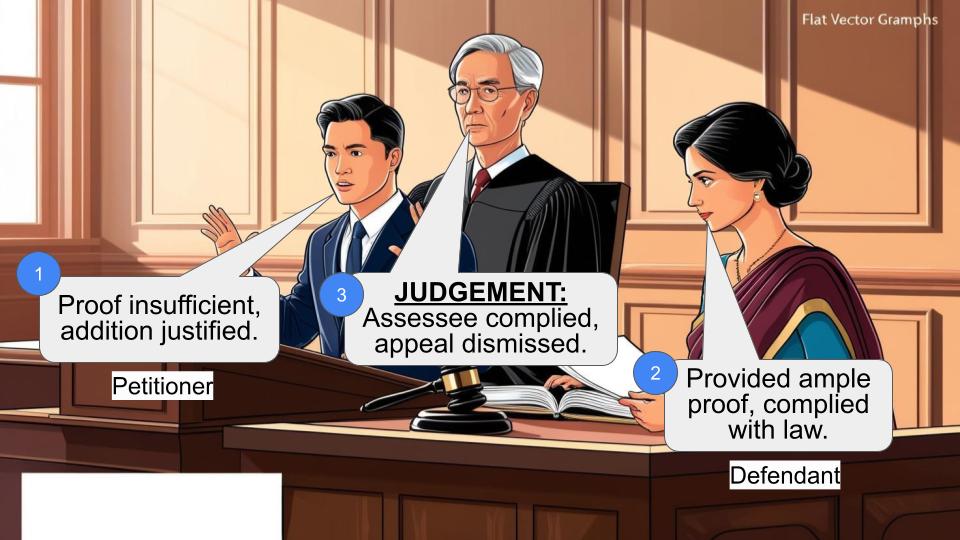
The High Court dismissed the Revenue's appeal, upholding the Tribunal's decision. Key points in the judgment:
1. The Tribunal's factual finding that the sales incentive was due and payable in AY 2005-2006 was not challenged with specific evidence by the Revenue.
2. The auditor's qualification alone is not sufficient to reverse the Tribunal's factual finding.
3. An auditor's opinion, while relevant, is not conclusive or binding on tax authorities or assessees.
FAQs:
1. Q: Why didn't the court accept the auditor's qualification of the expense?
A: The court held that an auditor's opinion, while relevant, is not conclusive or binding. It should be considered along with other evidence and can be accepted, rejected, or partially accepted.
2. Q: What was the significance of the 15-month period mentioned in the case?
A: The 15-month period ending on 30.6.2004 was crucial because it determined when the sales incentive became due and payable, which fell within the assessment year 2005-2006.
3. Q: How does this judgment impact the interpretation of auditor's reports in tax cases?
A: This judgment reinforces that auditor's reports are not binding on tax authorities or assessees. They are considered expert opinions that need to be evaluated alongside other evidence.
4. Q: What evidence would the Revenue have needed to overturn the Tribunal's decision?
A: The Revenue would have needed to provide specific documents or correspondence between the assessee and the Assessing Officer or dealers that contradicted the Tribunal's factual findings.
5. Q: Does this judgment set any new precedents?
A: While it doesn't set new precedents, it reinforces existing principles about the weight given to Tribunal findings and the non-binding nature of auditor opinions in tax matters.

This appeal by the Revenue under Section 260A (of Income Tax Act, 1961) is directed against the order dated 9.3.2018 passed by the Income Tax Appellate Tribunal (‘Tribunal’) in the case of Escorts Ltd. (respondent-assessee, for short) in ITA No.4235/Del/2014. The appeal relates to assessment year 2005-2006.
2. The impugned order decided a number of issues. However, this appeal is confined and limited to disallowance of claim of expenditure of Rs.7.75 crore made by the Assessing Officer on the ground that it relates to prior period and was not incurred and does not relate to the period relevant to the assessment year 2005-2006.
3. Learned counsel for the Revenue relies on the reasoning given in the assessment order dated 15.12.2008 and the order of the Commissioner of Income Tax (Appeals) dated 30.6.2014, upholding the disallowance. He submits that the auditor appointed by the respondent-assessee, not satisfied with the explanation given by the respondent-assesssee, had notified that the expenditure was prior period expenditure. This note and reservation of the auditor was reliable and should be accepted. Stand and stance of the respondent-assessee that the payments were not prior period expenditure, should have been rejected.
4. Genuineness of the expenditure of Rs.7.75 crores towards sales incentive to dealers for meeting the sales target is undisputed. The question raised is limited and confined to the year in which this expenditure is to be allowed. It is also not disputed that payment of Rs.7.75 crores to the dealers as sales incentives was made during the period relevant to the assessment year 2005-06. The contention of the Revenue is that this expenditure relates to the earlier assessment year 2004-05, and hence cannot be allowed as expenditure in the assessment year 2005-06.
5. The finding of the Tribunal is that sales incentive was paid for meeting sales target in the period of 15 months, ending on 30.6.2004. Thus, the relevant date and payment would relate to the period relevant to the assessment year 2005-2006. This factual position is specifically recorded in para 13 of the order passed by the Tribunal. The respondent-assessee had taken period from 1.4.2003 to 30.6.2004 for the purpose of computing and paying sales incentive to dealers. The sales incentive was payable only after and when the dealers had met the sales figures in this period. Complete details on account of incentive etc. were furnished.
6. In view of the factual finding, we do not think that the impugned order requires interference, as the auditor in the note had qualified this expenditure as prior period expenditure. This qualification or note alone would not justify reversal of the factual finding recorded by the Tribunal. Auditor’s opinion though relevant and material would not be final and conclusive even when against the assessee. Auditor’s report in a way is a third party and an independent report that can be equated with an expert opinion. It may be accepted or rejected or partly accepted and partly rejected. It has to be considered with other material. It cannot be treated as final or binding on the Assessing Officer, or for that matter even on the assessee, except when mandated by a statutory provision, which requires an unqualified auditor’s report or certification. In the absence of statutory provision it would not be right to hold that a reservation or qualifying note in the audit report would be a conclusive and bind finding against the assessee. The Gujarat High Court in Rajkot Engineering Association v. Union of India, (1986) 162 ITR 28 (Guj) had appropriately referred to the affidavit file by the Union of India repelling and quelling misgiving expressed by the assessee on the binding nature of qualifications or reservations expressed in audit reports under Section 44AB (of Income Tax Act, 1961), to clarify and observe:-
"53. It was, therefore, submitted that if the auditor finds that the financial information furnished to him is not according to the acceptable accounting policy and principles or not according to the relevant regulations and statutory requirements, he may refuse to give an unqualified opinion in which case an assessee would be exposed to grave consequences of not only a best judgment assessment but also to penalty. We can appreciate this apprehension expressed on behalf of the assessee. However, in view of the clarification made by the Union Government in the reply affidavit of Shri Kalyanchand, Under Secretary in the Finance Ministry to the Government of India in paragraph 15 that opinions given by the chartered accountants are not binding either on the assessees or on the assessing officer, we do not think that the assessee will be prejudiced by the qualified opinion given by the tax auditor in any given case. It is no doubt true that the assessee concerned may be required to persuade the Income-tax Officer that there was no justification for the qualified opinion or that there were valid and compelling reasons for an assessee for his failure or omission to satisfy an auditor. We are sure that the concerned tax authorities will not approach the matter in a strictly technical manner so as to make a best judgment assessment and/or to levy penalty merely because there is a qualified report of an auditor. The authorities will adopt a judicial approach and consider all attendant circumstances including the fact that the non-corporate assessees were not required to maintain their financial records in the manner in which the corporate assessees maintain as required under the law in force for the time being and the authorities will also bear in mind that non-corporate assessees should have reasonable time to adopt themselves to the changed situation emerging from the insertion of the impugned provisions for the first time in the statute book having far-reaching repercussions.
This contention, therefore, also stands rejected."
9. The chartered accountant in the audit report could have qualified the expenditure claimed, as the sales incentive was also pertaining to sales made in the earlier year. The finding of the Tribunal is that the sales incentive was to be quantified and was due and payable only during the period relevant to the assessment year 2005-2006. The appellant/Revenue has not placed on record any material and evidence to show and negate the factual finding of the Tribunal that sales incentive was not payable on the basis of the performance in the last 15 months. This factual finding is not specifically challenged as incorrect or wrong by relying on any document or correspondence exchanged between the respondent-assessee and the Assessing Officer or the dealers. Factual finding is not perverse and cannot be regarded as absurd only on the ground of qualifying note of the auditor.
10. In view of the aforesaid factual finding recorded by the Tribunal, we find no merit in the present appeal and the same is dismissed in limine, without any order as to costs.
SANJIV KHANNA, J
CHANDER SHEKHAR, J
SEPTEMBER 04, 2018
×