


Court Upholds Multiple Cash Payments Under Rs. 20,000 as Valid Under Income Tax…


Full News

Court Upholds Multiple Cash Payments Under Rs. 20,000 as Valid Under Income Tax Act
Court Upholds Multiple Cash Payments Under Rs. 20,000 as Valid Under Income Tax Act
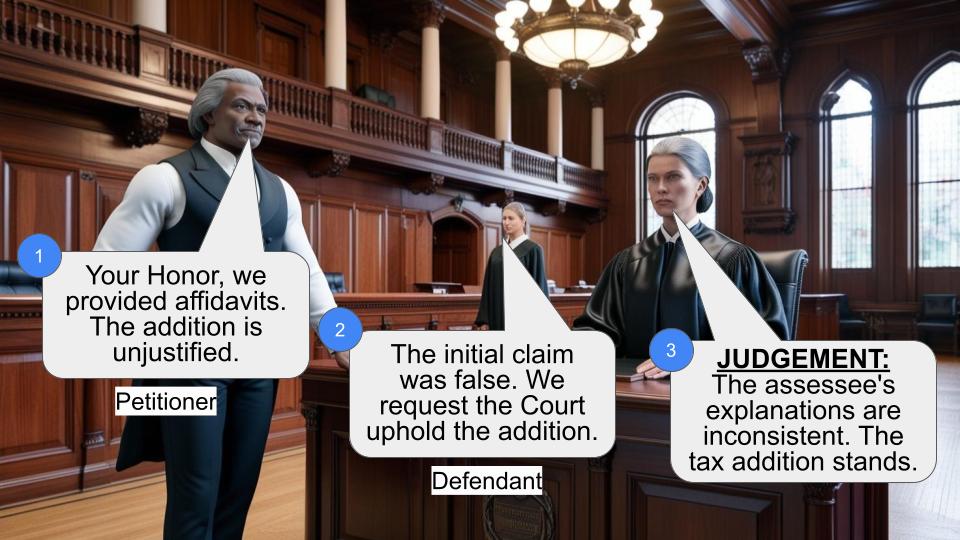
This case involves an appeal by the Income Tax Department against a liquor contractor regarding the interpretation of Section 40A(3) (of Income Tax Act, 1961). The main dispute was whether multiple cash payments made in a day, each under Rs. 20,000 but totaling more than Rs. 20,000, should be disallowed under this section. The court ruled in favor of the assessee (liquor contractor), upholding that such payments are valid and not subject to disallowance.
Get the full picture - access the original judgement of the court order here
Case Name:
Kiran Jaiswal vs Income Tax Officer (High Court of Allahabad)
Income Tax Appeal No. 191 of 2008
Date: 3rd May 2012
Key Takeaways:
1. The court interpreted "in a sum" in Section 40A(3) (of Income Tax Act, 1961) to mean individual payments, not aggregate daily payments.
2. Multiple cash payments under Rs. 20,000 each are allowed, even if they total more than Rs. 20,000 in a day.
3. The 2009 amendment adding "aggregate" to Section 40A(3) (of Income Tax Act, 1961) is prospective, not retrospective.
4. The court's interpretation aligns with previous judgments from other High Courts.
Issue:
Does Section 40A(3) (of Income Tax Act, 1961) apply to individual cash payments or to the aggregate of multiple payments made in a day?
Facts:
1. The assessee, a liquor contractor, filed a tax return for the assessment year 2004-2005.
2. The case was selected for scrutiny by the Income Tax Department.
3. The assessing authority found that the assessee had made multiple cash payments of Rs. 20,000 or less on single dates, which cumulatively exceeded Rs. 20,000.
4. The assessing authority disallowed an amount of Rs. 8,92,725 under Section 40A(3) (of Income Tax Act, 1961).
5. The assessee appealed this decision through various levels, ultimately reaching the High Court.
Arguments:
Assessee's Argument:
- Each individual payment was Rs.20,000 or less, complying with Section 40A(3) (of Income Tax Act, 1961).
- The section should apply to individual payments, not the daily aggregate.
Department's Argument:
- The total payments in a day exceeded Rs. 20,000, violating Section 40A(3) (of Income Tax Act, 1961).
- The payments were deliberately fragmented to avoid the section's application.
Key Legal Precedents:
1. CIT v. Aloo Supply Co. 121 (1980) ITR 680 1989 (Orissa High Court)
2. CIT v. Ashok Iron & Steel Rolling Mills Ltd. 320 ITR 101 (All)
3. CIT v. Triveniprasad Pannalal [1997] 228 ITR 680 (MP)
4. CIT v. Kothari Sanitation and Tiles Pvt. Ltd. [2006] 282 ITR 117 (Mad)
These precedents consistently interpreted "in a sum" in Section 40A(3) (of Income Tax Act, 1961) to refer to individual payments, not aggregate amounts.
Judgement:
The court ruled in favor of the assessee, holding that:
1. Section 40A(3) (of Income Tax Act, 1961) applies to individual payments, not the aggregate of payments made in a day.
2. The phrase "in a sum" in Section 40A(3) (of Income Tax Act, 1961) indicates an amount of money, not the totality of expenditure.
3. The 2009 amendment adding "aggregate" to the section is prospective, not retrospective.
4. The assessee's multiple payments under Rs. 20,000 each are valid and not subject to disallowance under Section 40A(3) (of Income Tax Act, 1961).
FAQs:
1. Q: What was the main issue in this case?
A: The main issue was whether Section 40A(3) (of Income Tax Act, 1961) applies to individual cash payments or the total of multiple payments made in a day.
2. Q: Why did the court rule in favor of the assessee?
A: The court interpreted "in a sum" in Section 40A(3) (of Income Tax Act, 1961) to mean individual payments, not aggregate daily payments, based on previous High Court judgments and the literal interpretation of the law.
3. Q: What impact does the 2009 amendment have on this case?
A: The 2009 amendment, which added the word "aggregate" to Section 40A(3) (of Income Tax Act, 1961), is prospective and not retrospective. Therefore, it doesn't apply to this case, which relates to the assessment year 2004-2005.
4. Q: Does this judgment mean businesses can make unlimited cash payments as long as each is under Rs. 20,000?
A: For the period before the 2009 amendment, yes. However, the current law includes aggregate payments, so this strategy would not work for more recent tax years.
5. Q: How does this judgment affect similar cases?
A: This judgment reinforces the interpretation of Section 40A(3) (of Income Tax Act, 1961) for cases before the 2009 amendment, potentially influencing similar disputes from that period.

1. This is an appeal under section 260A (of Income Tax Act, 1961) against the judgment and order dated 31.7.2008 passed by Income Tax Appellate Tribunal, Lucknow Bench 'A', Lucknow In ITA No. 249 LUC/08. The dispute raised to assessment years 2004-2005. The appeal was admitted by a Division Bench vide order 20.01.2009 on the following substantial question of law, is reproduced as under:
1. Whether expenditure incurred by assessee though payment is not exceeding Rs.20,000/-but multiple or fragmented payment is made in a day or short span of time. In case, it exceeds to Rs.20,000/- (Twenty Thousand rupees), then whether it shall be lawful for the income tax department to disallow the benefits of section 40(3)(3A) (of Income Tax Act, 1961)?
2. Whether fragmented payments made in a day more than Rs. 20,000/- will not be covered under provision of Section 40(3)(3A) (of Income Tax Act, 1961) ?
3. Assessee, the liquor contractor and is dealing in trading of country liquor. Assessee filed return on 30.10.2004 at Rs.1,10,120/-(One Lakh Ten Thousand and One Hundred Twenty rupees) along with audited balance-sheet and audit report in form 3-CB. The case of the assessee was selected for Scrutiny. Notice under section 143(2) (of Income Tax Act, 1961) dated 11.3.2005. It was found that the assessee had made payment in excess to Rs.20,000/- in cash on different dates but assessing authority has noted that only even on single date payment in cash was made @ 20,000/- or less to the same establishment and the total amount paid in cash at the end of the day cumulatively was more than 20,000/-. Accordingly, the assessing authority had disallowed an amount of Rs.8,92,725/- under section 40A(3) (of Income Tax Act, 1961) and audited the same income of assessee penalty proceeding under section 271(1)(c) (of Income Tax Act, 1961) was also initiated.
2. Order of the assessing authority was affirmed by the Appellate Authority. The Appellate Authority noted that Bill No.80 and broken payment was made of Rs. 20,000/- or less to M/s Mohan Meakin Ltd. & other Companies, which could have been done only by Cheque. Bills were supplied only up to rigors of Section 40A(3) (of Income Tax Act, 1961), 1961 (in short Act). The order passed by the Appellate Authority was also affirmed by a Tribunal. The Tribunal had made the observations as under, to reproduce:-
"After hearing the learned Departmental representative on the point, who has vehemently opposed it, we have perused the list given at page 3 and we are of the opinion that the decision of the Hon'ble Orissa High Court squarely covers up the case of the assessee. As no single payment was more than Rs. 2,500, we hold that the dis-allowance under section 40A(3) (of Income Tax Act, 1961) of the said amount was not justified. We, therefore, delete the said addition."
Heard the learned counsel for the parties and perused the record. Sri A.N. Mahajan, learned standing counsel on behalf of the Department submits that in view of the latest amendment in Section 40A(3) (of Income Tax Act, 1961), the order of the Tribunal cannot be allowed to stand. However, we find that section 40A(3) (of Income Tax Act, 1961), as it then stood at the relevant point of time, provided that the amount exceeding Rs. 2,500 should not be paid except by way of cheque drawn on bank or by a crossed bank draft and, if it exceeds that amount, then 20% of the expenditure shall not be allowed as deduction. It does not say that the aggregate of the amounts should not exceed Rs.2,500/-. The words used are "in a sum". The said phrase has been interpreted by various High Courts and it has been held that irrespective of any number of transactions, where the amount does not exceed Rs.2,500, the rigour of section 40A(3) (of Income Tax Act, 1961) will not apply. The said view has been taken by the Madhya Pradesh High Court in CIT versus Triveniprasad Pannalal [1997] 228 ITR 680. Identical view has been taken in CIT versus Kothari Sanitation and Tiles Pvt. Ltd. [2006] 282 ITR 117 (Mad).
It was further pointed out that similar view was taken by the Orissa High Court in CIT versus Aloo Supply Co. [1980] 121 ITR 680. The relevant portion of the said judgment is reproduced below (headnote): "The word 'sum' has no statutory definition and must have the common parlance meaning. While legislating, Parliament tries to convey its intention through express words. It is one of the well settled rules of interpretation that where a word used din a statute carries more than one meaning, that meaning which makes the provision workable and is nearest to the legislative intention, has to be adopted. The word 'sum' in section 40A(3) (of Income Tax Act, 1961), second proviso, of the Income-Tax Act, 1961, is used only to indicate an amount of money and does not refer to the totality of the expenditure."
Against the said judgment of the Orissa High Court, a special appeal was preferred before the Apex Court and the said special appeal has been dismissed by the Apex Court as reported in (1983) 143 ITR (St.) 67 Learned standing counsel for the Department could not place any decision contrary to the above. Only submission which he could make is that in view of the amendment in law, the view of the Tribunal cannot be allowed to stand. Obviously, the said amendment was not available during the relevant assessment year and the said amendment was not retrospective in nature. In view of the above, there is no legal infirmity in the order of the Tribunal. The question of law is, therefore, answered in the affirmative in favour of the assessee and against the Department. No order as to costs.
3. While assailing the impugned order, Sri Pushkar Baghel, learned counsel for the petitioner invited attention to the provision contained in Section 40A(3) (of Income Tax Act, 1961), which is as under:-
"Where the assessee incurs any expenditure 79 in respect of which payment is made, after such date (not being later than the 31st day of March, 1969) as may be specified in this behalf by the Central Government by notification in the Official Gazette80, in a sum exceeding81[ 82[twenty] thousand} rupees otherwise than by a crossed cheque drawn on a bank or by a crossed bank draft,83[twenty per cent of such expenditure shall not be allowed as a deduction]: Provided that where an allowance has been made in the assessment for any year not being an assessment year commencing prior to the 1st day of April, 1969, in respect of any liability incurred by the assessee for any expenditure and subsequently during any previous year the assessee makes any payment in respect thereof in a sum exceeding 84[ 85[twenty] thousand] rupees otherwise than by a crossed cheque drawn on a bank or by a crossed bank draft, the allowance originally made shall be deemed to have been wrongly made and the 86[Assessing] Officer may recompute the total income of the assessee for the previous year in which such liability was incurred and make the necessary amendment, and the provisions of Section 154 (of Income Tax Act, 1961) shall, so far as may be, apply thereto, the period of four years specified in sub-section (7) of that section being reckoned from the end of the assessment year next following the previous year in which the payment was so made:
Provided further that no dis-allowance under this sub- section shall be made where any payment in a sum exceeding 87[ 88[twenty] thousand rupees is made otherwise than by a crossed cheque drawn on a bank or by a crossed bank draft, in such cases and under such circumstances as may be prescribed 89, having regard to the nature and extent of banking facilities available, considerations of business 72[Expenses or payments not deductible in certain circumstances.
4. The plain reading of the provision (supra) reproduced, reveals that where the assessee incurred any expenditure in respect of payment is made after such date as may be specified by the Government of India by notification in official gazette (31.3.1969) in a sum extending Rs. 21,000/- other than crossed cheque drawn in Bank by crossed Bank Draft 20% such expenditure shall not be allowed as deduction.
5. Sri D. D. Chopra learned counsel appearing for the respondent would submit that since the total payment made in a day with regard to same person or establishment in fragment comes to more than 20,000/- it amount to abuse of process of law and deduction is not permissible. Accordingly the submission is finding recorded does not suffer from any impropriety or illegality.
6. On the other hand learned counsel for the petitioner Sri Pushkar Baghal had relied upon the case reported in CIT Vs. Aloo Supply Co.[1980]121 ITR 680 (Orissa) and [1983] 143 ITR (St.) 67. CIT Vs. Triveniprasad Pannalal [1997]228 ITR 680 (MP)(para 4).
7. In the case of CIT Vs. Ashok Iron & Steel Rolling Mills Ltd., 320 ITR 101(All.), the Division Bench of this court had relied upon the Judgment of Orissa High Court reported in 121 (1980) ITR 680, CIT Vs. Aloo Supply Co. 1989.
It is submitted that judgment of Aloo Supply Company (supra) has been affirmed by Hon'ble Supreme Court.
8. The Orissa High Court had interpreted words of the aforesaid provision and held that where the words used in the statute reflect more than one meaning, then that meaning which makes the provision workable and nearest to legislative intention has to be adopted.
According to the Orissa High Court, the words used in Section 40A(3) of the second proviso of the Act indicate an amount of money and not the totality of expenditure. Accordingly, Orissa High Court directed that if assessee make payment at different time during the day and has no Idea totality of expenditure then he cannot be subjected to statutory restriction contained under section 40A(3) (of Income Tax Act, 1961). The High Court held that Section 40A(3) (of Income Tax Act, 1961), applies to the payment made to the parties at a time and not to aggregate payment made to the parties in the course of day as recorded in the cash-book.
9. The case of Aloo Supply Company (supra) has been followed by Division Bench of this Court in Ashok Iron & Steel Rolling Mills Ltd. The relevant portion of the judgment is reproduced as under:- “Heard the learned counsel for the parties and perused the record. Sri A.N. Mahajan, learned standing counsel on behalf of the Department submits that in view of the latest amendment in Section 40A(3) (of Income Tax Act, 1961), the order of the Tribunal cannot be allowed to stand.
However, we find that section 40A(3) (of Income Tax Act, 1961), as it then stood at the relevant point of time, provided that the amount exceeding Rs. 2,500 should not be paid except by way of cheque drawn on bank or by a crossed bank draft and, if it exceeds that amount, then 20% of the expenditure shall not be allowed as deduction. It does not say that the aggregate of the amounts should not exceed Rs.2,500/-. The words used are "in a sum". The said phrase has been interpreted by various High Courts and it has been held that irrespective of any number of transactions, where the amount does not exceed Rs.2,500, the rigour of section 40A(3) (of Income Tax Act, 1961) will not apply. The said view has been taken by the Madhya Pradesh High Court in CIT versus Triveniprasad Pannalal [1997] 228 ITR 680. Identical view has been taken in CIT versus Kothari Sanitation and Tiles Pvt. Ltd. [2006] 282 ITR 117 (Mad). It was further pointed out that similar view was taken by the Orissa High Court in CIT versus Aloo Supply Co. [1980] 121 ITR 680. The relevant portion of the said judgment is reproduced below (headnote):
"The word 'sum' has no statutory definition and must have the common parlance meaning. While legislating, Parliament tries to convey its intention through express words. It is one of the well settled rules of interpretation that where a word used din a statute carries more than one meaning, that meaning which makes the provision workable and is nearest to the legislative intention , has to be adopted. The word 'sum' in section 40A(3) (of Income Tax Act, 1961), second proviso, of the Income-Tax Act, 1961, is used only to indicate an amount of money and does not refer to the totality of the expenditure.
Against the said judgment of the Orissa High Court, a special appeal was preferred before the Apex Court and the said special appeal has been dismissed by the Apex Court as reported in (1983) 143 ITR (St.) 67 Learned standing counsel for the Department could not place any decision contrary to the above. Only submission which he could make is that in view of the amendment in law, the view of the Tribunal cannot be allowed to stand. Obviously, the said amendment was not available during the relevant assessment year and the said amendment was not retrospective in nature.
In view of the above, there is no legal infirmity in the order of the Tribunal. The question of law is, therefore, answered in the affirmative, i.e., in favour of the assessee and against the Department. No order as to costs”.
10. The Division Bench of this Court also retreated the aforesaid Principle of law decided by the Orissa High Court as well as other High Courts and held that the "words" same used in Section 40A(3) (of Income Tax Act, 1961), second proviso indicates an amount of money and it does not refer to the totality of expenditure. The judgment being of Coordinate Bench is binding. I do not find any reason to differ with it for reference to Larger Bench.
11. In view of the aforesaid proposition of law, the interpretation made by this Court and seems correct keeping in view of the fact that in the year 2009, the Parliament had amended the provision and added word “aggregate” in the section of the aforesaid provision of the Income Tax Act, Amendment is prospective and not retrospective. Benefit of the amended provision was not available during the assessment year and is not retrospective in nature.
In view of the aforesaid said proposition of law, the appeal is allowed. Question answered in favour of assessee and against the revenue.
No cost.
Order Date :- 3.5.2012
Rabindra/Subodh
×
Similar Ripples
Questions
Court Upholds Multiple Cash Payments Under Rs. 20,000 as Valid Under Income Tax Act
Write your CommentSimilar Posts


Generic
- Reportdata/5862.pdf
