


Excise Duty Refund Taxable Despite Pending Appeal, Rules High Court


Full News

Excise Duty Refund Taxable Despite Pending Appeal, Rules High Court
Excise Duty Refund Taxable Despite Pending Appeal, Rules High Court
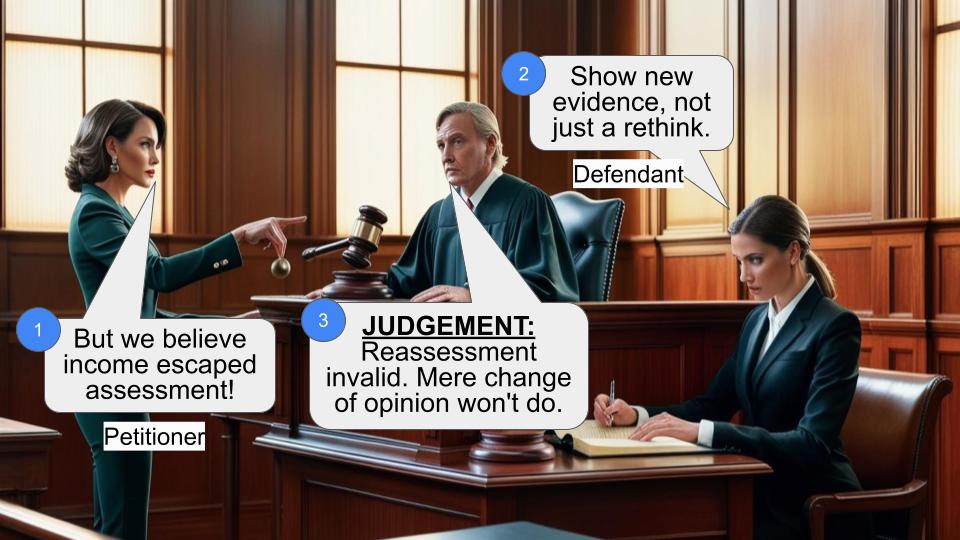
This case involves appeals filed by the Revenue (tax authorities) against orders of the Tribunal relating to the assessment years 1991-92 and 1993-94. The main issue was whether excise duty refunds received by the assessee (Rama Industries) should be included in taxable income under Section 41(1) (of Income Tax Act, 1961), even when an appeal against the refund order was pending. The High Court ruled in favor of the Revenue, overturning the Tribunal's decision.
Get the full picture - access the original judgement of the court order here
Case Name:
Commissioner of Income Tax vs. Rama Industries (High Court of Rajasthan)
Income Tax Appeal No.16 of 2003
Date: 23rd November 2007
Key Takeaways:
1. Excise duty refunds are taxable under Section 41(1) (of Income Tax Act, 1961), even if an appeal against the refund order is pending.
2. The Supreme Court's decision in Polyflex (India) Pvt. Ltd. vs. CIT was followed, establishing a precedent for similar cases.
3. The possibility of a refund being reversed in the future is not relevant for current tax assessment.
Issue:
Is an excise duty refund received during a previous year liable to be included for computing taxable income under Section 41(1) (of Income Tax Act, 1961), even when an appeal against the refund order is pending before the Appellate Authority?
Facts:
1. Rama Industries received excise duty refunds during the assessment years 1991-92 and 1993-94.
2. The assessee credited these refunds to their profit and loss account.
3. An appeal against the refund order was pending before the Appellate Authority.
4. The Tribunal initially ruled that the refunds were not taxable under Section 41(1) (of Income Tax Act, 1961) due to the pending appeal.
Arguments:
Revenue's Argument:
- The excise duty refunds should be included in taxable income under Section 41(1) (of Income Tax Act, 1961).
Assessee's Argument (implied):
- The refunds should not be taxable as long as an appeal against the refund order is pending.
Key Legal Precedents:
1. Polyflex (India) Pvt. Ltd. vs. CIT (2002) 257 ITR 343 (SC)
- This Supreme Court case established that when a statutory levy is discharged by an assessee and subsequently refunded, it falls under Section 41(1) (of Income Tax Act, 1961).
- The court held that the possibility of a refund being reversed in the future is not relevant for current tax assessment.
Judgement:
The High Court ruled in favor of the Revenue, overturning the Tribunal's decision. Key points of the judgment include:
1. Excise duty refunds are exigible to tax under Section 41(1) (of Income Tax Act, 1961), notwithstanding a pending appeal against the refund order .
2. The court followed the Supreme Court's decision in Polyflex (India) Pvt. Ltd. vs. CIT .
3. The court held that once an assessee receives a refund of an amount previously claimed as business expenditure, the deeming provision in Section 41(1) (of Income Tax Act, 1961) applies, regardless of potential future reversals .
FAQs:
Q1: What is Section 41(1) (of Income Tax Act, 1961)?
A1: Section 41(1) (of Income Tax Act, 1961) is a provision that brings certain receipts back into the tax net when they relate to expenses or losses claimed as deductions in previous years.
Q2: Does this judgment mean all refunds are immediately taxable?
A2: This judgment specifically applies to excise duty refunds. However, the principle may extend to similar situations where refunds relate to previously claimed deductions.
Q3: What if the higher court later reverses the refund decision?
A3: The judgment acknowledges that if a higher court upholds the levy at a later date, the assessee can seek relief to recover the tax paid on the refund.
Q4: How does this judgment impact businesses?
A4: Businesses may need to account for potential tax liabilities on refunds received, even if appeals are pending against those refunds.
Q5: Can this principle be applied to other types of refunds?
A5: While the case specifically deals with excise duty refunds, the principle could potentially be applied to other similar situations where refunds relate to previously claimed deductions.

These two appeals have been filed by the Revenue, against the order of the learned Tribunal dt. 23.5.2002, deciding two appeals of the assessee, relating to the assessment years 1991-92 and 1993-94.
The Appeal No. 16 was admitted vide order dt. 21.3.2003, by framing the following substantial question of law:-
“Whether in the facts and circumstances of the case the Tribunal was right in holding that refund of Excise Duty received during the previous year relevant to assessment year 1991-92 is not liable to be included for computing taxable income under Section 41(1) (of Income Tax Act, 1961) because the appeal against the order as a result of which refund has arisen was pending before the Appellate Authority?”
And the Appeal No. 24 was admitted on 27.2.2003, without framing any substantial question of law. However, thereafter, vide order dt. 14.11.2005 following substantial question of law was framed:-
“Whether on the facts and in the circumstances of the case the tribunal is right in law in holding that Excise Duty refund is not exigible to tax under section 41(i) (of Income Tax Act, 1961) in view of the law laid down by the Hon'ble the Supreme Court in case of Polyflex (India) Pvt. Vs. CIT reported in 253 ITR-343?”
As appears from the judgment of the learned Tribunal, that the learned Tribunal has decided the appeal in view of the earlier orders of the learned Tribunal itself, in the assessee's own case for other assessment years, wherein the excise duty refund credited to the profit and loss account was held to be not exigible to tax under Section 41(i) (of Income Tax Act, 1961). Obviously, it appears, that when the Appeal No. 16 was admitted, this Court had framed it as a moot question to be involved in the present case, however, after admission of the other Appeal No. 24, when the substantial question was framed therein on 14.11.2005, the frame of the question was entirely different, comprehending the correctness of the finding of the Tribunal, on the anvil of the judgment of Hon'ble the Supreme court, in Polyflex (India) Pvt. Ltd.'s case.
We have heard learned counsel for the parties, and have gone through the judgment of Hon'ble the Supreme Court, in Polyflex (India)'s case.
In this judgment, in Polyflex (India)'s case, the facts were, that the assessee had paid excise duty on certain goods, then pursuant to the decision of CEGAT a sum of Rs. 9,64,206/- was refunded, in September 1988. Thereafter, that judgment was upheld by the High Court, and the fate of challenge in the Supreme Court was not known.
However, in the assessment year 1989-90 the assessing officer brought to tax the amount by invoking Section 41(1) (of Income Tax Act, 1961). However, the Appellate Tribunal held, that there was no remission or cession of trading liability, so long as the matter is pending before Hon'ble the Supreme Court. Then, the High Court, in reference, held that the amount is assessable to tax, but has observed on the basis of counsel's argument, that the Tribunal ought to consider the argument, as to whether the excise duty was actually refunded to the assessee or not, and pass proper orders in the light of its finding. Against that order an appeal was preferred to Hon'ble the Supreme Court, and Hon'ble the Supreme Court held, that where a statutory levy is discharged by the assessee, and subsequently the amount paid is refunded, it will be a case, where the assessee “has obtained any amount in respect of such expenditure” within the meaning of Section 41(1) (of Income Tax Act, 1961); it will not be a case of “benefit by way of remission or cession” of a trading liability. It was further held, that where expenditure is actually incurred by reason of payment of duty on the goods, and the deduction or allowance is given in the assessment of an earlier period, the assessee is liable to discharge that benefit, as and when he obtains refund of the amount so paid. Whether there is a possibility of refund being set at naught on a future date is not a relevant consideration, as once the assessee gets back the amount which was claimed, and allowed as business expenditure during an earlier year, the deeming provision in Section 41(1) (of Income Tax Act, 1961) comes into play, and it is not necessary, that the Revenue should await the verdict of a higher court or tribunal. It was also held, that if the higher court or tribunal upholds the levy at a later date, the assessee is not without a remedy to get back the relief.
In our view, this judgment fully covers the controversy, and takes a view contrary to the one taken by the learned Tribunal.
Consequently, the questions framed in either of the appeals are answered in favour of the Revenue, and against the assessee. The appeals are accordingly allowed by following the judgment in Polyflex (India) Pvt. Ltd.'s case, and the order of the learned Tribunal is set aside.
( MUNISHWAR NATH BHANDARI ),J. ( N P GUPTA ),J.
×
Questions
Excise Duty Refund Taxable Despite Pending Appeal, Rules High Court
Write your CommentSimilar Posts


Generic
- Reportdata/5152.pdf
