


Full News

Government Funding Secures Tax Exemption for Educational Institutions
Government Funding Secures Tax Exemption for Educational Institutions
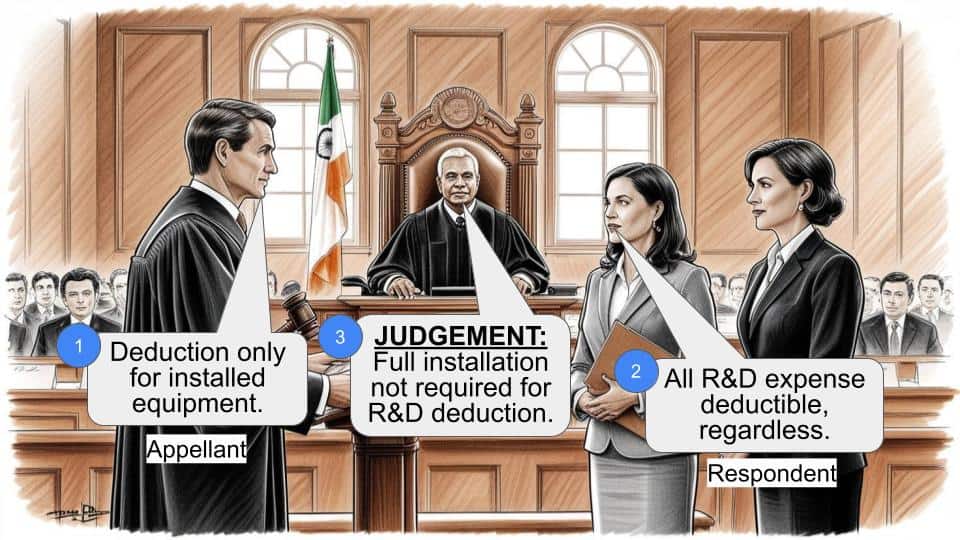
The case involves the Director of Income Tax (Exemptions) and Dhamaprakasha Rajakarya Prasakta, focusing on whether the assessee qualifies for tax exemption under Section 10(23C)(iiiab) (of Income Tax Act, 1961). The court ruled in favor of the assessee, affirming that substantial government funding (25%) satisfies the legal requirements for tax exemption.
Get the full picture - access the original judgement of the court order here
Case Name:
Director of Income Tax (Exemptions) vs. Dhamaprakasha Rajakarya Prasakta (High Court of Karnataka)
ITA No. 235 of 2009 C/w ITA No.232, 237 & 251 of 2009
Date: 16th January 2015
Key Takeaways:
- Substantial Finance Defined: The court clarified that government funding constituting 25% of an institution’s finance is considered substantial, meeting the criteria for tax exemption under Section 10(23C)(iiiab) (of Income Tax Act, 1961).
- Educational Purpose: The institution’s primary activity of imparting education and not existing for profit was crucial in the court’s decision.
- Precedent: The case referenced the decision in “Commissioner of Income Tax and Another v. Indian Institute of Management,” which established that more than 10% government funding could be deemed substantial.
Issue
Does receiving 25% of its finance from the government qualify an educational institution for tax exemption under Section 10(23C)(iiiab) (of Income Tax Act, 1961)?
Facts
The assessee, running several educational institutions, filed for tax exemption under Section 10(23C)(iiiab) (of Income Tax Act, 1961). The Assessing Officer initially denied this exemption, focusing instead on Section 11 (of Income Tax Act, 1961). The Appellate Commissioner granted relief under Section 11 (of Income Tax Act, 1961) but not under Section 10(23C)(iiiab) (of Income Tax Act, 1961). Both parties appealed, leading to the Tribunal’s decision favoring the assessee, which was then challenged by the revenue.
Arguments
- Assessee’s Argument: The institution argued that receiving 25% of its funding from the government qualifies it for tax exemption under Section 10(23C)(iiiab) (of Income Tax Act, 1961), as it constitutes substantial finance.
- Revenue’s Argument: The revenue contended that the institution did not meet the criteria for exemption under Section 10(23C)(iiiab) (of Income Tax Act, 1961) and challenged the Tribunal’s decision.
Key Legal Precedents
- Commissioner of Income Tax and Another v. Indian Institute of Management: This case established that government funding exceeding 10% of total finance could be considered substantial, supporting the assessee’s claim for exemption.
Judgement
The court upheld the Tribunal’s decision, confirming that the assessee is entitled to the tax exemption under Section 10(23C)(iiiab) (of Income Tax Act, 1961) due to substantial government funding. The court dismissed the revenue’s appeals, maintaining that the institution’s educational purpose and non-profit status were consistent with the exemption criteria.
FAQs
Q1: What does Section 10(23C)(iiiab) (of Income Tax Act, 1961) entail?
A1: It provides tax exemption for educational institutions substantially financed by the government, meaning a significant portion of their funding comes from government sources.
Q2: Why was the 25% government funding significant?
A2: The court deemed 25% as substantial finance, satisfying the legal requirement for tax exemption under the specified section.
Q3: How does this case impact other educational institutions?
A3: It sets a precedent that institutions receiving significant government funding can qualify for tax exemptions, provided they primarily focus on education and are not profit-driven.

The revenue has preferred these appeals against the order passed by the Tribunal dismissing the appeal filed by the revenue and allowing the appeal filed by the assessee and granting relief to the assessee. The impugned order relates to the assessment years 2003-2004 & 2005-2006, where a common order is passed. As the question involved is the same, the appeals are taken up for consideration together and disposed of as the other two appeals also arise out of the same order.
2. The assessee is running number of educational institutions. The assessee filed its return of income. The Assessing Officer under Section 143(3) (of Income Tax Act, 1961) of
the Income-Tax Act, 1961 (hereinafter referred to as ‘the Act’) has held that the assessee is not entitled to the benefit claimed under Section 11 (of Income Tax Act, 1961). He did not go into the question of exclusion benefit claimed by the
assessee under Section 10(23C)(iiiab) (of Income Tax Act, 1961).
3. Aggrieved by the said order the assessee preferred an appeal to the Commissioner of Income-Tax (Appeals). The Appellate Commissioner set aside the order of the Assessing Authority refusing the grant under Section 11 (of Income Tax Act, 1961) and granted the relief to the assessee, but he declined to grant the relief under Section 10(23C)(iiiab) (of Income Tax Act, 1961).
4. Aggrieved by the said order, both the
assessee as well as the revenue preferred two appeals
each. The Tribunal by its impugned order has set aside
the order passed by the Appellate Commissioner holding
that the assessee is not entitled to the benefit under
Section 10(23C)(iiiab) (of Income Tax Act, 1961) and allowed the appeals
filed by the assessee. It dismissed the appeals of
revenue on the ground that, once a benefit is granted
under Section 10(23C)(iiiab) (of Income Tax Act, 1961), the assessee is
also entitled to the benefit under Section 11 (of Income Tax Act, 1961) and
therefore the revenue’s appeals were dismissed.
Aggrieved by the impugned order, these appeals are
filed.
5. Insofar as the claim of the assessee under
Section 10(23C)(iiiab) (of Income Tax Act, 1961) is concerned, the
material on record discloses that the Government has
financed the institutions and their share is roughly
about 25%. It is not in dispute that the assessee is
carrying on its activities oF imparting education. It is
not existing for the sake of profit making. When 25% of
the finance to the assessee institutions flows from the
Government it constitutes the substantial finance and
therefore it has satisfied all the legal requirements
provided under Section 10(23C)(iiiab) (of Income Tax Act, 1961). In fact,
this Court had occasion to consider the said question in
the case of COMMISSIONER OF INCOME TAX AND
ANOTHER V. INDIAN INSTITUTE OF MANAGEMENT
reported in (2015) 370 ITR 81 (KARN) and a finance to
the extent of more than 10% of the total finance would
constitute substantial finance and therefore the finding
recorded by the Tribunal that the assessee is entitled to
the benefit exempted under Section 10(23C)(iiiab) (of Income Tax Act, 1961) of the
Act cannot be found fault with.
6. In the light of the aforesaid findings, in our
view it is unnecessary to go into the question whether
the Assessing Authorities were justified in reopening the
assessment and there was sufficient reasons and
whether the assessee is entitled to the benefit under
Section 11 (of Income Tax Act, 1961) also. Accordingly, we pass the
following:
ORDER
Appeals are dismissed.
Parties to bear their own costs.
The question, whether once a benefit under
Section 10(23C)(iiiab) (of Income Tax Act, 1961) is granted, the grant of
exemption under Section 11 (of Income Tax Act, 1961) is attracted or
not is not gone into. It shall be decided as and when
occasion arises before the appropriate Court. Therefore,
the finding of the Tribunal to that extent is kept open to
be agitated in an appropriate forum and it will not act
as precedent in the future assessment.
Sd/-
JUDGE
Sd/-
JUDGE
×
Similar Ripples
Questions
Government Funding Secures Tax Exemption for Educational Institutions
Write your CommentSimilar Posts


Generic
- Reportdata/4123.pdf
