


Tax Penalty Overturned: No Intent to Evade Found


Full News

Tax Penalty Overturned: No Intent to Evade Found
Tax Penalty Overturned: No Intent to Evade Found
In this case, the Income Tax Appellate Tribunal ruled in favor of the Respondent-Assessee, who was initially penalized for allegedly furnishing inaccurate income details. The court found no intent to evade taxes, as the business had been set up but not commenced, and the loss was not claimed in subsequent years.
Get the full picture - access the original judgement of the court order here
Case Name
Commissioner of Income Tax vs. First Data (India) Pvt. Ltd. (High Court of Bombay)
Income Tax Appeal No. 2085 of 2013
Date: 18th January 2016
Key Takeaways
- The Tribunal upheld the decision to cancel the penalty imposed on the Respondent-Assessee.
- The court found no evidence of intent to evade taxes, as the business was set up but not yet operational.
- The automatic reflection of carry forward loss in the E-return was not manipulated by the Assessee.
- The decision emphasizes the importance of intent in tax evasion cases.
Issue
Was the penalty for furnishing inaccurate particulars of income justified when the business was set up but not commenced, and no carry forward loss was claimed in subsequent years?
Facts
- The Respondent-Assessee filed a return showing a business loss due to claimed expenditures, which were disallowed as the business had not commenced.
- The return was filed late, making the carry forward of loss under Section 80 (of Income Tax Act, 1961) not permissible.
- The Assessing Officer imposed a penalty for allegedly furnishing inaccurate particulars of income.
Arguments
- Respondent-Assessee: Argued that the expenditure was claimed for a business that was set up, though not commenced, and there was no intent to carry forward the loss.
- Revenue: Contended that the penalty was justified as the Assessee showed a carry forward loss in the return, which was disallowed.
Key Legal Precedents
- Section 271(1) (of Income Tax Act, 1961)© of the Income Tax Act: Pertains to penalties for concealing income or furnishing inaccurate particulars.
- Explanation 4 to Section 271(1) (of Income Tax Act, 1961)©: Discusses the deemed concealment of income when a loss is reduced.
Judgement
The Tribunal dismissed the Revenue’s appeal, supporting the CIT(A)'s decision to cancel the penalty. It was determined that the Assessee did not intend to evade taxes, as evidenced by the lack of a carry forward loss claim in subsequent years. The automatic reflection of loss in the E-return was not manipulated by the Assessee.
FAQs
Q: Why was the penalty initially imposed?
A: The penalty was imposed because the Assessing Officer believed the Assessee furnished inaccurate particulars of income by claiming a business loss that was disallowed.
Q: What was the court’s reasoning for overturning the penalty?
A: The court found no intent to evade taxes, as the business was set up but not commenced, and the Assessee did not claim a carry forward loss in subsequent years.
Q: What does this case mean for future tax cases?
A: This case highlights the importance of intent in determining penalties for tax evasion, emphasizing that automatic software entries should not be considered as deliberate actions by the taxpayer.

1. This Appeal by the Revenue under Section 260-A (of Income Tax Act, 1961), 1961(the Act) challenges the order dated 7th December, 2012 passed by the Income Tax Appellate Tribunal (Tribunal). The impugned order dated 7th December 2012 relates to Assessment Year 2008-2009.
2 Mr. Pinto, learned counsel for the Revenue presses only the following two questions for our consideration:-
(1): “Whether on the facts and in the circumstances of the case and in law, the Tribunal was correct upholding the action of the CIT(A) cancelling the penalty when a claim for business loss was made in the return and the loss was disallowed by the AO during the course of assessment proceedings?
(2): “Whether on the facts and in the circumstances of the case and in law, the Tribunal was incorrect in ignoring the provisions of Explanation 4 to Section 271(1)(c) (of Income Tax Act, 1961) wherein it is provided where a loss has been reduced, it would also amount to deemed concealment?
3 Regarding Question 1:
(a) On 31st March, 2010 the Respondent-Assessee filed its return of income, claiming an expenditure of Rs.3.92 Crores. This resulted in business loss for the year under consideration. However, the Assessing Officer by order dated 22nd October, 2010 disallowed the expenditure as the business had not commenced and added the same to the income of the Respondent Assessee. Besides, the Assessing Officer disallowed the carry forward loss as claimed in the return of income as it was filed beyond the due date, thereafter disallowed under Section 80 (of Income Tax Act, 1961). However, penalty proceedings under Section 271(1)(c) (of Income Tax Act, 1961) were initiated.
(b) In the penalty proceedings, the Respondent-Assessee contended that expenditure had been claimed for the purpose of business which had been set up even though the business had not commenced. Further, it had shown a net loss of Rs. 3.92 Crores which in present format of e-return would automatically reflect also as carry forward loss. In any view of the matter, the Respondent-Assessee pointed out that it had no intent to carry forward this loss, as is evidenced from the copy of the return filed for the Assessment Years 2009-2010 and 2010-2011 dated 15th October, 2010 when no carried forward loss had been claimed i.e. before the Assessment order was passed on 22nd October, 2010. Moreover, as the return of income had been filed beyond the due date, no carried forward loss under Section 80 (of Income Tax Act, 1961) was permissible/allowable. Thus, it was submitted that no penalty be imposed. However, notwithstanding above, the Assessing Officer held that the Respondent had deliberately furnished inaccurate particulars of income to the Assessing Officer and concealed its income inviting penalty under Section 271(1)(c) (of Income Tax Act, 1961). Thus, by order dated 28th April 2011 the Assessing Officer imposed a penalty of 100% of the tax sought to be evaded i.e. Rs.1.33 Crores (on Rs.3.92 Crores being the loss/expenditure disallowed).
(c) In Appeal, the Commissioner of Income Tax(Appeals), by order dated 20th September, 2011 allowed Respondent- Asessee's Appeal inter alia holding that this was not case of furnishing of inaccurate particulars of income or concealing of income on the part of the Respondent-Assessee so as to invoke Section 271(1)(c) (of Income Tax Act, 1961). It held that there was no intention of taking advantage of carry forward loss for the reason that the return of income was filed beyond the due date and in terms of Section 80 (of Income Tax Act, 1961) such carry forward of loss was not allowable.
Further, in the return of income filed for the subsequent Assessment Years 2009-2010 & 2010-2011, no such carry forward loss has in fact been claimed by the Respondent-Asessee. Thirdly, the electronic form prescribed by the Department was such that if in the return of income, a loss is entered then the figure of carry forward loss appears without any control and/or manipulation on the part of the Assessee. In the above facts, the CIT(Appeals) allowed the Respondent-Assessee's Appeal and deleted the penalty.
(d) On further appeal by the Revenue, the Tribunal by the impugned order dismissed the Revenue's appeal. The impugned order holds that the carry forward loss which was shown in the return filed for the subject assessment year was automatically reflected in the E-return filed by the Respondent when it showed net loss. In any case, as the return was filed beyond the due date, thus, there was no question of the Respondent-Assessee claiming set off of the carried forward loss in the subsequent Assessment years. Besides, the impugned order also places reliance on the return of income filed for the subsequent Assessment Year prior to the order of the subject assessment year which also indicate that the Respondent had not claimed any set off or loss carried forward from the earlier assessment years. In the above view, the Appeal of the Revenue was dismissed.
(d) Mr. Pinto, learned counsel for the Revenue submits that the order imposing penalty by the Assessing Officer ought not to have been disturbed. This is so as the Respondent-Assessee had in its return of income filed for the subject assessment year had shown carry forward loss by claiming expenditure which had been disallowed.
(e) We find that the CIT(Appeals) and the Tribunal have concurrently reached a finding of fact that the Respondent had not claimed any carry forward loss either in the return which he has filed for the subject assessment year or in the subsequent assessment years. In the subject assessment year, once a loss was shown in the E-return, the software suomotu reflects the loss returned as carry forward loss. The Respondent has not fed in the entry of carried forward loss while filing its return of income in the E-return. The fact that the Respondent-Assessee had in the subsequent assessment year not claimed carry forward loss is evidence of the fact that there was no intent to furnish inaccurate particulars of income or conceal income. The expenditure had been claimed as it had set up its business though not commenced during the subject Assessment years. This was a claim which was disallowed not on the basis that it had not set up its business.
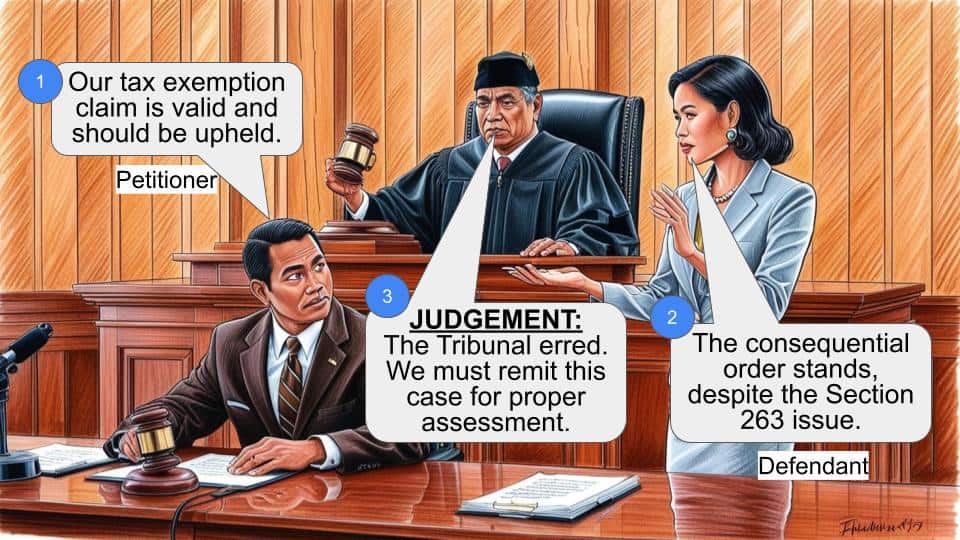
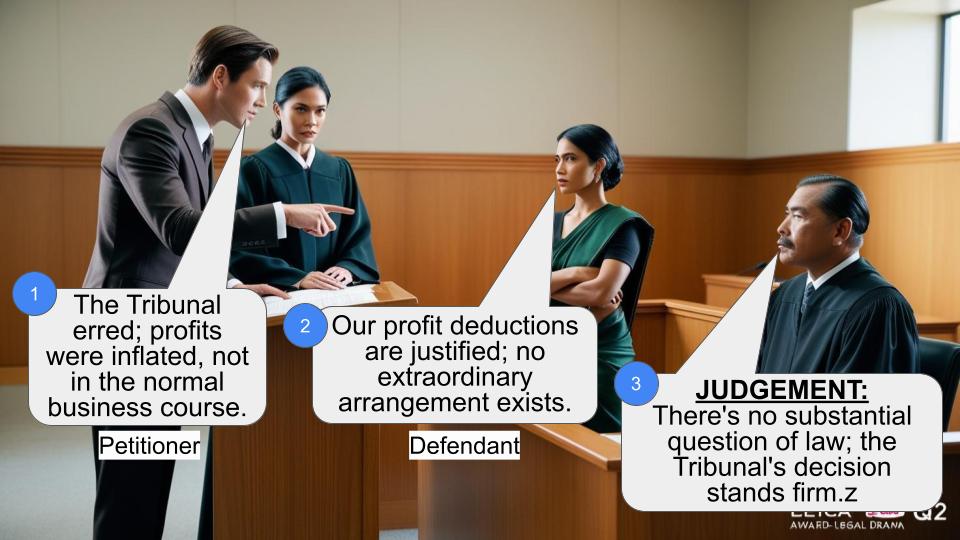
(f) In any case, both CIT(A) as well as the Tribunal had concurrently reached a finding of fact that there was no intent on the part of the Respondent Assessee to evade tax. This finding is not shown to the arbitrary. Therefore, Question (1) as proposed does not give rise to any substantial question of law. Thus, not entertained.
4 Regarding Question 2:-
(a) This question is pressed by Mr. Pinto even though the Assessment order has proceeded on the application of the Explanation 4 to Section 271(1)(c) (of Income Tax Act, 1961). The impugned order does not in any manner disturbs the application of Explanation 4 to Section 271(1)(c) (of Income Tax Act, 1961) and yet the proposed question is being pressed on behalf of the Revenue.
(b) Explanation 4 to Section 271(1)(c) (of Income Tax Act, 1961) provides that the amount of tax sought to be evaded would include the case where inaccurate particulars have been furnished which has effect of reducing the loss declared in the return i.e. the tax that would have been chargeable on the income in respect of which particulars have not been correctly furnished. The aforesaid Explanation 4 to Section 27(1)(c) (of Income Tax Act, 1961) was applied while imposing 100% penalty of the tax sought to be evaded.
(c) In fact, issue as framed was not the Revenue's grievance before the Tribunal. Therefore, it dose not arise in the facts of the present case. Therefore, Question No.2 as pressed by Mr. Pinto does not arise in the facts of the present case for consideration. Accordingly, not entertained.
5 Accordingly, appeal dismissed. No order as to costs.
( B. P. COLABAWALLA, J.) (M. S. SANKLECHA, J.)
×
Similar Ripples
Questions
Tax Penalty Overturned: No Intent to Evade Found
Write your CommentSimilar Posts

Generic
- Reportdata/3168.pdf
