


Court Rejects Tax Addition Based on Third-Party Documents, Upholds Presumption …


Full News

Court Rejects Tax Addition Based on Third-Party Documents, Upholds Presumption Limits
Court Rejects Tax Addition Based on Third-Party Documents, Upholds Presumption Limits
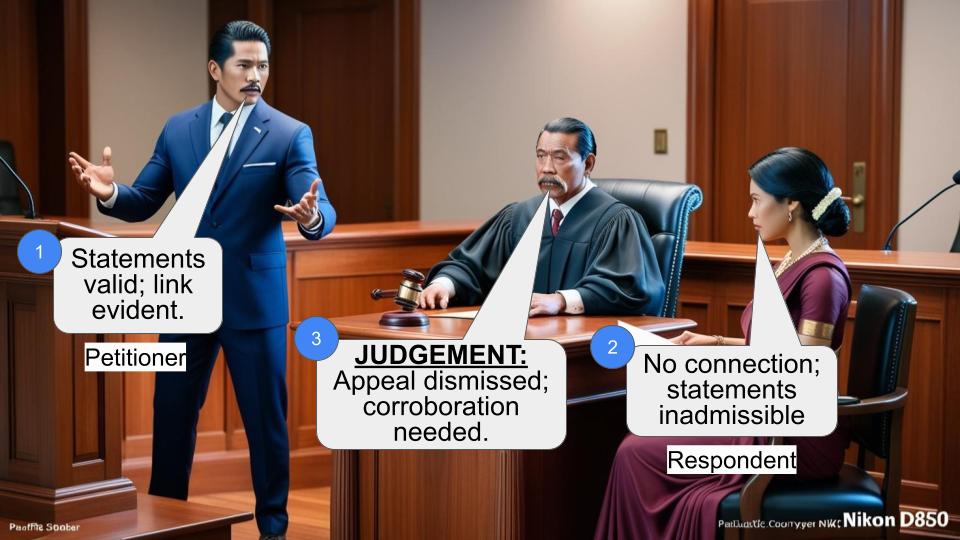
This case involves the Commissioner of Income Tax appealing against an order by the Income Tax Appellate Tribunal (ITAT) that confirmed the cancellation of tax additions made to Anil Khandelwal's income. The additions were based on documents seized from a third party, S.K. Gupta. The High Court dismissed the appeal, agreeing with the ITAT that the tax department couldn't rely solely on third-party documents without corroborative evidence.
Get the full picture - access the original judgement of the court order here
Case Name:
Commissioner of Income Tax Vs Anil Khandelwal (High Court of Delhi)
ITA 247/2015 & ITA 248/2015
Date: 21st April 2015
Key Takeaways:
1. Presumption under Section 132(4A) (of Income Tax Act, 1961)/292C of the Income Tax Act is only applicable to the person from whose possession documents are seized, not third parties.
2. Loose papers and documents can't be considered as books of account regularly kept in business.
3. Suspicion cannot take the place of proof in tax matters.
4. Additions based on third-party statements without corroborative evidence are not tenable.
Issue:
Can the Income Tax Department make additions to a taxpayer's income based solely on documents and statements seized from a third party, without corroborative evidence from the taxpayer's own premises?
Facts:
- A search and seizure operation was conducted on 12.12.2006 at the premises of S.K. Gupta and related entities.
- Anil Khandelwal, considered connected to Gupta, was issued a notice under Section 153A (of Income Tax Act, 1961).
- The Assessing Officer (AO) made additions to Khandelwal's income based on handwritten ledger entries seized from Gupta's premises.
- These entries mentioned Khandelwal's name and amounts related to companies allegedly connected to his family members.
- Gupta was examined on 13.12.2006 and cross-examined on 5.4.2011.
- No incriminating evidence was found during the search of Khandelwal's premises.
Arguments:
Revenue's Arguments:
- The seized materials from Gupta justified additions under Section 69 (of Income Tax Act, 1961).
- The AO's use of presumption under Section 132(4A) (of Income Tax Act, 1961) and 292C was valid.
- Khandelwal's replies were evasive given his friendship with Gupta.
- Gupta had admittedly provided accommodation entries.
Assessee's Arguments:
- No presumption under Section 132(4A) (of Income Tax Act, 1961)/292C applies as documents weren't seized from him.
- No corroborative evidence was found in his premises during the search.
- Gupta denied authorship/ownership of the seized documents and any cash transactions with Khandelwal.
Key Legal Precedents:
1. ACIT vs Lata Mangeshkar (1973) 97 ITR 696 (Bom.): Statement of witnesses not relevant for making additions without proof.
2. DCIT vs Yashpal Narendra Kumar (ITA NO-5340 to 5342/De1/2012): Addition based on third-party statements without corroborative evidence is not tenable.
3. Central Bureau of Investigation vs. V.C.Shukla (1988) 8 SSC 410: Loose papers can't be construed as books of account.
4. Chuharmal vs. Commissioner of Income Tax (1988) 172 250/138 Taxman 190 (SC): Revenue can't rest its case on loose papers from third parties.
Judgement:
The High Court dismissed the Revenue's appeal, agreeing with the ITAT and CIT(A) that:
1. The presumption under Section 132(4A) (of Income Tax Act, 1961)/292C doesn't apply to documents seized from third parties.
2. Without corroborative evidence from the assessee's premises, no adverse inference can be drawn.
3. Loose papers and documents can't be considered books of account under Section 34 of the Evidence Act.
4. The Revenue failed to establish the additions with concrete evidence.
FAQs:
1. Q: What is the significance of Section 132(4A) (of Income Tax Act, 1961)/292C?
A: It allows for a presumption about seized documents, but only for the person from whose possession they were seized, not third parties.
2. Q: Why couldn't the tax department use the seized documents as evidence?
A: Without corroborative evidence from the assessee's own premises or books, these third-party documents were considered insufficient proof.
3. Q: What's the importance of this judgment for taxpayers?
A: It reinforces that tax authorities need substantial evidence to make additions, not just suspicions or third-party documents.
4. Q: Does this mean third-party evidence is never admissible?
A: Not necessarily. It means such evidence needs corroboration and can't be the sole basis for tax additions.
5. Q: What should taxpayers learn from this case?
A: The importance of maintaining proper records and the right to challenge additions not supported by concrete evidence.

1. The Revenue is aggrieved by an order of the Income Tax Appellate Tribunal (‘ITAT’) dated 18.07.2014 in ITA Nos.5516-5517/Del/2012. Its grievance - urged as a question of law - is against the ITAT’s confirmation of the CIT (A)’s order cancelling the inclusion of `27 lakhs (for AY 2006-07) and 1,14,80,000/- (for AY 2007-08) in ITA Nos.5516-5517/Del//2012.
2. A search and seizure action was conducted on 12.12.2006 at the business and residential premises of Shri S.K. Gupta along with other concerns. Similar search action was conducted in respect of companies and other business entities which were controlled by him or owned by him or different individuals connected with him. The assessee was one such individual. He was issued with notice under Section 153A (of Income Tax Act, 1961) on 24.10.2008. The assessee had filed return of income on 5.11.2008 showing `1,82,556/-. In further proceedings under Section 143(3) (of Income Tax Act, 1961) read with Section 153A (of Income Tax Act, 1961), it was asked to respond to a questionnaire dated 7.11.2008 in regard to the transactions concerning his family members and concerns with which they were connected. The AO specifically confronted the assessee with extracts of certain documents, i.e., Annexure A-1 of party A-5 seized during the course of search of S.K. Group in the New Asiatic Building, Connaught Place, New Delhi. The assessee’s replies were not accepted resulting in addition to the extent noticed in the earlier part of the judgment. The assessee preferred appeals [to the CIT (A)]. After considering the submissions, the said Commissioner accepted the assessee’s contentions and directed that the amounts sought to be brought to tax by the AO ought to be deleted. The revenue’s appeals were rejected by the ITAT through the impugned order.
3. The ITAT took note of the reasoning of the CIT (A) as well as various Supreme Court decisions on the question as to whether the principle of natural justice had been complied with. It secondly went into the question as to whether the inference drawn on the basis of the materials seized was sustainable. Confirming the reasoning of the CIT (A) in paragraph 2.2 of the appellate order, the ITAT held as follows: -
“7. We have heard the rival submissions and perused the material available on record. On a consideration of the same, we find that the arguments of the Ld. CIT DR have no merit. We find that the specific questions put to Sh. S.K.Gupta extracted in the impugned order during the cross-examination cannot be termed to be vague where full facts have not come out. A perusal of the same shows that consistently Sh. S.K.Gupta states that no money has been received or paid by him relatable to the annexures shown. The other objection of the Ld. CIT DR that the questions put forth in the cross-examination specifically question 14 & 15 were also vague. We find that the arguments of the Ld. AR that these are the extracts of the statement of Sh.S.K.Gupta recorded at the time of the search are correct and the Ld. CIT DR is mistaken in her arguments to contend that the questions No-14 & 15 extracted in the impugned order are vague questions put forth during the cross examination. It is seen that the assessee in both the years has filed a Paper Books running into 71 pages and 87 pages respectively and none of the parties have considered it necessary or expedient to refer to any document or fact therein.” It further held as follows: -
“7.1. We find that no evidence has been placed before us nor any cogent argument has been raised before us so as to show that on facts the view taken by the CIT(A) was not correct. In the absence of any specific infirmity in the impugned order or reliance placed upon any evidence upsetting the view taken, we find that the department has failed to offer any meaningful argument in support of its claim. No reasons which can be legally accepted so as to remand the matter have also been placed before us. Thus in the light of the arguments advanced before us being satisfied by the reasoning and finding arrived at in the impugned order, we are of the view that the departmental appeal has no merit. We further find that the finding arrived at in the impugned order is fortified by the principle laid down in the judgement of the Hon'ble Bombay High Court in the case of ACIT vs Lata Mangeshkar (1973) 97 ITR 696 (Bom.). A perusal of the same shows that in the facts of that case reliance placed by the Revenue on the statement of two witnesses was considered to be not relevant for making an addition in the hands of the assessee therein. It is seen that whereas one of the witnesses was considered to be a person who could not have any knowledge the other witness who though was a partner in the concerned firm had given a statement that he had made payments to the singer in "black". Their Lordships were pleased to observe in the facts of that case that the statement at best could arouse suspicion but suspicion could not take place of proof and in the absence of proof, the statement was discarded. We also find that the order of the Coordinate Bench dated 07.02.2013 relied upon by the assessee in DCIT vs Yashpal Narendra Kumar in ITA NO-5340 to 5342/De1/2012 also supports the case of the assessee fully. The Co-ordinate Bench therein held that addition on the basis of statement of the third party without any corroborative evidence is not tenable.”
4. Learned counsel for the Revenue submits that given the nature of the materials seized from Shri S.K. Gupta, findings of the AO with regard to the addition under Section 69 (of Income Tax Act, 1961) were warranted. He also submitted that the recourse to presumption by the AO under Section 132(4A) (of Income Tax Act, 1961) and Section 292C (of Income Tax Act, 1961) was in the circumstances valid and that both the CIT (A) and ITAT fell into error in holding that such inference could not have been drawn. It was submitted that the AO correctly deduced that the assessee’s replies were evasive and unreliable given the determination that he was a friend of Shri S.K. Gupta whose premises were in the first instance searched. It was also submitted that the damaging material in the form of three pages of handwritten ledger extract clearly indicated the assessee’s name and of the group companies and the inference drawn was, therefore, justified. Furthermore, given that Shri S.K. Gupta had admittedly indulged in furnishing accommodation entries, the assessee’s explanation could not have been accepted.
5. This Court has considered the submissions and the record. It is quite evident that what materially persuaded the AO to make the addition were the extracts from documents - in the form of handwritten ledger entries seized from Shri S.K. Gupta. These mentioned Shri Khandelwal’s name as against which certain amounts were indicated. The other material was the statement of Shri S.K. Gupta recorded on 13.12.2006. Shri S.K. Gupta was further examined on 5.4.2011. The AO took recourse to the presumption permissible under Section 132(4A) (of Income Tax Act, 1961) on the basis of these two statements. It is a matter of the record - duly noted by the CIT (A) as well as ITAT that the three companies or business concerns whose monies were supposed to have been reflected in the handwritten ledgers (Bondwell Insurance Brokers, E-Synergy Infosystems Pvt. Ltd. and Paradigm Advertising) were all concerns in which the assessee’s family members or relatives were alleged to have been interested. The CIT (A) after considering these materials and elaborately discussing the submissions, held as follows:-
“2.3 I have carefully considered the facts of the case, the arguments of the appellant and the position of law. The AO has made the impugned addition on the basis of documents found and seized from Shri S. K Gupta, a third party. His primary reasoning is that in these papers there are intelligible narrations signifying payments of cash on various dates by appellant to various group companies of Shri S.K.Gupta, who have issued accommodation entries for investment in the companies in which the appellant and his relatives are interested. The appellant on the other hand has contended that no presumption is available to the Assessing Officer u/s 132(4A) (of Income Tax Act, 1961)/292C of the IT Act with regard to the impugned seized documents as they were neither found and seized from the appellant nor do they belong to the appellant. Further, the appellant has also contended that despite a simultaneous search operation in the case of the appellant, no evidence whatsoever has been found which correlates with the impugned seized documents found from the premises of Shri S. K. Gupta ,a third party. The appellant has also taken the ground that Shri S. K. Gupta himself had denied the authorship/ ownership of the impugned documents during his statement on 13/12/2006 and reiterated the same even during his cross examination by the appellant before the AO on 05/04/2012. The appellant has also taken the ground that since Shri S. K. Gupta, during his cross examination by the appellant before the AO, has categorically denied having any transactions in cash with the appellant or his family members, companies or entities owned by him or them, the impugned addition made by the AO is based on no evidence but on presumptions, conjectures and surmises. I have perused copies of the statement of Shri S. K. Gupta recorded during the search operation on 13/02/2006 as well as the Cross- examination statement of Shri S. K. Gupta dated 05/04/2011 which was forwarded by the AO without any comments vide his remand report dated 02.11.2011 in respect of A.Y.2007-08. It is seen from these statements that Shri .S. K. Gupta has denied having authored the impugned seized material and has also denied that they are part of his books of accounts. He has also denied having made any cash transactions with the appellant or his family members or entities owned by them and has also denied having received any commission for the alleged accommodation entries given to such entities belonging to the appellant or his family members.”
Thereafter the CIT (A) extracted the relevant parts of the statement of Shri S.K. Gupta specifically with respect to the entries which were attributed to the assessee. When asked about them, in response to question nos.13 and 14, Shri S.K. Gupta stated that he did not know “about these rough books and how they are lying in my office premises”. He further stated that “these books may be rough entries of daily entries as shown to me in detail of our group companies and enter transfer and deposits”. In his cross examination on 5.4.2011, he denied the authorship of Annexure A-5 which specifically stated that he had not given or taken cash from the assessee and his office. He also denied having received or paid any commission. He claimed to know two or three other individuals bearing the name of the assessee, i.e., Shri Anil Khandelwal who belongs to his native place. Furthermore, he claimed that he never received or paid any cash to the assessee or those connected with him. In the light of these, the CIT (A) held as follows: -
“2.3.1 A perusal of the above extracts clearly indicates that in the absence of any corroborative evidence found during the search at the premises of the appellant, no adverse inference can be drawn against the appellant merely on the basis of the seized documents as found and seized from the premises of the third party. As has been held in a number of judicial pronouncements relied on by the appellant and extracted in para 2.2.2 hereinabove, presumption u/s 134(4A) (of Income Tax Act, 1961)/292C is available only in the case of the person from whose possession and control the documents are found and it is not available in respect of a third party. Even in the case of such a person from whose possession and control any incriminating document is found, the presumption u/s 132(4A) (of Income Tax Act, 1961)/292C is a rebuttable one. Since in the case of the appellant, no corroborative documents or evidence has been found from the control or possession of the appellant, I hold that the legal presumption as incorporated u/s 132(4A) (of Income Tax Act, 1961)/292C will not be available to the Assessing Officer in the appellant's case.
2.3.2. Further, the appellant has also denied the contents of the impugned seized documents and the person from whom the impugned documents were seized has also stated during cross-examination that there has been no cash transactions between him and the appellant or his family members or entities in which they are interested. The AO has heavily emphasized on the fact that Shri S.K.Gupta was an entry provider and since the names of the companies in which the appellant's family members or relatives were interested was found mentioned in the document seized from Shri S.K.Gupta, it is enough to conclude that the appellant must have paid cash to Shri Gupta to receive accommodation entries from his group companies. I am afraid, I cannot concur with such logic in the absence any corroborative evidence to suggest that the entries found in the seized documents were also reflected in the books of the appellant or his concerns. It is well settled in law that the loose papers, diaries and documents cannot possible be construed as books of account regularly kept in the course of business. Such evidence would, therefore, be outside the purview of Section 34 of the Evidence Act, 1972. Therefore, the revenue would not be justified in resting its case just on the loose papers and documents found from third party if such documents contained narrations of transactions with the assessee as decided by the Hon'ble Supreme Court in the case of Central Bureau of Investigation vs. V.C.Shukla (1988) 8 SSC 410 and Chuharmal vs. Commissioner of Income Tax (1988) 172 250/138 Taxman 190 (SC).”
6. This Court further notices that the ITAT independently examined the evidence which the CIT (A) had scrutinized. It also took note of the paper book which had been furnished to the lower authorities and was satisfied that the amounts attributed to the assessee in fact had not been established and that in the given circumstances, the reference to Section 132(4A) (of Income Tax Act, 1961) and Section 292C (of Income Tax Act, 1961) was not justified. Having regard to the factual nature of the dispute - and having examined the findings of the lower authorities on this account which we do not consider unreasonable, this Court holds that no substantial question of law arises for consideration. The appeals are devoid of merit and are consequently dismissed.
S. RAVINDRA BHAT
(JUDGE)
R.K. GAUBA
(JUDGE)
APRIL 21, 2015
×
Similar Ripples
Questions
Court Rejects Tax Addition Based on Third-Party Documents, Upholds Presumption Limits
Write your CommentSimilar Posts
Generic
- Reportdata/3824.pdf
