


Court Nixes Penalties After Income Addition Deleted: No Basis for Punishment



Full News

Court Nixes Penalties After Income Addition Deleted: No Basis for Punishment
Court Nixes Penalties After Income Addition Deleted: No Basis for Punishment
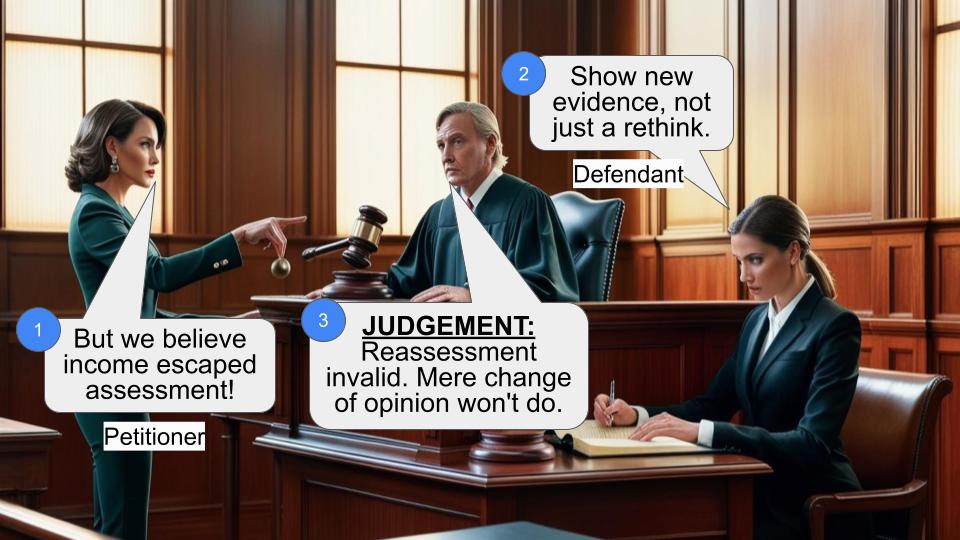
This case involves the Commissioner of Income Tax challenging the cancellation of penalties imposed on an assessee (taxpayer) after the entire addition to their income was deleted by the Income Tax Appellate Tribunal (ITAT). The High Court upheld the ITAT's decision, ruling that once the addition was removed, there was no grounds for penalties.
Get the full picture - access the original judgement of the court order here
Case Name:
Commissioner of Income Tax Vs Sanjiv Kumar (High Court of Punjab & Haryana)
I.T.R. No. 31 of 2002
Date: 4th February 2008
Key Takeaways:
1. Penalties cannot be sustained if the underlying income addition is deleted.
2. The basis for issuing a penalty notice must exist for the penalty to be valid.
3. Concealment of income must be proven by the Revenue for related penalties to apply.
Issue
Was the Income Tax Appellate Tribunal correct in cancelling penalties under sections 271(1)(a) (of Income Tax Act, 1961), 273(2)(aa), and 271(1)(c) of the Income Tax Act after the entire income addition was deleted, despite a pending reference application against the deletion?
Facts
1. For the Assessment Year 1981-82, the assessee filed an original income return on 24.08.1981, declaring an income of Rs.55,574/-.
2. The case was reopened under Section 148 (of Income Tax Act, 1961) due to suspected understatement of share purchase prices.
3. The Assessing Officer made an addition of Rs.1,14,502/- for undervaluation of share purchase prices.
4. Penalties were levied under Sections 271(1)(a) (of Income Tax Act, 1961), 271(1)(c), and 273(2)(aa) for late submission, concealment of income, and default in advance tax payment respectively.
5. The ITAT deleted the entire addition in its order dated 5.6.1990.
6. The assessee appealed against the penalties, which were subsequently deleted by the Commissioner of Income Tax (Appeals).
7. The revenue's appeal against this deletion was dismissed by the ITAT.
Arguments
Assessee's Argument:
- With the entire addition deleted, there was no basis for any penalties under the three provisions of the Act.
Revenue's Argument:
- The reference application against the deletion of the addition was pending before the High Court, so penalties should be sustained.
Key Legal Precedents
The ITAT relied on its earlier decision dated 4.4.1990 in ITA No. 175 of 1986 in the case of Shri Dharam Pal, which dealt with a similar issue regarding share pricing.
Judgement
The High Court ruled in favor of the assessee, agreeing with the ITAT's decision. Key points of the judgment:
1. Once the entire addition has been deleted, there remains no case for penalty.
2. The basis for issuing the penalty notice had disappeared.
3. There was no requirement for the assessee to file a return showing higher income after the addition was deleted.
4. The case was not one of concealment of income, and the Revenue failed to establish such a fact.
5. The ITAT was correct in concluding that after the entire addition was deleted, there was no case for sustaining penalties under any of the three provisions of the Act.
FAQs
Q1: What were the three types of penalties initially imposed on the assessee?
A1: The penalties were imposed under Sections 271(1)(a) (of Income Tax Act, 1961) for late submission of return, 271(1)(c) for concealment of income, and 273(2)(aa) for default in payment of advance tax and filing an untrue estimate of advance tax.
Q2: Why did the High Court rule in favor of cancelling the penalties?
A2: The High Court ruled that once the entire addition to income was deleted, there was no basis for any penalties. The very reason for issuing the penalty notices had disappeared.
Q3: Does this judgment mean that penalties can never be imposed if an addition is deleted?
A3: Not necessarily. This judgment specifically addresses cases where the entire addition is deleted and there's no proof of income concealment. Different circumstances might lead to different outcomes.
Q4: What's the significance of this judgment for taxpayers?
A4: This judgment emphasizes that penalties must have a valid basis. If the underlying reason for a penalty (like an income addition) is removed, the penalty itself cannot be sustained.
Q5: Did the pending reference application against the deletion of addition affect the court's decision?
A5: No, the court's decision was based on the fact that the ITAT's order deleting the addition had become final. The pending reference application did not influence the decision on penalties.

Pursuant to the directions given by this Court vide order dated February 26, 2001 passed in ITC No.157 of 1996 filed by the revenue, to draw up a statement of the case and refer the following substantial question of law to this Court, the Income Tax Appellate Tribunal, Chandigarh Bench, Chandigarh (hereinafter referred to as the ITAT') has referred the said question for the opinion of this Court:-
“Whether, on the facts and in the circumstances of the case, the Income-tax Appellate Tribunal was right in law in cancelling the penalties levied u/s 271(1)(a) (of Income Tax Act, 1961), 273(2)(aa) and 271(1)(c) merely holding that since the entire addition made by the Assessing Officer has been deleted by the Income-tax Appellate Tribunal, there is no case for sustaining the penalties without appreciating the fact that reference application u/s 256(2) (of Income Tax Act, 1961) filed against the deletion of addition is pending before the Hon'ble High Court for adjudication?”
In the present case, for the Assessment Year 1981-82, the assessee filed its original return of income on 24.08.1981 declaring an income of Rs.55,574/-. The assessment was completed under Section 143(3) (of Income Tax Act, 1961) (hereinafter referred to as `the Act') on the declared income on 30.9.1983. Subsequently, the case was reopened under Section 148 (of Income Tax Act, 1961) on certain information when it was noticed that the assessee had understated the purchase price of 810 shares of M/s. Angoora Wool Combers Pvt. Ltd.
The Assessing Officer issued notice on 10.5.1985 to the assessee. Pursuant to the return filed by the assessee on 19.2.1986, the Assessing Officer initiated and levied penalty under Section 271(1)(a) (of Income Tax Act, 1961) for late submission of return. Penalty under Section 271(1)(c) (of Income Tax Act, 1961) was levied for concealment of income and also under Section 273(2)(aa) (of Income Tax Act, 1961) for default in payment of advance tax and for filing untrue estimate of the advance tax. The Assessing Officer, after issuing notice under Section 148 (of Income Tax Act, 1961), proceeded to make fresh assessment and made an addition of Rs.1,14,502/- on account of under-valuation of the purchase price of shares. The value of each share was fixed at Rs.149.36.
Feeling aggrieved against the aforesaid order, the assessee went in appeal which was partly allowed by the Commissioner of Income Tax (Appeals). Against that order, the assessee further filed an appeal before the ITAT. The ITAT vide order dated 5.6.1990 deleted the entire addition while relying upon its earlier decision dated 4.4.1990 passed in ITA No.175 of 1986 in the case of Shri Dharam Pal and it was held that the issue involved regarding the price of the share was squarely covered by the said decision. In view of the said order, the assessee went in appeal against the levy of aforesaid three penalties with the plea that when the entire addition stands deleted , there was no case whatsoever for levy of penalty under any of the three different provisions of the Act. The Commissioner of Income Tax (Appeals) allowed the appeal and deleted all the penalties. The revenue filed an appeal against the said order. The same was also dismissed by the ITAT while holding that after the entire addition was deleted, there was no case for sustaining the penalty under any of the three provisions of the Act. It has further held that since the very basis had disappeared, the levy of penalty was cancelled.
During the course of arguments, it has not been disputed that the addition made by the Assessing Officer on account of price of the share was deleted by the ITAT and that order has become final.
After hearing the counsel for the revenue and going through the reference as well as the finding recorded by the ITAT pertaining to the deletion of the addition made by the Assessing Officer as also the order deleting the penalty, we are of the opinion that once the entire addition has been deleted, then there remains no case for penalty whatsoever. The very basis of issuance of notice had disappeared. Once the addition was deleted, there was no requirement for the assessee to file the return showing higher income. Admittedly, present case is not a case of concealment of income nor the revenue has been able to establish such fact. Therefore, in our opinion, the ITAT has rightly come to the conclusion that after the entire addition was deleted, there was no case for sustaining the penalty under any of the three provisions of the Act. Accordingly, the reference is answered against the revenue and in favour of the assessee.
Disposed of accordingly.
(SATISH KUMAR MITTAL)
JUDGE
(RAKESH KUMAR GARG)
JUDGE
February 04, 2008
×
Similar Ripples
Questions
Court Nixes Penalties After Income Addition Deleted: No Basis for Punishment
Write your CommentSimilar Posts


Generic
- Reportdata/4904.pdf
