


Supreme Court upholds High Court's decision in S.I. Group India Ltd. case, rule…


Full News

Supreme Court upholds High Court's decision in S.I. Group India Ltd. case, rules against tax authorities.
Supreme Court upholds High Court's decision in S.I. Group India Ltd. case, rules against tax authorities.
The Supreme Court dismissed the appeals filed by the Income Tax Department against the Bombay High Court's judgment in favor of S.I. Group India Ltd. The case centered around the applicability of Section 41(1)(a) (of Income Tax Act, 1961), which deals with the remission or cessation of trading liabilities. The Supreme Court agreed with the High Court's finding that one of the requirements for invoking Section 41(1)(a) (of Income Tax Act, 1961) was not fulfilled in this case.
Case Name:
Commissioner of Income Tax vs. S.I. Group India Ltd.
Civil Appeal No. 10873 of 2011
Key Takeaways:
- The case clarifies the requirements for the applicability of Section 41(1)(a) (of Income Tax Act, 1961), which deals with the remission or cessation of trading liabilities.
- The court held that for Section 41(1)(a) (of Income Tax Act, 1961) to apply, there must be a clear remission or cessation of liability, and the assessee must have obtained a benefit from it.
- The judgment highlights the need for tax authorities to provide sufficient evidence to establish the fulfillment of all requirements for invoking provisions like Section 41(1)(a) (of Income Tax Act, 1961).
Issue:
Whether the requirements for the applicability of Section 41(1)(a) (of Income Tax Act, 1961), were fulfilled in the case of S.I. Group India Ltd., allowing the tax authorities to invoke the provision.
Facts:
S.I. Group India Ltd. had set up a unit in a notified area in Maharashtra, where it was entitled to collect sales tax from customers and defer its payments to the state government under an incentive scheme. The assessee claimed a deduction for the sales tax in its tax returns, but the Assessing Officer disallowed it, invoking Section 41(1)(a) (of Income Tax Act, 1961) on the ground that the sales tax had not been remitted to the state government. The assessee's appeals were dismissed until the High Court reversed the decision.
Arguments:
- The tax department argued that the assessee had obtained a benefit by not remitting the sales tax, invoking Section 41(1)(a) (of Income Tax Act, 1961).
- The assessee contended that there was no cessation of liability regarding the sales tax dues, and even if there was, no benefit was obtained. This was supported by the Sales Tax Tribunal's decision upholding the denial of credit for the payment made to SICOM (State Industrial and Investment Corporation of Maharashtra Limited).
Judgement:
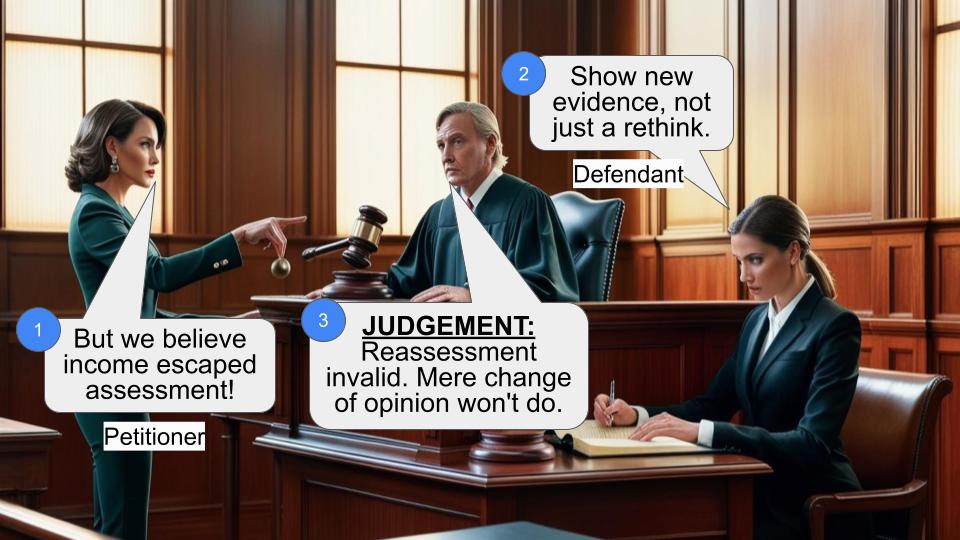
The Supreme Court dismissed the appeals filed by the Income Tax Department and upheld the Bombay High Court's judgment in favor of S.I. Group India Ltd. The court agreed with the High Court's finding that since the record did not disclose a remission or cessation of liability, one of the requirements for the applicability of Section 41(1)(a) (of Income Tax Act, 1961), was not fulfilled in this case.
FAQs:
Q1: What is the significance of this case?
A1: This case clarifies the legal requirements for invoking Section 41(1)(a) (of Income Tax Act, 1961), which deals with the remission or cessation of trading liabilities. It emphasizes the need for tax authorities to provide sufficient evidence to establish the fulfillment of all requirements before invoking such provisions.
Q2: What does this mean for the parties involved?
A2: For S.I. Group India Ltd., this is a favorable outcome as the tax authorities' decision to disallow the deduction under Section 41(1)(a) (of Income Tax Act, 1961) has been overturned. For the tax department, it means they must provide stronger evidence to establish the applicability of provisions like Section 41(1)(a) (of Income Tax Act, 1961) in future cases.
Q3: What are the implications for future cases?
A3: This case sets a precedent that tax authorities cannot invoke provisions like Section 41(1)(a) (of Income Tax Act, 1961) without clearly establishing that all the requirements for its applicability have been met. Assessees must be given a fair opportunity to rebut the allegations and provide explanations.

By the impugned judgment dated 10.06.2010, the Division Bench of the Bombay High Court has decided the following issue in favour of the respondent-assessee herein: -
“Whether on the facts and in the circumstances of the case and in law, the Hon'ble High Court erred in holding that since the assessee's payment to SICOM had not been accepted by Sales Tax Authorities, the same cannot be held to be a remission/cessation of liability u/s 41(1)(a) (of Income Tax Act, 1961), even though Maharashtra Sales Tax Tribunal had granted the liberty to the assessee to take credit for payment of sales tax after filing proper documents.”
The aforesaid issue arose in the following circumstances:
The assessee has set up a unit at District Raigad in Maharashtra which is a notified area. By virtue of packaged incentives scheme by Government of Maharashtra, the assessee became entitled to collect sales tax from customers and defer its payments to the State Government. Under the aforesaid scheme, the assessee was entitled to pay the sales tax so collected in five equal installments starting from April 20, 2010. In the return filed by the assessee, the deduction towards the sales tax was claimed. The Assessing Officer, however, disallowed the same while applying the provisions of Section 41(1)(a) (of Income Tax Act, 1961) (hereinafter referred to as 'Act') on the ground that the said sales tax had not been remitted to the State Government. The appeals of the assessee till the stage of Income Tax Appellate Tribunal failed. However, the decision of the Income Tax Appellate Tribunal has been reversed by the High Court by way of the impugned judgment.
We may note that the main contention of the respondent-assessee herein before the High Court was that the principal requirement for the applicability of Section 41 (of Income Tax Act, 1961) is that the assessee must obtain a benefit in respect of a trading liability by way of a remission or cessation thereof. He argued that in the present case, there was no cessation of the liability of the assessee in respect of the payment of the sales tax dues and even if there was such a cessation, no benefit was obtained by the assessee. This contention was supported by the fact that the issue pertaining to the sales tax liability was decided by the Sales Tax Tribunal by its judgment dated 08.02.2008 and the Tribunal has specifically upheld the decision of the assessing authorities declining to grant credit to the
assessee of payment which was made to State Industrial and Investment Corporation of Maharashtra Limited (SICOM) of Maharashtra. This contention is accepted by the High Court in the following manner: -
“10. The net result of the order of the Sales Tax Tribunal dated 8th February 2008 is to uphold the decision of the assessing authority declining to grant credit of the payment made by the assessee to SICOM towards discharge of the deferred sales tax liability. As a matter of fact, on 22nd July 2008 a notice of demand was issued under Section 38 of the Bombay Sales Tax Act of 1959 to the assessee by the Deputy Commissioner of Sales Tax, Navi Mumbai in the total amount of Rs. 1,33,13,555/-. Having regard both to the order passed by the Sales Tax Tribunal on 8th February 2008 and the notice of demand issued on 22nd July 2008, it is not possible for the Court to accept the contention that there was a remission or cessation of liability. Since the record before the Court does not disclose that there was a remission or cessation of liability, one of the requirements spelt
out for the applicability of Section 41(1)(a) (of Income Tax Act, 1961) has not been fulfilled in the facts of the present case.”
In view of the aforesaid facts, which clearly demonstrate that the assessee had not been granted the benefit of the said cessation for the Assessment Years in question, the High Court has rightly held that one of the requirements for the applicability of Section 41(1)(a) (of Income Tax Act, 1961) had not been fulfilled in the present case. We, thus, do not find any error in the order of the High Court. The appeals lack any merit and are, accordingly, dismissed.
[ A.K. SIKRI ]
[ ROHINTON FALI NARIMAN ]
New Delhi;
November 04, 2015.
×
Questions
Supreme Court upholds High Court's decision in S.I. Group India Ltd. case, rules against tax authorities.
Write your CommentSimilar Posts


Generic
- Reportdata/1902_zBzGOOl.pdf
