


Full News
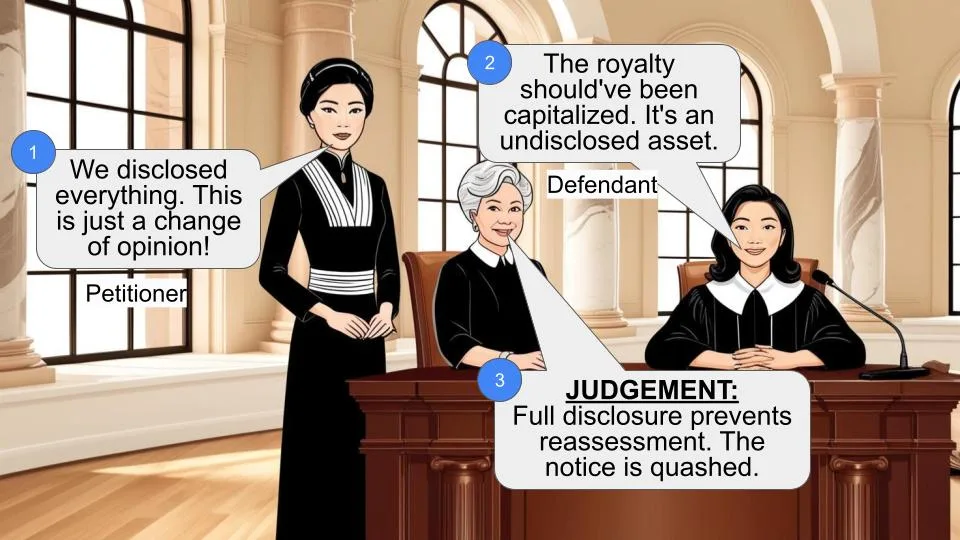
Court Quashes Reassessment Notice: Assessing Officer's Initiation Unjustified
Court Quashes Reassessment Notice: Assessing Officer's Initiation Unjustified
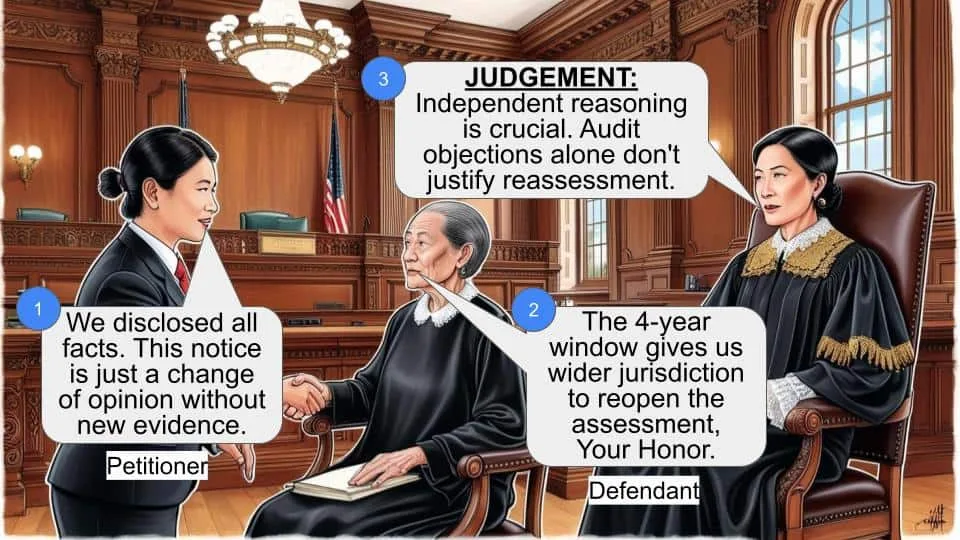
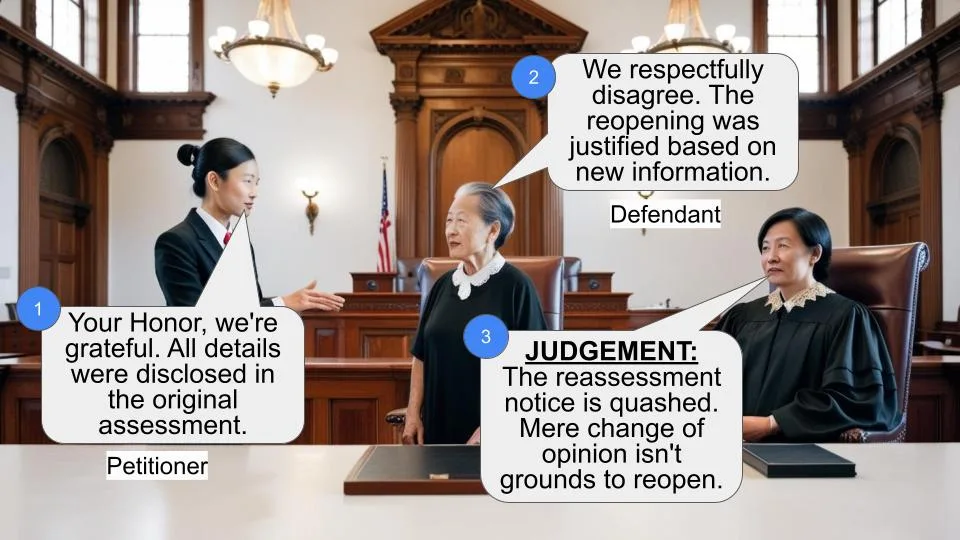
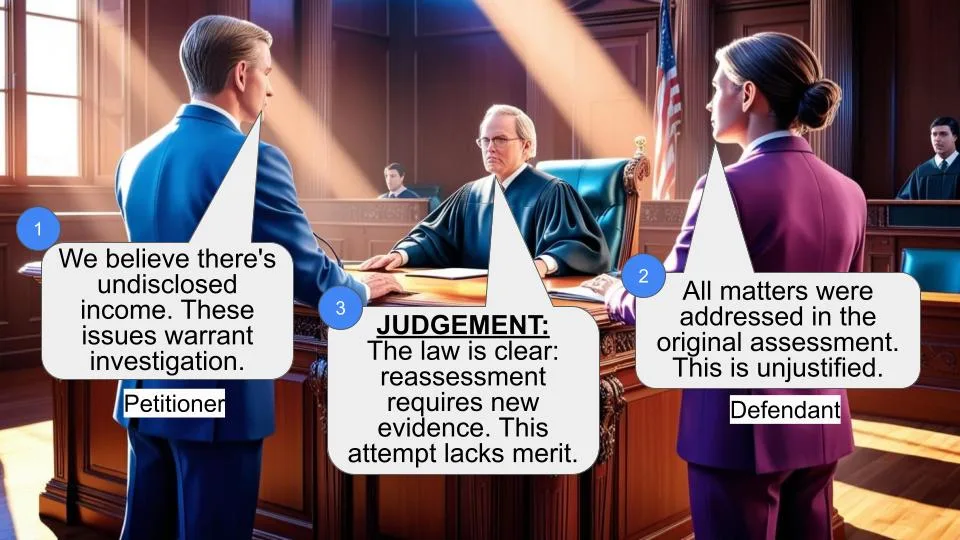
This case involves Munjal Showa Ltd. challenging a reassessment notice issued by the Income Tax Department for the assessment year 2005-06. The High Court ruled in favor of Munjal Showa Ltd., quashing the reassessment notice and subsequent orders, as the conditions for valid initiation of reassessment proceedings were not fulfilled.
Case Name**: Munjal Showa Ltd. vs Deputy Commissioner of Income Tax
**Key Takeaways**:
1. Reassessment notices issued after 4 years require specific conditions to be met.
2. Change of opinion by a new Assessing Officer is not grounds for reassessment.
3. Full disclosure of material facts by the assessee prevents reassessment proceedings.
4. Assessing Officer's silence on an issue in the original assessment implies acceptance.
**Issue**:
Was the Assessing Officer justified in initiating reassessment proceedings by issuing a notice under section 148 (of Income Tax Act, 1961) for the assessment year 2005-06?
**Facts**:
1. Munjal Showa Ltd. filed a return of income for the assessment year 2005-06 on 29.10.2005, declaring an income of ₹10,83,61,920.
2. The original assessment was completed on 31.12.2008, enhancing the income to ₹33,49,73,994.
3. On 24.3.2011, the Income Tax Department issued a notice under Section 148 (of Income Tax Act, 1961) to reassess the income.
4. The reassessment notice was issued after 4 years from the end of the assessment year.
5. During the original assessment, the assessee had provided detailed information about royalty payments, including agreements and calculations.
**Arguments**:
Munjal Showa Ltd. (Petitioner):
1. All material facts were fully disclosed during the original assessment.
2. The issue of royalty payments was specifically considered in the original assessment.
3. The reassessment notice was a case of change of opinion by a new Assessing Officer.
Income Tax Department (Respondent):
1. The royalty payment of ₹11,53,93,229 should have been capitalized as it created an intangible asset.
2. The assessee failed to fully and truly disclose particulars of its income.
3. The original Assessing Officer did not give any positive or negative finding on the royalty issue.
**Key Legal Precedents**:
1. CIT vs. Southern Switchgear Ltd. (232 ITR 359): Cited by the Income Tax Department to support the capitalization of royalty payments.
2. Commissioner of Income Tax vs. Eicher Ltd. (2007) 294 ITR 310: Established that if an Assessing Officer doesn't express his acceptance in the assessment order, it doesn't give grounds for reassessment.
**Judgement**:
The High Court ruled in favor of Munjal Showa Ltd., quashing the reassessment notice and subsequent orders. The court's reasoning was:
1. The assessee had fully disclosed all material facts during the original assessment.
2. The issue of royalty payments was specifically considered in the original assessment.
3. The Assessing Officer's silence on the issue in the original order implied acceptance of the assessee's stand.
4. The new Assessing Officer's interpretation was a change of opinion, which is not grounds for reassessment.
**FAQs**:
1. Q: What are the conditions for issuing a reassessment notice after 4 years?
A: There should be no change of opinion, and the assessee must have failed to fully and truly disclose all material facts necessary for the assessment.
2. Q: Can a new Assessing Officer reopen an assessment based on a different interpretation of the same facts?
A: No, this would be considered a change of opinion, which is not grounds for reassessment.
3. Q: What is the significance of the Assessing Officer's silence on an issue in the original assessment order?
A: It implies that the Assessing Officer was satisfied with the assessee's explanation and accepted their stand on the issue.
4. Q: How does this judgment impact future reassessment proceedings?
A: It reinforces the importance of full disclosure by assessees and limits the ability of tax authorities to reopen assessments based on changed opinions.
5. Q: What should taxpayers learn from this case?
A: Taxpayers should ensure they provide complete and accurate information during the original assessment to prevent future reassessment proceedings.

1. Munjal Showa Ltd. has filed the present writ petition for quashing the notice dated 24.3.2011 issued under Section 148 (of Income Tax Act, 1961) („Act‟, for short) for the assessment year 2005-06.
2. It is an accepted case that the original assessment proceedings pursuant to return of income filed on 29.10.2005 were completed by an order under Section 143(3) (of Income Tax Act, 1961) dated 31.12.2008. The assessee had declared income of Rs.10,83,61,920/- which was enhanced to Rs.33,49,73,994/- by order dated 31.12.2008. We are not concerned with the said addition, which is the subject matter of challenge in the appellate proceedings.
3. On 24.3.2011 the respondent issued notice under Section 148 (of Income Tax Act, 1961) inter alia recording the following reasons:
“Return of income declaring income of Rs.10,83,61,920/- was filed on 29/10/2005. Assessment was completed u/s 143(3) (of Income Tax Act, 1961) on 31/12/2008 at Rs.33,49,73,994/- resulting in demand of Rs.11,14,78,598/-.
Perusal of profit & Loss a/c reveals that assessee had claimed and was allowed the expenditure of Rs.11,53,93,229/- as Royalty paid to M/s. Showa corporation of Japan, its majority shareholder for the license to manufacture its products and use its technical know-how. Also as per the annual report of company, the technology imported was being absorbed gradually by the assessee. Thus, the expenditure incurred was essentially for creation of intangible asset which would provide enduring benefit to the assessee. Hence, the expenditure of Rs.11,53,93,229/- was to be capitalized and depreciation of Rs.2,88,48,307/- @ 25% on it should have been claimed and allowed and balance amount of Rs.8,65,44,922/- was to be capitalized and added in its income by the assessee. However, assessee has not capitalized the expenses of Rs.11,53,93,229/-. This view has also been upheld by Hon’ble Supreme Court in the case of CIT Vs. Southern Switchgear Ltd. 232 ITR 359. Therefore, I have reason to believe that income of assessee to the extent of Rs.8,65,44,922/- has escaped assessment by way of wrong claim of expenditure which was not a revenue expenditure. Thus there is failure on the part of the assessee to fully and truly disclose true particulars of its income and the same is required to be reassessed and taxed which requires reopening of assessment by initiation of proceedings u/s 147 (of Income Tax Act, 1961) by issue of notice u/s 148 (of Income Tax Act, 1961). Therefore, notice u/s 148 (of Income Tax Act, 1961) is hereby issued. The notice is issued after obtaining approval from CIT-II, New Delhi vide her Letter no.F.No.CIT- II/Delhi/Notice 148/2010/3331 dated 18/03/2011.
Sd/-
(A.S. Nehra)
Asstt. Commissioner of Income Tax, Circle 5(1), New Delhi”
4. It is the accepted position that the re-assessment notice was issued after 4 years from the end of the assessment year. Therefore, two conditions are required for valid initiation of the reassessment proceedings. Firstly it should not be a case of change of opinion and secondly, there should be failure by the assessee to fully and truly disclose all material facts necessary for the assessment.
5. Ld. counsel for the petitioner has drawn our attention to the letter dated 4.9.2008 which was written by the petitioner-assessee during the course of the original assessment proceedings. In para 1 of this letter the petitioner had stated as under:
“Apropos to our discussion in the previous hearing held on 20.08.2008 we are producing/ submitting the following information.
1. Copy of Agreement related to royalty, approval of the agreement from Ministry of Commerce and Industry, Royalty calculation certificate from Chartered Accountant and detailed note on Royalty for the financial year 2004-05 is enclosed. (Please refer Annexure-A). It may please be noted that the Company has deducted and deposited the TDS.”
6. It is clear from the aforesaid letter that at the time of the original assessment proceedings, the Assessing Officer had called for the copy of the agreement, approval of the agreement granted by Ministry of Commerce and Industry and royalty calculation- certificate of the chartered accountant. He had also called for and was furnished a detailed note on royalty. It is not disputed that the documents and details were finished. The petitioner had deducted TDS on the royalty paid.
7. Thus, the question of royalty was specifically considered in the original assessment proceedings. In the counter affidavit it is stated that the Assessing Officer had not given any positive or negative finding in the assessment order in this regard and therefore it is not a case of change of opinion. If an issue/aspect is raised by the Assessing Officer and the assessee furnishes reply, but no addition is made in the assessment order, the sequitor is that the Assessing Officer was satisfied with the reply and the stand of the assessee. In Commissioner of Income Tax Vs. Eicher Ltd. (2007) 294 ITR 310, it has been held: -
“15. In Hari Iron Trading Co. v. CIT [2003] 263 ITR 437, a Division Bench of the Punjab and Haryana High Court observed that an assessee has no control over the way an assessment order is drafted. It was observed that generally, the issues which are accepted by the Assessing Officer do not find mention in the assessment order and only such points are taken note of on which the assessee’s explanations are rejected and additions/disallowances are made. We agree.
16. Applying the principles laid down by the Full Bench of this court as well as the observations of the Punjab and Haryana High Court, we find that if the entire material had been placed by the assessee before the Assessing Officer at the time when the original assessment was made and the Assessing Officer applied his mind to that material and accepted the view canvassed by the assessee, then merely because he did not express this in the assessment order, that by itself would not give him a ground to conclude that income has escaped assessment and, therefore, the assessment needed to be reopened. On the other hand, if the Assessing Officer did not apply his mind and committed a lapse, there is no reason why the assessee should be made to suffer the consequences of that lapse.”
8. Moreover in the present case, the second condition is also not satisfied. The assessee had filed and furnished all details and particulars relating to the royalty payment including agreements, calculation and the approval. There was no failure on the part of the assessee to furnish true and correct all material facts. The facts were available before and were within the knowledge of the Assessing Officer. The new Assessing Officer as per the reasons recorded on the basis of the same facts, has observed that royalty payment should have been disallowed as it was capital in nature. This is a question of legal inference or interpretation which has been drawn from the same material facts on record. There is no allegation that there was failure or omission on the part of the assessee to furnish and state all material facts.
9. Writ of certiorari is accordingly issued and the notice issued under Section 148 (of Income Tax Act, 1961) and order dated 24.3.2011 dismissing the objections to the reassessment proceeding passed by the Assessing Officer are quashed. The re-assessment order is also quashed.
Writ petition is disposed of. No costs.
SANJIV KHANNA, J
R.V.EASWAR, J
MAY 14, 2012
×
Similar Ripples
Questions
Court Quashes Reassessment Notice: Assessing Officer's Initiation Unjustified
Write your CommentSimilar Posts
Generic
- Reportdata/5844.pdf
