Court Quashes Special Audit Orders Against Karnataka Industrial Board


Full News

Court Quashes Special Audit Orders Against Karnataka Industrial Board
Court Quashes Special Audit Orders Against Karnataka Industrial Board
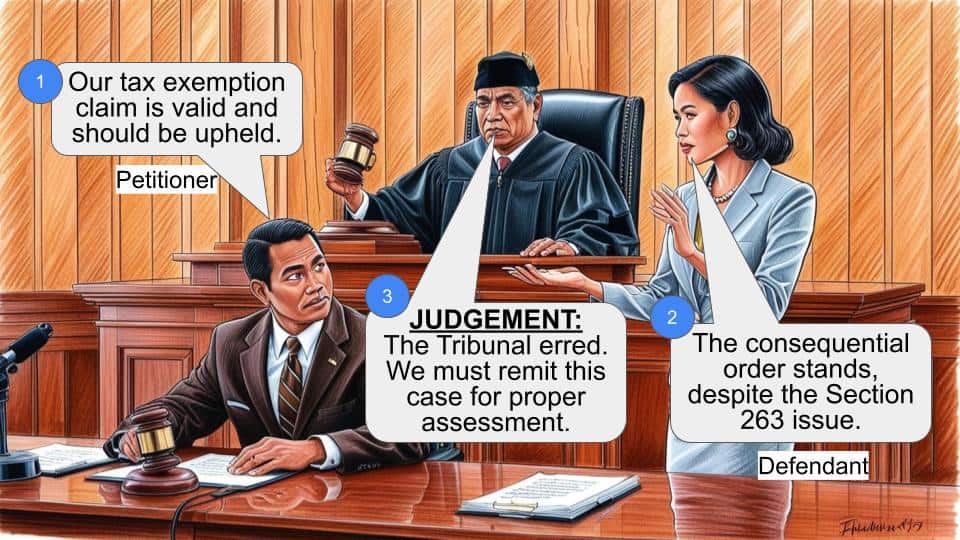
The Karnataka High Court quashed orders for special audit under Section 142(2A) (of Income Tax Act, 1961) against the Karnataka Industrial Area Development Board (KIADB) for assessment years 2013-14 and 2014-15. The court found that the Income Tax Department had mechanically passed these orders without proper application of mind, especially considering KIADB is a government undertaking exempt from income tax.
Get the full picture - access the original judgement of the court order here.
Case Name:
Karnataka Industrial Area Development Board Vs Assistant Commissioner Of Income Tax (Exemptions) & Anr. (High Court of Karnataka)
Writ Petition No. 1863/2017 C/w Writ Petition No. 25223/2016
Key Takeaways:
1. Special audit orders under Section 142(2A) (of Income Tax Act, 1961) must be passed with due consideration, not mechanically.
2. Government undertakings engaged in public purposes deserve special consideration in tax matters.
3. Assessing authorities should independently apply their mind and not merely rely on audit reports from other agencies.
4. Natural justice principles, including providing reasonable opportunity for hearing, must be followed in tax proceedings.
Issue:
Whether the orders for special audit under Section 142(2A) (of Income Tax Act, 1961) against KIADB were justified and legally valid?
Facts:
1. KIADB, a Government of Karnataka Undertaking, challenged orders for special audit for assessment years 2013-14 and 2014-15.
2. KIADB is already subject to audit by the Comptroller and Auditor General of India (C&AG) and an independent Chartered Accountant.
3. The Assessing Authority directed special audit at the fag-end of the limitation period for 2013-14 assessment.
4. For 2013-14, notice was given on 18/03/2016, giving only one day to show cause. KIADB submitted objections on 29/03/2016, but the order was passed on 28/03/2016.
5. For 2014-15, notice was given on 08/11/2016, objections were furnished on 28/11/2016, and the order was passed on 15/12/2016.
Arguments:
KIADB's arguments:
1. The Assessing Authority didn't give reasonable opportunity for hearing.
2. The Authority merely relied on C&AG audit objections without independent application of mind.
3. KIADB is exempt from income tax under Section 11 (of Income Tax Act, 1961).
Revenue's arguments:
1. The Authority considered C&AG audit objections and KIADB's explanations before forming an opinion.
2. The exemption given to KIADB is conditional.
3. After amendment, the cost of special audit is borne by the Central Government.
Key Legal Precedents:
The article doesn't mention any specific legal precedents. However, it refers to Section 142(2A) (of Income Tax Act, 1961), 1961, which deals with special audit.
Judgement:
1. The court quashed the impugned orders under Section 142(2A) (of Income Tax Act, 1961) for both assessment years.
2. It found that the orders were passed mechanically without due application of mind.
3. The court gave the Assessing Authority one more opportunity to reconsider the matter and pass fresh orders if necessary.
4. If the Authority decides to order special audit again, it must record detailed reasons showing independent application of mind.
FAQs:
Q1: What is a special audit under Section 142(2A) (of Income Tax Act, 1961)?
A1: It's an audit ordered by the Income Tax Department to get a true and fair view of an assessee's accounts when there are complexities or doubts about the correctness of the accounts.
Q2: Why did the court quash the special audit orders?
A2: The court found that the orders were passed mechanically, without proper consideration of KIADB's status as a government undertaking and without giving reasonable opportunity for hearing.
Q3: Can the Income Tax Department still conduct a special audit of KIADB?
A3: Yes, but they must reconsider the matter, provide proper opportunity for hearing, and show independent application of mind if they decide to order a special audit again.
Q4: What should the Assessing Authority do differently if they want to order a special audit?
A4: They should record detailed reasons, show independent application of mind, and not just rely on audit reports from other agencies.
Q5: Does this judgment apply to all cases of special audit?
A5: While it's specific to this case, it emphasizes the need for proper consideration and application of mind in all special audit cases, especially for government undertakings.

1. The petitioner – M/s. Karnataka Industrial Area Development Board (KIADB), a Government of Karnataka Undertaking has challenged before this Court the orders passed by the Respondent – Deputy Commissioner of Income Tax, Bangalore, directing ‘Special Audit’ of its Accounts for the Assessment Years 2013-14 and 2014-15 under Section 142 (of Income Tax Act, 1961)(2-A) of the Income Tax Act, 1961, by two separate orders passed on 28/03/2016 in Writ petition No.25223/2016 and on 15/12/2016 in Writ Petition No.1863/2017.
2. The petitioner being a Government of Karnataka Undertaking, engaged in the activities of Development of Industrial Areas within the State of Karnataka and is already subject to Audit at the hands of the Comptroller and Auditor General of India (C & AG) as well as the independent Chartered Accountant, also under the provisions of the KIADB Act itself and has already produced these two Audit Reports for the said two years before the Respondent - Income Tax Authority.
3. The core contention raised before this Court by the petitioner KIADB, while assailing the correctness of the ‘Special Audit’ ordered by the Respondent Authority, by the learned counsel for the petitioner assessee Board, Mr. Chythanya is that the Respondent Assessing Authority so directed the ‘Special Audit’ at the fag-end of the period of limitation on 31/03/2016 for the Assessment Year 2013-14 Assessment before which the said Authority was expected to pass the assessment orders without giving a reasonable opportunity of hearing to the petitioner assessee Board.
4. He submitted that the provisions of Section 142 (of Income Tax Act, 1961) (2-A) of the Income Tax Act, 1961 (‘Act’ for short) read with its Proviso requires the Assessing Authority to give a reasonable opportunity of hearing to the assessee against a Notice for directing the ‘Special Audit’ under Section 142 (of Income Tax Act, 1961) (2-A) of the Act. However, in the present case, the Notice to the petitioner assessee Board in Writ Petition No.25223/2016 was given on 18/03/2016 giving only one day’s time to show cause against such Notice for which the assessee Board prayed for some reasonable time to submit its objections and it did so submit its objections on 29/03/2016, but without waiting for the objections to be furnished and considered by the said Assessing Authority, he passed the impugned order under Section 142 (of Income Tax Act, 1961) (2-A) of the Act, directing ‘Special Audit’ vide impugned order Annexure A on 28/03/2016, itself.
5. He also urged before the Court that the Respondent Authority has merely referred and relied upon the Audit objections and Audit Paras given by the Comptroller and Auditor General of India (C & AG) for the said period to which the assessee Board had given its due reply and explanations to the said Comptroller and Auditor General of India and it was for their consideration and there was no independent application of mind and formation of reasonable belief by the Assessing Authority himself to direct such ‘Special Audit’ under the Income Tax Act in the case of the petitioner assessee Board, which is exempt from payment of Income Tax under the provisions of Section 11 (of Income Tax Act, 1961).
6. Similar are the facts in the connected Writ Petition No.1863/2017 for the Assessment Year 2014- 15 and the learned counsel for the petitioner assessee Board submitted that though on the date of giving of Notice, the limitation was not expiring, as the Notice was given on 08/11/2016 and though the objections were furnished vide Annexure E on 28/11/2016, but without considering the same in right perspective, the impugned order was passed on 15/12/2016 by a short cryptic and unreasoned order vide Annexure A.
7. While issuing the Notices to the Respondent Department, this Court passed a detailed interim order in one of the connected petitions, on 05/07/2016, in Writ Petition No.25223/2016 which was as follows:-
“1. Heard for Admission.
2. The learned counsel for the petitioner – KIADB, submits that at the fag end of the limitation expiring of the Assessment Year 2013-14, the learned Deputy Commissioner of Income Tax, Circle-1, Bengaluru, has mechanically ordered a ‘Special Audit’ under Section 142(2A) (of Income Tax Act, 1961), 1961, for the petitioner and submitted report within 90 day, even though the petitioner being a Government of Karnataka undertaking, created under a special statute, already got its accounts audited not only by the independent Chartered Accountant, but by the Comptroller and Auditor General of the State and prior to ordering such ‘Special Audit’ under Section 142(2A) (of Income Tax Act, 1961) without complying with the principles of natural justice fully, even though required under proviso to sub-section (2A) of the Act, the said authority has been directed the petitioner -
KIADB just to get the period of limitation to complete the assessment for Assessment Year 2013-14 of the petitioner which is in the nature of charitable trust/institution without any object of profit.
3. The learned Counsel submitted that the proceedings seeking to cancel the registration of the petitioner’s Institution, for the earlier Assessment year 2003-04 and 2004-05, has already reached up to the Hon’ble Apex Court. He also urged that the alleged reasons expressed in impugned communication Annexure-A dated 28.3.2016 namely, “...... considering the complexities involved, volume of transactions and doubt about the correctness of the accounts, it is felt necessary and expedient to refer the case for ‘Special Audit’ u/s.142(2A) (of Income Tax Act, 1961)......” are mere repetition of these words in the provisions of Section 142(2A) (of Income Tax Act, 1961) itself without any application of the mind by the respondent-Authority to the facts of the case in hand.
4. Prima-facie, this Court is of the opinion that the petitioner-KIADB is working as a public authority of developing the industrial lands within the State and being a Government of Karnataka undertaking, the reasons available for directing ‘Special Audit’ under Section 142(2A) (of Income Tax Act, 1961), may not be available to the respondent-Income Tax Department. In this case, as the petitioner– KIADB has already undertaken the process of two audits by independent auditors, Comptroller and Auditor General and Chartered Accounts and therefore, the contention raised by the learned counsel for the petitioner has considerable force. The case also unnecessarily drags in the public bodies like KIADB into litigation against Revenue Departments and to say the least, it is unfortunate and least justified litigation burdening the dockets of the Court. Such litigation is generally caused by the irresponsible acts of the Revenue officials, who, in order to shirk their own responsibilities, issue aforesaid kinds of notices and orders like the one impugned in the present case.
5. The matter would therefore require further consideration by this Court.
Let the notices be issued to the respondents. A copy of the writ petition along with Annexures may be served upon them and also upon Mr.E.I.Sanmathi, learned standing counsel for Income Tax Department. Both the respondents 1 & 2 (Commissioner of Income Tax and Deputy Commissioner of Income Tax) are directed to positively file their personal affidavits in response to the notice issued by this Court justifying their action for directing the ‘Special Audit’ under Section 142(2A) (of Income Tax Act, 1961) in the case of the present petitioner by the next date of hearing and they are also directed to remain present before the Court on the next date. List this case again on 18.07.2016. In the meanwhile and until further orders, the operation of the impugned communication
Annexure-A dated 28.03.2016 shall remain stayed.”
8. The learned counsel for the Revenue, Mr. E.R. Indra Kumar, Senior Counsel, however, submitted before the Court that the Respondent Authority has considered the Audit objections raised by the Comptroller and Auditor General of India and its reply and explanation furnished by the assessee Board and on the basis of the said material, the Respondent – Assessing Authority has given his own observations and formed an opinion that a ‘Special Audit’ was required in the circumstances of the case.
9. He also urged before the Court that the exemption given to the petitioner Board is a conditional one and therefore the requirement of ‘Special Audit’ may result in certain findings ultimately which may affect even the exemption given to the petitioner Board.
10. He has also supported the impugned orders as being in consonance with the provisions of the Act itself and submitted that after the amendment of sub- Section (2-D) of the Act, the cost of such ‘Special Audit’ is to be borne by the Central Government itself.
11. Having heard the learned counsels for the parties, this Court is of the opinion that the impugned orders passed by the Respondent Assessing Authority are rather mechanically passed without due application of mind particularly in the case of an assessee, which is a Government Undertaking engaged in the activity of a public purpose namely development of Industrial Areas within the State of Karnataka and it is exempt from Income Tax as such even though exemption given to it under Section 11 (of Income Tax Act, 1961), may be conditional.
12. The purpose of Section 142 (of Income Tax Act, 1961) (2-A) of the Act is to get a true and fair view of the Accounts produced by the assessee so that upon the ‘Special Audit’ conducted at the instance of the Revenue may yield more revenue in the form of Income Tax and it is not expected to be mere paper exercise or a repetitive audit exercise. Therefore, the special circumstances must exist to direct the ‘Special Audit’ under Section 142 (of Income Tax Act, 1961) (2-A) of the Act and such special circumstances or the special reasons must be discussed in detail in the order under Section 142 (of Income Tax Act, 1961)(2-A) of the Act itself.
13. From the facts narrated above, it prima facie appears that the Assessing Authority has not only directed the ‘Special Audit’ in the case of the petitioner assessee Board rather mechanically, but at the fag-end of the limitation period, perhaps just to buy more time to pass the assessment orders in the case of the assessee Board, which admittedly for the period in question enjoyed the exemption from Income Tax under Section 11 (of Income Tax Act, 1961).
14. It is not in dispute before this Court that the Assessee has already produced the two Audit Reports, one by the Comptroller and Auditor General of India and another by a Chartered Accountant who is also an independent Auditor. The reasons recorded and communicated to the assessee for such ‘Special Audit’ prima facie indicate that the Assessing Authority has merely quoted the observations and objections of the Comptroller and Auditor General of India, its Audit Paras and its explanation and reply by the petitioner assessee Board and adding a few lines of his own as Assessing Authority’s observations, the said Respondent has directed the ‘Special Audit’. The orders impugned before this Court neither disclose the discussion on the objections of the assessee for there being no justification for ‘Special Audit’ and at least in one case for assessment year 2013-14, the said Respondent Assessing Authority did not even wait for the objections to be placed on record and before they were furnished on 29/03/2016, the said Respondent had already passed the impugned order on 28/03/2016 while the limitation for passing the assessment order was expiring on 31/03/2016.
15. The hot-haste, the casual and cavalier attitude of the Respondent Assessing Authority in which he is invoking a serious provision of the Act against an assessee which is a Government Undertaking engaged in a public purpose of Industrial Development and being exempt from Income Tax under the KIADB Act itself, are very telling facts, in the perspective of which, invoking of these provisions of Section 142 (of Income Tax Act, 1961) (2-A) of the Act in this manner was absolutely not called for. This reflects an irresponsible and reckless manner in which the Assessing Authority has treated an ordinary businessman assessee and an exempted Government Undertaking in the same manner, at the same level and put them on the same scale, which they are not.
16. This Court is, therefore, of the opinion that the impugned orders under Section 142 (of Income Tax Act, 1961)(2-A) of the Act cannot be sustained. While quashing the two orders under Section 142 (of Income Tax Act, 1961) (2-A) of the Act for the Assessment Years 2013-14 and 2014-15, this Court would however give one more opportunity to the Respondent Assessing Authority to reconsider the matter in the light of the aforesaid at its own level and consider the objections and written submissions filed by the petitioner assessee Board in the correct perspective and pass fresh orders.
17. The Respondent Assessing Authority will be free to drop the said proceedings under Section 142 (of Income Tax Act, 1961) (2-A) of the Act. In case, he decides to order ‘Special Audit’ again even now he will have to record the detailed reasons for the same showing the independent application of mind to the material on record and not to just rely upon the Audit Reports given by the other Agencies and pass the orders under Section 142 (of Income Tax Act, 1961) (2-A) of the Act, as if in a supervisory position over these two Audit Reports already furnished to the said Tax Authority.
18. With these observations and directions, the petitions are allowed. The impugned orders Annexure A dated 28/03/2016 in Writ petition No.25223/2016 and Annexure A dated 15/12/2016 in Writ Petition No.1863/2017 are hereby quashed and set aside.
19. It goes without saying that the Respondent Assessing Authority will pass such fresh orders only after providing a reasonable and proper opportunity of hearing to the assessee petitioner. No order as to costs.
Sd/-
JUDGE
×