Court Upholds Brokerage Expenses as Allowable Revenue Expenditure for Builders


Full News

Court Upholds Brokerage Expenses as Allowable Revenue Expenditure for Builders
Court Upholds Brokerage Expenses as Allowable Revenue Expenditure for Builders
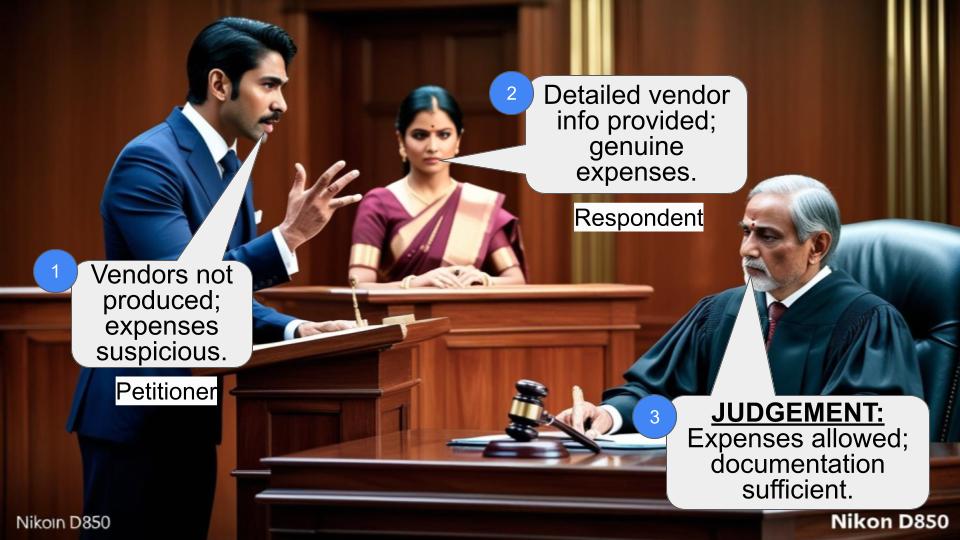
This case involves the Principal Commissioner of Income Tax (the Revenue) challenging the Income Tax Appellate Tribunal (ITAT)'s decision regarding DLF Home Developers Ltd. (the assessee). The main dispute was about the allowability of brokerage expenses as revenue expenditure. The High Court upheld the ITAT's decision, ruling in favor of the assessee.
Get the full picture - access the original judgement of the court order here
Case Name:
Principal Commissioner of Income Tax Vs DLF Home Developers Ltd. (High Court of Delhi)
ITA 54/2019, C.M. APPL.3290/2019
Date: 23rd January 2019
Key Takeaways:
1. Brokerage and commission expenses are considered financial costs/selling expenses, not direct expenses for acquiring property.
2. These expenses are fully allowable in the year they are incurred.
3. The percentage completion method (POCM) is an approved accounting method for builders.
4. Accounting Standards play a crucial role in determining the treatment of expenditures.
Issue:
Is brokerage expense a direct expense for acquiring property that should be capitalized, or is it a financial cost/selling expense that can be fully allowed in the year it's incurred?
Facts:
- The case pertains to the Assessment Year 2008-09.
- DLF Home Developers Ltd., a builder and developer, claimed deduction for various expenditures, including brokerage expenses of ₹6.8 crores.
- The assessee follows the percentage completion method (POCM) as mandated by Accounting Standard 7 (AS-7).
- The Assessing Officer (AO) disallowed the brokerage expense claim, arguing it should be spread over several years.
- The Commissioner of Income Tax (Appeals) [CIT(A)] and ITAT disagreed with the AO and allowed the expense.
Arguments:
Revenue's Argument:
- Brokerage expenses should be capitalized and spread over several years.
- Only a portion of the expense should be allowed each year based on the percentage of completion.
Assessee's Argument:
- Brokerage is a selling expense, not a direct expense for acquiring property.
- It should be fully allowed in the year it's incurred, as per accounting standards.
- This treatment has been accepted by the Revenue in previous years.
Key Legal Precedents:
1. CIT v. DLF Universal Ltd. 2017 (79) TAXMANN.COM 382: The court held that brokerage and commission expenses are allowable in the year they're incurred.
2. Nokia Corporation v. DIT, Delhi 2007 162 Taxman 369 (Delhi): This case established that even if the Department has filed an appeal against a favorable order, the last order is judicially binding on subordinate authorities.
3. CIT v. Bilahari Investment Pvt. Ltd. 2008 (299) ITR 1: This case noted that the adoption of different accounting methods is largely revenue neutral.
Judgement:
The High Court dismissed the Revenue's appeal and upheld the ITAT's decision, ruling in favor of the assessee. The court reasoned that:
1. Brokerage and commission are financial costs/selling expenses, not direct expenses for acquiring property.
2. These expenses are fully allowable in the year they're incurred, as per accounting standards.
3. The percentage completion method (POCM) is an approved method for builders.
4. The Revenue had accepted this treatment in previous years.
5. Disallowing substantial parts of the expense each year could lead to complications in future assessments.
FAQs:
1. Q: What is the percentage completion method (POCM)?
A: POCM is an accounting method used by builders where revenue and expenses are recognized based on the percentage of work completed in a given period.
2. Q: Why is this judgment significant for builders?
A: It clarifies that brokerage expenses can be fully claimed in the year they're incurred, rather than being spread over multiple years.
3. Q: Does this ruling apply to all types of businesses?
A: While the principle may be applicable broadly, this case specifically dealt with builders following the POCM under AS-7.
4. Q: What role do Accounting Standards play in tax matters?
A: Accounting Standards provide guidelines for treating various expenses and revenues. The court emphasized that these standards are crucial in determining appropriate methods for treating expenditures.
5. Q: Can the Revenue challenge this decision further?
A: While it's possible for the Revenue to appeal to the Supreme Court, the High Court's decision is binding unless overturned by a higher court.

1. Four questions of law are urged by the Revenue under Section 260A (of Income Tax Act, 1961) [hereafter “the 1961 Act”]. It is contending that the ITAT‟s decision impugned in these proceedings is erroneous and unsupported by law:
(i) with respect to disallowance under Section 14A (of Income Tax Act, 1961);
(ii) with respect to the claim of expenses incurred for software upgradation and services;
(iii) in regard to payment of brokerage expenses, and
(iv) with regard to payment made towards IBM and Bharti Airtel for providing computer maintenance and broadband services to the group.
2. The assessee, which is a builder and developer for Assessment Year (AY) 2008-09 filed its returns and had claimed deduction on account of various expenditures. For the purposes of this appeal, the Revenue urges four issues – outlined in the previous paragraph. The Assessing Officer (AO) had disallowed all four heads of expenditures. As the assessee follows the percentage method mandated (under Accounting Standards 7) [hereafter also referred to as “AS-7”], and recognised under Section 145 of the 1961 Act, the past claim with respect to the expenditure of `6.8 crores towards brokerage payable was disallowed by the AO. The AO was of the opinion that at best the assessee could claim portion of the brokerage amount claimed for the particular assessment year and also after picking the expenditure.
3. CIT(A) and ITAT, however, disagreed and set aside the findings of AO. It is contended by the Revenue that the findings of the lower appellate authority are erroneous inasmuch as the Revenue recognised by the assessee based upon the percentage completion method presupposes that it can claim percentage of proportion in the whole expenditure which is incurred or likely to incur in the particular year. It was emphasized furthermore that the assessee had to actually pick the expenditure even if its claim for proportion has to be considered and allowed. Learned counsel soguht to distinguish the ruling of this Court in CIT v. DLF Universal Ltd. 2017 (79) TAXMANN.COM 382. Although the AO had disallowed the expenditure, we notice that the CIT(A) reasoned as follows while accepting the assessee‟s plea:
“It is seen that as per para 19 of AS-17, it is mentioned that the selling cost cannot be attributed to contract activity or cannot be allocated to a contract under construction. Even as per AS-2 Valuation of inventory issue by ICAI, it is seen that selling and distribution cost cannot be considered as part of the cost of inventory and such expenses has to recognize in the period in which they are incurred. The cost which can be attributed/allocated over the inventory should comprise all the cost of purchase, cost of conversion and other cost incurred in bringing the inventory to their present location and condition. In the case of construction activities the cost of purchase of land and construction cost can only be attributed over the project. The brokerage expenses are purely a selling cost and cannot form a part of inventory. In view of the accounting standard, the brokerage expenses being a selling cost cannot be capitalized with the cost of inventory and cannot be allocated to the construction activity.
It is also seen that this issue has been decided in favour of one of the group company named DLF Ltd. by Hon’ble ITAT in its order for AY 1984-85. However, the ASSESSING OFFICER has observed that the accounting policy followed by the group company for recognition of revenue in the AY 1983-84 were different from the accounting policy followed during the year under consideration. It is seen that in AY 1983-84 also the selling cost i.e. brokerage and commission were claimed in the year in which they were incurred and same were not recognized on the basis of revenue recognition. Therefore, the ratio of the said judgment still applicable in the case of appellant and the brokerage and commission has to be allowed in the year in which it has been incurred and cannot be associated with construction cost. The contention of the ASSESSING OFFICER that the brokerage expenditure to be postponed to subsequent year as per AS-9 cannot be accepted, as brokerage and commission are related to the sale of flats and properties. By incurring the same the appellant has not derived any enduring advantage in subsequent years.
It is also seen that Appellant’s claim is also covered by the order of CIT(Appeals)-XVII, New Delhi in one of group company named M/s. DLF Ltd. passed for the AY 2006-07. It has been verified that accounting policies of the appellant for the year under consideration was same as that of DLF Ltd. in AY 2006-07. Considering the facts discussed above I am of the considered opinion that the expenses on brokerage for flats etc. are part of selling expenses and cannot be included in the cost of construction for the purpose of valuation of closing stock of WIP. The accounting standard of ICAI also does not support the proposition of capitalization of brokerage. I am, therefore, of the opinion that this expenditure cannot be capitalized and has to be allowed as arevenue expenditure. The above addition of Rs.6,80,52,340/- is therefore, deleted.
The ASSESSING OFFICER has relied upon the Supreme Court judgment in the case of Madras Industrial Investment Corp. 225 ITR 802 (SC) and has held that the expenses has to be spread over in several years if the benefit of such expenditure is continuing in the ensuing years. The facts of this judgment cannot be applied to the appellant’s case as Brokerage and Commission linked with the services rendered by the broker to the appellant for selling the flats and other properties. There is a nexus between the expenses and services rendered which cannot be spread to several years. The benefit of the brokerage and commission is related to a particular property or flat sold and it cannot be extended to other properties. Therefore, brokerage expenses cannot be postponed for the future years. Therefore, ratio of the said judgment is not applicable in the case of appellant.
Further, reliance is placed on the decision of the jurisdictional High Court in the case of Nokia Corporation v. DIT, Delhi 2007 162 Taxman 369 (Delhi), wherein it is held that even if the Department has filed further appeal against the last order, which is in favour of the appellant, the last order is judicially binding on the subordinate authority. Hence, respectfully following the order of the Hon’ble Income Tax Appellate Tribunal for AY 1984-85 and the order of CIT(A)-XVIII for the immediately preceding year in one of the group company of the appellant, the addition/disallowance made by the AO amounting to Rs.6,80,52,340/- on account of brokerage expenses for sale of various properties cannot be sustained. Therefore, the addition/disallowance of Rs.6,80,52,340/- is deleted.”
4. The ITAT affirmed the order of the CIT(A) by the following reasoning:
“6.3 We have considered the arguments advanced by the parties and gone through the material on record including order of ITAT for AY 1984-85 and order of Tribunal and the decision of the Hon’ble Delhi High Court in the case of sister concern of the assessee. As rightly pointed out by ld. Counsel for the assessee, we find that identical issue has been considered by Tribunal in the case of M/s. DLF Ltd. (supra) wherein also the assessee was following POCM method of revenue recognition and disallowance of brokerage on similar reasoning was deleted by Tribunal by observing as follows:
169. We have carefully considered the rival contentions. We have also perused the order of ITAT in assessee’s own case for AY 1984-85 submitted before us by the ld. AR. This decision has also been considered by the AO at page 188 of the assessment order. The AO has not followed this decision as it could not be verified whether the issue has been taken up by the Department before the Hon’ble Delhi High Court or not. Before us, ld. DR also could not point out that why this decision cannot be followed nor we could find any reason for not following the same by AO except that whether it is accepted by the department or not is not verified. Ld. CIT(A) has also deleted the addition following the order of coordinate Bench of ITAT for AY 1984-85 in the case of the assessee. Merely because the decision is not accepted by revenue disallowance has been made. As observed by the CIT(A), these expenses related to brokerage of flats as part of selling expenses and, therefore, cannot be included in the cost of construction for the purpose of value of closing stock of WIP and in view of Accounting Standards issued by the ICAI. Respectfully following the decision of Honourable High Court in the case of CIT vs. DLF Universal Limited in ITA No.1136/2009 dated 16.04.2015 while deciding ground No.4 of the appeal of the revenue honourable high Court has held that expenditure towards brokerage and commission paid to brokers for booking and sale of certain properties is allowable firstly in view of the facts that assessee’s treatment of such expenditure has been decided in favour of the assessee and revenue has not challenged it and secondly such expenditure are allowable in view of the above facts and following the decision of Coordinate Bench as facts are not distinguished by revenue, we confirm the order of CIT(A) in deleting the addition of Rs.20,87,70,567/- on account of brokerage expenses for sale of various properties. Therefore, ground no.14 is rejected.”
5. In DLF Universal Limited (supra), this Court after framing questions with respect to allowance under brokerage and commission claimed by the assessee in the context of percentage completion method adopted by it held as follows:
“8. The assessee had claimed `61,78,414/- as expenditure towards brokerage and commission. The amount was paid to its brokers for booking and sale of certain properties during the assessment year. The Assessing Officer disallowed this expenditure on the ground that during the year the conveyance of the sale deeds were not executed. The CIT (A) and ITAT accepted the assessee’s contentions and set aside the disallowance. At the outset, we notice that the assessee’s explanation clearly stated is as follows: -
“In this connection it is submitted that brokerage and commission is not a direct expenses for acquiring to a specific property but it is in fact financial cost/selling expenses and is fully allowable in the year in which the same is incurred. The property brokers who have rendered their services to obtain advances on booking of properties are entitled to the payment of commission in terms of agreement entered into with them. Therefore, the expenses incurred on brokerage and commission on booking of properties being a finance/selling expenses are allowable in full. In this connection your attention is invited to the various orders of CIT (A) on this point where in the addition on account has been deleted. Your attention is also drawn to order dt. 20.7.1994 of Hon’ble ITAT, New Delhi for the assessment year 1983-84 of the Income-tax wherein an additional ground taken by the Deptt. for inclusion of the amount of brokerage and commission in the sales promotion expenses u/s 37(2)(a) (of Income Tax Act, 1961) have been dismissed. We understand that the Deptt. has not filed any reference application in the High Court against this order.”
9. It is not disputed by the Revenue that for the other years, the assessee’s treatment of such expenses has been in his favour and the Revenue has not chosen to challenge it. Even otherwise, we are of the opinion that such expenditure has to be allowed. The question of law is consequently answered in favour of the assessee and against the Revenue.”
6. It is not disputed that for past years as well, the treatment given by the assessee was accepted by the Revenue. Furthermore, the project completion method which this Court alluded to in DLF Universal Ltd. (supra) finds reflection as an approved method in the decision of the Supreme Court. Furthermore, this Court notices that as to what appropriate methods of treatment of expenditure in the hands of a particular business per se have to be adopted, is the subject matter of Accounting Standards. In the present case, after 2007, every builder must necessarily follow the percentage of completion method by following the AS-7. If the Revenue‟s arguments were to be accepted too, the expenditure which is clearly discernable and which may accrue in a particular year and even be paid has to necessarily be disallowed in substantial part and never proportionality granted. In such event, the likely result would be that for next succeeding year, the AO must find himself bound by previous determination and depend upon the balance amount paid. Given the statement in CIT v. Bilahari Investment Pvt. Ltd. 2008 (299) ITR 1 that adoption of one or more methods and the implementation of it, is largely revenue neutral.
7. This Court is of the opinion that no question of law arises on this aspect. So far as the disallowance under Section 14A (of Income Tax Act, 1961) goes, the Revenue appellate authorities noticed that for the concerned AY, the assessee did not indicate „tax exempt‟ income to attract the provision. Therefore, the decision in Cheminvest Ltd. v. CIT 2015 (378) ITR 33 clearly applied which the ITAT followed. No question of law, therefore, arises.
8. With respect to treatment of software expenditure claims, the Court is of the opinion that the findings of the CIT(A) and ITAT are pure findings of fact. Moreover, as held by the CIT(A), the AO did not even care to examine the terms of agreement which the assessee entered into with the service provider. As far as the software expenditure goes, the Court is of the opinion that the findings of fact rendered by the CIT(A) and ITAT cannot be faulted.
No question of law, therefore, arises. The appeal is accordingly dismissed.
S. RAVINDRA BHAT
(JUDGE)
PRATEEK JALAN
(JUDGE)
JANUARY 23, 2019
×