


Court Upholds Denial of Interest Waiver for Public Sector Undertaking


Full News

Court Upholds Denial of Interest Waiver for Public Sector Undertaking
Court Upholds Denial of Interest Waiver for Public Sector Undertaking
The High Court ruled that the Deputy Commissioner of Income Tax was justified in denying the waiver of interest under Section 234C (of Income Tax Act, 1961) to Fertilizers & Chemicals Travancore Ltd. The court found that the petitioner did not meet the criteria for waiver as specified by the Central Board of Direct Taxes (CBDT).
Get the full picture - access the original judgement of the court order here.
Case Name:
Fertilizers & Chemicals Travancore Ltd. vs Deputy Commissioner of Income Tax (High Court of Kerala)
WP(C).No. 2791 of 2007 (G)
Key Takeaways
- The court confirmed that only the Central Board of Direct Taxes (CBDT) has the authority to issue guidelines for waiving interest under Sections 234A (of Income Tax Act, 1961), 234B (of Income Tax Act, 1961), and 234C of the Income Tax Act.
- The petitioner, Fertilizers & Chemicals Travancore Ltd., did not fall under the specified classes of cases eligible for interest waiver.
- The court dismissed the writ petition, upholding the decision of the Deputy Commissioner of Income Tax.
Issue
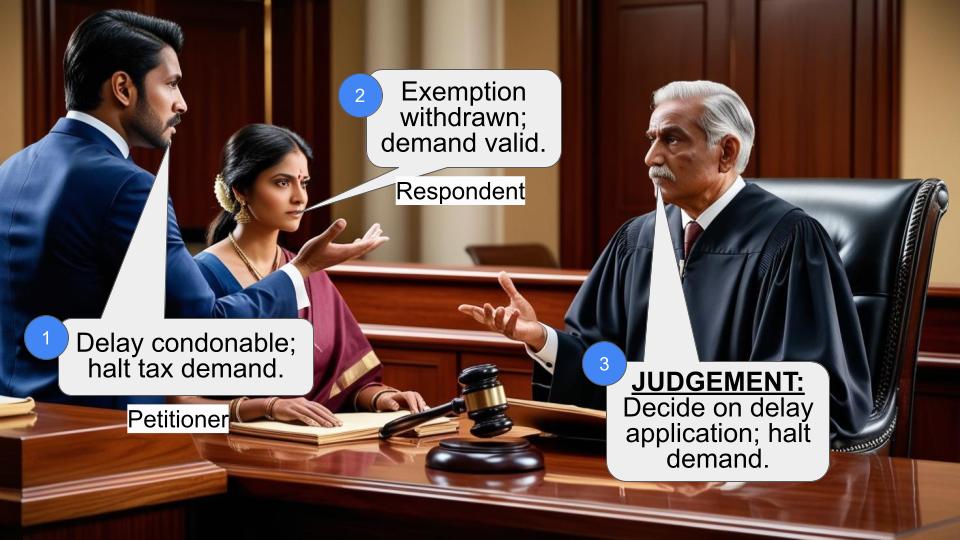
Was the Deputy Commissioner of Income Tax justified in declining the request for waiver of interest under Section 234C (of Income Tax Act, 1961)?
Facts
- The petitioner, Fertilizers & Chemicals Travancore Ltd., is a public sector undertaking and an assessee under the Income Tax Act.
- For the assessment year 1990-91, the petitioner filed returns claiming a carried forward loss and offered book profit for taxation under Section 115J (of Income Tax Act, 1961).
- The first respondent levied interest under Section 234C (of Income Tax Act, 1961) for shortfall in advance tax payment.
- The petitioner’s appeal against this levy was dismissed by the first appellate authority and confirmed by the Income Tax Appellate Tribunal.
- The petitioner then sought a waiver of the interest from the second respondent under Section 119(2)(a) (of Income Tax Act, 1961), which was denied.
Arguments
- Petitioner:
Argued that since book profit cannot be determined before the end of the assessment year, they should not be obliged to pay interest under Section 234C (of Income Tax Act, 1961) for non-payment of advance tax on book profit. They relied on the Karnataka High Court decision in Kwality Biscuits Ltd. v. Commissioner of Income Tax.
- Respondent:
Argued that the petitioner did not fall under the classes of cases specified by the CBDT for interest waiver and that the previous decisions upholding the interest levy were final.
Key Legal Precedents
- Kwality Biscuits Ltd. v. Commissioner of Income Tax [2000 Vol.243 ITR 519]:
This case was cited by the petitioner but was not found relevant to the authority of income tax officers to waive interest under Section 119 (of Income Tax Act, 1961).
- Sections 119(1) and 119(2)(a) of the Income Tax Act:
These sections confer authority to waive interest on the CBDT, which can issue general or special orders for other income tax authorities to follow.
Judgement
The court dismissed the writ petition, stating that the second respondent was justified in denying the waiver of interest. The petitioner did not meet the criteria specified by the CBDT for such a waiver, and the previous decisions upholding the interest levy were final.
FAQs
Q1: What was the main issue in this case?
A1: Whether the Deputy Commissioner of Income Tax was justified in declining the request for waiver of interest under Section 234C (of Income Tax Act, 1961).
Q2: Why was the interest waiver denied?
A2: The petitioner did not fall under the specified classes of cases eligible for interest waiver as per the guidelines issued by the CBDT.
Q3: What sections of the Income Tax Act were relevant in this case?
A3: Sections 119(1), 119(2)(a), and 234C of the Income Tax Act were relevant.
Q4: What was the outcome of the case?
A4: The court dismissed the writ petition, upholding the decision of the Deputy Commissioner of Income Tax to deny the interest waiver.
Q5: Did the court find the petitioner’s reliance on the Kwality Biscuits Ltd. case relevant?
A5: No, the court found that the decision in Kwality Biscuits Ltd. was not relevant to the authority of income tax officers to waive interest under Section 119 (of Income Tax Act, 1961).

1. Ext.P4 order passed by the second respondent in exercise of the powers conferred on him by the Central Board of Direct Taxes under Clause (a) of sub-section (2) of Section 119 (of Income Tax Act, 1961), hereinafter referred to as the Act for short, is under challenge in this writ petition.
2. The petitioner is a public sector undertaking. It is an assessee under the Act on the file of the first respondent. For the assessment year 1990-91, the petitioner filed returns claiming the benefit of carried forward loss of Rs.6,42,65,257/-, worked out its book profit at Rs.3,61,32,102/- and offered the same for taxation under Section 115J (of Income Tax Act, 1961). The first respondent while completing the assessment levied interest under Section 234C (of Income Tax Act, 1961) on the ground that there was shortfall in the payment of advance tax. The petitioner had though challenged the assessment order before the first appellate authority, the levy of interest under Section 234C (of Income Tax Act, 1961) was upheld by the first appellate authority and the said decision of the first Appellate Authority was confirmed by the Income Tax Appellate Tribunal. Thereafter, the petitioner filed a petition before the second respondent seeking waiver of intererst levied under Section 234C (of Income Tax Act, 1961), invoking his powers under Section 119(2)(a) (of Income Tax Act, 1961) and the same was dismissed by the second respondent holding that in so far as the levy of interest under section 234C (of Income Tax Act, 1961) was upheld by the first appellate authority in the appeal preferred against the assessment order and since the said decision of the first appellate authority was confirmed by the Tribunal, the assessee is not entitled to invoke the powers of the second respondent under Section 119(2)(a) (of Income Tax Act, 1961), for waiver of the interest payable under Section 234C (of Income Tax Act, 1961). Ext.P4 is the order issued by the second respondent dismissing the petition filed by the petitioner seeking waiver of interest. In Ext.P4, the second respondent had also held that the case of the assessee would not fall under the class of cases and incomes specified by the Central Board of Direct Taxes as per notification dated 26/6/2006 for the income tax authorities to exercise the power under Section 119(2)(a) (of Income Tax Act, 1961). As stated above, it is aggrieved by the said decision of the second respondent, this writ petition is filed.
3. Heard Adv.P.Gopinath Menon, the learned counsel for the petitioner and Adv. Jose Joseph, the learned Standing Counsel for the respondents.
4. The learned counsel for the petitioner contended, relying on the decision of the Karnataka High Court in Kwality Biscuits Ltd. v. Commissioner of Income Tax [2000 Vol.243 ITR 519] that since the book profit cannot be determined before the end of the relevant assessment year, the petitioner is not obliged to pay interest under Section 234C (of Income Tax Act, 1961) for non-payment of advance tax on the book profit. 5. Section 119(1) (of Income Tax Act, 1961) and 119(2)(a) of the Act reads thus :
“119. (1) The Board may, from time to time, issue such orders, instructions and directions to other income-tax authorities as it may deem fit for the proper administration of this Act, and such authorities and all other persons employed in the execution of this Act shall observe and follow such orders, instructions and directions of the Board:
Provided that no such orders, instructions or directions shall be issued -
(a) so as to require any income-tax authority to make a particular assessment or to dispose of a particular case in a particular manner; or
(b) so as to interfere with the discretion of the Commissioner (Appeals) in the exercise of his appellate functions.
(2) Without prejudice to the generality of the foregoing power,-
(a) the Board may, if it considers it necessary or expedient so to do, for the purpose of proper and efficient management of the work of assessment and collection of revenue, issue, from time to time (whether by way of relaxation of any of the provisions of sections [115P, 115S], [115WD, 115WE, 115WF, 115WG, 115WH, 115WJ, 115 WK,] [139], 143, 144, 147, 148, 154, 155, [158BFA] [sub-section (1A) of section 201 (of Income Tax Act, 1961), sections 210, 211, [234A, 234B], 234C], 271 and 273 or otherwise), general or special orders in respect of any class of incomes [or fringe benefits] or class of cases, setting forth directions or instructions (not being prejudicial to assessees) as to the guidelines, principles or procedures to be followed by other income-tax authorities in the work relating to assessment or collection of revenue or the initiation of proceedings for the imposition of penalties and any such order may, if the Board is of opinion that it is necessary in the public interest so to do, be published and circulated in the prescribed manner for general information;”
It is clear from Sections 119(1) and 119(2)(a) of the Act that the statute had conferred authority to waive interest payable under Sections 234A (of Income Tax Act, 1961), 234B (of Income Tax Act, 1961) and 234C (of Income Tax Act, 1961) only on the Central Board of Direct Taxes and it is based on the general or special orders issued by the Board, the other income tax authorities are exercising the power of waiver. It is also clear from the aforesaid Sections that the income tax authorities other than the Board are empowered and authorised to waive interest only in accordance with the guidelines, principles and procedures specified by the Board in general or special orders issued by the Board. The classes of incomes and cases in respect of which the Chief Commissioner of Income Tax is authorised to waive interest payable under Section 234C (of Income Tax Act, 1961) as per notification dated 26/6/2006 referred to in Ext.P4 order, which was made available to me by the Standing Counsel for the respondents, read thus:
“(b) Any income chargeable to income-tax under any head of income, other than “Capital Gains” is received or accrued after due date of payment of the first or subsequent instalments of advance tax which was neither anticipated nor was in the contemplation of the assessee, and the advance tax on such income is paid in the remaining instalment or instalments, and the Chief Commissioner/Director General is satisfied on the facts and circumstances of the case that this is a fit case for reduction or waiver of the interest chargeable under section 234C of the Income Tax Act, 1961.
(c) Where any income was not chargeable to income-tax in the case of an assesse on the basis of any order passed by the High Court within whose jurisdiction he is assessable to income-tax, and as a result, he did not pay income-tax in relation to such income in any previous year, and subsequently, in consequence of any retrospective amendment of law or the decision of the Supreme court of India, or as the case may be, a decision of a larger Bench of the jurisdictional High Court(which was not challenged before the Supreme Court and has become final), in any assessment or re-assessment proceedings the advance tax paid by the assessee during such financial year is found to be less than the amount of advance tax payable on his current income, and the assessee is chargeable to interest under section 234B (of Income Tax Act, 1961) or section 234C (of Income Tax Act, 1961), and the Chief Commissioner/Director General is satisfied that this is a fit case for reduction or waiver of such interest.”
As stated above, the second respondent is empowered and authorised to waive interest payable by the petitioner under Section 234C (of Income Tax Act, 1961) only if the case of the petitioner falls under any of the two classes of cases referred to above. The petitioner has no case that its case would fall under the said classes of cases. The contention raised by the learned counsel for the petitioner that since the book profit cannot be determined before the end of the relevant assessment year, the assessees are not obliged to pay interest under Section 234C (of Income Tax Act, 1961) for non-payment of advance tax on the book profit also cannot be accepted, for, the question whether the petitioner is liable to pay interest under Section 234C (of Income Tax Act, 1961) is not the issue in this case. As noticed above, the issue in this case is as to whether the second respondent is justified in declining the request made by the petitioner for waiver of interest in exercise of his authority under Section 119 (of Income Tax Act, 1961). The decision relied on by the learned counsel for the petitioner is also not a decision rendered in the context of the authority of the income tax officers to waive interest under Section 119 (of Income Tax Act, 1961). Further, as noticed above, the question whether the petitioner is liable to pay tax under Section 234C (of Income Tax Act, 1961) was considered and decided against the petitioner in the appeal preferred by them against the assessment order of the concerned year and the said order has become final.
In the aforesaid circumstances, Ext.P4 order of the second respondent is perfectly in order. There is, therefore, no merit in the writ petition and same is, accordingly, dismissed.
Sd/-
P.B.SURESH KUMAR, JUDGE.
×
Similar Ripples
Questions
Court Upholds Denial of Interest Waiver for Public Sector Undertaking
Write your CommentSimilar Posts

Generic
- Reportdata/4119.pdf
