


High Court's Order Dismissing Appeal Without Deciding Any Issue Deemed Unsustai…




Full News

High Court's Order Dismissing Appeal Without Deciding Any Issue Deemed Unsustainable
High Court's Order Dismissing Appeal Without Deciding Any Issue Deemed Unsustainable
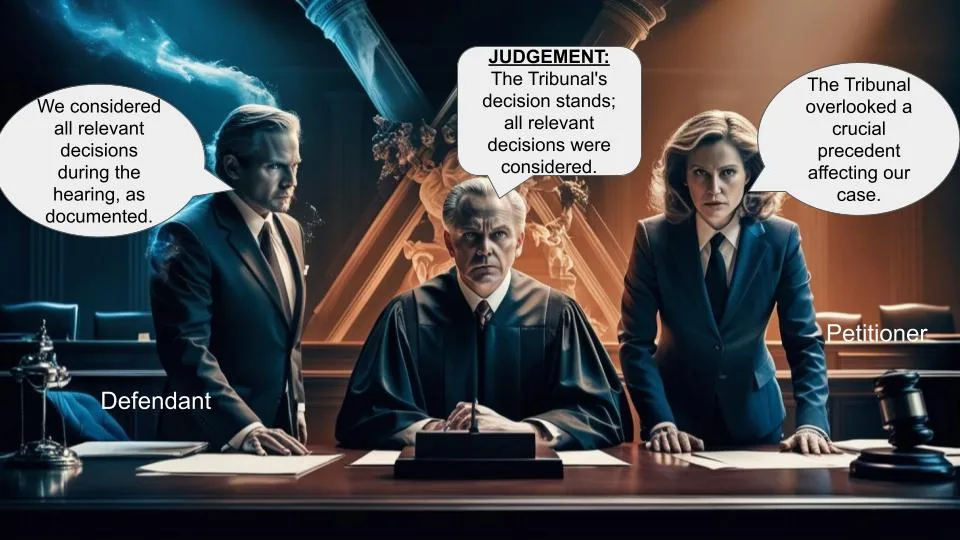
In this case, the High Court failed to frame any substantial question of law as required under Section 260-A (of Income Tax Act, 1961), even though the appeal was heard fully. This means that the High Court did not dismiss the appeal on the grounds that it did not involve any substantial question of law. Furthermore, the High Court dismissed the appeal without deciding any of the issues raised in the case, stating that it was not necessary to do so. The main issue in this appeal pertains to the applicability of Section 35-D (of Income Tax Act, 1961) to the assessee (Bank), as noted by the High Court in paragraph 6. However, the High Court did not provide a decision on this issue. As a result, it is clear that the High Court's approach in this matter is problematic. The failure to frame substantial questions of law and the dismissal of the appeal without addressing the issues at hand raise legal concerns and render the High Court's decision legally unsustainable. This summary highlights the High Court's failure to fulfill its legal obligations and emphasizes the need for a proper consideration of the issues and a decision based on the applicable law. The court observes that the High Court should have framed a substantial question of law regarding the applicability of Section 35-D (of Income Tax Act, 1961), in addition to other questions raised in the case. It should have answered these questions in accordance with the law, rather than leaving them undecided. Furthermore, it was brought to the court's attention that the issue of the applicability of Section 35-D (of Income Tax Act, 1961) to the assessee (the party involved) is already under consideration by the High Court in another appeal filed by the assessee. In light of this, the court believes that both appeals should be decided together. Taking all these factors into account, the court concludes that the impugned order (the order being challenged) is not legally sustainable. This summary highlights the court's opinion on the High Court's failure to address the issue of applicability of Section 35-D (of Income Tax Act, 1961) and the need to consider it in conjunction with other questions. The court's decision is based on ensuring legal coherence and consistency in the case.

The synopsis of the provided text is as follows:
1.Leave has been granted for this appeal.
2.The appeal is filed against the final judgment and order passed by the Bombay High Court in ITA No. 599/2015, where the appellant's appeal was dismissed.
3.The appeal revolves around the question of whether the respondent bank is entitled to claim deduction under Section 35-D (of Income Tax Act, 1961) for the Assessment Year in question, based on its classification as an industrial undertaking.
4.The Assessing Officer's order and subsequent proceedings before the Commissioner resulted in an adverse order against the respondent.
5.The respondent appealed to the Income Tax Appellate Tribunal (ITAT), and the ITAT allowed the appeal.
6.The Revenue (Income Tax Department) filed an appeal in the High Court under Section 260-A (of Income Tax Act, 1961).
7.The High Court dismissed the appeal, leading to the filing of this special leave appeal in the Supreme Court.
8.The Supreme Court allows the appeal, sets aside the High Court's order, and remands the case to the High Court for a fresh decision on the merits.
9.The Supreme Court notes that the High Court failed to frame any substantial question of law and dismissed the appeal without deciding the main issue regarding the applicability of Section 35-D (of Income Tax Act, 1961).
10.The Supreme Court emphasizes the need to remand the case to the High Court and decide the appeal afresh on merits.
11.The High Court should have framed the substantial question of law and answered it in accordance with the law.
12.The Supreme Court is informed that the issue of the applicability of Section 35-D (of Income Tax Act, 1961) to the respondent bank is already pending before the High Court in another appeal, suggesting that both appeals should be decided together.
13.The impugned order of the High Court is deemed legally unsustainable.
14.The appeal is allowed, the impugned order is set aside, and the case is remanded to the High Court for a fresh decision on merits, along with the other pending appeal.
15.The Supreme Court refrains from expressing any opinion on the merits of the case and emphasizes that the High Court should decide the appeal without being influenced by any observations made in previous orders.
16.The appeal succeeds and is allowed in view of the foregoing discussion.
This synopsis provides an overview of the appeal, highlighting the procedural issues in the High Court's order and the need for a fresh decision on the merits by the High Court. It also mentions the Supreme Court's decision to remand the case and emphasizes the importance of framing substantial questions of law and considering the pending appeal related to the same issue.
1. Leave granted.
2. This appeal is filed against the final judgment and order dated 01.08.2017 passed by the High Court of Judicature at Bombay in ITA No.599/2015 whereby the High Court dismissed the appeal filed by the appellant herein.
3. This appeal involves a short point as would be clear from the facts stated infra.
4. The appellant is the Union of India (Income Tax Department) and the respondent Bank is the assessee.
5. In the course of assessment proceedings of the respondent assessee(Bank) for the Assessment Year 2007-2008, the question arose as to whether the
respondent assessee(Bank) was entitled to claim deduction under Section 35 (of Income Tax Act, 1961)D of the Income Tax Act, 1961 (for short, “the Act”) for the Assessment
Year in question. In other words, the question arose as to whether the respondent Bank is an industrial undertaking so as to entitle them to claim deduction under Section 35 (of Income Tax Act, 1961)D of the Act.
6. The case of the respondent was that they, being an industrial undertaking, are entitled to claim the deduction under Section 35 (of Income Tax Act, 1961)D of the Act.
The Assessing Officer passed an order dated 31.10.2009 which gave rise to the proceedings before the Commissioner under Section 263 (of Income Tax Act, 1961) which resulted in passing of an adverse order dated 14.11.2011 by the Commissioner.
7. This gave rise to filing of the appeal by the respondent before the ITAT against the order of the Commissioner. By order dated 05.12.2014, the ITAT
allowed the appeal which gave rise to filing of the appeal by the Revenue (Income Tax Department) in the High Court under Section 260 (of Income Tax Act, 1961)A of the Act.
8. By impugned order, the High Court dismissed the appeal after hearing both the parties giving rise to filing of this appeal by way of special leave in this Court.
9. So, the short question that arises for consideration in this appeal, is whether the High Court was justified in dismissing the appellant's appeal.
10. Having heard the learned counsel for the parties and on perusal of the record of the case, we are constrained to allow the appeal, set aside the
impugned order and remand the case to the High Court for deciding the appeal afresh on merits in accordance with law.
11. In our view, the need to remand the case to the High Court is called for due to the following reasons.
12. First, the High Court did not frame any
substantial question of law as is required to be
framed under Section 260 (of Income Tax Act, 1961)A of the Act though
heard the appeal bipartite. In other words, the High
Court did not dismiss the appeal in limine on the
ground that the appeal does not involve any
substantial question of law; Second, the High Court
dismissed the appeal without deciding any issue
arising in the case saying that it is not necessary.
(see para 6).
13. Third, the main issue involved in this appeal,
as rightly taken note of by the High Court in para 6,
was with regard to the applicability of Section 35 (of Income Tax Act, 1961)D
of the Act to the respondent assessee(Bank). It was,
however, not decided.
14. In our view, the High Court should have
framed the substantial question of law on the
applicability of Section 35 (of Income Tax Act, 1961)D of the Act in addition to
other questions and then should have answered
them in accordance with law rather than to leave
the question(s) undecided.
15. It was brought to our notice that the issue with
regard to applicability of Section 35 (of Income Tax Act, 1961)D of the Act to
the respondent Bank is already pending consideration before the High Court at the instance of the respondent in one appeal. If that be so, both
the appeals, in our view, should be decided together.
16. It is for all these reasons, we are of the view
that the impugned order is not legally sustainable.
17. In view of the foregoing discussion, the appeal
succeeds and is accordingly allowed. The impugned
order is set aside. The appeal is accordingly
remanded to the High Court for its decision on
merits in accordance with law along with another
appeal, if pending, after framing proper substantial
question(s) of law arising in the case.
18. We have not expressed any opinion on the
merits of the case having formed an opinion to
remand the appeal to the High Court for its disposal
on the merits afresh. The High Court will
accordingly decide the appeal uninfluenced by any
observations made in the impugned order and this
order.
[ABHAY MANOHAR SAPRE]
[DINESH MAHESHWARI]
New Delhi;
March 15, 2019
×
Similar Ripples
Questions
High Court's Order Dismissing Appeal Without Deciding Any Issue Deemed Unsustainable
Write your CommentSimilar Posts

Generic
- Reportdata/987_ZvvL04d.pdf
