Income Tax Tribunal’s Order Set Aside Due to Overlooked Developments in Skyline…



Full News
Income Tax Tribunal’s Order Set Aside Due to Overlooked Developments in Skyline Builders Case
Income Tax Tribunal’s Order Set Aside Due to Overlooked Developments in Skyline Builders Case
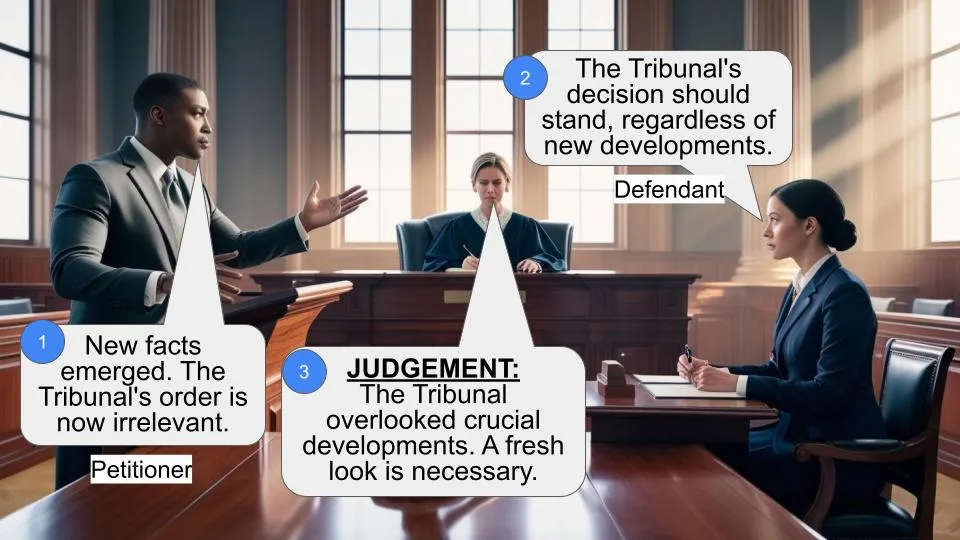
This is case involving Skyline Builders and the Commissioner of Income Tax. Basically, Skyline Builders (the appellant) wasn’t happy with an Income Tax Tribunal decision and took it to the High Court. The High Court ended up setting aside the Tribunal’s order and sending the case back for a fresh look. Why? Well, some important stuff happened during the appeal process that the Tribunal didn’t consider.
Get the full picture - access the original judgement of the court order here
Case Name:
Skyline Builders vs Commissioner of Income Tax (High Court of Kerala)
ITA. No. 1606 of 2009
Date: 26th August 2016
Key Takeaways:
- Always keep the court updated on new developments in your case.
- A search operation and reassessment under Section 153A (of Income Tax Act, 1961) can significantly impact ongoing proceedings.
- Courts may set aside decisions if important information wasn’t considered.
Issue:
The main question here is: Was the Income Tax Appellate Tribunal correct in law and fact when it reversed the Commissioner of Income Tax (Appeals) order without considering new developments in the case?
Facts:
- Skyline Builders is a firm that builds residential flats and bungalows.
- For the 2002-03 assessment year, they initially filed returns showing an income of ₹58,79,863.
- After a survey, they filed a revised return with an income of ₹46,91,241.
- The tax authorities weren’t buying it and assessed their income at ₹1,48,57,690.
- Skyline appealed to the Commissioner of Income Tax (Appeals), who ruled in their favor.
- The Revenue (tax department) then appealed to the Income Tax Appellate Tribunal.
- While this appeal was pending, a search was conducted on Skyline’s premises on 24.1.2006.
- Following this, a notice under Section 153A (of Income Tax Act, 1961) was issued, and Skyline filed a new return.
- On 28.12.2007, a new assessment was made under Section 153A (of Income Tax Act, 1961), setting the income at ₹51,86,410.
- Despite all this happening, the Tribunal allowed the Revenue’s appeal on 12.3.2009, without considering these new developments.
Arguments:
Skyline Builders (Appellant):
- The Tribunal should have dismissed the Revenue’s appeal as infructuous (no longer valid) due to the new developments.
- The Tribunal was wrong to reverse the Commissioner’s order without considering the Section 153A (of Income Tax Act, 1961) proceedings.
Revenue (Respondent):
- The specific arguments aren’t detailed in the judgment, but they likely defended the Tribunal’s decision to allow their appeal.
Key Legal Precedents:
Interestingly, this judgment doesn’t cite any specific legal precedents. Instead, it focuses on the procedural issue of the Tribunal not considering new developments and the impact of Section 153A (of Income Tax Act, 1961).
Judgement:
The High Court decided to:
- Set aside the Tribunal’s order in ITA No.1162/Coch/2005.
- Send the case back to the Income Tax Appellate Tribunal, Cochin Bench for a fresh look.
- Instruct the Tribunal to consider the developments that occurred during the appeal’s pendency and the impact of Section 153A (of Income Tax Act, 1961).
The Court felt that these overlooked factors were significant enough to warrant a fresh consideration of the entire case.
FAQs:
Q: Why did the High Court set aside the Tribunal’s order?
A: Because the Tribunal didn’t consider important developments that happened during the appeal process, including a search operation and reassessment under Section 153A (of Income Tax Act, 1961).
Q: What is Section 153A (of Income Tax Act, 1961)?
A: It’s a provision that allows for reassessment of income tax in cases where a search operation has been conducted.
Q: Does this mean Skyline Builders won the case?
A: Not exactly. The High Court didn’t rule on the merits of the case but sent it back to the Tribunal for a fresh look considering all the new information.
Q: What happens next in this case?
A: The Income Tax Appellate Tribunal will have to reconsider the case, taking into account the search operation and the Section 153A (of Income Tax Act, 1961) assessment.
Q: Is this decision final?
A: For now, yes. But once the Tribunal makes a new decision, either party could potentially appeal that decision if they’re not satisfied.

This appeal filed by the assessee is against the order passed by the Income Tax Tribunal, Cochin Bench in ITA No.1162/Coch/2005 pertaining to the assessment year 2002-03. The assessee is a firm engaged in the business of building residential flats and independent bungalows. For the assessment year in question they filed their returns with a total income of Rs.58,79,863/- (Rupees Fifty eight lakh seventy nine thousand eight hundred and sixty three only). Subsequently following a survey a revised return was filed on 12.11.2003 with a total income of Rs.46,91,241/-(Rupees Forty six lakh ninety one thousand two hundred and forty one only). Rejecting the books of accounts the assessment was completed and order was passed on 29.3.2005, on a total income of Rs.1,48,57,690/- (Rupees One crore forty eight lakhs fifty seven thousand six hundred and ninety only).
2. The assessee challenged the order before the Commissioner of Income Tax (Appeals). The appellate authority allowed the appeal. Aggrieved by the order of the first appellate authority, Revenue filed appeal before the Tribunal on 18.11.2005. By the order impugned, passed on 12.3.2009, the Tribunal allowed the appeal and restored the assessment order. It is aggrieved by this order the assessee has filed this appeal and the questions of law framed are the following:
A. Whether on the facts and in the circumstances the case the Tribunal is correct in law and fact in adjudicating the appeal filed by the revenue instead of dismissing it being infructuous?
B. Whether on the facts and in the circumstances of the case the tribunal is correct in law and fact in reversing the Annexure B order of the Commissioner of Income tax (Appeals)?
3. We heard the learned counsel for the assessee and the learned Senior Counsel appearing for the Revenue. It is the admitted case of the parties that while when the appeal filed by the Revenue was pending before the Tribunal, on 24.1.2006 a search under section 132 (of Income Tax Act, 1961) was conducted in the premises of the assessee. Thereafter notice under section 153A (of Income Tax Act, 1961) was issued on 3.11.2006 and in response thereto the assessee filed its return on 11.12.2006 with a total income of Rs.46,91,241/- (Rupees Forty six lakhs ninety one thousand two hundred and forty one only). Subsequently on 28.12.2007 assessment was framed under section 153A (of Income Tax Act, 1961) read with section 143(3) (of Income Tax Act, 1961) on a total income of Rs.51,86,410/- (Rupees Fifty one lakhs eighty six thousand four hundred and ten only).
4. Though this development took place during the pendency of the appeal filed by the Revenue before the Tribunal, when the Tribunal passed the impugned order on 12.3.2009, these developments were not brought to the notice of the Tribunal nor has the Tribunal considered the impact of these developments or section 153A (of Income Tax Act, 1961) on the proceedings. According to us for non-consideration of these developments that took place during the pendency of the appeal and also the impact of section 153A (of Income Tax Act, 1961) on the proceedings, the order passed by the Tribunal needs to be set aside and the matter has to be remitted to the Tribunal for fresh consideration.
Accordingly, setting aside the order passed by the tribunal in ITA No.1162/Coch/2005 the appeal is restored to the file of the Income Tax Appellate Tribunal, Cochin Bench for fresh consideration with notice to the parties and in accordance with law.
The appeal is disposed of accordingly.
ANTONY DOMINIC,
JUDGE.
P.V.ASHA,
JUDGE.
×