


Tax Appeal Dismissed: Court Upholds Tribunal's Decision on Section 14A (of Inco…


Full News

Tax Appeal Dismissed: Court Upholds Tribunal's Decision on Section 14A (of Income Tax Act, 1961) Disallowance
Tax Appeal Dismissed: Court Upholds Tribunal's Decision on Section 14A (of Income Tax Act, 1961) Disallowance
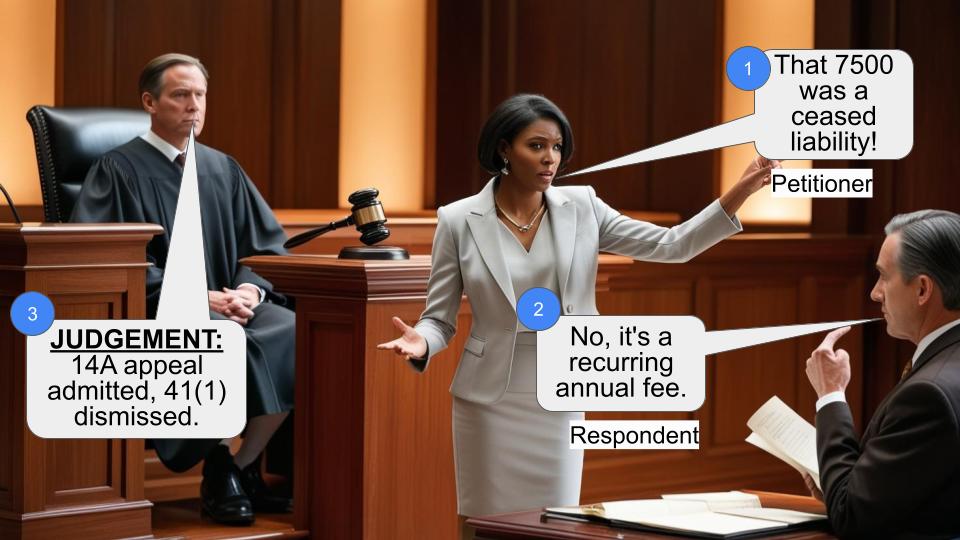
This case involves a tax appeal by the Principal Commissioner of Income Tax against UTI Bank Ltd. The main issue was the disallowance of Rs. 38.68 crores under section 14A (of Income Tax Act, 1961). The Income Tax Appellate Tribunal (ITAT) had ruled in favor of the assessee (UTI Bank), and the High Court dismissed the Revenue's appeal, upholding the Tribunal's decision.
Get the full picture - access the original judgement of the court order here
Case Name:
Principal Commissioner of Income Tax vs UTI Bank Ltd. (High Court of Gujarat)
Tax Appeal No. 382, 383 and 384 of 2016
Date: 13th June 2016
Key Takeaways:
1. The court affirmed the Tribunal's power to entertain new grounds or claims not made before the Assessing Officer.
2. The judgment emphasizes that income tax proceedings are not strictly adversarial, and the aim is to tax real income.
3. The court recognized that assessees can raise new claims before appellate authorities if the necessary facts are already on record.
Issue:
Whether the Income Tax Appellate Tribunal erred in deleting the disallowance of Rs.38.68 crores made under section 14A (of Income Tax Act, 1961), and in allowing the assessee to withdraw its suo moto disallowance of Rs.6.23 crores?
Facts:
- The case pertains to the assessment year 2002-03.
- UTI Bank (the assessee) had made a suo moto disallowance of Rs.6.23 crores in its tax return.
- The Assessing Officer increased the disallowance to Rs. 38.68 crores under section 14A (of Income Tax Act, 1961).
- The matter reached the Tribunal, where the assessee raised an additional ground to withdraw its suo moto disallowance.
- The Tribunal, after considering the merits, deleted the entire disallowance made by the Assessing Officer.
Arguments:
Revenue's Arguments:
1. The Tribunal erred in deleting the disallowance under section 14A (of Income Tax Act, 1961).
2. The assessee shouldn't be allowed to change its position on the suo moto disallowance.
3. New claims should only be made through a revised return under section 139(5) (of Income Tax Act, 1961).
Assessee's Arguments:
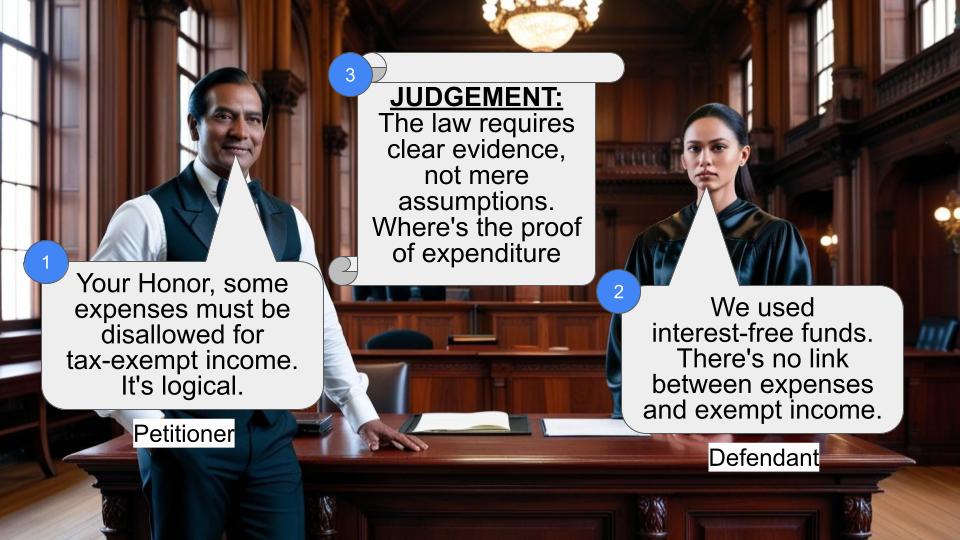
1. The assessee had sufficient interest-free funds exceeding interest-free investments.
2. The Tribunal has the power to entertain new grounds and claims.
Key Legal Precedents:
1. National Thermal Power Co. Ltd. vs Commissioner Of Income Tax (229 ITR 383)
2. CIT v. Mitesh Impex (270 CTR 66 Guj)
3. Goetze India Limited v. CIT (284 ITR 323)
The court relied on these precedents to establish that appellate authorities have the power to entertain new grounds and claims, even if not raised before the Assessing Officer.
Judgement:
The High Court dismissed the Revenue's appeal, finding no error in the Tribunal's decision. Key points of the judgment include:
1. The Tribunal correctly examined the issue of disallowance under section 14A (of Income Tax Act, 1961) based on the materials on record.
2. The assessee's interest-free funds exceeded its interest-free investments.
3. The Tribunal was justified in allowing the assessee to raise a new claim against its own suo moto disallowance.
4. The court affirmed that the purpose of assessment is to tax real income, and new claims can be entertained by appellate authorities if facts are already on record.
FAQs:
1. Q: Can an assessee change its position on a suo moto disallowance made in the original return?
A: Yes, the judgment affirms that an assessee can raise such a claim before appellate authorities if the necessary facts are already on record.
2. Q: Does the Goetze India Limited case prevent assessees from raising new claims before appellate authorities?
A: No, the court clarified that the Goetze India Limited case is limited to the powers of the Assessing Officer and doesn't restrict appellate authorities from entertaining new claims.
3. Q: What's the significance of interest-free funds in this case?
A: The Tribunal found that the assessee's interest-free funds far exceeded its interest-free investments, which was a crucial factor in deleting the disallowance under section 14A (of Income Tax Act, 1961).
4. Q: Can new grounds or claims be raised at the appellate stage in tax matters?
A: Yes, the judgment confirms that appellate authorities can entertain new grounds, legal contentions, or claims if the necessary facts are already on record.
5. Q: What's the key principle regarding the nature of income tax proceedings?
A: The judgment emphasizes that income tax proceedings are not strictly adversarial, and the intention is to tax real income.

1. Facts being identical, we may record those arising in Tax Appeal No.382 of 2016.
2. Revenue is in appeal against the judgment of Income tax Appellate Tribunal ('the Tribunal' for short) raising following questions for our consideration.
“[A] Whether the Appellate Tribunal has substantially erred in deleting the disallowance of Rs.36.68 crores made u/s 14A (of Income Tax Act, 1961) ?
[B] “Whether the Appellate Tribunal has substantially erred in directing the Assessing Officer to delete the suo moto disallowance of Rs.6.23 crores made by the assessee company in the return of income?
[C] “Whether the Appellate Tribunal has erred in not appreciating the fact that the assessee can only make a new claim which was not made in the original return, by way of filing a revised u/s 139(5) (of Income Tax Act, 1961) only, as held by Hon. Supreme Court in the case of Goetze India Ltd vs CIT (2006) 284 ITR 323 (Supreme Court)?”
3. Though three questions are framed, issue is common viz. disallowance of a global sum of Rs.38.68 crores made by the Assessing Officer under section 14A (of Income Tax Act, 1961) ('the Act' for short). From the record, it emerges that for the assessment year 200203, the respondent assessee itself in the return filed, had made suomotu disallowance of the sum of Rs.6.33 crores under the said head. The Assessing Officer however, made a total disallowance of Rs.38.66 crores. When the matter reached the Tribunal, the assessee raised an additional ground resiling from suomotu disallowance of Rs.6.23 crores. In essence therefore the assessee questioned the entire disallowance made by the Assessing Officer.
4. After one round of remand, the Tribunal by the impugned order dated 28.10.2015, considered the issue on merit. The Tribunal came to the conclusion that the assessee had sufficient interest free funds in excess of interest free investments. The Tribunal recorded that the surplus percentage of interest free funds were at the rate of 373%. Referring to the decision of this Court in case of the assessee pertaining to the later assessment years, the Tribunal ruled in favour of the assessee and deleted the entire disallowance made by the Assessing Officer. The Tribunal rejected the Revenue's contention that the assessee itself having made suomotu disallowance in the return of the income, could not have changed its position and argued against such disallowance also. In this context, the Tribunal referred to and relied upon the decision of Supreme Court in case of National Thermal Power Co. Ltd. vs Commissioner Of Incometax, reported in 229 ITR 383. The Tribunal also referred to a decision of Division Bench of this Court in case of CIT v. Mitesh Impex reported in 270 CTR 66 (Guj).
5. Having heard learned counsel for the parties and having perused documents on record, we do not see any error in the view of the Tribunal. The question of disallowance under section 14A (of Income Tax Act, 1961) has been examined on the basis of materials on record. The Tribunal found that the assessee's interest free funds far exceeded its interest free investments. The Tribunal relied on the decisions of this court in case of this very assessee concerning similar issues in the later assessment years, against which we are informed that the Special Leave Petition has been dismissed.
6. Regarding a claim contrary to the disclosures in the return, the Tribunal relied on the decision of Supreme Court in the case of the National Thermal Power (supra) to observe that the purpose of assessment is to tax real income. This court taking note of the decisions of Supreme Court in case of Goetze India Limited v. CIT, reported in 284 ITR 323 and National Thermal Power (supra) a in case of Mitesh Impex had observed as under:
“38. It thus becomes clear that the decision of the Supreme Court in the case of Goetze (India) Ltd. vs. Commissioner of Incometax (supra) is confined to the powers of the assessing officer and accepting a claim without revised return. This is what Supreme Court observed in the said judgment while distinguishing the judgment in the case of National Thermal Power Co. Ltd. vs. Commissioner of Incometax (supra) and that is how various High Courts have viewed the dictum of the decision in the case of Goetze (India) Ltd. vs. Commissioner of Incometax (supra). When it comes to the power of Appellate Commissioner or the Tribunal, the Courts have recognized their jurisdiction to entertain a new ground or a legal contention. A ground would have a reference to an argument touching a question of fact or a question of law or mixed question of law or facts. A legal contention would ordinarily be a pure question of law without raising any dispute about the facts. Not only such additional ground or contention, the Courts have also, as noted above, recognized the powers of the Appellate Commissioner and the Tribunal to entertain a new claim for the first time though not made before the assessing officer. Income Tax proceedings are not strictly speaking adversarial in nature and the intention of the Revenue would be to tax real income.
39. This is primarily on the premise that if a claim though available in law is not made either inadvertently or on account of erroneous belief of complex legal position, such claim cannot be shut out for all times to come,merely because it is raised for the first time before the appellate authority without resorting to revising the return before the assessing officer.
40. Therefore, any ground, legal contention or even a claim would be permissible to be raised for the first time before the appellate authority or the Tribunal when facts necessary to examine such ground, contention or claim are already on record. In such a case the situation would be akin to allowing a pure question of law to be raised at any stage of the proceedings. This is precisely what has happened in the present case. The Appellate Commissioner and the Tribunal did not need to nor did they travel beyond the materials already on record, in order to examine the claims of the assessees for deductions under section 80IB (of Income Tax Act, 1961) and 80HHC (of Income Tax Act, 1961).”
7. In the result, no question of law arises. All tax appeals are dismissed.
(AKIL KURESHI, J.)
(A.J. SHASTRI, J.)
×
Questions
Tax Appeal Dismissed: Court Upholds Tribunal's Decision on Section 14A (of Income Tax Act, 1961) Disallowance
Write your CommentSimilar Posts

Generic
- Reportdata/2769.pdf
