Tax Deductions and Old Creditors: Court Favors Assessee in Income Tax Dispute


Full News

Tax Deductions and Old Creditors: Court Favors Assessee in Income Tax Dispute
Tax Deductions and Old Creditors: Court Favors Assessee in Income Tax Dispute
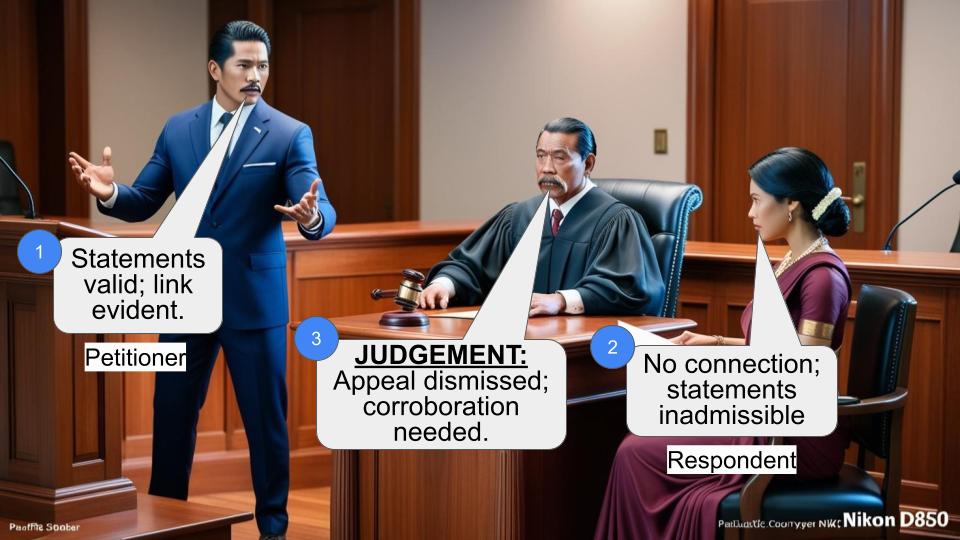
It's basically a tax dispute between the Commissioner of Income Tax (that's the Revenue) and Banaras House Ltd. (the Assessee). The case revolves around two main issues: how to calculate certain tax deductions and whether some old creditor balances should be added to the company's income. The court ended up siding with Banaras House Ltd. on both counts, which is a win for the company.
Get the full picture access the original judgement of the court order here
Case Name:
Commissioner of Income Tax Vs Banaras House Ltd. (High Court of Delhi)
ITA 583/2005
Date: 17th January 2018
Key Takeaways:
1. The court reinforced previous decisions on how to calculate deductions under Section 80HHC (of Income Tax Act, 1961).
2. It clarified that old creditor balances can't be automatically added to income just because they're old.
3. The judgment emphasizes the importance of acknowledging liabilities in company accounts.
Issue:
The case revolves around two main questions:
1. How should the deduction under Section 80HHC (of Income Tax Act, 1961) be calculated, particularly regarding the treatment of interest income?
2. Can old creditor balances be added to the assessee's income under Section 41(1) (of Income Tax Act, 1961)?
Facts:
We're looking at a tax assessment for Banaras House Ltd. for the 1996-1997 assessment year. The Income Tax Appellate Tribunal (ITAT) made a decision on November 29, 2004, which the Revenue (that's the tax department) wasn't happy with. So, they appealed to the High Court. The court admitted the appeal on August 2, 2005, and framed two questions of law to be addressed.
Arguments:
The Revenue's main arguments were:
1. The ITAT was wrong in how it interpreted the calculation of deductions under Section 80HHC (of Income Tax Act, 1961).
2. The ITAT shouldn't have deleted the addition of Rs.18,90,273/- made by the Assessing Officer under Section 41(1) (of Income Tax Act, 1961).
Banaras House Ltd.'s side of the story (though they didn't appear in court) was that:
1. The deduction calculation was correct as per previous court decisions.
2. The old creditor balances were still valid liabilities and shouldn't be added to income.
Key Legal Precedents:
The court relied on two important previous cases for the first question:
1. Commissioner of Income Tax Etc. v. Shri Ram Honda Powers Equipment Ltd. (2007) 289 ITR 475 (Del)
2. ACG Associated Capsules P. Ltd. v. The Commissioner of Income Tax, Central-IV Mumbai (2012) 343 ITR (SC)
These cases deal with how to apply Explanation (baa) and compute deductions under Section 80 (of Income Tax Act, 1961) HHC of the Act.
Judgement:
The court decided in favor of Banaras House Ltd. on both issues:
1. On the first question, they said the Assessing Officer should follow the principles laid out in the two precedent cases mentioned earlier.
2. On the second question, they agreed with the ITAT. They said that just because creditor balances are old doesn't mean they can be automatically added to income. The company had acknowledged these liabilities in its audited accounts, and many were paid or adjusted in later years.
FAQs:
1. Q: What's Section 80HHC (of Income Tax Act, 1961) all about?
A: It's a section of the Income Tax Act that deals with deductions for profits earned from the export of goods or merchandise.
2. Q: Why couldn't the old creditor balances be added to income?
A: Because the company had acknowledged these as valid liabilities in its audited accounts, and many were actually paid or adjusted in later years.
3. Q: What's the significance of this judgment for other companies?
A: It reinforces that tax authorities can't arbitrarily add old creditor balances to a company's income without strong reasons to believe the liabilities have ceased to exist.
4. Q: Does this mean companies can keep creditor balances on their books indefinitely?
A: Not necessarily. The judgment emphasizes the importance of proper accounting and acknowledgment of liabilities. Companies should still manage their creditor balances responsibly.
5. Q: What should companies learn from this case?
A: It highlights the importance of maintaining proper accounts, acknowledging liabilities, and being able to show that old creditor balances are still valid or have been dealt with in subsequent years.

This appeal by the Revenue pertains to the Assessment Year 1996-1997 and arises from the order of the ITAT dated 29.11.2004 passed in ITA No. 2074/Del/2000 in the case of M/s Banaras House Ltd.
2. By order dated 02.08.2005, the appeal was admitted and the following substantial questions of law were framed:-
1) Whether on the facts and in the circumstances of the case the Tribunal was correct in law in holding that for the purposes of applying explanation (baa) below Sub-Section 4B (of Income Tax Act, 1961) of Section 80HHC (of Income Tax Act, 1961) and while deducting 90% of the receipt by way of interest from the profits of the business, it is only the 90% of the net interest remain after allowing a set off of interest paid?
2) Whether the Ld. ITAT was correct in law and in facts and circumstances of the case in deleting the addition of Rs.18,90,273/- made by the A.O. by invoking the provisions of Section 41(1) (of Income Tax Act, 1961)?”
3. We have heard counsel for the appellant but there is no appearance on behalf of the counsel for the respondent/assessee in spite of service.
4. The first question of law is covered by decision of this Court in Commissioner of Income Tax Etc. v. Shri Ram Honda Powers Equipment Ltd. (2007) 289 ITR 475 (Del) and the Supreme Court in ACG Associated Capsules P. Ltd. v. The Commissioner of Income Tax, Central-IV Mumbai (2012) 343 ITR (SC). The Assessing Officer will apply their ratio on applicability and effect of Explanation (baa) and compute deduction under Section 80 (of Income Tax Act, 1961) HHC of the Act.
5. The first question of law is answered accordingly.
6. We now turn to the second question. Assessee during the course of the assessment proceedings had furnished details of creditors. The Assessing Officer made addition of Rs.18,90,273/- under Section 41(1) (of Income Tax Act, 1961) in case of old creditors i.e., where there was no transaction between the assessee and the creditors during the last three years or more. The Assessing Officer held that there has to be some time limit for the credit recorded to be carried forward.
7. The addition was partly confirmed by the Commissioner of Income Tax (Appeal), who had tallied the list of old creditors with payments by the assessee to these creditors in the subsequent years. The Assessing Officer was required to verify and rectify, if required.
He observed that Rs.8,32,130/- had not still not been paid.
8. Income Tax Appellate Tribunal on the said issue held that the assessee had carried forward the balances from earlier years. Some credit balances were written off in the year in question and some in succeeding years. Further, when a liability was acknowledged by the debtor, it cannot be said that the claim of the creditor was barred by limitation. In case of 16 creditors, the credit balance was returned or adjusted for the next financial year. Provisions of Section 41(1) (of Income Tax Act, 1961) were not attracted.
9. We do not see any error in the findings and reasons given by the Tribunal. The respondent assessee is a company and accounts were audited as per the mandate of the Companies Act. In the accounts, the respondent assessee had accepted and acknowledged its liability. The creditors can rely on the said acknowledgment. Even otherwise many of the creditors were paid, adjusted or eased in the subsequent years as accepted by the Commissioner of Income Tax (Appeals) and the Tribunal. No special facts or reasons were given by the Assessing Officer to hold and observe that the liabilities had ceased and amounts should be added under Section 41(1) (of Income Tax Act, 1961).
10.The second question is accordingly decided against the revenue and in favour of the assessee.
11. The appeal is disposed of without any order as to costs.
SANJIV KHANNA, J
CHANDER SHEKHAR, J
JANUARY 17, 2018
×