


Tax Exemption Appeal: High Court Quashes Tribunal's Order, Remits Case to Asses…


Full News
Tax Exemption Appeal: High Court Quashes Tribunal's Order, Remits Case to Assessing Officer
Tax Exemption Appeal: High Court Quashes Tribunal's Order, Remits Case to Assessing Officer
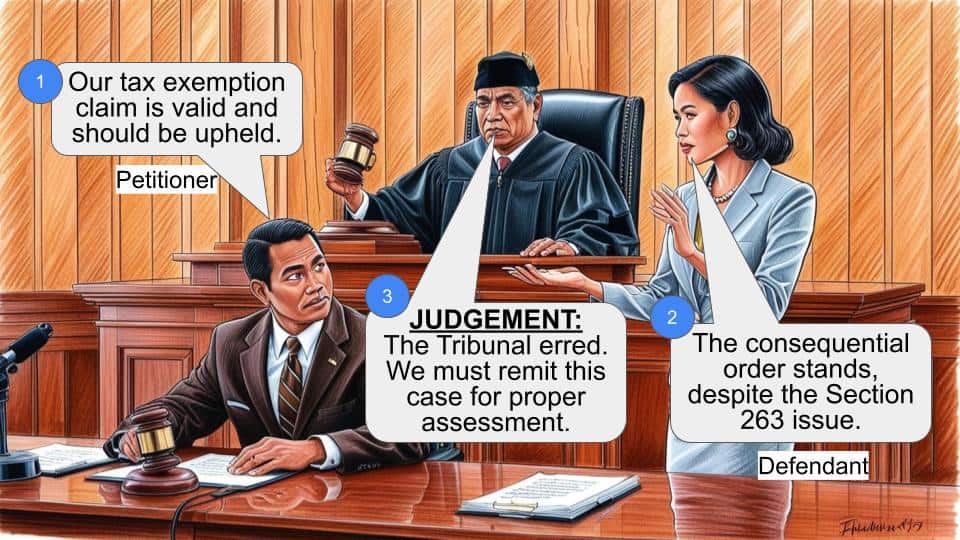
This case involves an appeal by the revenue department against M/s. India Heritage Foundation regarding a tax exemption claim for the assessment year 2009-10. The High Court quashed the orders of the Income Tax Appellate Tribunal and the Commissioner of Income Tax (Appeals), remitting the case back to the Assessing Officer for a fresh assessment of the assessee's claim under Section 80IB(10) (of Income Tax Act, 1961).
Get the full picture - access the original judgement of the court order here
Case Name:
Commissioner of Income Tax (Exemptions) And Anr. Vs M/s. India Heritage Foundation (High Court of Karnataka)
ITA No.303 of 2016
Date: 18th August 2020
Key Takeaways:
1. The High Court overturned lower authorities' decisions, emphasizing the importance of proper assessment of tax exemption claims.
2. The case highlights the significance of Section 263 (of Income Tax Act, 1961) orders in tax proceedings.
3. The court's decision to remit the case back to the Assessing Officer underscores the need for thorough examination of tax exemption claims at the initial assessment stage.
Issue:
Whether the Income Tax Appellate Tribunal was correct in holding that the consequential order passed by the assessing authority is infructuous due to the non-existence of the Section 263 (of Income Tax Act, 1961) order, even though the assessing authority's order was in accordance with the Commissioner of Income Tax's directions under Section 263 (of Income Tax Act, 1961)?
Facts:
1. The case pertains to the assessment year 2009-10.
2. The revenue department filed an appeal under Section 260A (of Income Tax Act, 1961).
3. The appeal was admitted by the High Court on October 10, 2017.
4. The case involves orders passed by various authorities, including the Assessing Officer, Commissioner of Income Tax (Appeals), and the Income Tax Appellate Tribunal.
5. There was a related case (ITA No.382/2012) pending before the High Court concerning the Section 263 (of Income Tax Act, 1961) order.
Arguments:
While the judgment doesn't explicitly state the arguments from each side, we can infer:
Revenue's argument:
- The consequential order passed by the assessing authority should be valid as it was in accordance with the directions issued by the Commissioner of Income Tax under Section 263 (of Income Tax Act, 1961).
Assessee's argument:
- The consequential order should be considered infructuous as the Section 263 (of Income Tax Act, 1961) order was no longer in existence.
Key Legal Precedents:
The judgment doesn't mention any specific legal precedents. However, it refers to Section 260A (of Income Tax Act, 1961), Section 263 (of Income Tax Act, 1961), and Section 80IB(10) (of Income Tax Act, 1961), which are crucial to this case.
Judgement:
1. The High Court answered the substantial question of law in favor of the revenue and against the assessee.
2. The court quashed the order dated November 30, 2015, passed by the Income Tax Appellate Tribunal.
3. The order dated October 29, 2013, passed by the Commissioner of Income Tax (Appeals) was also quashed.
4. The order dated March 14, 2012, passed by the Assessing Officer was quashed as well.
5. The matter was remitted back to the Assessing Officer to deal with the assessee's claim under Section 80IB(10) (of Income Tax Act, 1961).
FAQs:
1. Q: What was the main issue in this case?
A: The main issue was whether the Tribunal was correct in holding that the consequential order by the assessing authority was infructuous due to the non-existence of the Section 263 (of Income Tax Act, 1961) order.
2. Q: What is Section 263 (of Income Tax Act, 1961)?
A: Section 263 (of Income Tax Act, 1961) gives the Commissioner of Income Tax the power to revise orders that are prejudicial to the interests of revenue.
3. Q: Why did the High Court remit the case back to the Assessing Officer?
A: The court remitted the case to allow the Assessing Officer to freshly examine the assessee's claim under Section 80IB(10) (of Income Tax Act, 1961).
4. Q: What is Section 80IB(10) (of Income Tax Act, 1961)?
A: Section 80IB(10) (of Income Tax Act, 1961) provides for deductions in respect of profits and gains from certain industrial undertakings other than infrastructure development undertakings.
5. Q: Does this judgment set a precedent for similar cases?
A: While every case is unique, this judgment emphasizes the importance of proper assessment of tax exemption claims and the significance of Section 263 (of Income Tax Act, 1961) orders in tax proceedings.

This appeal under Section 260A (of Income Tax Act, 1961) (hereinafter referred to as the Act for short) has been preferred by the revenue. The subject matter of the appeal pertains to the Assessment year 2009-10. The appeal was admitted by a bench of this Court vide order dated 10.10.2017 on the following substantial question of law:
Whether on the facts and in the circumstances of the case, the Tribunal was right in law in holding that as the 263 order was no more in existence, the consequential order passed by the assessing authority is infructuous even though the order passed by the assessing authority is in accordance with the directions issued by the Commissioner of Income Tax under Section 263 (of Income Tax Act, 1961) and when the said 263 order is subject matter before this Hon’ble High Court in ITA No.382/2012?
2. By a separate order passed today, we have decided I.T.A.No.382/2012. For the reasons assigned in the aforesaid order, the substantial question of law is answered in favour of the revenue and against the assessee. In the result, the order dated 30.11.2015 passed by the Income Tax Appellate Tribunal is quashed as well as the order dated 29.10.2013 passed by the Commissioner of Income Tax (Appeals) and the order dated 14.03.2012 passed by the Assessing Officer are quashed and the matter is remitted to the Assessing Officer to deal with the claim of the assessee under Section 80IB(10) (of Income Tax Act, 1961).
Accordingly, the appeal is disposed of.
Sd/-
JUDGE
Sd/-
JUDGE
×
Similar Ripples
Questions
Tax Exemption Appeal: High Court Quashes Tribunal's Order, Remits Case to Assessing Officer
Write your CommentSimilar Posts


Generic
- Reportdata/6191.pdf
