


Tax Penalty Upheld: High Court Dismisses Assessee's Appeal Against Income Tax T…


Full News

Tax Penalty Upheld: High Court Dismisses Assessee's Appeal Against Income Tax Tribunal Order
Tax Penalty Upheld: High Court Dismisses Assessee's Appeal Against Income Tax Tribunal Order
This case involves an appeal by an assessee (taxpayer) against an order passed by the Income Tax Appellate Tribunal (ITAT) regarding a penalty levied under Section 271(1)(c) (of Income Tax Act, 1961). The High Court dismissed the appeal, confirming the Tribunal's decision to uphold the penalty.
Get the full picture - access the original judgement of the court order here
Case Name:
Smt. R. Mahalakshmi Vs Assistant Commissioner of Income Tax (High Court of Madras)
Tax Case Appeal No.985 of 2019
Date: 13th July 2020
Key Takeaways:
1. The court emphasized the importance of reading tribunal orders in their entirety, not just the operative portion.
2. The case highlights the significance of challenging specific findings in tribunal orders, even if the overall appeal is allowed.
3. It underscores the distinction between penalties under Sections 271(1)(c) (of Income Tax Act, 1961) and 271AAA (of Income Tax Act, 1961).
Issue:
Was the Income Tax Appellate Tribunal correct in upholding the penalty levied under Section 271(1)(c) (of Income Tax Act, 1961), despite seemingly allowing the assessee's appeal in an earlier order?
Facts:
1. The assessee's premises were subjected to search and seizure operations.
2. A notice under Section 153A (of Income Tax Act, 1961) read with Section 153C (of Income Tax Act, 1961) was served.
3. The assessee filed a return admitting a total income of Rs.2,02,62,800/-.
4. The Assessing Officer completed the assessment and initiated penalty proceedings under Section 271(1)(c) (of Income Tax Act, 1961).
5. The Commissioner of Income Tax (Appeals) partly allowed the assessee's appeal, applying Section 271AAA (of Income Tax Act, 1961).
6. Both the assessee and the Revenue appealed to the Tribunal.
7. The Tribunal passed an order on 25.11.2016, which became the center of controversy.
Arguments:
Assessee's Argument:
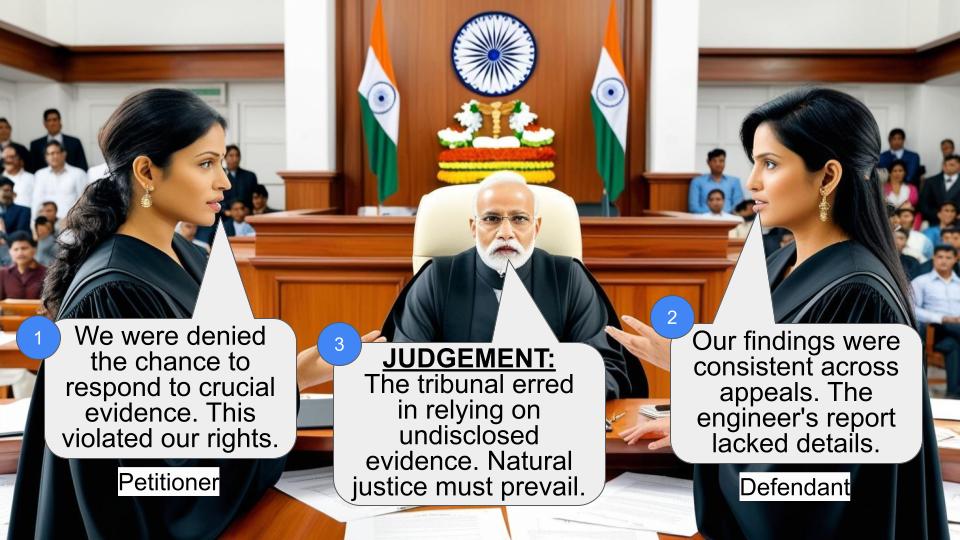
- The Tribunal's order dated 25.11.2016 allowed the assessee's appeal and dismissed the Revenue's appeal, effectively vacating the entire penalty.
- The CIT(A) misinterpreted the Tribunal's order by sustaining the penalty under Section 271(1)(c) (of Income Tax Act, 1961).
Revenue's Argument:
- The Tribunal's order, when read in its entirety, confirmed the penalty under Section 271(1)(c) (of Income Tax Act, 1961) while only setting aside the direction to levy penalty under Section 271AAA (of Income Tax Act, 1961).
Key Legal Precedents:
The Tribunal referred to the decision of the Coordinate Bench in the case of ACIT Vs. Smt.J.Mythili [ITA.Nos.235 and 236/ Mds/2013 dated 30.4.2013] to support its conclusion that the assessee was liable for penalty under Section 271(1)(c) (of Income Tax Act, 1961).
Judgement:
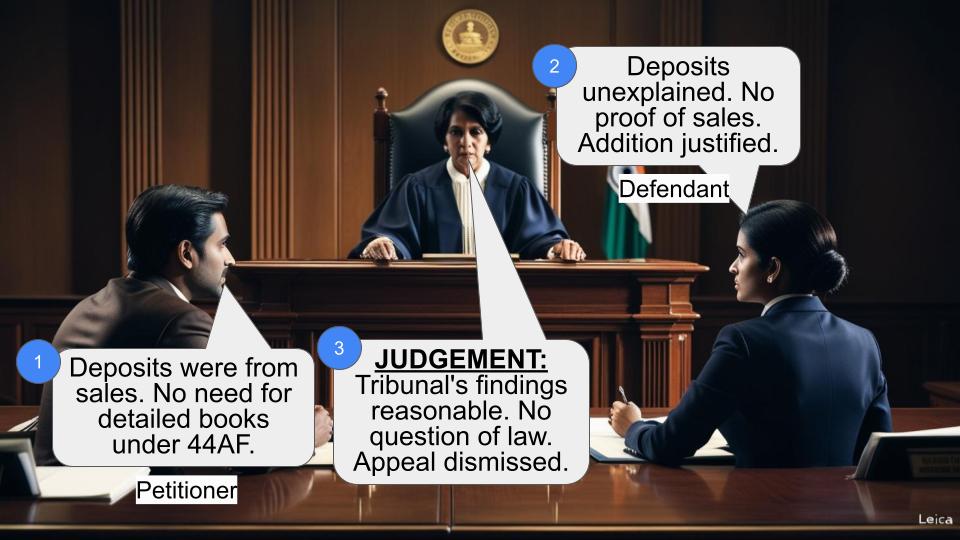
1. The High Court dismissed the assessee's appeal, confirming the Tribunal's order.
2. The court held that the Tribunal's order dated 25.11.2016 should be read as a whole, not just the operative portion.
3. The court found that the Tribunal had clearly held the assessee liable for penalty under Section 271(1)(c) (of Income Tax Act, 1961), while only setting aside the direction to levy penalty under Section 271AAA (of Income Tax Act, 1961).
4. The court noted that the assessee should have challenged the specific finding of liability under Section 271(1)(c) (of Income Tax Act, 1961) if aggrieved.
FAQs:
1. Q: Why did the High Court dismiss the assessee's appeal?
A: The court found that the Tribunal's order, when read in its entirety, clearly upheld the penalty under Section 271(1)(c) (of Income Tax Act, 1961), and the assessee had not challenged this specific finding.
2. Q: What was the significance of the Tribunal's order dated 25.11.2016?
A: This order became the center of controversy as its operative portion seemed to allow the assessee's appeal, but the body of the order confirmed the penalty under Section 271(1)(c) (of Income Tax Act, 1961).
3. Q: What's the difference between penalties under Sections 271(1)(c) (of Income Tax Act, 1961) and 271AAA (of Income Tax Act, 1961)?
A: Section 271(1)(c) (of Income Tax Act, 1961) deals with penalties for concealment of income or furnishing inaccurate particulars, while Section 271AAA (of Income Tax Act, 1961) relates to penalties on undisclosed income found during search and seizure operations.
4. Q: Why couldn't the Revenue's miscellaneous petition change the outcome?
A: The Revenue's petition under Section 254 (of Income Tax Act, 1961) was dismissed as time-barred, not on merits, so it didn't affect the finality of the Tribunal's original order.
5. Q: What lesson can taxpayers learn from this case?
A: It's crucial to challenge specific findings in tribunal orders, even if the overall appeal seems to be in your favor, and to read orders in their entirety rather than just the operative portion.

This appeal by the appellant – assessee is directed against the order dated 10.9.2019 passed by the Income Tax Appellate Tribunal, Chennai ‘B’ Bench (hereinafter called the Tribunal) in ITA.No.3106/ Chny/2018 for the assessment year 2008-09.
2. We have elaborately heard Mr.G.Baskar, learned counsel appearing for the appellant – assessee and Mrs.R.Hemalatha, learned Senior Standing Counsel appearing for the respondent – Revenue.
3. The appeal has been admitted on 29.1.2020 on the following substantial questions of law :
“i. Whether the Income Tax Appellate Tribunal was right in law in holding that the penalty levied under Section 271(1)(c) (of Income Tax Act, 1961) has to be sustained when in its earlier order dated 25.11.2016, the assessee's appeal was allowed and the Departmental appeal was dismissed ? And
ii. Whether the Income Tax Appellate Tribunal was right in law in reversing the earlier order of the Tribunal dated 25.11.2016 even after the application under Section 254(2) (of Income Tax Act, 1961) by the Department was dismissed vide order dated 01.2.2019 ?”
4. The assessee is aggrieved by the order passed by the Tribunal dismissing the appeal filed by the assessee by confirming the order passed by the Commissioner of Income Tax (Appeals)-5, Chennai-34 [for short, the CIT(A)] dated 28.9.2018, who, in turn, confirmed the order passed by the Assessing Officer with regard to levy of penalty under Section 271(1)(c) (of Income Tax Act, 1961) (for brevity, the Act).
5. To test the correctness of the decision arrived at by the Tribunal to enable us to answer the substantial questions of law framed for consideration, the following facts are to be taken note of : The residential premises of the assessee and her family members were subjected to search and seizure operations resulting in the assessment of valuables and books of accounts. Thereafter, a notice under Section 153A (of Income Tax Act, 1961) read with Section 153C (of Income Tax Act, 1961) was served and in response thereto, the assessee filed her return of income on 29.10.2010 admitting a total income of Rs.2,02,62,800/-. Undoubtedly, the notice under Section 143(2) (of Income Tax Act, 1961) was served on the assessee within the period of limitation and thereafter, the notice under Section 142(1) (of Income Tax Act, 1961) was served along with a questionnaire.
6. After considering the submissions made by the assessee, the assessment was completed under Section 153A (of Income Tax Act, 1961) read with Section 143(3) (of Income Tax Act, 1961) by order dated 31.12.2010. The Assessing Officer mentioned that penalty proceedings would be initiated and accordingly issued the notice proposing to levy penalty under Section 271(1)(c) (of Income Tax Act, 1961). The notice culminated in an order of penalty dated 27.6.2011.
7. As against the order dated 27.6.2011, the assessee filed an appeal before the Commissioner of Income Tax (Appeals)-II in ITA.No. 20/2011-12/A-II. The penultimate portion of the order dated 06.3.2013 reads that the appeal was partly allowed. The Commissioner of Income Tax (Appeals)-II, while partly allowing the appeal filed by the assessee, held that the provisions of Section 271AAA (of Income Tax Act, 1961) would apply for the assessment year 2007-08. Aggrieved by that order, the assessee as well as the Revenue preferred appeals before the Tribunal. The appeal filed by the Revenue was heard along with the assessee's appeal and other appeals and a common order dated 25.11.2016 has been passed. The entire case revolves around the aspect as to what was ordered by the Tribunal and what was the ultimate decision of the Tribunal.
8. Mr.G.Baskar, learned counsel for the assessee has strenuously contended that in paragraph 10 of the order of the Tribunal dated 25.11.2016, it has been stated that the appeal filed by the assessee was allowed and that the appeal filed by the Revenue was dismissed. Therefore, it is submitted that the entire penalty stood completely vacated because the appeal filed by the assessee was allowed and there ends the matter.
9. On 16.10.2017, the CIT(A) sustained the order of penalty under Section 271(1)(c) (of Income Tax Act, 1961) levied by the Assessing Officer vide order dated 27.6.2011. Challenging the same, the assessee preferred an appeal before the Tribunal in ITA.No.2784/Chny/2017 contending that the assessee should be heard before the appeal is disposed of and the matter should be remitted back to the CIT(A) for giving an opportunity to the assessee. Further, the appeal was allowed by the Tribunal on 08.2.2018 and on remittance, the CIT(A), vide order dated 28.9.2018, dismissed the assessee's appeal sustaining the order of the Assessing Officer dated 27.6.2011 levying penalty under Section 271(1)(c) (of Income Tax Act, 1961).
10. Aggrieved by such order, the assessee preferred an appeal to the Tribunal contending that the CIT(A) grossly misinterpreted the order passed by the Tribunal on 25.11.2016, which clearly showed that the appeal filed by the assessee was allowed and the appeal filed by the Revenue was dismissed and that the CIT(A) failed to note that the Tribunal did not restore or reinstate the penalty order under Section 271(1)(c) (of Income Tax Act, 1961). However, the Tribunal elaborately considered the matter and dismissed the appeal of the assessee by order dated 10.9.2019, which is impugned in this appeal.
11. The sheet anchor of the argument of Mr.G.Baskar, learned counsel appearing for the appellant – assessee is on the operative or decretal portion of the order passed by the Tribunal dated 25.11.2016.
12. Mr.G.Baskar, learned counsel for the appellant – assessee is right in his submission to the extent that the Tribunal stated that the appeal filed by the assessee was allowed and the appeal filed by the Revenue was dismissed. However, the said interpretation of the order is incorrect because the order has to be read as a whole and more particularly paragraphs 6 and 7 of the order. If the same is done, it is clear that the Tribunal came to the conclusion that the assessee is liable to penalty under Section 271(1)(c) (of Income Tax Act, 1961). To support its conclusion, the Tribunal referred to the decision of the Coordinate Bench in the case of ACIT Vs. Smt.J.Mythili [ITA.Nos.235 and 236/ Mds/2013 dated 30.4.2013].
13. After holding that the assessee was liable to penalty under Section 271(1)(c) (of Income Tax Act, 1961), the Tribunal proceeded to consider the question as to whether the CIT(A) was justified in giving a direction to the Assessing Officer to levy penalty under Section 271AAA (of Income Tax Act, 1961). After considering the effect of the said provision, the Tribunal held that the CIT(A) does not have power to give a direction to the Assessing Officer to levy penalty under Section 271AAA (of Income Tax Act, 1961) on the undisclosed income and accordingly set aside that direction. Therefore, the appeal filed by the assessee stood allowed only to that extent and not in deleting the penalty levied by the Assessing Officer under Section 271(1)(c) (of Income Tax Act, 1961) by order dated 27.6.2011. Hence, the Tribunal, in the impugned order, rightly observed that when the Tribunal held that the penalty could not be levied under Section 271AAA (of Income Tax Act, 1961), it is automatic that the levy of penalty made under Section 271(1)(c) (of Income Tax Act, 1961) was confirmed. The Tribunal further observed that the assessee had not challenged the levy of penalty under Section 271(1)(c) (of Income Tax Act, 1961).
14. The argument of Mr.G.Baskar, learned counsel appearing for the appellant – assessee is that the assessee had no occasion to challenge the same because the appeal filed by the assessee stood allowed.
15. We are not convinced with the said argument because in paragraph 6 of the order of the Tribunal dated 25.11.2016, there is a clear finding that the assessee is liable to penalty under Section 271(1)(c) (of Income Tax Act, 1961). Hence, if the assessee was aggrieved, she should have challenged that portion of the order of the Tribunal, which held that the assessee should be liable to penalty.
16. It is pointed out by Mr.G.Baskar, learned counsel appearing for the appellant – assessee that the Revenue moved a miscellaneous petition under Section 254 (of Income Tax Act, 1961) before the Tribunal, which was dismissed.
17. We find from the order passed by the Tribunal dated 01.2.2019 that the miscellaneous petition filed by the Revenue was dismissed as time barred and not on merits. In any event, the finding rendered by the Tribunal in its order dated 25.11.2016 having attained finality and the order imposing penalty having been confirmed, the decision arrived at by the Tribunal in dismissing the assessee's appeal does not call for any interference.
18. Accordingly, the above tax appeal is dismissed, the order passed by the Tribunal stands confirmed and the substantial questions of law framed for consideration are answered against the assessee. No costs.
T.S.SIVAGNANAM, J
AND
V.BHAVANI SUBBAROYAN, J
×
Similar Ripples
Questions
Tax Penalty Upheld: High Court Dismisses Assessee's Appeal Against Income Tax Tribunal Order
Write your CommentSimilar Posts

Generic
- Reportdata/6226.pdf
