


Tribunal Must Consider Cross-Objections: High Court Upholds Assessee's Right to…


Full News

Tribunal Must Consider Cross-Objections: High Court Upholds Assessee's Right to Be Heard
Tribunal Must Consider Cross-Objections: High Court Upholds Assessee's Right to Be Heard
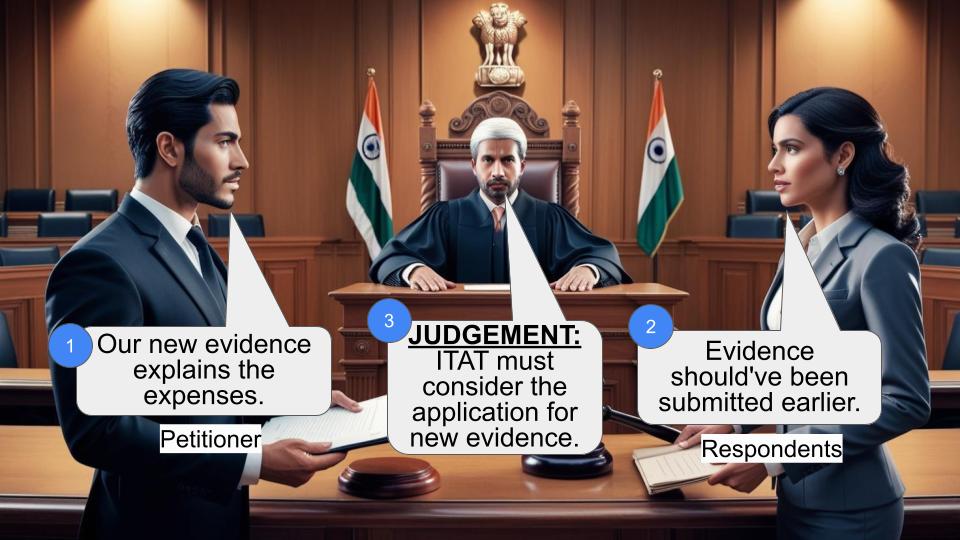
This case involves an appeal by an assessee (taxpayer) against an order of the Income Tax Appellate Tribunal (ITAT). The main issue was the ITAT's refusal to consider the assessee's cross-objections in a tax dispute. The High Court partially allowed the appeal, setting aside the ITAT's decision to deny the assessee's right to urge cross-objections.
Get the full picture - access the original judgement of the court order here
Case Name:
Brijwasi Impex P. Ltd. vs Commissioner of Income Tax (High Court of Delhi)
ITA 274/2015, C.M. APPL.7358-7359/2015
Date: 1st May 2015
Key Takeaways
1. The ITAT is duty-bound to consider submissions of parties rather than dismissing cross-objections without proper consideration.
2. The right of parties to present their arguments on merits should be preserved.
3. The court emphasized the importance of considering all relevant submissions in tax appeal proceedings.
Issue
Was the Income Tax Appellate Tribunal (ITAT) correct in refusing to entertain the assessee's cross-objections in the tax appeal?
Facts
1. The case pertains to the Assessment Year 2000-01.
2. The original assessment was completed under regular scrutiny.
3. For AY 2002-03, the Assessing Officer examined certain entries claimed as share application amounts of ₹50 lakhs.
4. A search was conducted on the assessee's business premises on 09.12.2005.
5. A notice was issued, and the assessee filed a return on 31.10.2007 under Section 153A (of Income Tax Act, 1961).
6. The Assessing Officer completed the assessment pursuant to the search on 31.12.2007, adding back the ₹50 lakhs.
7. The assessee appealed to the CIT(A), who allowed the deletion of ₹50 lakhs.
8. The Revenue appealed to the ITAT, and the assessee filed cross-objections (though belatedly).
9. The ITAT refused to entertain the assessee's application under Rule 27 (of Income Tax Rules, 1962) of the Income Tax (Appellate Tribunal) Rules, 1963.
Arguments
Assessee's Arguments:
1. No incriminating material was found during the search to support the addition of ₹50 lakhs.
2. The assessment under Section 153A (of Income Tax Act, 1961) should not be equated with a regular scrutiny assessment under Section 143(3) (of Income Tax Act, 1961).
3. The ground for cross-objection was urged before the CIT(A) and accepted, even if not explicitly discussed.
Revenue's Arguments:
The question of the extent of additions that can be made in search proceedings should not be decided in this appeal, as orders under Section 153A (of Income Tax Act, 1961) are wider than the pre-existing Section 158BC (of Income Tax Act, 1961).
Key Legal Precedents
The judgment doesn't explicitly mention any specific legal precedents. However, it refers to:
1. Section 153A (of Income Tax Act, 1961)
2. Section 143(3) (of Income Tax Act, 1961)
3. Rule 27 (of Income Tax Rules, 1962) of the Income Tax (Appellate Tribunal) Rules, 1963
Judgement
1. The High Court partially allowed the appeal.
2. The court set aside the ITAT's order to the extent it denied the assessee the right to urge cross-objections.
3. The court held that the ITAT was duty-bound to consider the submissions rather than brushing aside the cross-objections.
4. The right of parties to urge contentions in support of their submissions on the merits was reserved.
FAQs
1. Q: What was the main issue in this case?
A: The main issue was whether the ITAT was correct in refusing to consider the assessee's cross-objections in the tax appeal.
2. Q: Why did the High Court partially allow the appeal?
A: The High Court partially allowed the appeal because it found that the ITAT should have considered the assessee's cross-objections rather than dismissing them outright.
3. Q: What is the significance of Section 153A (of Income Tax Act, 1961) in this case?
A: Section 153A (of Income Tax Act, 1961) relates to assessment procedures following a search operation. The case discusses whether additions made under this section should be treated differently from regular assessments.
4. Q: Did the High Court make a decision on the merits of the tax dispute?
A: No, the High Court did not decide on the merits of the tax dispute. It only ruled on the procedural issue of allowing the assessee to present its cross-objections.
5. Q: What does this judgment mean for future tax appeal cases?
A: This judgment emphasizes that tribunals must consider all relevant submissions and cross-objections from parties, rather than dismissing them without proper consideration.

Issue notice. Ms. Suruchii Aggarwal, Advocate accepts notice. The narrow ground on which the appellant/assessee assails the order of the Income Tax Appellate Tribunal (ITAT) in ITA No. 361/Del/2011 and CO No. 8/Del/2013 is that the impugned order was in error by refusing to consider the cross-objections and the grounds urged by the assessee/appellant.
For AY 2000-01, the original assessment had been completed. In the course of regular assessment for AY 2002-03, the Assessing Officer (AO) had the occasion to examine the veracity of certain entries claimed to be share application amounts received to the tune of `50 lakhs. The assessment was completed after appropriate enquiries were made from such share applicants on scrutiny basis under Section 143(3) (of Income Tax Act, 1961). Subsequently, search proceedings took place in respect of the assessee’s business premises on 09.12.2005. Notice was issued pursuant to which a return was filed on 31.10.2007 under Section 153A (of Income Tax Act, 1961). The AO completed the assessment pursuant to the search on 31.12.2007 and added back the said amount of `50 lakhs. In the course of the appeal preferred to CIT(A), the assessee had inter alia urged as follows:
“3. On the basis of aforesaid factual position addition made on account of unexplained share application amounting to `.50,00,000/- for the A.Y. 2000-01 deserves to be deleted as:
ii) No corresponding seized material, much less incriminating material was found in the course of search for the subjected addition. It may kindly be appreciated that the assessment u/s 153A (of Income Tax Act, 1961) on the basis of the search u/s 132 (of Income Tax Act, 1961) cannot and should not be equated to regular/normal scrutiny assessment u/s 143(3) (of Income Tax Act, 1961).”
The CIT(A), however, did not discuss this issue but returned the finding in favour of the assessee which allowed the said deletion of `50 lakhs.
The Revenue appealed to the ITAT. The assessee filed cross-objection – though belatedly. By the impugned order, the ITAT refused to entertain the application under Rule 27 (of Income Tax Rules, 1962) of the Income Tax (Appellate Tribunal) Rules, 1963, stating that the contention sought to be urged by it could not inter alia be entertained because it was never taken in the first instance before the CIT(A).
Learned counsel points out that a bare look at para 3(ii) of the CIT’s order would show that the ground was in fact urged and was accepted by the CIT(A) even though there was no discussion. It was submitted that the Revenue could not get hold of any material in the course of search and that the addition of `50 lakhs could not be made precisely on the basis of which CIT(A) granted relief. Learned counsel for the Revenue urges that the question as to whether and to what extent addition can be made in search proceedings should not be decided in this appeal since orders under Section 153A (of Income Tax Act, 1961) are wider that the pre-existing 158BC.
We have considered the submissions. For the purpose of this appeal, we do not propose to launch an examination of the difference between the phraseology of the old law and Section 153A (of Income Tax Act, 1961). However, what is apparent is that further in regard to the assessee’s contention that no material was found to support the addition – which was in fact gone into in scrutiny assessment, the ITAT was duty-bound to consider the submissions rather than brushing aside the cross-objections as it has done in the present instance. In the circumstances, the impugned order to the extent it denies the assessee the right to urge cross-objection is hereby set aside. The right of the parties to urge contentions in support of their submissions on the merits is reserved. The appeal is partly allowed in the above terms.
S. RAVINDRA BHAT, J
R.K.GAUBA, J
×
Questions
Tribunal Must Consider Cross-Objections: High Court Upholds Assessee's Right to Be Heard
Write your CommentSimilar Posts


Generic
- Reportdata/3779.pdf
