


Tribunal's Power to Rectify: Time Limit Not Absolute for Hearing Opportunity


Full News

Tribunal's Power to Rectify: Time Limit Not Absolute for Hearing Opportunity
Tribunal's Power to Rectify: Time Limit Not Absolute for Hearing Opportunity
This case involves the Principal Commissioner of Income Tax challenging an order by the Income Tax Appellate Tribunal (ITAT) that recalled an earlier ex-parte order and provided a fresh hearing opportunity to an assessee. The High Court dismissed the challenge, affirming the Tribunal's power to rectify mistakes and provide fair hearing opportunities.
Get the full picture - access the original judgement of the court order here
Case Name:
Principal Commissioner of Income Tax Vs Income Tax Appellate Tribunal (High Court of Bombay)
Writ Petition No.2858 of 2019
Date: 24th January 2020
Key Takeaways:
1. The Tribunal has inherent power to recall ex-parte orders and provide fresh hearing opportunities.
2. Time limits in Section 254(2) (of Income Tax Act, 1961) are not absolute barriers to rectification.
3. Natural justice principles support giving litigants a fair hearing opportunity.
4. Procedural review powers are distinct from review on merits.
Issue:
Can the Income Tax Appellate Tribunal recall an ex-parte order and provide a fresh hearing opportunity beyond the statutory time limit specified in Section 254(2) (of Income Tax Act, 1961)?
Facts:
1. The assessee (respondent No.2) filed an appeal (No. 3910/Mum/2010) for the assessment year 2006-07 before the ITAT.
2. On January 10, 2018, the ITAT dismissed the appeal ex-parte as the assessee was not present.
3. The assessee filed an application (MA No.483/M/2018) on July 9, 2018, for recall of the ex-parte order.
4. On February 1, 2019, the ITAT recalled the earlier order and fixed the appeal for fresh hearing.
5. The Principal Commissioner of Income Tax challenged this order in the High Court.
Arguments:
Revenue's Arguments:
1. The ITAT's order was passed under Section 254(2) (of Income Tax Act, 1961), which has a six-month time limit.
2. The ITAT disposed of the application beyond the prescribed limitation period.
3. Rule 24 (of Income Tax Rules, 1962) of the Income Tax (Appellate Tribunal) Rules cannot override the time limit in the Act.
Respondent's Arguments:
1. The ITAT's order was an exercise of its inherent power of procedural review.
2. Such power is acknowledged by the Supreme Court in various judgments.
Key Legal Precedents:
1. Srei Infrastructure Finance Limited Vs. Tuff Drilling Private Limited, (2018) 11 SCC 470:
Affirmed the inherent power of tribunals for procedural review.
2. Grindlays Bank Ltd. Vs. Central Government Industrial Tribunal, 1980 Supp SCC 420:
Distinguished between procedural review and review on merit.
3. Sree Ayyanar Spinning and Weaving Mills Limited Vs. Commissioner of Income Tax, 301 ITR 434 SC:
Upheld Tribunal's order beyond the limitation period.
4. Harshavardhan Chemicals and Minerals Limited Vs. Union of India, 256 ITR 767:
Held that if an application is made within the limitation period, the Tribunal must decide on merits.
Judgement:
The High Court dismissed the writ petition, holding that:
1. Section 254(2) (of Income Tax Act, 1961) and Rule 24 (of Income Tax Rules, 1962) should be read harmoniously.
2. The use of "may" in Section 254(2) (of Income Tax Act, 1961) indicates that the time limit is not absolute.
3. The Tribunal has inherent power to recall ex-parte orders to ensure justice.
4. No prejudice was caused to the revenue by providing a fresh hearing opportunity to the assessee.
FAQs:
Q1: What is the significance of this judgment?
A1: It clarifies that tribunals have inherent power to recall ex-parte orders and provide fresh hearing opportunities, even beyond statutory time limits, to ensure natural justice.
Q2: Does this mean time limits in tax laws are no longer relevant?
A2: No, time limits are still relevant, but they should not be interpreted so strictly as to deny a fair hearing opportunity.
Q3: What's the difference between procedural review and review on merits?
A3: Procedural review deals with correcting procedural errors or ensuring fair hearings, while review on merits involves re-examining the substantive decision.
Q4: How does this judgment impact taxpayers?
A4: It provides a safeguard for taxpayers who may have missed hearings due to genuine reasons, allowing them to seek a fresh hearing opportunity.
Q5: Is this judgment applicable only to income tax cases?
A5: While the case deals with income tax, the principles regarding natural justice and fair hearings could potentially be applied in other administrative law contexts as well.

1. Heard Mr.N.C.Mohanty, learned standing counsel, Revenue for the petitioner; and Mrs.Shilpa Kapil, learned counsel for respondent No.1.
2. This petition has been filed under Article 226 of the Constitution of India by the Principal Commissioner of Income Tax-7, Mumbai assailing the legality and correctness of order dated 1st February, 2019 passed by the Income Tax Appellate Tribunal, Bench "B" , Mumbai (briefly "the Tribunal" hereinafter) in MA No.483/M/2018 for the assessment year 2006-07, whereby the earlier order of the Tribunal dated 10th January, 2018 passed in Income Tax Appeal No.3910/Mum/2010 has been recalled and the appeal has been directed to be placed for hearing afresh.
3. It may be mentioned that respondent No.2 i.e. the assessee had preferred Income Tax Appeal No. 3910/Mum/2010 for the assessment year 2006-07 before the Tribunal against the order passed by the Commissioner of Income Tax (Appeals)-13, Mumbai dated 6th January, 2010. By order dated 10th January, 2018, Tribunal dismissed the appeal.
4. From a perusal of the order dated 10th January, 2018 it is seen that there was no representation on behalf of respondent No.2 i.e. the assessee and Tribunal decided the appeal on merit in the absence of the assessee after hearing the Departmental Representative.
5. Respondent No.2 thereafter filed an application for recall of the aforesaid order dated 10th January, 2018 and for hearing the appeal afresh. The said application was registered as MA No.483/M/2018. After hearing learned counsel for respondent No.2 as well as the Departmental Representative, Tribunal passed the impugned order dated 1st February, 2019 recalling the earlier order dated 10th January, 2018 and fixing the appeal for hearing afresh on merit.
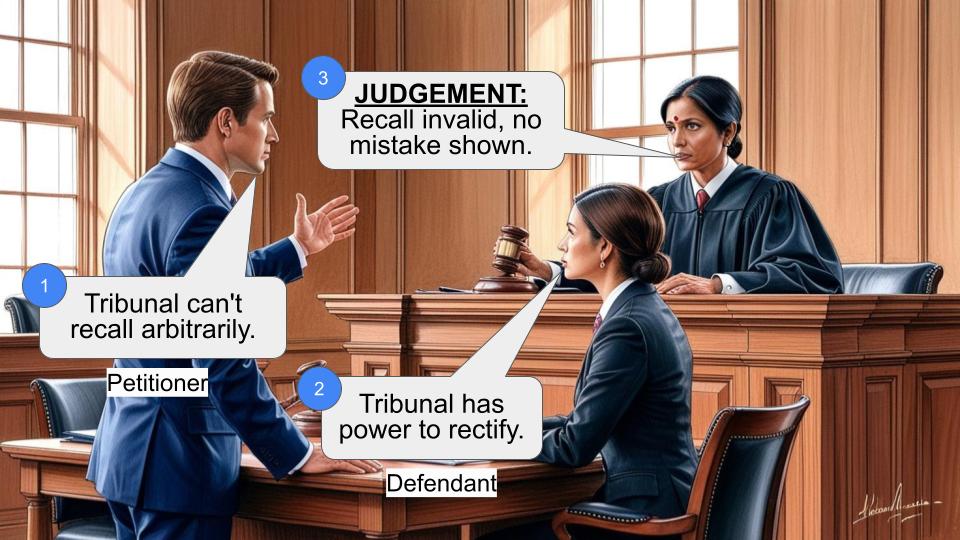
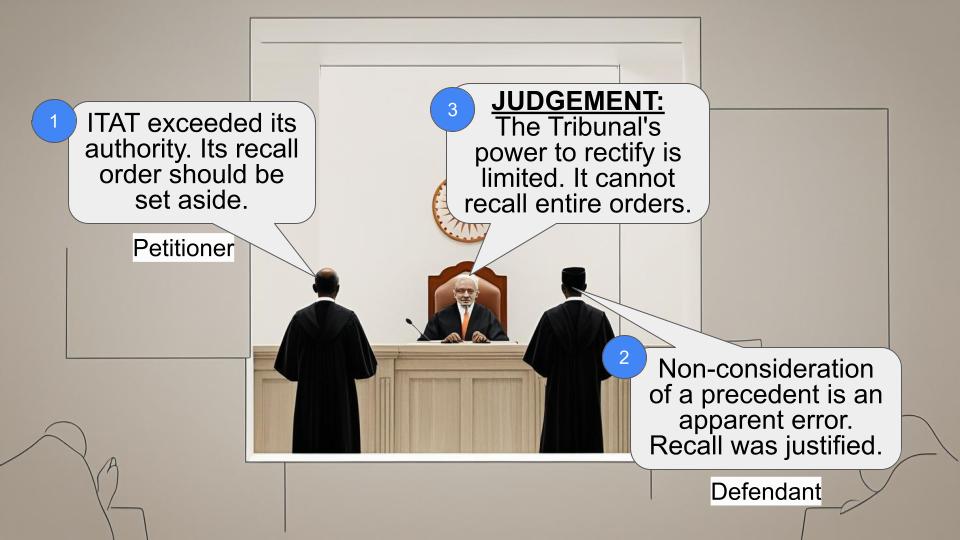
6. Mr.Mohanty, learned standing counsel submits that the impugned order was passed under Section 254(2) (of Income Tax Act, 1961). Referring to the said provision he submits that a time limit of six months from the end of the month in which the Tribunal had passed the order is provided to rectify any mistake in the order which is apparent from the record. In the instant case, though the miscellaneous application was filed by the assessee on 9th July, 2018 within the aforesaid period of six months, Tribunal did not dispose of the same within the prescribed limitation period. Infact, much later on 1st February, 2019.
Therefore, the said order cannot be sustained. He submits that there is no provision under Section 254 (of Income Tax Act, 1961) extending the period of limitation. Further submission of Mr.Mohanty is that in exercise of the power conferred under sub-section (5) of Section 255 (of Income Tax Act, 1961), Income Tax (Appellate Tribunal) Rules, 1963 (briefly “the Rules” hereinafter) have been framed. Rule 24 (of Income Tax Rules, 1962) of the said Rules provides that in case of an ex-parte order if the appellant appears otherwise and satisfies the Tribunal that there was sufficient cause for his non-appearance when the appeal was called for hearing, the Tribunal shall make an order setting aside the ex-parte order and restore the appeal. However, his contention is that though time limit is not provided under Rule 24 (of Income Tax Rules, 1962), the time limit prescribed under Section 254(2) (of Income Tax Act, 1961) has to be strictly adhered to as the Rules cannot contravene or operate beyond the parent Act. In support of his submissions, Mr.Mohanty has placed reliance on a decision of the supreme Court in Assam Company Ltd. Vs. State of Assam, 248 ITR 567.
7. On the other hand, learned counsel for respondent No.1 submits that though the impugned order has been purportedly passed under Section 254(2) (of Income Tax Act, 1961), the same infact is an order by the Tribunal invoking its inherent power of procedural review. She submits that such a power inheres in every Tribunal and this has been acknowledged by the Supreme Court in Srei Infrastructure Finance Limited Vs. Tuff Drilling Private Limited, (2018)11 SCC 470.
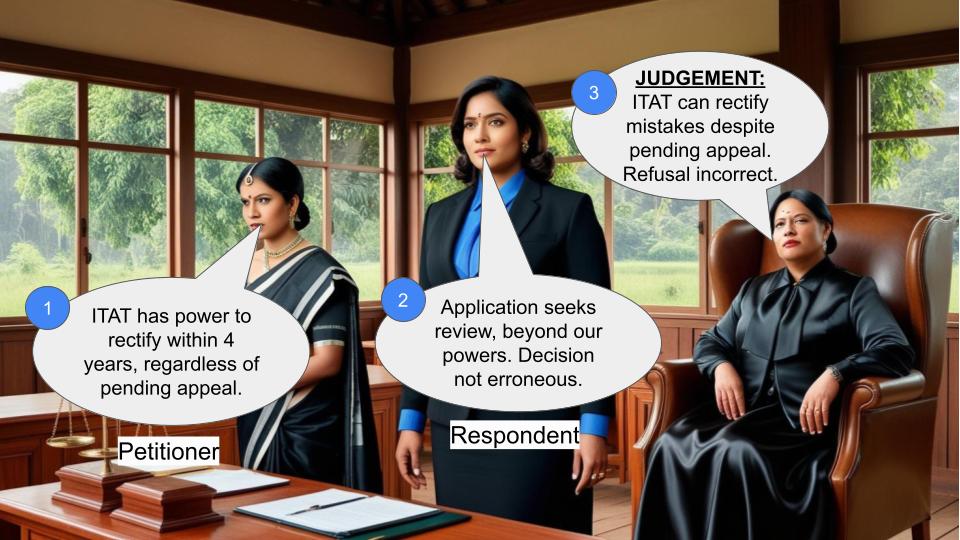
8. In his reply Mr.Mohanty fairly submits that the limitation of six months from the end of the month in which the order was passed was substituted in sub- section (2) of Section 254 (of Income Tax Act, 1961) by the Finance Act, 2016 with effect from 1st June, 2016. Prior to that the limitation was four years from the date of the order. In Sree Ayyanar Spinning and Weaving Mills Limited Vs. Commissioner of Income Tax, 301 ITR 434 SC, Supreme Court had upheld order passed by the Tribunal beyond the limitation of four years.
9. Submissions made by learned counsel for the parties have been considered.
10. Facts are not in dispute. However, a brief recital of the facts is considered necessary. The initial order passed by the Tribunal on 10th January, 2018 was an ex-parte one. The assessment year under consideration is 2006- 07. The limitation of six months as noticed above was substituted by the Finance Act, 2016 with effect from 1st June, 2016. Therefore, for the assessment year under consideration the limitation period may be construed to be four years from the date of the order. Even otherwise, if a view is taken that since the impugned order was passed by the Tribunal on 1st February, 2019, the substituted limitation period of six months would be applicable, then also it is seen that the said period of six months was available to respondent No.2 till 31st July, 2018. Respondent No.2 had filed the application for recall of the ex-parte order on 9th July, 2018 within the limitation period of six months. However, Tribunal passed the impugned order only on 1st February, 2019.
11. At this stage, we may advert to Section 254(2) (of Income Tax Act, 1961), relevant portion of which reads as under:-
(2) The Appellate Tribun al may, at any time within six months from the end of the month in which the order was passed, with a view to rectifying any mistake apparent from the record, amend any order passed by it under sub-section (1) and shall make such amendment if the mistake is brought to its notice by the assessee or the Assessing Officer:
12. From a careful reading of the provision, it is seen that Tribunal is vested with the power to rectify any mistake apparent from the record to amend any order passed by it under sub-section (1) of Section 254 (of Income Tax Act, 1961) at any time within six months from the end of the month in which the order was passed, provided the mistake is brought to its notice by the assessee or by the Assessing Officer.
13. The use of the expression “may” in the aforesaid provision is clearly indicative of the legislative intent that the limitation period of six months from the end of the month in which the order was passed is not to be construed in such a manner that there can not be any extension of time beyond the said period of six months. This is so because the assessee or the Assessing Officer can only bring the mistake to the notice of the Tribunal. The assessee or the Assessing Officer has no control over the Tribunal. For one reason or the other, the Tribunal may not be in a position to pass the order under Section 254(2) (of Income Tax Act, 1961). For the inability of the Tribunal to pass such an order within the period provided, neither the assessee nor the revenue should suffer. What therefore becomes relevant is that the assessee or the Assessing Officer should bring the mistake to the notice of the Tribunal within the limitation period.
14. Rule 24 (of Income Tax Rules, 1962) of the Income Tax (Appellate Tribunal) Rules, 1963 (Rules) is relevant. Rule 24 (of Income Tax Rules, 1962) reads as under :-
“24. Where, on the day fixed for hearing or on any other date to which the hearing may be adjourned, the appellant does not appear in person or through an authorized representative when the appeal is called on for hearing, the Tribunal may dispose of the appeal on merits after hearing the respondent: Provided that where an appeal has been disposed of as provided above and the appellant appears afterwards and satisfies the Tribunal that there
was sufficient cause for his non- appearance, when the appeal was called on for hearing the Tribunal shall make an order setting aside the ex- parte order and restoring the appeal.”
15. From a reading of Rule 24 (of Income Tax Rules, 1962) as extracted above, it is seen that Tribunal is vested with the power to recall an ex-parte order. Requirement of the proviso is that Tribunal must be satisfied that there was sufficient cause for non-appearance of the appellant. No time limit is prescribed in Rule 24 (of Income Tax Rules, 1962).
16. On a conjoint reading of the two provisions, there appears to be no contradiction between Section 254(2) (of Income Tax Act, 1961) and Rule 24 (of Income Tax Rules, 1962) as extracted above. Both the provisions can be and should be read harmoniously to advance the objective that a decision on merit should be avoided in the absence of the aggrieved litigant. It is an established principle of natural justice that a litigant should be heard before a decision is taken.
17. In Srei Infrastructure Finance Limited (supra) Supreme Court referred to its earlier decisions in the case of Grindlays Bank Ltd. Vs. Central Government Industrial Tribunal, 1980 Supp SCC 420 and Kapra Mazdoor Ekta Union Vs. Birla Cotton Spinning and Weaving Mills Limited, (2005) 13 SCC 777 and distinguished between a procedural review and a review on merit. Supreme Court held that a Tribunal or a quasi- judicial body is always endowed with such ancillary or incidental powers as are necessary to discharge its functions effectively for the purpose of doing justice between the parties. Such a power inheres in every Tribunal.
18. As candidly pointed out by Mr.Mohanty, with regard to the pre-amended provision of Section 254(2) (of Income Tax Act, 1961), Supreme Court in Sree Ayyanar Spinning and Weaving Mills Limited (supra), had accepted the position that such an order can be recalled beyond the then prescribed period of four weeks, provided the application is made within the limitation period. In fact, Rajasthan High Court in Harshavardhan Chemicals and Minerals Limited Vs. Union of India, 256 ITR 767 took the view that if the assessee had moved the application within four years from the date of the order, the Tribunal was bound to decide the application on its merit and not on the ground of limitation. Supreme Court agreed with the view expressed by the Rajasthan High Court and in the facts of that case held that the application for rectification was made within four years. Tribunal took its own time to dispose of the application. Therefore, Madras High Court erred in holding that the application could not have been entertained by the Tribunal beyond four years.
19. We may now advert to the impugned order. By the said order Tribunal has recalled the ex-parte order and fixed the appeal for hearing afresh, which has been filed by none else than the assessee. Ultimately, what the Tribunal has done is only to provide an opportunity of hearing to the assessee. No prejudice has been caused to the revenue by such order of the Tribunal.
20. Thus, having regard to the discussions made above and on due consideration, we are of the view that the challenge made by the revenue in this writ petition is misconceived. Consequently we find no merit in the writ petition.
21. Writ petition is accordingly dismissed, but without any order as to costs.
(MILIND N. JADHAV, J.) (UJJAL BHUYAN, J.)
×
Similar Ripples
Questions
Tribunal's Power to Rectify: Time Limit Not Absolute for Hearing Opportunity
Write your CommentSimilar Posts
Generic
- Reportdata/6098.pdf
