


Tax Appeals Dismissed: High Court Upholds Tribunal's Findings on Income Tax Add…


Full News

Tax Appeals Dismissed: High Court Upholds Tribunal's Findings on Income Tax Additions
Tax Appeals Dismissed: High Court Upholds Tribunal's Findings on Income Tax Additions
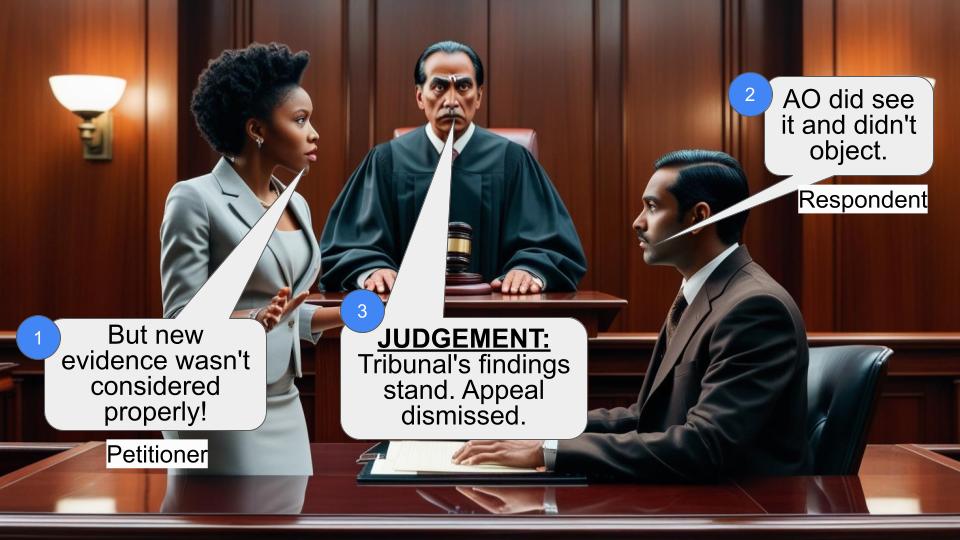
This case involves two tax appeals filed by the Revenue (Income Tax Department) against the order of the Income Tax Appellate Tribunal (ITAT) in favor of the assessee, Ghanshyam Dungarbhai Sutaria. The High Court dismissed both appeals, upholding the Tribunal's findings on various income tax additions made by the Assessing Officer.
Get the full picture - access the original judgement of the court order here
Case Name:
Principal Commissioner of Income Tax vs Ghanshyam Dungarbhai Sutaria (High Court of Gujarat)
R/Tax Appeal No.803 of 2019 and 804 of 2019
Date: 10th February 2020
Key Takeaways:
1. The High Court affirmed the importance of concurrent findings of fact by lower authorities in tax matters.
2. The court emphasized the limited scope for interference in factual findings unless there's a clear error or lack of evidence.
3. The judgment reinforces the application of Section 292C (of Income Tax Act, 1961) regarding presumptions about seized documents.
Issue:
Whether the Income Tax Appellate Tribunal erred in upholding the CIT(A)'s order, which deleted or modified various additions made by the Assessing Officer based on documents seized during a survey?
Facts:
- A survey under Section 133A (of Income Tax Act, 1961) was conducted on the assessee's premises on March 26, 2009.
- The Assessing Officer made several additions to the assessee's income based on documents found during the survey.
- The Commissioner of Income Tax (Appeals) [CIT(A)] partly allowed the assessee's appeal, deleting or modifying some additions.
- Both the assessee and the Revenue filed appeals before the Income Tax Appellate Tribunal (ITAT).
- The ITAT largely upheld the CIT(A)'s order, leading to the Revenue filing these appeals before the High Court.
Arguments:
Revenue's Arguments:
- The Tribunal erred in not considering the effect of Section 292C (of Income Tax Act, 1961).
- The additions made by the Assessing Officer based on seized documents were justified.
Assessee's Arguments:
- The documents found during the survey were either explained or not related to the assessee.
- The lower authorities correctly appreciated the evidence and deleted unjustified additions.
Key Legal Precedents:
1. Asstt. CIT v. Vatika Greenfield (P) Ltd. [2009] 121 ITD (Delhi) 208
2. Hiren Vasantlal Shah [2012] 19 taxmann.com 241 (Gujarat)
These cases were cited regarding the application of Section 292C (of Income Tax Act, 1961), which deals with presumptions about seized documents.
Judgement:
The High Court dismissed both tax appeals, holding that:
1. The Tribunal had considered the effect of Section 292C (of Income Tax Act, 1961).
2. The Tribunal's findings were based on a detailed analysis of the evidence and materials on record.
3. There were concurrent findings of fact by both the CIT(A) and the Tribunal, which didn't warrant interference by the High Court.
4. The questions raised by the Revenue didn't qualify as substantial questions of law.
FAQs:
Q1: What is Section 292C (of Income Tax Act, 1961)?
A1: Section 292C (of Income Tax Act, 1961) deals with presumptions about books of account, other documents, and assets seized during a search or survey operation.
Q2: Why did the High Court dismiss the Revenue's appeals?
A2: The court found that the Tribunal had made factual findings based on evidence, and there were no substantial questions of law arising from the Tribunal's order.
Q3: What is the significance of "concurrent findings of fact"?
A3: When two lower authorities (in this case, the CIT(A) and the Tribunal) arrive at the same factual conclusions, higher courts are generally reluctant to interfere unless there's a clear error or lack of evidence.
Q4: Did the High Court completely agree with the Tribunal's order?
A4: Yes, the High Court upheld the Tribunal's order in its entirety, finding no reason to interfere with its factual findings or legal conclusions.
Q5: What impact does this judgment have on future tax cases?
A5: This judgment reinforces the principle that higher courts will not easily interfere with factual findings of lower tax authorities unless there's a substantial question of law involved.

1. Both the appeals are filed at the instance of the Revenue under Section 260A (of Income Tax Act, 1961) [for short, 'the Act, 1961'] arising out of the common judgment and order passed by the Income Tax Appellate Tribunal, Surat Bench, Surat [for short, 'Tribunal'] dated 6th June 2019 in ITA No.1615/Ahd/2014 filed by the assessee and ITA No.1730/Ahd/2014 filed by the Revenue before the Tribunal for the Assessment Year 200910.
2. The Revenue has proposed the following question as substantial question of law in Tax Appeal No.803 of 2019 out of appeal filed by assessee before the Tribunal being ITA No.1615/Ahd/2014:
“Whether on the facts and circumstances of the case and in law, the Hon'ble ITAT erred in upholding the order passed by the Ld. CIT(A) without considering the effect of the provisions of Section 292C (of Income Tax Act, 1961)?”
3. The following questions of law are proposed as substantial questions of law in Tax Appeal No.804 of 2019 arising out of appeal filed by Revenue before the Tribunal being ITA No.1730/Ahd/2014:
“(a) Whether on the facts and circumstances of the case and in law, the Hon'ble ITAT erred in upholding the order passed by the Ld. CIT(A) in respect of addition made on account of unaccounted loan and advances and interest of Rs.4,82,56,000/ by accepting the explanation of the assessee?
(b) Whether on the facts and circumstances of the case and in law, the Hon'ble ITAT erred in upholding the order passed by the Ld. CIT(A) in respect of addition made on account of unaccounted income of Rs.1,50,000/ by accepting the explanation of the assessee?
(c) Whether on the facts and circumstances of the case and in law, the Hon'ble ITAT erred in upholding the order passed by the Ld. CIT(A) in respect of additions made on account of unaccounted income of Rs.12,63,96,132/ and on account of receipt of onmoney of Rs.40,27,600/ by accepting the explanation of the assessee?
(d) Whether on the facts and circumstances of the case and in law, the Hon'ble ITAT erred in upholding the order passed by the Ld. CIT(A) and dismissing the appeal filed by the Revenue in respect of addition made on account of unexplained expenditure u/s 69C (of Income Tax Act, 1961) of Rs.97,24,958/?
(e) Whether on the facts and circumstances of the case and in law, the Hon'ble ITAT erred in upholding the order passed by the Ld.CIT(A) on account of unaccounted income of Rs.34,82,000/, Rs.1,42,60,000/ and Rs.5,43,49,000/ to Rs.1,34,86,000/, by accepting the explanation of the assessee?
(f) Whether on the facts and circumstances of the case and in law, the Hon'ble ITAT is correct in upholding the order passed by the Ld. CIT(A) and dismissing the appeal filed by the Revenue without considering that the assessee during the assessing proceeding failed to explain the documents / loose papers found and impounded from his premises and even disowned the same whereas the provisions of Section 292C (of Income Tax Act, 1961) were clearly applicable?
(g) Whether on the fact and circumstances of the case and in law, the Hon'ble ITAT is perverse in upholding the order passed by the Ld. CIT(A) deleting the additions made by the AO on the basis of loose papers found and impounded from his premises of the assessee, which were not explained or disowned by the assessee during the assessment proceedings and by completely ignoring the provisions of Section 110 of the Indian Evidence Act where burden of proof as to ownership has been defined as “whether any person is owner of anything of which he is shown to be in possession, the burden of proving that he is not the owner is on the person who affirms that he is not the owner?”
4 The facts giving rise to these appeals may summarised as under:
4.1 The survey action under Section 133A (of Income Tax Act, 1961) was conducted on 26th March 2009. During the course of survey proceeding, books of accounts and documents found were investorised and impounded.
5 The assessment order under Section 143(3) (of Income Tax Act, 1961) was passed by the Assessing Officer determining the total income of Rs.28,49,83,580/ against the returned income of Rs.1,71,550/. The Assessing Officer made the following additions:
Sr. No. Nature of addition Amount (Rs.)
1. On account profit earned in the year form unaccounted receipts 86,44,340
2. On account of unaccounted income 4,82,56,000
3. On account of unaccounted income 5,72,000
4. On account of unaccounted income 1,50,000
5. On account of unaccounted income 12,6396,132
6. On account of unaccounted onmoney receipts 40,27,600
7. On account of unaccouned expenditure u/s 69C (of Income Tax Act, 1961) 97,24,958
8. On account of unaccounted income 34,82,000
9. On account of unaccounted income 1,43,60,000
10. On account of unaccounted income 5,43,49,000
6. The assessee being aggrieved filed appeal filed before the CIT(A). The CIT(A) by order dated 26th March 2014 confirmed the additions of Rs.86,44,340/ pertaining to profit earned in the year from unaccounted receipts and Rs.5,72,000/ pertaining to unaccounted income. The CIT(A) granted relief to the assessee as under:
Sr. No. Nature of addition Amount (Rs.) Addition confirmed / deleted by CIT(A)
1. On account of profit earned in the y ear form unaccounted receipts 86,44,340 Confirmed
2. On account of unaccounted income 4,82,56,000 Deleted
3. On account of unaccounted incom 5,72,000 Confirmed
4. On account of unaccounted income 1,50,00,000 Deleted
5. On account unaccounted income 12,63,96,132 Deleted
6. On account of unaccounted on- money receipts 40,27,600 Deleted 7. On account of unaccounted expenditure u/s 69C (of Income Tax Act, 1961) 97,24,958 Deleted
8. On account of unaccounted income 1,43,60,000 Partly allowed by restricting the addition to Rs.1,34,86,000 / out of total addition made of Rs.7,21,91,000
9. On account of unaccounted income 1,43,60,000
10. On account of unaccounted income 5,43,49,000
7. The CIT(A) also enhanced the following addition under Section 251(1) (of Income Tax Act, 1961) read with Section 251(2) (of Income Tax Act, 1961): [1] Rs.1,90,00,000/ on account of unaccounted disclosed capital
grain.
[2] Rs.38,90,500/ on account of cash deposit from undisclosed sources.
8. The assessee being aggrieved by the addition sustained by the CIT(A) preferred ITA No.1615/Ahd/2014 whereas the Revenue being aggrieved by the order passed by the CIT(A) preferred ITA No.1730/Ahd/2014 before the Tribunal.
9. The Tribunal partly allowed appeal filed by the assessee giving partial relief to the assessee in respect of amount of Rs.5,72,000/ on account of unaccounted income by restricting addition to Rs.72,000/ by applying the telescoping with respect to addition sustained of Rs.86.44 lakhs on account of profit earned from the unaccounted receipts. The Tribunal upheld the finding arrived at by the Assessing Officer and CIT(A) by invoking the presumption under Section 292C (of Income Tax Act, 1961). The Tribunal held as under:
“16 We have heard the rlval submissions and perused the material available on record. We find that the lmpounded material BF2 page 51 was found from the premises of the assessee being computer printout indicating that loan of Rs.1 Iakh each was given the 4 persons namely Premjibhai, Lavjibhai, Rameshbhai and Pareshbhai indicating a loan agreement and clearly mentioning that the principal amount with monthly interest and yearly interest from each individuals. Therefore, unless otherwise proved, it will be presumed that such books of accounts etc., belongs to such person and its contents are true as per provisions of section 292C (of Income Tax Act, 1961). We, further fînd that Id. CIT(A) has supported his view with regard to presumption u/s.292C (of Income Tax Act, 1961) by placing reliance in the case of Asstt. CIT v.Vatika Greenfîeld (P) Ltd. [2009] 121 ‘ITJH (Delhí) 208 and decision of Hon’ble Gujarat High Court in the case of Hiren Vasantlal Shah [2012] 19 taxmann.com 241 (Gujarat) wherein it was held as under:
“It was held that section 292C (of Income Tax Act, 1961) of the Incometax Act, 1961 Presumption as to assets, books of account, etc. Pursuant to a search at assessee’s premises, certain documents were found and one of such documents contained working of interest at rate of 3 per cent on total sum of Rs. 3 Iakh Assessee was directed to explain contents of document found during course of search Assessee explained that contents of said document were rough working and no loan was given out Assessing Officer rejected assessee’s explanation Whether on basis of material recovered during search, lower authorities had rightly drawn presumption in terms of section 292C (of Income Tax Act, 1961) Held, yes Whether, therefore, impugned addition was to be confirmed Held, yes [In favour of revenue]”
17. Since the incriminating documents was recovered from the premises of the assessee, therefore, we find no reason to draw adverse inference in the finding recorded by the lower authorities, accordingly same is confirmed. However, the addition on the basis of seized material is worked out to Rs. 4,72,000 [being loan amount of Rs. 4 Lakhs and interest of Rs.72,000/]. Therefore, addition of Rs. 4,72,000 is confirmed and balance addition of Rs. 1,00,000 is deleted. However, since the assessee has claimed that telescoping should be allowed with respect to addition sustained in Ground No. 1 above Rs.86.44 lakhs. The assessee is entitled to telescoping of Rs.4 lakhs. Therefore, same is allowed out of Rs.86.44 lakhs. Therefore, addition of Rs.4 lakhs sustained is covered by telescoping and balance addition of Rs.72,000/is upheld. Accordingly, this ground of appeal of the assessee is partly allowed.”
10. In view of the aforesaid finding given by the Tribunal, the question raised by the Revenue cannot be termed as substantial question of law as the Tribunal has considered the effect of provision of Section 292C (of Income Tax Act, 1961) as applied by the CIT(A) applying the telescoping reduced the addition giving partial relief to the assessee.
11. In such circumstances, no question of law much less any substantial question of law arises out of the order of the Tribunal in respect of Tax Appeal No.803 of 2019. Accordingly, Tax Appeal No.803 of 2019 stands dismissed.
12. With regard to questions of law arising out of the order from the appeal filed by the Revenue being Tax Appeal No.804 of 2019 are concerned, the Tribunal has arrived at finding of fact for each of the questions as under:
● Question [a]: Whether on the facts and circumstances of the case and in law, the Hon'ble ITAT erred in upholding the order passed by the Ld.CIT(A) in respect of addition made on account of unaccounted loan and advances and interest of Rs.4,82,56,000/ by accepting the explanation of the assessee?
“We have heard the rival submissions and perused the relevant material on record. We Find that the impounded sheet contained name of probable lenders as date of interest column dated and amount of interest payable has been found as blank. Further, six persons mentioned in the chart have denied to have done any financial transactions with the assessee. The AO has wrongly treated these as loans given We have heard the rival submissions and perused the relevant material on record. We Find that the impounded sheet contained name of probable lenders as date of interest column dated and amount of interest payable has been found as blank.
Further, six persons mentioned in the chart have denied to have done any financial transactions with the assessee. The AO has wrongly treated these as loans given whereas the list / chart indicates probable lenders. We Find that the AO has not brought on record anything contrary to the submissions made by the assessee. Therefore, in such circumstances, we do not find any infirmity in the order of CIT(A), accordingly, same is upheld. This ground of appeal of revenue is therefore, dismissed.”
● Question [b]: Whether on the facts and circumstances of the case and in law, the Hon'ble ITAT erred in upholding the order passed by the Ld. CIT(A) in respect of addition made on account unaccounted income of Rs.1,50,00,000/ by accepting the explanation of the assessee?
“We have heard the rival submissions and perused the relevant material on record. We find that BF2 Page No. 40 reflected 10 number cheques of Rs. 15 Lakh each in respect of Five person. These cheques were pertaining to Bhavnagar District Cooperative Bank Ltd. with whom the assessee, nor any of his family members were having any bank account. Further, such cheques were not cleared or deposited with bank account of the assessee maintained with Surat Peoples Cooperative Bank Ltd. These facts stands verified by the AO during remand report proceedings and by Ld. CIT(A) in appellate proceedings. Therefore, in absence of any corroborating evidences, the addition made by the AO in respect of cheque entries has been rightly deleted. Having careful consideration of facts and circumstances, we do not find any infirmity in the order of CIT(A), accordingly, it is upheld. Accordingly, this grounds of appeal of revenue is therefore, dismissed.”
● Question [c]: Whether on the facts and circumstances of the case and in law, the Hon'ble ITAT erred in upholding the order passed by the Ld. CIT(A) in respect of additions made on account of unaccounted income of Rs.12,63,96,132/ ad on account of receipt of onmoney of Rs.40,27,600/ by accepting the explanation of the assessee?
“We have heard the rival submissions and perused the relevant material on record. We Find that the AO has made addition based on impounded AnxBF2 Page No. 1 to 39 which reflected the payments of and onmoney in respect of 170 persons against whom details are mentioned. However, during the remand report proceedings, the AO had made enquiries on the basis of address available on record, details were called for under section 133(6) (of Income Tax Act, 1961) from Smt. Kirtiben Vishrambhai Moradia, Shri Vishrambhai Kanjibhai Moradia, Smt. ]agrutiben Jitendra Navadiya , Shri Ramesbhai Diyabhai Goyani, whose names were reflecting in Sarajn and asked to furnish details of address of Sarjan, copy of sale deed, payment details with Sarjan and transaction carried out with the assessee during period from 01.04.2008 to 31.03.2009 with details of IT returns, PAN and photo identity proof. The AO has reported that the above- mentioned parties submitted their replies wherein they have stated that Sarjan is registered cooperative society with the name of Sarjan (Katragam) CoOperative Housing society Ltd. incorporated on 20.10.2004, situated a Laxmikant Road Katargam Surat. It was noticed that Shrí Pareshbhai Davera (Patel) signed the certificate as Pramukh. Therefore, summons under section 131 (of Income Tax Act, 1961) was issued to Paresh Patel, whose statement was recorded on 04.12.2012 in which he stated that Shri Ghanshyambhaí D Sutariya is having no connection with his society. He is neither member nor holding any plot in Sarjan society. He do not know as to how the papers of Sarajn were found during survey at the premises of Ghanshyam D Sutariya. The Other members from whom information was collected under section 133(6) (of Income Tax Act, 1961) also denied knowing the appellant or having any type of financial transactions with the appellant.
In view of these facts, the CIT(A) observed that the appellant has in no way associated with Sarjan Cooperative Society. Having careful consideration of above facts, we are of the considered opinion there was no corroborating evidences on record, which suggested that the transactions, were related to in any manner with the assessee. In view of these facts and circumstances, we are of the considered view that Ld. CIT(A) was not in error in deleting the addition so made by the AO. Therefore, this grounds of appeal of revenue is accordingly, dismissed.”
● Question [d]: Whether on the facts and circumstances of the case and in law, the Hon'ble ITAT erred in upholding the order passed by the Ld. CIT(A) and dismissing the appeal filed by the Revenue in respect of addition made on account of unexplained expenditure u/s 69C (of Income Tax Act, 1961) of Rs.97,24,958/?
“We have heard the rival submissions and perused the relevant material on record. We find that the AO has made enquiries during the course of remand proceedings wherein he has examined Shri Lavjibhai Haribhai Patel, the President of Madhav Darshan Coop Housing Society Ltd. who developed the Laxmi Darshan Complex. It has been emerged that the assessee has acted as Panch in resolving a dispute arose between members of society on reducing the alignment of shops by the SMC. Since the CIT(A) as well the AO has accepted that the assessee has no financial deahngs with Laxmi Darshan Complex. The copy of papers of the society being a copy of decision taken by the member of society was found in possession of the assessee as he being a Panch has retained a copy of decision taken by the Panchayat. Having careful consideration of facts, we are of the view that Ld. CIT(A) was correct in deleting the addition made as unexplained expenditure of Rs.97,24,958/. Accordingly, this grounds of appeal of Revenue is therefore, dismissed.”
● Question [e]: Whether on the facts and circumstances of the case and in law, the Hon'ble ITAT erred in upholding the order passed by the Ld. CIT(A) on account of unaccounted income of Rs.34,82,000/, Rs.1,42,60,000/ and Rs.5,43,49,000/ to Rs.1,34,86,000/ by accepting the explanation of the assessee?
This question is also arising in the appeal filed by the assessee as the CIT(A) partly allowed the appeal filed by the assessee by restricting the addition to Rs.1,34,86,000/ out of total addition made of Rs.7,21,21,91,000/ on account of unaccounted income by the Assessing Officer. Therefore, there were cross appeals filed by the assessee as well as the Revenue respectively. The Tribunal while deciding the appeal in respect of the addition sustained by the CIT (A) of Rs.1,34,86,000/ held as under:
“27 We have heard the rival submissions and perused the material available on record. We Fund that the entries appearing in impounded material being AnxBF3, Page No. 86 and 92 and other loose papers contained details of receipts of booking money in respect of various plots the total of such plot has been worked out as ten number of plots of which explanation was filed by the assessee vide his letter dated 13.03.2014 which has been reproduced by the ld.CIT(A) in para No.6.8.4, as reproduced above. Accordingly, the total payments by buyers was computed at Rs.74,66,000/ and interest compensation to buyers was computed at Rs.60,20,000/ aggregating to Rs.1,34,86,000/. The ld.CIT(A) has also considered and decoded the amount mentioned in respect of these plots, considered and cited specific example in respect of Plot No.86 the amount which was written in coded figures and arrived at a correct figure of which working is given in Para 6.8.5 of his order as reproduced in this appellate order above. Thus, considering the totality of the facts and details entries pertaining to each plot recorded in the impounded document showed that the assessee has sold 10 plots to various 10 buyers and had received a sum of Rs.74,66,000/as advanced towards the sale of plot. It is further noticed that the assessee has paid simple interest @2% per month on the amount deposited by the buyer which has been calculated at Rs.60,20,000/ by the Ld. CIT(A). Thus, the total amount returned back to the various buyers has been worked out at RS.1,34,86,000/[ 74,66,000 + 60,20,000] which included the interest as well as the principal amount. Since, the assessee was not able to furnish any details regarding the source of these payments the ld.CIT(A) has rightly upheld the addition to this extent. Therefore, we do not find any infirmity in the order the ld.CIT(A) in sustaining the addition of Rs.1,34,86,000/, hence, same is upheld. With regard to Revenue’s ground of appeal in respect of deletion of addition of Rs.34,82,000/ we find that this amount of addition is already been covered by the addition of Rs.1,34,86,000/sustained in respect of plot no.86 and 92 which are figuring in para 6.8.4 at Sl.No.6 & 9 of the table. Therefore, we do not find any infirmity in deleting of the said addition by the Id.CIT(A), accordingly this ground of appeal of the Revenue is dismissed. Similarly, with regard to addition of Rs.5,43,49,000/, we find that these additions have been made on the basis of impounded Page No.73 & 74 of Annexure B, F3 which has been already taken care of by the ld. CIT(A) while considering the total number of 10 plots as discussed and appearing in para 6.8.4 at Page No.29 of the appellate order as reproduced above. Therefore, we are of the considered opinion that the Id.CIT(A) has analyzed all the entries appearing in the impounded material and also have obtained the remand report from the AO. Therefore, since the factual aspects has been examined by the Id.CIT(A), hence we do not find any infirmity in the order of Id.CIT(A), accordingly restriction the addition of unaccounted income of Rs.34,82,000/ Rs.1,42,60,000/ and Rs.5,43,49,000/ to Rs.1,34,86,000/ is correctly found to be correct. In view of this matter, we do not find any infirmity in the order of Id.CIT(A), accordingly Ground No.5 of the Revenue appeal is therefore dismissed. With regard to claim of benefit of telescoping out of remaining addition of Rs.74,66,000/. We are of the view that the same is required to be co- related with the amount of received from the prospective buyers at the time of booking. This aspect has not been examined by the lower authorities. Accordingly, setaside for limited purpose to the file of the Assessing Officer, for examination if there is any corelation between income of Rs.74.66 Iakhs generated and said amount was available for setoff against the amount paid. The Assessing Officer will examine the claim of cash flow fund out of which, how much amount can be telescoped by way of these payments. Therefore, this ground is setaside for limited verification. Accordingly, this ground of the assessee is dismissed with limited verification and ground No.5 of the Revenue is dismissed.”
13. With regard to above questions, as the Tribunal on the basis of the materials produced before it and after analysing the same has arrived at finding of fact, no interference is warranted. As there are concurrent finding of fact by both the authorities, none of the questions of law being questions No.[a] to [e] can be termed as substantial questions of law, the appeal stands dismissed.
14. As regards to questions Nos.[f] is concerned, the same pertains to application of Section 292C (of Income Tax Act, 1961) and perversity in the order of the Tribunal. As the Tribunal has, in fact, confirmed the application of Section 292C (of Income Tax Act, 1961) invoked by the CIT(A), question No.[f] does not arise from the impugned order of the Tribunal.
15. As regard to question No.[g], the Tribunal has arrived at finding of fact on the basis of the materials placed before it, there is nothing on record to come to the conclusion that the Tribunal has ignored the material which is required to be considered or has taken into consideration the material which is not relevant. Moreover, it is not the case of the Revenue that the Tribunal has arrived at the aforesaid finding of fact without any evidence. Therefore, the application of Section 100 of the Indian Evidence Act cannot be said to be ignored by the Tribunal, as canvassed by the Revenue. In the facts of the case, the Tribunal has considered in detail in respect of each of the additions deleted by the CIT(A) and after analysing the material, the Tribunal has confirmed the order passed by the CIT(A). As such there are concurrent finding of fact as stated hereinabove, it cannot be said that the order of the Tribunal is perverse in upholding the order passed by the CIT(A) deleting the additions made by the Assessing Officer on the basis of loose papers found and impounded from the premises of the assessee. The Tribunal has also upheld the inference drawn by the CIT(A) under Section 292C (of Income Tax Act, 1961) so as to sustain the additions made by the CIT(A).
16. The Tribunal has given cogent reasons and arrived at conclusion on the basis of the materials and the fact found on record, which cannot be interfered in absence of any material on record to show the contrary fact on record.
17. In such circumstances, both the appeals fail, and are, accordingly, dismissed.
(J. B. PARDIWALA, J)
(BHARGAV D. KARIA, J)
×
Similar Ripples
Questions
Tax Appeals Dismissed: High Court Upholds Tribunal's Findings on Income Tax Additions
Write your CommentSimilar Posts

Generic
- Reportdata/6063.pdf
