


Non-compete fee ruled capital receipt, not taxable as income: High Court uphold…


Full News

Non-compete fee ruled capital receipt, not taxable as income: High Court upholds Tribunal's decision
Non-compete fee ruled capital receipt, not taxable as income: High Court upholds Tribunal's decision
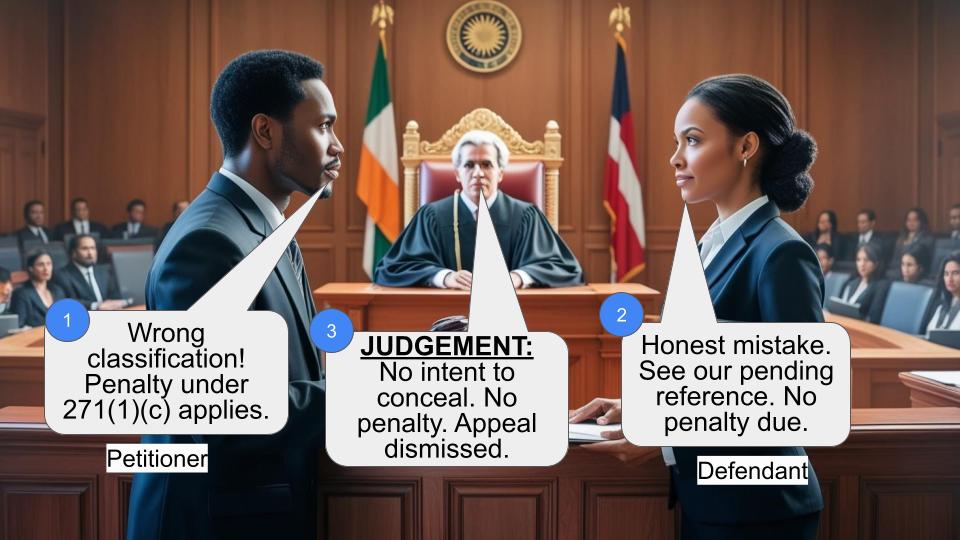
This case involves the Commissioner of Income Tax (Revenue) appealing against Real Image Pvt. Ltd. (assessee) regarding the tax treatment of a non-compete fee. The High Court dismissed the appeal, affirming that the non-compete fee received by the assessee is a capital receipt and not taxable under the Income Tax Act for the relevant assessment year.
Get the full picture - access the original judgement of the court order here
Case Name:
Commissioner of Income Tax Vs Real Image Pvt. Ltd. (High Court of Madras)
Tax Case No.223 of 2008
Date: 21st June 2012
Key Takeaways:
1. Non-compete fees were considered capital receipts and not taxable prior to April 1, 2003.
2. The court emphasized the importance of the specific agreement terms in determining the nature of payments.
3. The decision aligns with the Supreme Court's ruling in Guffic Chem (P) Ltd. v. Commissioner of Income-tax.
4. Legislative changes (Finance Act, 2002) made non-compete fees taxable from April 1, 2003, but cannot be applied retrospectively.
Issue:
Was the payment received by Real Image Pvt. Ltd. as a non-compete fee under a negative covenant a capital receipt (not taxable) or a payment for goodwill transfer (taxable as income)?
Facts:
1. Real Image Pvt. Ltd. was in the business of technology marketing and trading of audio-visual equipment.
2. On April 20, 2000, the company entered into two agreements with Real Image Media Technologies Pvt. Ltd.:
a) A business transfer agreement for Rs. 68,75,250
b) A non-compete agreement for Rs. 98,22,000
3. The assessee treated the non-compete fee as a capital receipt in their tax return.
4. The Assessing Officer initially considered it as goodwill transfer and sought to tax it.
5. The Commissioner of Income Tax (Appeals) and the Income Tax Appellate Tribunal ruled in favor of the assessee.
6. The Revenue department appealed to the High Court.
Arguments:
Revenue's Arguments:
1. The non-compete agreement effectively transferred goodwill, making it taxable.
2. The surrounding circumstances, such as common directorship, indicate a goodwill transfer.
3. The Finance Act, 2002 amendments should apply retrospectively.
Assessee's Arguments:
1. The non-compete fee is a capital receipt, not taxable as per established law.
2. The agreements clearly distinguish between business transfer and non-compete provisions.
3. Legislative changes cannot be applied retrospectively.
Key Legal Precedents:
1. Guffic Chem (P) Ltd. v. Commissioner of Income-tax (2011) 4 SCC 254: Established that non-compete fees were capital receipts and not taxable before April 1, 2003.
2. Gillanders Arbuthnot & Co. Ltd. v. CIT (1964) 53 ITR 283: Discussed but distinguished from the current case.
3. Lachminarayan Madan Lal v. Commissioner of Income-tax (1972) 086 ITR 0439: Cited by Revenue but found not applicable to the current case.
Judgement:
The High Court dismissed the Revenue's appeal, concluding that:
1. The payment received as a non-compete fee was a capital receipt and not taxable for the relevant assessment year.
2. The court upheld the concurrent findings of the CIT (Appeals) and the Tribunal.
3. The agreements clearly specified the nature of payments, distinguishing between business transfer and non-compete fee.
4. Legislative changes making non-compete fees taxable (Section 28 (of Income Tax Act, 1961)(v-a) of Income Tax Act) are applicable only from April 1, 2003, and cannot be applied retrospectively.
FAQs:
1. Q: Why was the non-compete fee considered a capital receipt?
A: Prior to April 1, 2003, payments received under negative covenants were consistently treated as capital receipts and not taxable under the Income Tax Act.
2. Q: What changed after April 1, 2003?
A: The Finance Act, 2002 introduced Section 28 (of Income Tax Act, 1961)(v-a) in the Income Tax Act, making non-compete fees taxable from April 1, 2003.
3. Q: Why couldn't the new law be applied to this case?
A: The court emphasized that tax liabilities cannot be created retrospectively, and the change was amendatory, not clarificatory.
4. Q: How did the court differentiate between goodwill and non-compete fee?
A: The court relied on the specific terms of the agreements, which clearly distinguished between the business transfer and the non-compete arrangement.
5. Q: What's the significance of this judgment for similar cases?
A: It reinforces the principle that non-compete fees received before April 1, 2003, should be treated as capital receipts and not taxed as income.

1. The Revenue has come forward with the present Tax Case Appeal against the order passed by the Income Tax Appellate Tribunal Madras 'B' Bench, dated 19.1.2007 in ITA.No.1561/Mds/2005 for the assessment year 2001-2002.
2. The facts in brief are as follows :-
The respondent / assessee company, namely, M/s. Real Image Private Limited, which was involved in the business of Technology Marking, Trading of Computers, Audit, Visual and Audio Visual equipments. By agreement dated 20.4.2000, M/s. Real Image Media Technologies Private Ltd., (formerly known as Media Artists Pvt. Ltd.,) took over the entire business of the assessee company for an agreed consideration of Rs.68,75,250/-, to be paid in the form of Rs.6,87,525/- fully paid up equity shares of Rs.10/- each. As per clause 11 of the aforesaid agreement, the assessee transferred all the commercial goodwill, in particular the trade name "Real Image" in favour of M/s. Real Image Media Technologies Pvt. Ltd., without any consideration. Clause 12 provides for further supplementary agreement to enable M/s. Real Image Media Technologies Pvt. Ltd., to continue the business of the assessee using its trade name "Real Image". Another agreement for non-compete dated 20.4.2000 was entered into by the assessee, by which the assessee agreed to pay the assessee Rs.98,22,000/- as non-compete fee. In the return of income, the assessee treated the aforesaid non-compete fee of Rs.98,22,000/- as a capital receipt. The Return was processed under Section 143(1) (of Income Tax Act, 1961) on 20.1.2003. After issuance of statutory notice and discussion, the Assessing Officer vide order dated 29.3.2004, held that the amount of Rs.98,22,000/- received by the assessee is nothing but the "Goodwill" and brought to tax under Section 45 (of Income Tax Act, 1961) read with Section 55(2)(a) (of Income Tax Act, 1961). The matter was taken in appeal by the assessee before the Commissioner of Income Tax, who, by order dated 22.03.2005, by observing that the assessee is neither manufacturing any products nor selling them under any particular brand name and the best it may enable the assessee company to have the continuity and deal with the same customers as was done by the assessee company earlier, held that the assessing officer cannot interpret the agreements to hold that the payment of Rs.98,22,000/- was towards 'Goodwill" and reversed the order of the assessing officer. The matter was taken in appeal by the Revenue before the Income Tax Appellate Tribunal. The Tribunal, after considering the question as to whether the amount received by the assessee was towards non-compete fee and in the nature of capital receipt or could it be treated as transfer of goodwill thereby the receipt is in the nature of revenue, answered the same in favour of the assessee, thereby rejected the appeal preferred by the Revenue. Aggrieved by the order of the Tribunal, the Revenue has come with the present appeal before this Court.
3. While admitting the Tax Case Appeal, the following substantial questions of law have been formulated for consideration :-
"Whether on the facts and circumstances of the case, the Tribunal was right in holding that the amount received for intangible assets under a separate agreement, is only a non-compete fee and does not contain any element of goodwill, especially when there is no other consideration specified in the main agreement for the goodwill?"
4. Learned Standing Counsel for the Department has mainly contended that an entire reading of the Agreement for Non-Compete between the parties would show that the word "goodwill" was omitted in the agreement for obvious reasons and in substance what was transferred was only the "goodwill". He further contended that once the entire business is transferred, it is understandable that the goodwill of the company also stands transferred and what was paid as "non-compete fee" is only a payment towards "goodwill". He has also contended that introducing the provision in the statute with effect from 1.4.2003 vide the Finance Act, 2002 would indicate that it is the intention of the Legislature to tax such receipts irrespective of the assessment year. Learned counsel by placing reliance upon the decision of the Supreme Court in Lachminarayan Madan Lal v. Commissioner of Income-tax (1972) 086 ITR 0439 submitted that the surrounding facts and circumstances such as the Director of the going concern and the purchasing company is one and the same and the Partners of the going concern were not restricted from using the trade name "Real Image" have established the true nature of the transaction to the effect that the goodwill has also been transferred along with the business of the assessee company.
5. On the other hand, the learned counsel for the assessee relying on various decisions of the Supreme Court, including the latest decision of the Supreme Court in Guffic Chem (P) Ltd., v. Commissioner of Income-tax (2011) 198 TAXMAN 78 (SC) contended that the law is well settled that the receipt of compensation attributable to the restrictive covenant is a capital receipt and not liable for tax.
6. The question which arises for consideration is as to whether the payment made under the agreement not to compete is a capital receipt as pleaded by the assessee or towards goodwill as pleaded by the Revenue ?
7. The assessee is a private company and during the previous year relevant to assessment year 2001-02, the assessee entered into an agreement, dated 20.04.2000, with M/s. Real Image Media Technologies Private Limited for transfer of the business of the company in technology marketing, trading of computers, audio, visual and audio visual equipments as a going concern with all assets and liabilities for a consideration of Rs.68,75,250/-. On the very same day, the assessee had also entered into another agreement not to compete with the same company and in terms of the said agreement the assessee ceased to carry on the business, which is being transferred, directly or indirectly for a period of five years with effect from 27.04.2005 for a consideration of Rs.98,22,000/- as non-compete fee.
According to the Assessing Officer, though the agreement entered into in respect of non-compete fee does not prescribe directly that the "goodwill" was not transferred, the entire reading of the agreement and the surrounding facts of the case reveal that the "goodwill" was transferred along with the business and it is not correct to state that consideration paid to the assessee was not for the purchase of the goodwill. The CIT (A) reversed the aforesaid finding by observing that the amount received towards 'non-compete fee' is clearly a 'capital receipt' and not taxable in the hands of the assessee company and there is no evidence to show that the amount received was towards transfer of 'Goodwill'. The Tribunal had also confirmed the finding of the CIT (A) and treated the payment made under the agreement towards non-compete fee as 'capital receipt' and not as 'goodwill'.
8. Whether the payment received as non-competition fee under a negative covenant was a capital receipt or a revenue receipt has been the issue in a recent decision of the Supreme Court in Guffic Chem (P) Ltd., v. Commissioner of Income-tax (2011) 4 SCC 254 = (2011) 198 TAXMAN 78 (SC).
In the aforesaid decision, the assessee-company transferred its trademarks to a company by name Ranbaxy and entered into an agreement with Ranbaxy under which the assessee company was restricted from manufacturing drugs for a period of 20 years for which the assessee had received certain amount from Ranbaxy as 'non-compete fee'. The Assessing Officer treated the said receipt as revenue receipt. On appeal, the CIT held that the sum received by the assessee from Ranbaxy was a capital receipt and was not taxable under the Act during the relevant assessment year. That decision was affirmed by the Tribunal. However, on appeal, the High Court reversed the decision of the Tribunal by following the decision of the Supreme Court in Gillanders Arbuthnot & Co. Ltd. v. CIT (1964) 53 ITR 283. The aforesaid decision came to be challenged before the Supreme Court.
The Supreme Court, after considering the questions arose in Gillanders Arbuthnot & Co. Ltd., and the decision rendered thereunder, observed as follows :-
"7. This dichotomy has not been appreciated by the High Court in its impugned judgment. The High Court has misinterpreted the judgment of this Court in Gillanders case. In the present case, the Department has not impugned the genuineness of the transaction. In the present case, we are of the view that the High Court has erred in interfering with the concurrent findings of fact recorded by CIT (A) and the Tribunal.
8. One more aspect needs to be highlighted. The payment received as non-competition fee under a negative covenant was always treated as a capital receipt till Assessment Year 2003-2004. It is only vide the Finance Act, 2002 with effect from 1-4-2003 that the said capital receipt is now made taxable [see Section 28 (of Income Tax Act, 1961)(v-a)]. The Finance Act, 2002 itself indicates that during the relevant assessment year compensation received by the assessee under non-competition agreement was a capital receipt, not taxable under the 1961 Act. It became taxable only with effect from 1-4-2003. It is well settled that a liability cannot be created retrospectively. In the present case, compensation received under the non-competition agreement became taxable as a capital receipt and not as a revenue receipt by specific legislative mandate vide Section 28 (of Income Tax Act, 1961)(v-a) and that too with effect from 1-4-2003. Hence, the said Section 28 (of Income Tax Act, 1961)(v-a) is amendatory and not clarificatory.
9. Lastly, in CIT v. Rai Bahadur Jairam Valji it was held by this Court that if a contract is entered into in the ordinary course of business, any compensation received for its termination (loss of agency) would be a revenue receipt. In the present case, both CIT(A) as well as the Tribunal, came to the conclusion that the agreement entered into by the assessee with Ranbaxy led to loss of source of business; that payment was received under the negative covenant and therefore the receipt of Rs. 50 lakhs by the assessee from Ranbaxy was in the nature of capital receipt. In fact, in order to put an end to the litigation, Parliament stepped in to specifically tax such receipts under the non-competition agreement with effect from 1-4-2003. (Emphasis added)
9. The aforesaid decision has amply made it clear that the payment received as non-competition fee under a negative covenant was a capital receipt and not taxable under the Act. Since the CIT (Appeals) and the Tribunal have concurrently held that the payment received as non-compete fee by the assessee from the purchaser company is a capital receipt and not the amount received towards the transfer of goodwill, applying the principle laid down in the aforesaid decision of the Supreme Court, we are not inclined to interfere with such a concurrent finding.
10. The decision in Lachminarayan Madan Lal v. Commissioner of Income-tax (1972) 086 ITR 0439 relied on by the learned Standing Counsel to the effect that the surrounding facts and circumstances have established the true nature of the transaction to the effect that the goodwill has also been transferred along with the business of the assessee company, is not applicable to the facts of the case as the agreement entered into between the parties have amply made it clear that the payment received by the assessee company was only towards non-compete fee and not towards the goodwill.
For the aforesaid reasons, the substantial question of law raised in this appeal is answered against the Revenue and in favour of the assessee. Accordingly, the Tax Case Appeal is dismissed. No costs.
(E.D.R.,J.) (M.V.,J.)
Index :Yes / No 21-06-2012
Website :Yes / No
To
1. The Income Tax Appellate Tribunal 'B' Bench, Chennai.
2. Commissioner of Income Tax Appeals (V) Chennai.
ELIPE DHARMA RAO,J. and
M. VENUGOPAL, J
21.06.2012
×
Similar Ripples
Questions
Non-compete fee ruled capital receipt, not taxable as income: High Court upholds Tribunal's decision
Write your CommentSimilar Posts


Generic
- Reportdata/5754.pdf
