“Court Upholds Case Transfer for Tax Authority Convenience”


Full News

“Court Upholds Case Transfer for Tax Authority Convenience”
“Court Upholds Case Transfer for Tax Authority Convenience”
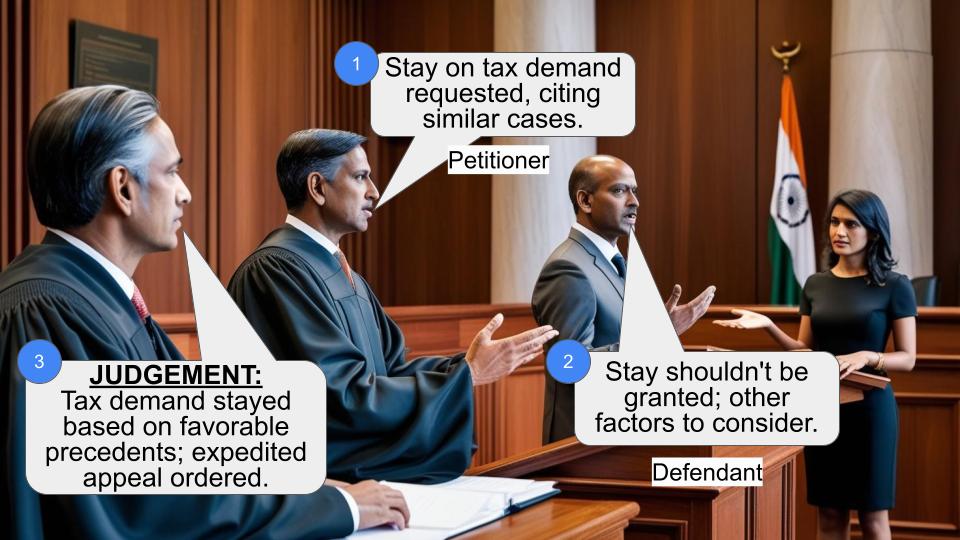
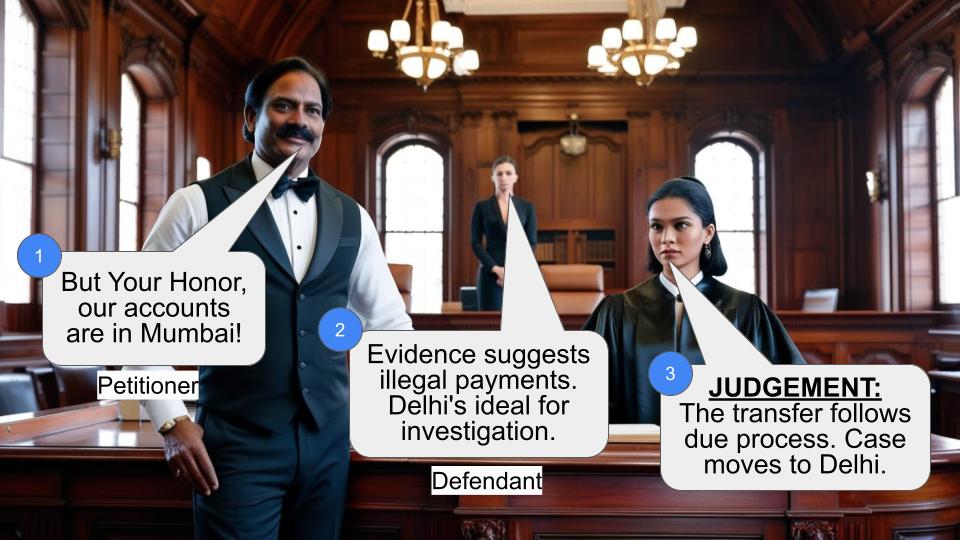
The case involves the transfer of an assessee’s tax case from one jurisdiction to another, based on the administrative convenience of the income tax authorities. The court ruled in favor of the transfer, emphasizing that administrative convenience is a valid reason for such a decision.
Get the full picture - access the original judgement of the court order here
Case Name
Ravneet Takhar vs. Commissioner of Income Tax & Others (High Court of Delhi)
W.P.(C) 3898/2013
Date: 19th October 2016
Key Takeaways
- Administrative Convenience: The court confirmed that administrative convenience is a legitimate reason for transferring a tax case under Section 127 (of Income Tax Act, 1961).
- Requirement of Reasons: The court highlighted the necessity for reasons to be recorded and communicated in the transfer order, although they need not be detailed.
- Centralization of Cases: The decision supports the centralization of cases to ensure consistent and coordinated tax assessments.
Issue
Is administrative convenience a valid ground for transferring an assessee’s case under Section 127 (of Income Tax Act, 1961)?
Facts
The assessee was subjected to search and seizure operations, along with other entities, primarily based in Jalandhar. The Additional Commissioner of Income Tax issued a notice proposing to centralize the assessee’s case in Jalandhar for administrative convenience. The assessee objected, arguing that the reasons provided were vague and not initially communicated.
Arguments
- Assessee’s Argument: The assessee contended that the notice and subsequent order lacked specific reasons, making the transfer unjustifiable. They relied on previous judgments like Ajantha Industries vs. CBDT to argue that reasons must be communicated.
- Revenue’s Argument: The revenue argued that the transfer was necessary for administrative convenience and coordinated investigation, citing the judgment in Surya Pharmaceuticals Ltd. vs. ITO as precedent.
Key Legal Precedents
- Ajantha Industries vs. CBDT (1976) 102 ITR 281 (SC): This case established the need for recording and communicating reasons for transfer orders.
- Melco India § Ltd. vs. CIT (2003) 260 ITR 450 (Del): Extended the requirement for reasons to be included in the notice to the assessee.
- Surya Pharmaceuticals Ltd. vs. ITO (2007) 295 ITR 427 (Delhi): Supported administrative convenience as a valid ground for case transfer.
Judgement
The court dismissed the writ petition, ruling that the transfer was justified based on administrative convenience. It emphasized that the reasons provided, although not detailed, were sufficient under the circumstances. The court found no merit in the assessee’s objections and upheld the transfer order.
FAQs
Q: Why was the case transferred?
A: The case was transferred for administrative convenience to centralize investigations and ensure consistent tax assessments.
Q: What does this mean for the assessee?
A: The assessee’s case will be handled by the tax authorities in Jalandhar, as per the transfer order.
Q: Can the assessee appeal this decision?
A: The court’s decision is final in this context, but the assessee may explore other legal avenues if they believe there are grounds for further appeal.
Q: What is Section 127 (of Income Tax Act, 1961)?
A: Section 127 (of Income Tax Act, 1961) allows for the transfer of cases between jurisdictions for reasons such as administrative convenience or coordinated investigation.

1. In this writ petition, the assessee impugns notice dated 24.04.2012 under Section 127(1) (of Income Tax Act, 1961) as well as the order made subsequently on 11.09.2012. It is contended that the impugned notice and order are contrary to law inasmuch as they do not contain any reasons.
2. The assessee was subjected to search and seizure proceedings under Section 132 (of Income Tax Act, 1961) pursuant to warrant issued in that regard. The warrant was not only in respect of the assessee but also in respect of other entities – most of whom were Jalandhar based. The impugned notice was issued by the Additional Commissioner of Income Tax proposing to centralise the assessee’s case by way of transfer to the concerned Deputy Commissioner of Income Tax/Additional Commissioner of Income Tax at Jalandhar. The assessee by reply dated 03.05.2012 objected to the proposed transfer contending that the notice contained vague reasons i.e. in its reference to search operations with respect to M/s Prominent Players of Land Deals. The assessee claimed that it was unaware of that rule and further stated that it was handicapped and could not object to the transfer. Therefore it sought “precise” reasons and cited a decision of the Andhra Pradesh High Court in Saptagiri Enterprises vs. CIT & Others (1991) 189 ITR 705 (AP). Subsequently, the assessee received notices from the office of the Assistant Commissioner of Income Tax, Jalandhar on 24.01.2013. Upon its protest that an order under Section 167 (of Income Tax Act, 1961) was furnished to it, the assessee was provided with the impugned order dated 11.09.2012. The said impugned order reads as follows:
A request was received from the Commissioner of Income Tax (Central) Ludhiana vide letter F. No. CIT(C)/JB/Cent./32/12-13/33 dated 09/04/2012 for centralization of below mentioned case of Mis Prominent Players of Land Deals Group of cases, Ludhiana from ACIT CIT 32(1) & ITO Ward 33(1) New Delhi of this charge to Central Circle-I. Jalandhar under the charge of the CIT (Central), Ludhiana. As this case was to be transferred out of Delhi u/s 127(2) (of Income Tax Act, 1961), an opportunity, was given to the assessees to file his objections in this regard.
The reply of Shri Ravneet Takhar S/o Sh. Ravinder Singh, has been received on 09/05/2012 giving objection for centralization of their case with the ACIT, Central Girded, Jalandhar. Accordingly, a letter was written to the CIT (Central), Ludhiana vide this office letter No. CIT- XI/Centralizationl/2012-13/402 dated 30th May, 2012. In response to the letter a reply has been received from the Director of income Tax (Inv.) Ludhiana through the CIT (Central) Ludhiana vide letter NO.DIT/Inv/Ldh/2012- 13/Cent/138 dated 27-07-2012 stating their that the objection of the assessee Shri. Ravneet Takhar are not maintainable. Hence, it is requested that the matter be taken up with the respective commissioner of Income Tax having present jurisdiction over his case for centralization of this case with ACIT Central Circle, Jalandhar. In the case of Shri. Yogendra Kumar Agrahari neither any reply nor any objection has been received till date.
Otherwise also, section 127 (of Income Tax Act, 1961) provides for giving the assessee a reasonable opportunity of being heard in the matter of Transferring only "Wherever it is possible to do so". Thus the section, does not even make giving opportunity of being heard to the assessee legally mandatory The centralization order u/s 127(2) (of Income Tax Act, 1961) is being passed in the public interest which has been consensually interpreted as including 'coordinated investigation in the interest of revenue and administrative convenience.
Therefore, in exercise of the powers, conferred by Sub Section(2) of the Section 127 (of Income Tax Act, 1961) and all other powers enabling me on this behalf, I, the Commissioner of Income Tax, Delhi-XI, New Delhi hereby transfer the case, the particulars of which is mentioned in Column from the Assessing Officers mentioned in Column-4 to the Assessing Officer mentioned in column-5 of the Annexure below after receiving the [Not Eligible in the copy received from the Respondent]
3. It is argued that the impugned order as well as the notice which preceded it are unsustainable. Learned counsel relies upon the Supreme Court’s judgment in Ajantha Industries vs. Central Board of Direct Tax (1976) 102 ITR 281 (SC) and ruling of this court in Melco India (P) Ltd. & Ors. vs. CIT (2003) 260 ITR 450 (Del). It is submitted that the reasons indicated in the impugned notice are untenable because they are not specific. Counsel relied upon Melco India (P) Ltd.’s case (supra). In that regard it was further submitted that lack of specific reasons in the notice and the reasons furnished in the order are of such a nature as to render the transfer order illegal and unenforceable.
4. The revenue contends in its counter affidavit that besides the search and seizure operations carried out in the assessee’s premises warrants were executed in respect of a large number of other entities, including M/s Prominent Players of Land Deals and M/s Punjab Iron and Steel Co. Pvt. Ltd. It was decided to transfer the case and centralise it for the sake of convenience to Jalandhar. The respondents rely upon the judgment of this court in Surya Pharmaceuticals Ltd. vs. ITO (2007) 295 ITR 427 (Delhi) which ruled that administrative convenience is a sufficient ground to transfer or centralise cases under Section 127 (of Income Tax Act, 1961).
5. The assessee’s mainstay is Ajantha Industries’s case (supra). On the juxtaposition of the previous law embodied in Section 34 (of Income Tax Act, 1961), 1922 with the present provision under Section 127(1) (of Income Tax Act, 1961), the Court concluded that recording reasons and their communication in an order under Section 127(1) (of Income Tax Act, 1961) is necessary: Mr. Sharma also drew our attention to a decision of this court in S. Narayanappa v. Commissioner of Income-tax (1967) 63 ITR 219 (SC), where this court was dealing with section 34 of the old Act. It is clear that there is no requirement in any of the provisions of the Act or any section laying down as a condition for the initiation of the proceedings that the reasons which induced the Commissioner to accord sanction to proceed under section 34 (of Income Tax Act, 1961) must also be communicated to the assessee. The Income- tax Officer need not communicate to the assessee the reasons which led him to initiate the proceedings under section 34 (of Income Tax Act, 1961). The case under section 34 (of Income Tax Act, 1961) is clearly distinguishable from that of a transfer order under section 127(1) (of Income Tax Act, 1961).
When an order under section 34 (of Income Tax Act, 1961) is made the aggrieved assessee can agitate the matter in appeal against the assessment order, but an assessee against whom an order of transfer is made has no such remedy under the Act to question the order of transfer. Besides, the aggrieved assessee on receipt of the notice under section 34 (of Income Tax Act, 1961) may even satisfy the Income-tax Officer that there were no reasons for reopening the assessment. Such an opportunity is not available to an assessee under section 127(1) (of Income Tax Act, 1961). The above decision is, therefore, clearly distinguishable.
6. In Melco India (P) Ltd.’s case (supra) the logic of Ajantha Industries’s case (supra) appears to have been extended further to say that reasons should not only be forthcoming in the order under Section 127(1) (of Income Tax Act, 1961) but in the notice issued to the assessee as well:
6. In Ajantha Industries v. CBDT [1976] 102 ITR 281(SC), while dealing with the provisions of Section 127 (of Income Tax Act, 1961), their Lordships of the Supreme Court observed that before making an order of transfer the Legislature has imposed the requirement of a show cause notice and also recording of reasons.
Elucidating the principle enunciated in Ajantha Industries case (supra) a Division Bench of the Andhra Pradesh High Court in Vijayasanthi Investments Pvt. Ltd. v. Chief CIT & Ors. [1991] 197 ITR 405(AP), observed as under (page 411) :
"... in the matter of the transfer of a case under Section 127 (of Income Tax Act, 1961), it is necessary that the authority which proposes to transfer the case must, wherever it is possible to do so, give the assessee a reasonable opportunity of being heard with a view to enable him to effectively show cause against the proposed transfer. The notice must also propose to give a personal hearing. It is also necessary to mention in the notice the reasons for the proposed transfer so that the assessee could make an effective representation with reference to the reasons set out. It is not sufficient merely to say in the notice that the transfer is proposed “to facilitate detailed and co-ordinated investigation”. The reasons cannot be vague and too general in nature but must be specific and based on material facts. It is again not merely sufficient to record the reasons in the file but it is also necessary to communicate the same to the affected party."
7. The assessee’s contention, broadly, is that the notice issued on 24.04.2012 does not contain “precise” reasons [read as “specific” having regard to decision in Melco India P. Ltd’s case (supra)].
8. Now, the very first sentence in the notice of 24.04.2012 specifically alludes to the search and seizure proceedings carried out. That the assessee responded to the notice is not in dispute. Admittedly, the assessee’s contention at this stage is that the reasons were vague. However, the materials on record do indicate that the assessee was subjected to search; statements of the individuals were recorded during the course of search proceedings which appear to have been the subject matter of consideration by the Income Tax authorities when they finally gave an order under Section 127(1) (of Income Tax Act, 1961). The assessee’s argument is that even the order under Section 127 (of Income Tax Act, 1961) was not furnished to it in the first instance but rather upon its asking after it was intimated about the transfer by the Jalandhar Officer. There is undoubtedly, some substance in this argument. However, to constitute a fatal infirmity the reasons indicated in the order under Section 127(1) (of Income Tax Act, 1961) dated 11.09.2012 should be of a nature which can be said to be no reasons at all. The order to the extent it is relevant has been extracted above; it clearly indicates that the decision to transfer assessee’s case is based upon the convenience of the income tax authorities who had conducted search in respect of the other entities and individuals in Jalandhar. The materials on record filed along with the counter affidavit support this conclusion. The judgment in Surya Pharmaceuticals’s case (supra), we notice, was rendered after Melco India P. Ltd.’s case (supra). In Surya Pharmaceuticals’s case (supra), the court held that administrative convenience could be a valid ground for transfer of the assessee’s case. In the circumstances of this case, the court is of the opinion that the opinion formation cannot be faulted – there is no gainsaying to the fact that but for the centralisation there could be different approaches leading to differing block assessment orders.
9. For the above reasons, the writ petition is devoid of merit and is accordingly dismissed.
S. RAVINDRA BHAT
(JUDGE)
DEEPA SHARMA
(JUDGE)
OCTOBER 19, 2016
×