Court Upholds Voluntary Income Disclosure Scheme Benefits, Overrules Tax Depart…


Full News

Court Upholds Voluntary Income Disclosure Scheme Benefits, Overrules Tax Department
Court Upholds Voluntary Income Disclosure Scheme Benefits, Overrules Tax Department
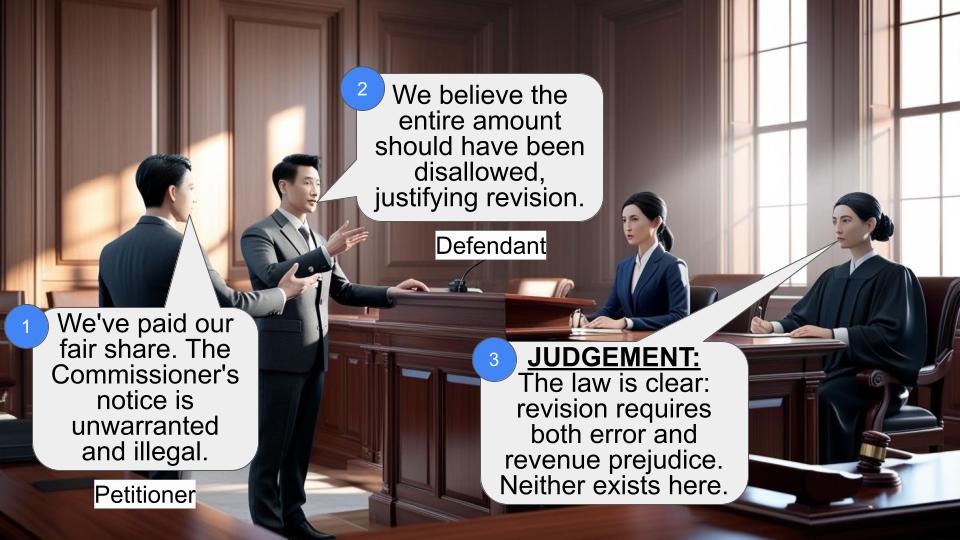
This case involves appeals by the Income Tax Department against orders passed by the Income Tax Appellate Tribunal (ITAT) in favor of taxpayers who had disclosed income under the Voluntary Disclosure of Income Scheme (VDIS) 1997. The High Court dismissed the appeals, affirming the ITAT's decision to allow the benefits of VDIS to the assessees.
Get the full picture - access the original judgement of the court order here
Case Name:
Commissioner of Income Tax Vs Rajiv Enterprises (High Court of Gujarat)
Tax Appeal No. 1436 of 2006
Date: 22nd June 2016
Key Takeaways:
1. Once a valid certificate is granted under VDIS 1997, the assessee is entitled to immunity under Section 68 of the Finance Act, 1997.
2. The Assessing Officer cannot go behind the certificate issued by the Commissioner under VDIS.
3. The amount of voluntarily disclosed income should not be included in the total income of the declarant for any assessment year if specified conditions are met.
Issue:
Whether the Income Tax Appellate Tribunal was correct in law and on facts in setting aside the order passed by the Assessing Officer and allowing the benefit of the Voluntary Disclosure of Income Scheme (VDIS) to the assessee?
Facts:
1. The case involves two tax appeals challenging ITAT orders for block periods from 03/11/1986 to 20/10/1997.
2. The assessees had made declarations under the VDIS 1997.
3. The Assessing Officer had made additions to the income, which were confirmed by the CIT (Appeals).
4. The ITAT set aside these orders, deleting the additions and allowing VDIS benefits to the assessees.
Arguments:
Revenue's Arguments:
1. The ITAT erred in quashing the Assessing Officer's order and deleting the additions.
2. The ITAT wrongly allowed VDIS benefits without considering all material evidence.
Assessee's Arguments:
1. The issue is covered by previous court decisions, including Nitin P. Shah alias Modi v. Deputy Commissioner of Income-Tax [2005] 276 ITR 411 (Guj).
2. Similar views have been taken by other High Courts in similar cases.
Key Legal Precedents:
1. Nitin P. Shah alias Modi v. Deputy Commissioner of Income-Tax [2005] 276 ITR 411 (Guj)
2. Uma Corporation v. Krishna Prabhakar, Assistant Commissioner of Income Tax & Ors., (2006) 204 CTR (Bom) 282
3. Bhagwat Prasad v. Commissioner of Income-Tax (2003) 183 CTR (All) 626
4. Gestetner Duplicators P. Ltd. Vs. CIT [1979] 117 ITR 1
5. Union of India Vs. Azadi Bachao Andolan [2003] 263 ITR 706
Judgement:
The High Court dismissed the appeals, upholding the ITAT's decision. Key points of the judgment include:
1. The court found that the issue was squarely covered by previous decisions, particularly the Nitin P. Shah case.
2. Section 68 of the Finance Act, 1997 clearly states that voluntarily disclosed income shall not be included in total income if specified conditions are met.
3. Once a certificate is issued under Section 68(2) (of Income Tax Act, 1961) of VDIS, it's not open for subordinate authorities to question it.
4. The Assessing Officer cannot go behind the certificate issued by the Commissioner and assess income that has already been taxed under VDIS.
FAQs:
1. Q: What is the Voluntary Disclosure of Income Scheme (VDIS) 1997?
A: VDIS 1997 was a scheme that allowed taxpayers to voluntarily disclose previously undeclared income by paying a specified tax rate, in return for immunity from further scrutiny on that income.
2. Q: Can an Assessing Officer override a certificate issued under VDIS?
A: No, the judgment clearly states that once a certificate is issued by the Commissioner under VDIS, the Assessing Officer cannot go behind it or ignore it.
3. Q: What conditions need to be fulfilled for VDIS benefits?
A: The declarant must credit the disclosed amount in their books of account and intimate the Assessing Officer, and pay the required income tax within the specified time.
4. Q: Does this judgment set a precedent for similar cases?
A: Yes, this judgment reinforces previous decisions on the matter and provides a clear interpretation of how VDIS certificates should be treated by tax authorities.
5. Q: What's the significance of this judgment for taxpayers?
A: It provides assurance to taxpayers who have made valid disclosures under VDIS that their disclosed income cannot be reassessed or included in their total income for any assessment year, as long as they've met the specified conditions.

1. Since the common question of arises, both these appeals are being heard and decided together by way of this common oral judgment.
2. Tax Appeal No.1436 of 2006 challenges order dated 07/07/2006 passed by the ITAT in IT (SS)A No.33/Ahd/2001 for the block period 03/11/1986 to 20/10/1997 and the said appeal came to be admitted on the following questions of law:
“(A) Whether the Appellate Tribunal is right in law and on facts in setting aside the order passed by the Assessing Officer as confirmed by the CIT (A) and thereby deleting the addition of Rs.75,50,000/?
(B) Whether the Appellate Tribunal has correctly appreciated the facts on record so as to allow benefit of Voluntary Disclosure of Income Scheme (VDIS) to the assessee in respect of an amount of Rs. 75,50,000/?”
3. Whereas, Tax Appeal No.1467 of 2008 challenges the order passed by the ITAT in IT (SS) A No.73/Ahd/2001 for the block period 03/11/1986 to 20/10/1997 and the said appeal came to be admitted on the following questions of law:
“(1) Whether on the facts and in the circumstances of the case, the Income Tax Appellate Tribunal was justified in law in upholding the validity of block assessment proceedings initiated u/S.158BD (of Income Tax Act, 1961) on 29.10.1999 by AO?
(2) Whether on the facts and in the circumstances of the case, the Income Tax Appellate Tribunal was justified in law in upholding that Rs.4,50,000/ was undisclosed income inspite of declaration made by the appellant under VDIS, 1997?
(3) Whether on the facts and in the circumstances of the case, the Income Tax Appellate Tribunal was justified in law in deciding the validity of the declaration made under VDIS' 1997 and denying the immunity in respect of Rs.4,50,000?
(4) Whether on the facts and in the circumstances of the case, the Income Tax Appellate Tribunal was justified in law in upholding the addition of Rs.4,80,000/ in the hands of the appellant?”
4. Learned Counsel for the revenue has contended that the ITAT has committed a serious error by quashing and setting aside the order passed by the Assessing Officer as confirmed by the CIT (Appeals) and thereby deleting the addition of Rs.75,50,000/. He has further contended that the ITAT has committed an error by allowing benefit of Voluntary Disclosure of Income scheme to the assessee in respect of an amount of Rs.75,50,000/ by not considering the material placed before it. In support of the contentions raised in this appeal, learned Counsel has relied upon the reported decision of the Hon'ble Telangana and Andhra Pradesh High Court in case of Commissioner of IncomeTax v. Shankarlal & ors., [2015] 372 ITR 405 (T & AP).
4.1 Learned Counsel for the revenue has taken this Court through the order made by the A.O., which has been confirmed by the CIT (Appeals) and contended that orders passed by the authorities are just and proper and no interference was required to be made by the tribunal and therefore order passed by the ITAT may be quashed and set aside.
5. On the other hand, learned Advocate Mr.Divetia for the assessee has mainly contended that the issue involved in this matter is squarely covered by the decision in case of Nitin P. Shah alias Modi v. Deputy Commissioner of IncomeTax [2005] 276 ITR 411 (Guj) where this Hon'ble Court has held that the certificate issued under Section 68(2) (of Income Tax Act, 1961), cannot be cancelled or revoked.
5.1 He has further contended that similar issue has also come up for consideration before the Hon'ble Bombay High Court in case of Uma Corporation v. Krishna Prabhakar, Assistant Commissioner of Income Tax & Ors., (2006) 204 CTR (Bom) 282 wherein in paragraph No.6 the said view as referred earlier has been taken and notice issued to the assessee came to be dismissed.
5.2 He has also contended that identical issue was also raised before the Hon'ble High Court of Allahabad in case of Bhagwat Prasad v. Commissioner of IncomeTax (2003) 183 CTR (All) 626 wherein it has been held that once a valid certificate had been granted to the petitioner by the CIT under the VDIS 1997, he was entitled to the immunity under Section 68 of the Finance Act, 1997 and the impugned proceedings under Section 158BD (of Income Tax Act, 1961) taken against the petitioner were illegal. Lastly, he contended the ITAT's order is just and proper and no interference is required at the hands of this Court.
6. Having heard the learned Counsel for the parties and having gone through the decisions cited at the bar, this Court is of the opinion that the issue involved in this matter is squarely covered by the decisions referred by the learned Counsel for the respondent. In the case of Nitin P. Shah alias Modi (supra), this Court has in detailed discussed the issue and relevant discussion reads thus:
“23. As noted hereinbefore, the assessee succeeded before the Commissioner of Incometax (Appeals) and the Revenue's appeal on this count was dismissed by the Tribunal.
24. Section 68 (of Income Tax Act, 1961) of the VDIS reads as under:
"68. Voluntarily disclosed income not to be included in the total income.(1) The amount of the voluntarily disclosed income shall not be included in the total income of the declarant for any assessment year under the Incometax Act, if the following conditions are fulfilled, namely:
(i) the declarant credits such amount in the books of account, if any, maintained by him for any source of income or in any other record, and intimates the credit so made to the Assessing Officer; and
(ii) the incometax in respect of the voluntarily disclosed income is paid by the declarant within the time specified in section 66 (of Income Tax Act, 1961) or section 67 (of Income Tax Act, 1961).
(2) The Commissioner shall, on an application made by the declarant, grant a certificate to him setting forth the particulars of the voluntarily disclosed income and the amount of incometax paid in respect of the same".
The said provision on a plain reading makes it clear that the amount of voluntarily disclosed income shall not be included in the total income of the declarant for any assessment year under the Act if the specified conditions stand fulfilled. The conditions are: (i) the declarant credits such amount in the books of account, if any, maintained by him for any source of income or in any other record, and intimates the credit so made to the Assessing Officer; and (ii) the incometax in respect of such voluntarily disclosed income is paid by the declarant within the time specified in section 66 (of Income Tax Act, 1961) or section 67 (of Income Tax Act, 1961). Under subsection (2), it is provided that on an application made by the declarant, the Commissioner shall grant a certificate to the declarant and such certificate shall set out the particulars of the voluntarily disclosed income and the amount of incometax paid in respect of such disclosure. The emphasis of the Assessing Officer on noncompliance with condition as prescribed in section 68(1)(i) (of Income Tax Act, 1961) is required to be considered.
26. As can be seen from the form of declaration, the declarant is required to attach copies of relevant entries made in the books of account or any other record along with the declaration in duplicate. The purpose behind the scheme providing for making of entries in the books of account or any other record is to ensure that the same declared income (asset) is not relied upon to explain away some other income (asset) by an assessee in subsequent proceedings. There is one more reason. Under section 73 (of Income Tax Act, 1961) of the VDIS, a declarant is not required to pay wealthtax where the voluntarily disclosed income is represented by cash, bullion, other assets specified in section 73(1) (of Income Tax Act, 1961) of the Scheme but such immunity from payment of wealthtax is for the assessment years for which declaration is made. Meaning thereby, the declarant is required to show that the corresponding wealth, relatable to such income/asset declared under the VDIS, is returned for the subsequent assessment years. Thus, making of credit on the basis in the books of account or in other record assumes importance for the purpose of wealthtax payable for the subsequent assessment years also. The requirement of furnishing the copies of the entries in duplicate along with declaration form indicates that one set is retained by the Commissioner along with declaration made by the concerned assessee while the second set is forwarded to the Assessing Officer having jurisdiction over the declarant.
27. The Commissioner having issued the certificate under section 68(2) of the Scheme, judicial discipline requires that the authorities entrusted with administering law proceed on the basis that the certificate granted by the Commissioner would indicate satisfaction of all the requisite conditions as required by the provisions of the scheme and it is not open to the subordinate authority to sit in judgment over the certificate granted by the Commissioner. The Assessing Officer in the present case has, while making addition of Rs. 137 lakhs in the fresh assessment made pursuant to the order of set aside, taken upon himself to give a go- by to the certificate issued by the Commissioner as if the said certificate had been issued by the Commissioner without verification or application of mind. The court is not prepared to proceed on such an assumption, though it was so contended by learned counsel for the Revenue. The fact that the Commissioner is superior authority in so far as the Assessing Officer is concerned, is not in dispute and could not be disputed by learned counsel for the Revenue. Once that is the position, the following observations made by the apex court in the case of Gestetner Duplicators P. Ltd. Vs. CIT [1979] 117 ITR 1, would apply. In a case where a private company employed salesmen with a fixed monthly salary and also commission at fixed percentage of the turnover achieved by the salesmen, the assesseecompany paid employer's contribution to a provident fund maintained by the company after computing the same by considering both as salary. The fund was recognised by the Commissioner.
According to the Assessing Officer, the commission so paid did not partake of the character of salary and, hence, the contribution made in relation to such commission was proportionately disallowed in the assessment proceedings. After deciding on the merits of the dispute between the parties and taking into consideration the terms of the contract, it was observed by the court that:
"It would be conducive to judicial discipline and the maintaining of certainty and uniformity in administering the law that the taxing authorities should proceed on the basis that the recognition granted and available for any particular assessment year implies that the provident fund satisfies all the conditions under rule 4 (of Income Tax Rules, 1962) of Part A of the Fourth Schedule to the Act and not sit in judgment over it.
There is ample power conferred upon the Commissioner under rule 3 (of Income Tax Rules, 1962) of Part A of the Fourth Schedule to withdraw at any time the recognition already granted if, in his opinion, the provident fund contravenes any of the conditions required to be satisfied for its recognition and if during the assessment proceedings for any particular assessment year the taxing authority finds that the provident fund maintained by an assessee has contravened any of the conditions of recognition, he may refer the question of withdrawal of recognition to the Commissioner but until the Commissioner acting under the powers reserved to him, withdraws such recognition the taxing authority must proceed on the basis that the provident fund has satisfied all the requisite conditions for its recognition for that year; any other course is bound to result in chaos and uncertainty which has to be avoided."
Therefore, it is not open to the Assessing Officer to go behind the certificate issued by the Commissioner and by ignoring the same, assess an income which has already borne tax under the VDIS.
28. The Assessing Officer has assigned one more reason for rejecting the declaration made under the VDIS by the assessee. According to the Assessing Officer the circulars issued by the Central Board of Direct Taxes could not have been issued under section 119 (of Income Tax Act, 1961), and hence, they are violative of the provisions of the Constitution as well as go beyond the powers available to the Board under the Act. A similar contention was specifically raised in a case before the Supreme Court, in the case of Union of India Vs. Azadi Bachao Andolan [2003] 263 ITR 706. The Supreme Court observed:
"It is trite law that as long as an authority has power, which is traceable to a source, the mere fact that source of power is not indicated in an instrument does not render the instrument invalid [see in this connection State of Sikkim Vs. Dorjee Tshering Bhutia [1991] 4 SCC 243 at para. 16; N.B. Sanjana, CCE (Asst.) Vs. Elphinstone Spinning and Weaving Mills Co. Ltd. [1971] 1 SCC 337; P. Balakotaiah Vs. Union of India [1958] SCR 1052; AIR 1958 SC 232 and Afzal Ullah Vs. State of U.P. [1964] 4 SCR 991 ; AIR 1964 SC 264].
Even on this ground, the Assessing Officer was not justified in holding that the sum of Rs. 137 lakhs did not form part of valid declaration.”
7. Thus, in light of the above settled legal position the view taken by the Tribunal is correct. At this stage, it is required to be noted that similar view has been adopted by the other High Courts in identical matter as referred earlier and therefore this Court does not deem it fit to now discuss the issue with elaborate reasons and accordingly answer the issue in favour of assessee and against the department.
8. In the results, both these appeals are dismissed.
(K.S.JHAVERI, J.)
(G.R.UDHWANI, J.)
×