


Court Overturns Tax Tribunal's Decision on Unexplained Cash Credits


Full News

Court Overturns Tax Tribunal's Decision on Unexplained Cash Credits
Court Overturns Tax Tribunal's Decision on Unexplained Cash Credits
It's about a company called Kumar Nirman and Nivesh Pvt Ltd who appealed against a tax assessment. The main issue was whether they had to prove the source of a loan they received. The High Court ended up siding with the company and overturned the decision of the Income Tax Appellate Tribunal.
Get the full picture - access the original judgement of the court order here
Case Name:
M/s. Kumar Nirman and Nivesh Pvt Ltd (Rep. by its Director Subramanya Hegde) Vs Assistant Commissioner of Income Tax (High Court of Karnataka)
ITA No.255 of 2010
Date: 31st January 2020
Key Takeaways:
1. The court reinforced that an assessee doesn't need to prove the "source of source" for loans received.
2. If an assessee provides basic information about a creditor, it's up to the tax department to investigate further.
3. The court emphasized the importance of conducting proper inquiries before making tax additions.
Issue:
The main question here was: Is an assessee (that's the taxpayer) required to prove the source of funds of their creditor when they've taken a loan?
Facts:
1. Kumar Nirman and Nivesh Pvt Ltd is a construction company.
2. For the 2005-06 tax year, they declared an income of Rs. 38,11,543.
3. The company said they received Rs. 55 lakhs in cash from M/s Bhuwania Bros. Pvt. Ltd. in Calcutta for a proposed contract.
4. The deal didn't go through, and the money was repaid.
5. The tax officer didn't buy this explanation and added the 55 lakhs to the company's income as unexplained cash credits.
6. The company appealed, and it went through various stages before landing in the High Court.
Arguments:
The company (the appellant) said:
1. They provided all necessary details to prove the identity and creditworthiness of Bhuwania Bros.
2. The tax officer shouldn't judge liquidity just by looking at a balance sheet.
3. They shouldn't be expected to prove the "source of source" of the funds.
The tax department (the respondent) argued:
1. The company needed to prove the identity of the creditor, the genuineness of the transaction, and the creditworthiness of the creditor.
2. No original agreement or cancellation deed was produced for the proposed sale.
Key Legal Precedents:
The court relied on several important cases:
1. 'CIT VS. DAULAT RAM RAWATMULL', 87 ITR 349 (SC):
This case said that even if an explanation about the source of money isn't correct, the person could still be the owner of that money.
2. 'LABHCHAND BOHRA VS. ITO', 219 CTR 571 (RAJ):
This one said an assessee can't be required to prove the source of the source.
3. 'CIT VS. ORISSA CORPORATION', 159 ITR 78 (SC):
This case held that if an assessee gives names and addresses of creditors, it's up to the revenue department to investigate their creditworthiness.
Judgement:
The High Court ruled in favor of the company. They said:
1. The company had provided enough information about Bhuwania Bros.
2. It was the tax department's job to investigate further if they doubted the transaction.
3. The tax department didn't conduct any inquiry and failed to prove the transaction wasn't genuine.
4. The court quashed the order of the Income Tax Appellate Tribunal and allowed the company's appeal.
FAQs:
Q1: Does this mean companies never have to prove where their loans come from?
A1: Not exactly. They still need to provide basic information about the creditor, but they don't have to prove the "source of source" of the funds.
Q2: Why didn't the tax department's arguments work?
A2: The court felt that once the company provided basic information, it was the tax department's responsibility to investigate further if they had doubts.
Q3: Does this judgment apply to all tax years?
A3: This specific case dealt with the 2005-06 tax year. The court noted that there have been amendments to the law since then, so it might not apply in the same way to more recent cases.
Q4: What should taxpayers learn from this case?
A4: It's important to maintain proper documentation of transactions and be ready to provide basic information about creditors. However, you're not expected to prove every detail of your creditor's finances.

This appeal under Section 260A (of Income Tax Act, 1961) (hereinafter referred to as ‘the Act’, for short), which has been filed by the assessee which pertains to assessment year 2005-06. The moot question, which arises for consideration in this appeal is whether an assessee who has taken a loan is bound to produce the source of source. A bench of this court by an order dated 20.10.2010 had admitted the appeal on the following substantial questions of law:
(i) Whether the Tribunal was justified in law in reversing the finding of the Commissioner of Income Tax (Appeals) an addition of Rs.55,00,000/- under Section 68 (of Income Tax Act, 1961) on the facts and circumstance of the case?
(ii) Whether the tribunal was justified in law in holding that the appellant has not proved the credit inspite of detailed evidences placed before the Tribunal on the facts and circumstance of the case?
(iii) Whether the Tribunal was justified in law in expecting in expecting the appellant to prove the source of source and origin of origin of the funds of the creditor on the facts and circumstances of the case?
(iv) Without prejudice whether the Tribunal ought to have remanded the matter to the file of the Assessing Officer when it recorded a finding that more facts ought to have been verified on the facts and circumstances of the case?
2. Facts giving rise to the filing of the appeal briefly stated are that the appellant is a company, which is engaged in the business of construction. The appellant filed its return of income for assessment year 2005-06 and declared the total income of Rs.38,11,543/-. The return filed by the appellant was selected for scrutiny and a notice under Section 143(2) (of Income Tax Act, 1961) was issued. According to the assessee, it received a sum of Rs.55 Lakhs by way of cash from M/s Bhuwania Bros. Pvt. Ltd. Calcutta on various dates against a proposed contract for sale. However, the sale could not be finalized on account of some reasons. The aforesaid amounts were paid to M/s Bhuwania Bros. Pvt. Ltd., and the accounts of M/s.Bhuwania Bros. Pvt. Ltd., also showed the repayment of the said amount. However, the Assessing Officer by an order dated 31.12.2017, rejected the explanation furnished by the assessee and made an addition of Rs.55 Lakhs as the same was treated as unexplained cash credits in the hands of the assessee and was added to the income of the assessee. Being aggrieved, the assessee filed an appeal. The Commissioner of Income Tax (Appeals) by an order dated 24.08.2009, added the deletion of a sum of Rs.55 Lakhs. The appeal preferred by the assessee was partly allowed by the Commissioner of Income Tax (Appeals). Being aggrieved, the assessee as well as the revenue filed appeals before the Income Tax Appellate Tribunal (hereinafter referred to as ‘the tribunal’ for short). The tribunal by an order dated 05.03.2010, allowed the appeal preferred by the revenue and dismissed the appeal preferred by the assessee and maintained the order passed by the Assessing Officer. In the aforesaid factual background, this appeal has been filed.
3. Learned Senior counsel for the appellant submitted that the Assessing Officer grossly erred in making addition on the ground that on perusal of the balance sheet, prima facie it appears, that party does not have liquidity to make such huge cash transactions. It is further submitted that the Assessing Officer cannot decide the liquidity of the cash looking into the balance sheet, without looking into the cash book of the parties. It was further submitted that Assessing Officer ought to have appreciated that the appellant had identity, genuineness of the transactions and credit worthiness of the party by producing details before the Assessing Officer. It is further submitted that the addition made by the Assessing Officer is not in accordance with Section 68 (of Income Tax Act, 1961) as there is no concept of undisclosed income. It is further submitted that the Commissioner of R Shivappa, V Lokeshmurthy, P Narasimha Swamy, R Kiran and B.S. Manjunath Tax (Appeals) by considering the remand before the Assessing Officer rightly held that the appellant had proved the identity and credit worthiness. It is submitted that the tribunal grossly erred in holding that summons issued to M/s Bhuwania Bros. Pvt. Ltd. were not complied with as balance sheet and confirmation letter was filed. It is also urged that the tribunal ignored the material evidence on record and erred in holding that the entries in the assessee’s books are self serving. It is also urged that the tribunal grossly erred in holding that the assessee is expected to examine the source. In support of aforesaid submissions, reliance has bee placed on the following decisions ‘CIT VS. DAULAT RAM RAWATMULL’, 87 ITR 349 (SC), ‘LABHCHAND BOHRA VS. ITO’, 219 CTR 571 (RAJ), ‘KANHAILAL JANGID VS. ACIT’, 217 CTR 354 (RAJ) AND ‘CIT VS. ORISSA CORPORATION’, 159 ITR 78 (SC).
4. On the other hand, learned counsel for the revenue submitted that in order to avoid the rigor of Section 68 (of Income Tax Act, 1961), the assessee is required to prove the identity of the creditor, genuineness of the transaction and credit worthiness of the creditor, which has not been done in the instant case. It is further submitted that neither the original agreement with regard to sale of the property nor the deed of cancellation of sale has been produced. Therefore, the Assessing Officer has rightly made an addition of Rs.55 Lakhs in the income of the assessee. It is also submitted that the assessee has failed to prove the availability of the cash. In support of aforesaid submissions, reliance has been placed by the learned counsel for the revenue in the case of ‘COMMISISONER OF INCOME-TAX VS. P.R.GANAPATHY’, (2012) 26 TAXMANN.COM 354 (SC) AND ‘PRINCIPAL COMMISSIONER OF INCOME TAX (CENTRAL)-1 VS. NRA IRON & STEEL PVT. LTD.’, (2019) 412 ITR 161 (SC).
5. In rebuttal learned Senior counsel for the assessee has placed reliance on division bench High Court of Madhya Pradesh in ITRNo.22/2018 decided on 07.08.2018. It is further submitted that the similar issue was dealt with the division bench of Madhya Pradesh High Court and the aforesaid decision has been upheld by Supreme Court vide order dated 18,.02.2019 in SLP (civil diary) No.1992/2019.
6. We have considered the submissions made on both the sides and have perused the record. The Supreme Court in the case of DAULAT RAM RAWATMULL supra has held that a person could still be held to be the owner of a sum of money even though the explanation furnished by him regarding the source of that money was found to be not correct. It has further been held that onus of proving that the transaction was not the genuine transaction is on the party who claims it to be so. The aforesaid decision was referred to division bench of Rajasthan High Court in ‘LABHCHAND BOHRA supra and it was held that assessee cannot be required to prove the source of the source and the fact that the lender has not been able to give satisfactory explanation regarding source of fund lent by him, would not be decisive. It has further been held that explanation regarding source of money furnished by the lender whose money is lying deposited, has been found to be false. It would be a remote and far fetched conclusion to hold that money belongs to the assessee. The Supreme Court in case of ORISSA COPROATION P. LTD. supra has held that in case the assessee gives the names and addresses of the creditors, the revenue has to conduct an enquiry and examine the source of income of the alleged creditors to find out whether they were creditworthy or were such who could advance the alleged loans.
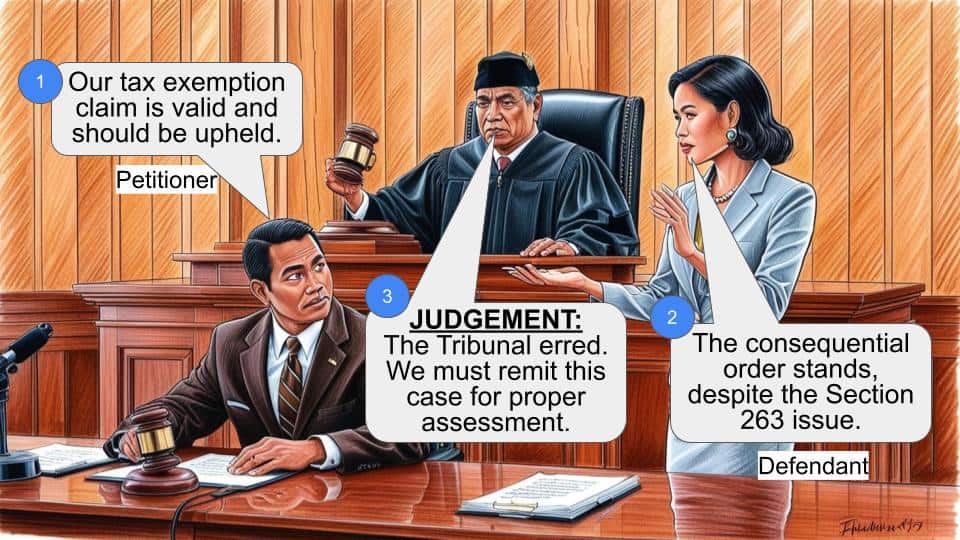
7. In the backdrop of aforesaid well settled legal principles, the facts of the case may be seen. In the instant case, the assessee in support of identity, genuineness of transaction and credit worthiness of M/s Bhuwania Bros. Pvt. Ltd. had supplied a copy of the balance sheet and profit and loss account to the Assessing Officer. The appellant had also filed the copy of the return of income of M/s. Bhuwania Bros Pvt. Ltd. as well as copy of information letter. The appellant having proved the identity and credit worthiness of the party as well as the genuineness of the transaction had discharged its burden and it was for the revenue to conduct an enquiry and to prove that the transaction in question was not genuine and the identity of the creditor was not established and it had no credit worthiness. In the instant case, the revenue has not conducted any enquiry and has failed to discharge its burden. In view of preceding analysis, we answer the substantial question of law Nos.(i), (ii) and (iii) in the negative and in favour of the asssessee and against the revenue.
8. So far as reliance placed by learned counsel for the revenue in case of NRA IRON STEEL LTD. SUPRA is concerned, suffice to say that the aforesaid decision interprets amended Section 68 (of Income Tax Act, 1961), by which a proviso has been added with effect from 01.04.2013. In para 11 of the aforesaid decision, the Supreme Court has culled out the principles where sums of money are credited as share capital / premium. The aforesaid decision has no application to the case of the assessee as the case of the assessee pertains to the assessment year 2005-06.
In the result, the order passed by the tribunal dated 24.08.2009 is hereby quashed and the appeal is allowed.
Sd/-
JUDGE
×
Questions
Court Overturns Tax Tribunal's Decision on Unexplained Cash Credits
Write your CommentSimilar Posts

Generic
- Reportdata/6083.pdf
