


Co-op Bank's Tax Audit Penalty Upheld: Form 3CA and 3CD Mandatory


Full News

Co-op Bank's Tax Audit Penalty Upheld: Form 3CA and 3CD Mandatory
Co-op Bank's Tax Audit Penalty Upheld: Form 3CA and 3CD Mandatory
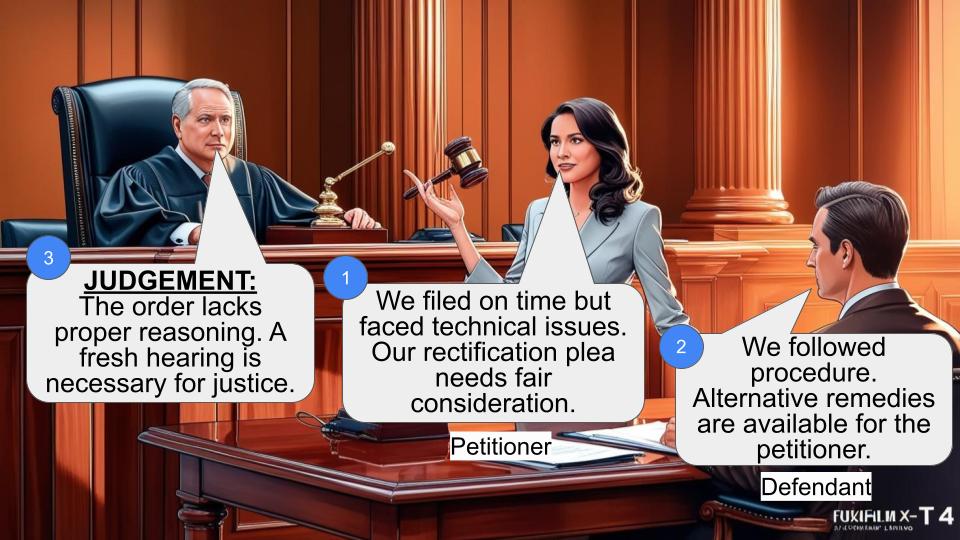
This case about a co-operative bank that got slapped with a penalty for not submitting proper tax audit reports. They appealed against it, but the High Court said, "Nope, you gotta pay up!" The court basically told them that just because they're audited under one law doesn't mean they can skip the specific forms required by the Income Tax Act. Let's break it down, shall we.
Get the full picture - access the original judgement of the court order here
Case Name:
Peroorkkada Service Co-operative Bank Limited (Rep. By Its Secretary Shri Viswakumar V.) Vs Income Tax Officer & Ors.(High Court of Kerala)
ITA.No.320 of 2019
Date: 7th January 2020
Key Takeaways:
1. Co-operative societies can't escape tax audit requirements just because they're audited under their own act.
2. Form 3CA and Form 3CD are mandatory, even if you're audited under another law.
3. The Income Tax Department's circulars don't override the clear provisions of the Income Tax Act.
4. Failing to show a "reasonable cause" for non-compliance can lead to penalties.
Issue:
The main question here is: Can a co-operative society avoid penalties under Section 271B (of Income Tax Act, 1961) if they've been audited under the Co-operative Societies Act but haven't submitted the specific forms (3CA and 3CD) required by the Income Tax Act?
Facts:
- Our protagonist is the Peroorkkada Service Co-operative Bank Limited.
- They're required to get audited under the Co-operative Societies Act.
- For the assessment year 2014-15, they didn't submit the tax audit report in Form 3CA and 3CD as required by Section 44AB (of Income Tax Act, 1961).
- Instead, they submitted a certificate from the Joint Director (Audit) of the Co-operative Department and some financial statements.
- The Income Tax Officer wasn't happy and slapped them with a penalty of Rs. 1,50,000 under Section 271B (of Income Tax Act, 1961).
- The bank appealed, but both the Commissioner of Income Tax (Appeals) and the Income Tax Appellate Tribunal said, "Nah, you gotta pay."
Arguments:
The bank's side:
- "Hey, we're audited under the Co-operative Societies Act. That should be enough!"
- "We don't have the power to appoint our own auditor, so we couldn't meet your deadline."
- "The penalty should only apply if we didn't get audited at all, not if we just missed submitting your specific form."
- "Look, there's this CBDT circular that says we don't need to attach the audit report with our returns!"
The Tax Department's side:
- "Rules are rules. Section 44AB (of Income Tax Act, 1961) says you need to submit Form 3CA and 3CD. No exceptions!"
- "You didn't show any 'reasonable cause' for not complying. So, penalty stays."
Key Legal Precedents:
Interestingly, this judgment doesn't cite any specific case laws. Instead, it relies heavily on the interpretation of Sections 44AB, 271B, and 273B of the Income Tax Act, 1961.
Judgement:
The High Court sided with the Tax Department. Here's what they said:
1. Yes, co-operative societies are audited under their own act, but that doesn't exempt them from Income Tax Act requirements.
2. The second proviso to Section 44AB (of Income Tax Act, 1961) is clear: you need to submit the audit report in Form 3CA along with Form 3CD.
3. The bank didn't show any "reasonable cause" for not complying, so they can't escape the penalty under Section 273B (of Income Tax Act, 1961).
4. That CBDT circular? It can't override the clear provisions of the Act.
FAQs:
Q1: Does this mean all co-operative societies need to submit Form 3CA and 3CD?
A1: Yes, if they fall under the purview of Section 44AB (of Income Tax Act, 1961).
Q2: Can't the audit under the Co-operative Societies Act be enough?
A2: Nope, the Income Tax Act specifically requires its own forms to be submitted.
Q3: What if a society genuinely can't meet the deadline?
A3: They need to show a "reasonable cause" under Section 273B (of Income Tax Act, 1961) to avoid penalties.
Q4: Does this judgment set a precedent for other similar cases?
A4: While it's not explicitly stated, this High Court judgment could influence similar cases in the future.
Q5: What should co-operative societies do to avoid such penalties?
A5: They should ensure they submit Form 3CA and 3CD along with their Co-operative Societies Act audit report before the specified date.

The above Income Tax Appeal was filed challenging an order passed by the Income Tax Appellate Tribunal, Cochin Bench in I.T.A.No.400/COCH/2018, dated 26.06.2019. The assessee is the appellant and the revenue is the respondent.
2. Issue pertains to sustainability of the penalty imposed against the appellant under Section 271B (of Income Tax Act, 1961) ('the Act', for short). The proceedings was initiated based on an allegation that the appellant had failed to furnish report of audited accounts as required under Section 44AB (of Income Tax Act, 1961) with respect to the assessment year 2014-15. A show cause notice was issued preceding imposition of the penalty, requiring the assessee to show cause as to why penalty under Section 271B (of Income Tax Act, 1961) should not be imposed. In the reply the appellant said that, as per the second proviso to Section 44AB (of Income Tax Act, 1961), if a person is required by or under any other law to get his accounts audited, getting the accounts audited under that law before the specified date and furnishing of a report of such audit, would be sufficient compliance of the requirement under that Section and that no penalty can be imposed. But the Assessing Authority found that, the appellant had failed to furnish the report of audit in the prescribed Form, duly signed and verified by an Accountant as required under Section 44AB (of Income Tax Act, 1961) or to furnish the report of audit conducted under any other law along with the further report by an Accountant in the Form prescribed, as required under the second proviso to Section 44AB (of Income Tax Act, 1961). Therefore it is held that the appellant is liable to be imposed with penalty under Section 271 (of Income Tax Act, 1961) B and ordered to pay penalty of Rs.1,50,000/- as provided under the said Section.
3. The order imposing penalty was taken up in appeal before the Commissioner of Income Tax (Appeals). The first Appellate Authority had found that the appellant had failed in complying with the statutory requirement of furnishing the audited report in Form No.3CA as required under Section 44AB (of Income Tax Act, 1961), along with the further report of the Accountant as mandated. It was found that, what was filed by the appellant is only a 'Certificate' issued by the Joint Director (Audit), Thiruvananthapuram, Co-operative Department, dated 03.07.2018, accompanied by the 'Audit Note' of the assessee Society. It was found that, filing of Form No.3CA along with a further report by an Accountant is the mandatory requirement and the mere getting of the accounts audited under any other law will not suffice compliance of the said requirement. In the absence of compliance of the provisions contained in the second proviso to Section 44AB (of Income Tax Act, 1961) read with Rule 6G(1) (of Income Tax Rules, 1962), it cannot be said that there is proper compliance of the provision, is the findings . It was also found that the appellant had failed to prove that there existed no 'sufficient cause' for the failure or that there existed any 'reasonable cause' for such failure. Therefore the order of penalty was confirmed.
4. In the second appeal filed before the Tribunal, the appellant/assessee contended that the audit was completed under provisions of the Co-operative Societies Act, 1969. But the audit was completed at a later stage. The Society does not have any power to appoint an Auditor and to get its account audited within the time stipulated under the Income Tax Act. Therefore, the delay occurred in submitting the audited account was reasonable. It was pointed out that there was proper compliance of the first limb of the second proviso to Section 44AB (of Income Tax Act, 1961). According to the appellant, the failure was only with respect to furnishing of the further report by an Accountant, as required under the second limb of the second proviso. It was argued that the penalty under Section 271B (of Income Tax Act, 1961) could be imposed only if there is a failure to get the accounts audited or if there is a failure to furnish the report of such audit. It was contended that the scope of Section 271B (of Income Tax Act, 1961) cannot be extended, alleging non-compliance to furnish the further report by an Accountant.
5. The Tribunal found that that the assessee had furnished documents such as Annual report of the financial year 2013-14 depicting the audited financial statements. But the Audit Report in the prescribed Form was not produced before the Assessing Officer. It was held that, the non-production of the Audit Report in the prescribed format can be a reason for imposing penalty under Section 271B (of Income Tax Act, 1961). Therefore the contentions were discarded and the orders of the authorities below were confirmed. It is aggrieved by the said order, the above appeal is filed by raising the following questions of law.
1 Whether the Assessing Officer is right in imposing penalty when audit report is filed as per the 2nd proviso to S.44AB of the Income Tax Act, 1961?
2 Whether the Assessing Officer is right in insisting for a 'Further Report in Form No.3CA when the proviso very clearly speaks that 'where such person is required by or under any other law to get his accounts audited it shall be sufficient compliance with the provisions of this section?
3 Whether the Appellate Authorities are justified in confirming the penalty imposed by the assessing officer without applying mind while an Audit Report has been submitted as per the proviso to S.44AB?
6. We heard learned counsel for the appellant Adv. Sri.C.A.Jojo, as well as learned standing counsel appearing for the respondents.
Section 271B (of Income Tax Act, 1961) reads as follows ;
“271B. Failure to get accounts audited If any person fails to get his accounts audited in respect of any previous year or years relevant to an assessment year or [furnish a report of such audit as required under section 44AB (of Income Tax Act, 1961)], the [Assessing] Officer may direct that such person shall pay, by way of penalty, a sum equal to one-half per cent of the total sales, turnover or gross receipts, as the case may be, in business, or of the gross receipts in profession, in such previous year or years or a sum of [one hundred fifty thousand rupees], whichever is less.”
It is evident that, if there is any failure on the part of the assessee to get his accounts audited in respect of any previous year relevant to the assessment year or if the assessee fails to furnish a report of such audit as required under Section 44AB (of Income Tax Act, 1961), it is liable to be imposed with penalty under that Section. Section 273B (of Income Tax Act, 1961) provides that, no penalty shall be imposed for any failure referred to in Section 271B (of Income Tax Act, 1961), if the assessee proves that there was 'reasonable cause' for the said failure.
7. From the provisions enumerated as above, it is clear and evident that if an assessee is liable to furnish the audited report of his accounts, audited under any other law applicable to him, along with a further report by an Accountant in the prescribed form, within the date stipulated for the said purpose, it will attract penalty under Section 271B (of Income Tax Act, 1961), subject to provisions contained in Section 273B (of Income Tax Act, 1961), which is of showing sufficient reasons (reasonable cause). In the case at hand, the appellant had furnished audited financial statement with respect to the year concerned along with a Certificate issued by the Joint Director (Audit) of the Co-operative Department dated 3.7.2018. He has not furnished the report of audit in the prescribed form, Form 3CA, as required under the second proviso (as it stood then) to Section 44AB (of Income Tax Act, 1961) read with the requirements under Rule 6G(1) (of Income Tax Rules, 1962).
8. Contention of the appellant herein is that the submission of audited accounts and statement along with the Certificate of the Auditor appointed under the Co-operative Societies Act, as mandated under Section 63 (of Income Tax Act, 1961) of the Co- operative Societies Act, would amount to sufficient compliance of the requirements under the second proviso to Section 44AB (of Income Tax Act, 1961). His further contention is that the further report by an Accountant, insisted upon in the second proviso, is not a mandatory requirement, because the provision in the Constitution of India itself insists upon for a mandatory audit of the accounts of a Co-operative Society under the Department of the Government concerned. We take note of the fact that, it is a mandatory requirement under Section 44AB (of Income Tax Act, 1961) that the appellant should get its account audited by an Accountant and to furnish before the specified date, the report of such audit in the prescribed form duly signed and verified by such Accountant and by setting forth such particulars as may be prescribed. Form CA is the particular form prescribed for the said purpose.
9. Since the appellant is a person required under the Co-operative Societies Act to get its account audited under that Act, it would be sufficient compliance under the second proviso to Section 44AB (of Income Tax Act, 1961), if the appellant gets the account of its business audited under the Co-operative Societies Act before the specified date and furnishes that report of audit, along with further report by an Accountant in the form prescribed, before the Assessing Authority under the Income Tax Act, before the date stipulated for the said purpose. It is to be noted that, the further report required by an Accountant need to be furnished in Form 3CD. Evidently the appellant had not furnished the report of the audit under Co- operative Societies Act in the form prescribed, which is Form 3CA. On the other hand, his contention is that the accounts were audited by the Co-operative Department and the Joint Director had issued a Certificate to that effect. Probable contention raised by the appellant is that since the appellant is a person required by the Co-operative Societies Act to get its accounts audited under that Act, the audit report need not be filed in Form 3CA. Even assuming (without admitting) that the furnishing of a report of the audit conducted by the competent Auditor stipulated under the Co-operative Societies Act would suffice compliance of the first limb of the second proviso, it is evident that the further report by an Accountant, as mandated to be furnished in Form 3CD, was not furnished by the appellant. Moreover, the factual finding arrived by the Tribunal is to the effect that the appellant had furnished only the Annual Report depicting the audited financial statement along with copy of the receipts and distribution statements. It is also evident that the appellant had furnished a Certificate issued by the Joint Director (Audit) of the Co-operative Department. When the second proviso carves out an exemption from the general provisions of Section 44AB (of Income Tax Act, 1961), the stipulations therein need to be strictly adhered and the mere fact that the audit of the assessee was conducted under the provisions of the Co-operative Societies Act, would not be sufficient for such compliance. Furnishing of the report of audit in the prescribed form accompanied with a further report by an Accountant in the prescribed form, is a mandatory requirement for proper compliance. Since the appellant had failed to show any 'reasonable cause', coming within the purview of Section 273B (of Income Tax Act, 1961), the imposition of penalty under Section 271B (of Income Tax Act, 1961) cannot be interfered with.
10. Lastly, learned counsel for the appellant had drawn our attention to a Circular issued by the Central Board of Direct Taxes, Circular No.03/2009, dated 21.5.2009. Based on which it is contended that, the audited report need not be attached along with the returns or furnished separately at any time before or after the due date; but it need only to be retained by the assessee and produced if it is called for by the Income Tax Authority during any proceedings under the Act. The Circular says that no penalty under Section 271B (of Income Tax Act, 1961) shall be initiated or levied for not furnishing the tax audit report before the due date. Therefore the imposition of penalty under Section 271B (of Income Tax Act, 1961) cannot be sustained, is the contention. We are not persuaded to accept the above contention in view of the mandatory provisions contained in Section 44AB (of Income Tax Act, 1961), which insists on furnishing of the audit report in the prescribed form before the due date stipulated, along with a further report of an Accountant. When the specific provision contained in the statute is unambiguous in this respect, we cannot hold otherwise based on any circular of the Department. Hence the above contention cannot be accepted. Further, learned Standing Counsel appearing for the respondents contended that, the penalty proceedings in this case was initiated on the allegation that the appellant had failed to obtain a proper audit report within the date stipulated in the relevant provision.
For the reasons mentioned as above, we are of the opinion that, no substantial question of law arises for consideration in challenge against the impugned order of the Tribunal. Accordingly, the above appeal fails and the same is hereby dismissed.
All pending interlocutory applications are closed.
Sd/-
C.K.ABDUL REHIM
JUDGE
×
Similar Ripples
Questions
Co-op Bank's Tax Audit Penalty Upheld: Form 3CA and 3CD Mandatory
Write your CommentSimilar Posts


Generic
- Reportdata/6147.pdf
