


Court clarifies transfer pricing comparables in Microsoft India tax dispute.


Full News

Court clarifies transfer pricing comparables in Microsoft India tax dispute.
Court clarifies transfer pricing comparables in Microsoft India tax dispute.
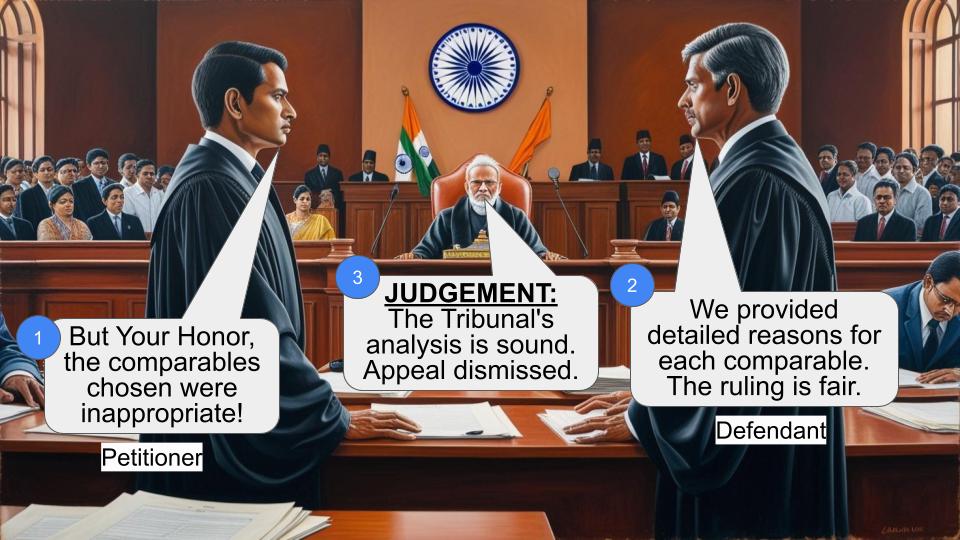
In the case involving Microsoft India (R&D) Pvt. Ltd., the court addressed disputes over transfer pricing adjustments made by the tax authorities. The key issue was whether certain companies could be considered comparable for determining the arm’s length price of international transactions. The court upheld the exclusion of three comparables, emphasizing the need for functional similarity and the availability of segmental data.
Get the full picture - access the original judgement of the court order here
Case Name:
Microsoft India (R&D) Pvt. Ltd. & Ors. Vs Deputy Commissioner of Income Tax & Ors. (High Court of Delhi)
ITA 247/2019
Date: 4th January 2021
Key Takeaways:
- The court reinforced the importance of functional comparability in transfer pricing.
- It established that companies with significant revenue from software products cannot be compared to a captive service provider like Microsoft India, which only provides software development services.
- The decision highlights the necessity for segmental data to assess comparability accurately.
Issue
Did the Income Tax Appellate Tribunal (ITAT) err in excluding certain companies from the list of comparables for transfer pricing purposes?
Facts
- Microsoft India (R&D) Pvt. Ltd. is a subsidiary of Microsoft Ireland Research Ltd., primarily engaged in software development services.
- The company filed its income tax return for the assessment year 2011-12, declaring a substantial income.
- The case was selected for scrutiny, leading to a transfer pricing assessment where the tax authorities proposed significant adjustments based on comparables.
- The ITAT excluded three companies (Infosys Technologies Ltd., Persistent Systems Ltd., and Wipro Technology Services Ltd.) from the list of comparables, which the Revenue challenged.
Arguments
- Revenue’s Argument: The Revenue argued that the ITAT erred in excluding the three comparables, asserting that they met the necessary filters for inclusion and that the Assessee should not be allowed to challenge their inclusion after accepting them in prior documentation.
- Assessee’s Argument: Microsoft India contended that the excluded companies were functionally dissimilar and engaged in significant R&D activities or product sales, which made them unsuitable for comparison with a captive service provider.
Key Legal Precedents
- DCIT vs. Quark Systems Pvt. Ltd. (2010) 132 TTJ (Chd) (SB): Established that a company included by the assessee can be excluded if proven not comparable.
- CIT Vs. Mercer Consulting (India) P. Ltd. (2017) 390 ITR 615 (P&H): Reinforced the need for functional similarity in comparables.
- Principal Commissioner of Income Tax-7 v. Open Solutions Software Services Pvt. Ltd. (2020) 315 CTR (Del) 497: Supported the exclusion of comparables based on functional dissimilarity.
Judgement
The court upheld the ITAT’s decision to exclude the three comparables from the list. It reasoned that:
- Infosys Technologies Ltd. and Persistent Systems Ltd. derived significant revenue from software products, which made them functionally dissimilar to Microsoft India.
- Wipro Technology Services Ltd. was excluded due to its revenue being primarily from related party transactions, failing the criteria for uncontrolled transactions.
- The court dismissed the Revenue’s appeal, affirming the ITAT’s approach to determining comparability based on functional analysis and the availability of segmental data.
FAQs
Q1: What does this ruling mean for Microsoft India?
A1: The ruling allows Microsoft India to avoid significant tax adjustments based on the excluded comparables, affirming its position as a captive service provider.
Q2: Why were the comparables excluded?
A2: The comparables were excluded due to their functional dissimilarity and the lack of segmental data to accurately assess their comparability with Microsoft India.
Q3: What is the significance of segmental data in transfer pricing?
A3: Segmental data is crucial for determining the specific contributions of different revenue streams, ensuring that only functionally similar companies are compared for arm’s length pricing.
Q4: Can the Revenue challenge the exclusion of comparables in future cases?
A4: Yes, but they must provide substantial evidence to demonstrate that the excluded companies meet the criteria for comparability as established by the court.

1. This common order shall dispose of the afore-noted appeals preferred by
both the Assessee as well as the Revenue under Section 260A (of Income Tax Act, 1961) (hereinafter referred to as the ‘Act’) challenging the orders
passed by the Income Tax Appellate Tribunal (hereinafter referred to as
‘ITAT’) with respect to Assessment Years 2011-12 and 2012-13. For the
sake of convenience, the appeals pertaining to each assessment year are
being dealt with separately.
2. The appeals of the Revenue and the Assessee are numbered as ITA No.
357/2019 and ITA No. 247/2019 respectively. These cross-appeals impugn
the common order dated 14.09.2018 passed by the learned ITAT, New Delhi
in respect of AY 2011-12, in ITA No. 1479/Del/2016, filed by the Assessee
and ITA No. 691/Del/2016 filed by the Revenue (hereinafter referred to as
the ‘Impugned Order’). The aforesaid ITAs assailed the order dated
16.01.2016 of the Ld. Assessing Officer (hereinafter referred to as ‘AO’).
3. Briefly stated, the factual matrix giving rise to the present appeals is as follows:
3.1. That Microsoft India (R&D) Pvt. Ltd. (hereinafter referred to as
the ‘Assessee’) is a private limited company which was set up in India
in May 1998 and is a subsidiary of Microsoft Ireland Research Ltd.
(99.99% shareholding); the ultimate parent company being Microsoft
Corporation, USA. The Assessee is engaged, inter alia, in rendering
software development services and information technology enabled
services.
3.2. The Assessee filed its return of income on 29.11.2011, declaring
an income of Rs. 2,01,64,26,819/- and same was processed under
Section 143(1) (of Income Tax Act, 1961). The case of the Assessee was selected for
scrutiny assessment and notice under Section 143(2) (of Income Tax Act, 1961) was issued.
3.3. The Assessee filed Audit Report in Form No. 3CEB declaring six
international transactions. Its case was selected for scrutiny and the
AO referred the matter to the Transfer Pricing Officer (hereinafter
referred to as the ‘TPO’) for determination of Arm’s Length Price
(‘ALP’) of the international transactions. The TPO proposed transfer
pricing adjustment of Rs. 2,40,89,61,667/- (being Rs. 2,01,21,96,582/-
towards Software development services and Rs. 39,67,65,085/-
towards provision of IT enabled services).
3.4. Pursuant to the aforesaid reference, draft order under Section
144C was framed by the AO. Aggrieved with the same, the Assessee
filed its objections before the Dispute Resolution Panel (hereinafter
referred to as the ‘DRP’) which were disposed of vide order dated
08.12.2015 with certain directions. Accordingly, pursuant to the order
of the DRP, final assessment order under Section 143(3) (of Income Tax Act, 1961)/144C was
framed by the AO on 16.01.2016, determining the total taxable
income at Rs. 4,37,47,44,593/-.
3.5 The Assessee preferred an appeal against the assessment order
vide ITA No. 1479/DEL/2016 before the learned ITAT. The Revenue
also preferred an appeal against the same order vide ITA No.
691/DEL/2016. The afore-noted appeals were disposed of vide the
Impugned order dated 14.09.2018.
4. Both the parties assail the Impugned order, urging substantial questions of law.
5. The main and only plank of submissions advanced by Mr. Ruchir Bhatia,
learned Senior Standing Counsel appearing on behalf of the Appellant-
Revenue in ITA 357/2019 is that the learned ITAT has erred in excluding
the three comparables from the list of comparables, which are: (i) Infosys
Technologies Ltd., (ii) Persistent Systems Ltd. and (iii) Wipro Technology
Services Ltd. He submits that Persistent Systems Ltd. was included by the
Assessee itself in its list of comparables. Having considered the said entity as a comparable in its transfer pricing documentation, and then also
accepted by the TPO, the Assessee would be precluded from challenging the
inclusion in further appellate proceedings. He points out that the Assessee is not questioning the filters applied by the TPO and adds that the filter applied by the TPO was in fact more stringent than the one applied by the Assessee. He submits that since the Comparables met the said filter test and were included in the list, the Tribunal has completely erred in excluding them.
6. The reasoning of the learned ITAT for excluding the three comparables,
as mentioned in the impugned order is as extracted hereinbelow:
“(ii) Infosys Technology Ltd.
39. The second company under challenge is Infosys Technology Ltd., which
was included by the TPO in the final tally of comparables. The assessee
objected to such inclusion by contending, inter alia, that it is engaged in
noteworthy R&D activities apart from having significant intangible assets
and exceptionally high turnover. The assessee also submitted that this
company is functionally not comparable as is also having revenues from
software products. The assessee’s objections have been recorded on pages
80-82 of the TPO’s order. Not convinced, the TPO held this company to be
comparable, which has been assailed in the impugned order.
40. Having heard both the sides and perused the relevant material on
record, we find from the Annual report of this company, a copy of which is
available on pages 1653 onwards of the paper book, that this company is
also engaged in earning revenue from Licensing of software products. This
fact has also been recorded in the TPO’s order noting that the revenue from
software products stands at Rs.l,285/- crore. This revenue has been
generated from its product’ Finacle’, reference to which has been made on
page 8 of the Director’s Report. The extent of profit from software services,in the overall kitty of profits from software services and software products, cannot be separated because of the merged expenses. In view of the fact that the total profit of this company includes profit from software
development services as well as software products and there is no separate
profit available of the software development services, we are unable to
countenance the comparability of this company as the assessee is not
engaged in licensing of any software products. We, therefore, order to
exclude Infosys Technologies Ltd. from the list of comparables.
(iii) Persistent Systems Ltd.
41. Though this company was included by the assessee in its list of
comparables, the same has still been challenged before us. The ld. AR
contended that this company was erroneously included in the list of
comparables as it is also a product company which is apparent from the
Annual report of this company.
42. The ld. DR raised a preliminary objection to the effect that once a
company has been considered by the assessee as comparable in its TP
documentation and the same has been accepted by the TPO, the same
cannot be challenged in the further appellate proceedings. He relied on the
impugned order to contend that this company was rightly offered by the
assessee in the list of comparables and, hence, the same should not be
excluded.
43. We are disinclined to sustain the preliminary objection taken by the ld.
DR that the assessee should be estopped from taking a stand contrary to the
one which was taken at the stage of the TP study or during the course of
proceedings before the TPO. It goes without saying that the object of
assessment is to determine the income in respect of hich an assessee is
rightly chargeable to tax. As an income not originally offered for taxation, if otherwise chargeable, is required to be included in the total income, in the same breath, any income wrongly included in the total income, which is
otherwise not chargeable, should be excluded. There can be no estoppel
against the provisions of the Act. Extending this proposition further in the
context of the transfer pricing, it transpires that if an assessee fails to report an otherwise comparable company, then the TPO is obliged to include the same in the list of comparables, and in the same manner, if the assessee
wrongly reported an incomparable company as comparable in its TP study
and then later on realizes and claims that it should be excluded, there
should be nothing to prohibit it from claiming so, provided the company so
originally reported as comparable is, in fact, not comparable. Simply
because a company was wrongly ,chosen by the assessee as comparable,
cannot tie its hands from contending before the Tribunal that such a
company was wrongly considered as comparable which is, in fact, not.
There is no qualitative difference between a situation where an assessee
claims that a wrong company inadvertently included for the purpose of
comparison should be excluded and the situation in which the Revenue does
not accept a particular company chosen by the assessee as comparable. The
underlying object of the entire exercise is to determine the arm’s length
price of an international transaction. Simply because a company was
wrongly considered by the assessee as comparable, cannot, act as a
deterrent from challenging before the Tribunal the fact that this company is,in fact, not comparable. The Special Bench of the Tribunal in DCIT vs.
Quark Systems Pvt. Ltd. (2010) 132 TTJ (Chd) (SB)1 has held that a
company which was included by the assessee and also by the TPO in the list
of comparables at the time of computing ALP, can be excluded by the
Tribunal, if the assessee proves that the same was wrongly included. Similar
view has been upheld by the Hon’ble Delhi High Court in Xchanging
Technology Services India Pvt Ltd [TS-446-HC-20l 6(DEL)-TP}. The
Hon’ble Bombay High Court in Tata Power Solar Systems Ltd [TS-1007-
HC-2016(BOM)-TP} and the Hon’ble Punjab & Haryana High Court in
CIT Vs. Mercer Consulting (India) P. Ltd. (2017) 390 ITR 615 (P&H) have
also approved similar view. In view of the foregoing discussion, we do not
find any substance in the preliminary objection taken by the ld. DR.
44. Coming to the comparability or otherwise of this company, we find from
its Profit & Loss Account that its income from’ Sale of software services and products’ stands at Rs.6, 101.27 millions. Product revenue is 7.2% of the total revenue. Thus, it is established that this company is engaged in
rendering software development services as well as sale of software
products. Even though the percentage of software products in the total
revenue is less, yet, the same ceases to be comparable as there is no precise information about the contribution made by the income from sale of
software to the total income of the company. In the absence of any
segmental information provided by the company in respect of software
services, we cannot approve the inclusion of this company in the list of
comparables. The same is directed to be excluded.
(iv) Wipro Technology Services Ltd.
45. The TPO proposed to include this company in the list of comparables
despite the assessee’s objection that it has more related party transactions.After going through the Annual report of this company, it is noticed that it was earlier Citi Technologies Ltd. On 21.1.2009, Wipro Ltd. signed a master agreement with Citi Group Inc., for delivery of technology
Infrastructure Services and application development and maintenance
services for a period of six years, which also includes the year under
consideration. This shows that income from software development support
and maintenance services was earned by Wipro Technology Services Ltd.,
from Citi Group Inc., by means of master service agreement entered into
between Wipro Ltd., its parent company and Citi Group Inc., a third person.
46. Rule 10B(l)(e)(ii) (of Income Tax Rules, 1962) provides that it is the net profit margin realized from a comparable uncontrolled transaction, which is considered for the purposes of bench marking. The epitome of ‘comparable uncontrolled transaction’ is that the companies or transactions, in order to fall within the ambit of sub-clause (ii) of rule 10B(l)(e) (of Income Tax Rules, 1962), should be both comparable as well as uncontrolled. ‘Uncontrolled transaction’ has been defined in Rule 10A(a) (of Income Tax Rules, 1962) to mean: ‘a transaction between enterprises. other than associated enterprises,whether resident or non-resident.’ This shows that in order to be called as an uncontrolled transaction, it is essential that the same should, be between the enterprises other than the associated enterprises. Section 92B(2) (of Income Tax Act, 1961) provides that: ‘A transaction entered into by an enterprise with a person other than an associated enterprise shall, for the purposes of sub-section(1), be deemed to be a transaction entered into between two associated enterprises, if there exists a prior agreement in relation to the relevant transaction between such other person and the associated enterprise, or the terms of the relevant transaction are determined in substance between such other person and the associated enterprise’. On going through the prescription of sub-section (2) of section 92B (of Income Tax Act, 1961), it is clearly borne out that a transaction with a non-AE shall be deemed to be a transaction entered into between two AEs if there exists a prior agreement in relation to the relevant transaction between the third person and the AE or the terms of the relevant transaction are determined in substance between the third person and the AE. When we consider section 92B(2) (of Income Tax Act, 1961) in combination with Rule IOA(a), it follows that the transaction between non-AEs shall be construed as a transaction between two AEs, if there exists a prior agreement in relation to the relevant transaction between third person and the AE. If such an agreement exists, the third person is also considered as an AE and the transaction with such third person becomes international transaction within the meaning of section 92B (of Income Tax Act, 1961). Once there is a transaction between two associated enterprises, it ceases to be an ‘uncontrolled transaction’ and,thereby, goes out of reckoning under Rule 10B(1)(e)(ii) (of Income Tax Rules, 1962).
47. Coming back to the facts of this company, we find that Wipro
Technology Services Ltd. earned a revenue from Master services agreement
with Citigroup Inc. for the delivery of technology infrastructure services.
This agreement was, in fact, executed between the assessee’s AE, Wipro
Ltd., and Citigroup Inc., a third person. This unfolds that the transaction of earning revenue from software development support and maintenance
services by Wipro Technology Services Ltd., is an international transaction
because of the application of section 92B(2) (of Income Tax Act, 1961) i.e., there exists a prior
agreement in relation to such transaction between Citigroup Inc. (third
person) and Wipro Ltd. (associated enterprise). In the light of this
structure of transaction, it ceases to be uncontrolled transaction and,
hence, Wipro Technology Services Ltd., disqualifies to become a
comparable uncontrolled transaction for the purposes of inclusion in the
final list of comparables under Rule 10B(1)(e)(ii) (of Income Tax Rules, 1962). We, therefore, direct
removal of this company from the list of comparables. Similar view has been
taken by the Delhi Bench of the Tribunal in the case of Saxo India (P) Ltd.
(2016) 67 taxmann.com 155 (Delhi-Trib.). This order of the Tribunal stands
affirmed by the Hon’ble Delhi High Court vide its judgment dated
28.09.2016 in ITA no.682/2016, C.M. APPL.35744-35746/2016 by holding
that no substantial question of law arises from the Tribunal order.”
[Emphasis Supplied]
7. We notice that insofar as Infosys Technology Limited and Persistent
Systems Limited are concerned, the learned ITAT observed that while the
profit of the aforesaid three comparables is derived from both software
development services as well as software products, however there is no
precise information about the contribution made from the income derived
from the sale of software to the total income of the companies. Thus, in the
absence of segmental information provided by the companies in respect of
the software services, the aforesaid companies have been excluded from the
list of the comparables. We do not find any perversity in the approach
adopted by the learned ITAT which would call for our inference. The third
comparable viz Wipro Technology Services Limited has been held to be
disqualified under Rule 10B(1)(e)(ii) (of Income Tax Rules, 1962), to become a comparable for
uncontrolled transaction for the purposes of inclusion in the final list of
comparables. The rationale for exclusion has been upheld by this court in
Principal Commissioner of Income Tax-7 v. Open Solutions Software
Services Pvt. Ltd.
8. At this juncture, we would like to note that this Court in Open Solutions
(supra) upheld the exclusions of some of the comparables in question, in a
similar factual situation, noting as under:
“28. Let us briefly evaluate the reasoning of the ITAT for deleting the
comparables. As regards the first comparable-Infosys Ltd., it possesses huge
tangibles of more than Rs. 1,00,000/- Crores. It is a full-fledged risk bearer with a turnover of more than Rs. 12,000/- Crores. The functions of Infosys Ltd. are highly diversified, and branching out into product
conceptualization, core design, research & development to marketing and
sales of products, etc. No such function is carried out by the assessee. Being a captive service provider, its function is completely confined to software development services for its AE. There are no intangibles owned by the assessee and it incurs no expenditure on research & development. We find
that these distinguishing factors are highly substantial and cannot be
ignored or severed from the comparison. The contractual terms of the
transaction will be heavily influenced by this and other factors, such as, the overall economic standing of Infosys Ltd. in the market, thereby affecting the cost of the transaction that it enters into. Furthermore, this comparable has been deleted in the case of assessee’s sister concern in Fiserv India Ltd., and the same has been upheld by this Court, therefore, we are not inclined to interfere with the order of deletion of Infosys Ltd. as a comparable.
29. As regards the second comparable- Wipro Technology Services Ltd.,
the comparable was a part of the Citi Group prior to 20.01.2009 and
provided services to City Group and was known as “Citi Technology
Services Ltd.” Citi Group entered into a Master Agreement with Wipro Ltd.,
whereby Wipro acquired 100% interest in “Citi Technology Services Ltd.”
and the comparable was renamed as “Wipro Technology Services Ltd.”
with effect from 01.01.2009. As per the Master Agreement, Wipro
Technology Services Ltd. would continue to provide services such as
delivery of technology, infrastructure, services and application,
development and maintenance to Citi Group, which were delivered by the
erstwhile Citi Technology Services Ltd. The main ground for exclusion of
this comparable is that its entire revenue is on account of related party
transactions and it fails the criteria of RPT filter. The critical question is whether the pre-arrangement between the Citi group and Wipro Limited
would make the subsequent rendition of services by this company to the Citi
Group fall within the meaning of “deemed international transaction” as
defined under section 92B(2) (of Income Tax Act, 1961). At this juncture, it would be
apposite to reproduce Section 92B(2) (of Income Tax Act, 1961):
“Section 92B(2) (of Income Tax Act, 1961): A transaction entered into by an enterprise with a person
other than an associated enterprise shall, for the purposes of sub-section (1), be deemed to be an international transaction entered into between two
associated enterprises, if there exists a prior agreement in relation to
the relevant transaction between such other person and the associated
enterprise, or the terms of the relevant transaction are determined in
substance between such other person and the associated enterprise
where the enterprise or the associated enterprise or both of them are
non-residents irrespective of whether such other person is a non-resident
or not.” [Emphasis Supplied]
30. A perusal of the aforenoted provision shows that the transaction between
an unrelated party and an enterprise would be deemed to be an
international transaction if there was any prior agreement between the
parties on the basis of which the transaction is being undertaken. There was
indeed a prior agreement between Citi Group and the erstwhile Citi
Technology Services for rendition of software services. After acquiring Citi
Technology Services (now Wipro Technology Services) by Wipro Ltd,
since the comparable company continues to deliver services to Citi Group,
this entire transaction would be considered as a related party transaction.
The pre-arrangement between Citi group and Wipro Ltd. is a deemed
international transaction as per Section 92B(2) (of Income Tax Act, 1961). Therefore, we are of the
considered view that this comparable has been rightly deleted since it is no
longer an uncontrolled transaction and cannot serve as a comparable in
the benchmarking mechanism for the present assessee, since the RPT
filter of this company failed to meet the filter criteria of 25% of RPT, as
applied by TPO. The Tribunal in a similarly situated case, deleted Wipro
Technology Services Ltd, since it had ceased to be an uncontrolled
transaction under Section 92B(2) (of Income Tax Act, 1961). The same order of deletion
has been upheld by this Court in PCIT vs. Saxo India Pvt. Ltd., ITA
682/16vide order dated 28.09.2016.Theassessee therein was engaged in the
business of design and development of customized software applications.
The relevant paragraphs of the Tribunal’s order reads as under:
“16.5. Adverting to the facts of the instant case, we find that Wipro
Technology Services Ltd. earned a revenue from Master services
agreement with Citigroup Inc. for the delivery of technology
infrastructure services. This agreement was, in fact, executed
between the assessee’s AE, Wipro Ltd., and Citigroup Inc., a third
person. This unfolds that the transaction of earning revenue from
software development support and maintenance services by Wipro
Technology Services Ltd., is an international transaction because of
the application of section 92B(2) (of Income Tax Act, 1961) i.e., there exists a prior agreement
in relation to such transaction between Citigroup Inc. (third person)
and Wipro Ltd. (associated enterprise). In the light of this structure
of transaction, it ceases to be uncontrolled transaction and, hence,
Wipro Technology Services Ltd., disqualifies to become a
comparable uncontrolled transaction for the purposes of inclusion in
the final list of comparables under Rule 10B(1)(e)(ii) (of Income Tax Rules, 1962). We, therefore,
direct removal of this company from the list of comparables.”
[Emphasis Supplied]
31. We also note that the aforesaid comparable has been deleted in the case
of the sister company of the assessee herein. The sister company of the
assessee also operates in the same business segment as the assessee. The
order of deletion has been upheld by this Court in CashEdge India (supra)
for the same AY 2010-11. Since, the Courts have consistently upheld the
deletion of the said comparable on account of failing the Related Party
Filter, we do not see any reason to interfere with the Tribunal’s order of
deletion of Wipro Technology Services Ltd.
32. This brings us to the third and fourth comparable, Persistent Systems
Ltd. and Thirdware Solutions Ltd., which were deleted on the ground of
being functionally dissimilar to the assessee and on account of absence of
segmental information with regard to their earnings and sales in the field of software development. The reasoning given by the Tribunal for rejecting the aforenoted two comparables is as follows:
“(iii) Persistent Systems Ltd.: -
9. We have heard the rival submissions, perused relevant findings
given in the impugned order as well as the material referred to before
us. From a perusal of the annual report of PSL it is seen that this
company deals with various products and it has been stated that it has
realised more than 3000 products in the last five years and it is leader
in the world of outsource software product development. The break-up
of income under the head “software services and products” both
exports and domestic, it is seen that there is no segmental information
as to how much is the revenue from software services and how much is
from the products. This is evident from a detailed report given at page
46 of the paper book. In absence of such segmental information it is
very difficult to come to a conclusion as to whether the margin of this
company also includes the sale of products. Moreover, as pointed out
by ld. Counsel, commission paid to agents on sales is also indicative of
the fact that there are sale of products. Thus, we find it very difficult to
include such a comparable into the basket of comparables for bench
marking the assessee’s margin and, accordingly, we direct the TPO to
exclude this comparable from the list of comparable companies.
(iv) Thirdware Solutions Ltd.: -
From the above it is not clear as to what constitutes the sale of exports,
whether it is product or software development services. Revenue from
subscription and sale of licence also indicate that there is income from
products also which would indicate different business model and
consequently the profit margin. Without any proper segmental
information regarding revenues from software development and
software products, it would be very difficult to accept that the proper
comparability analysis can be carried out with the assessee which is
purely providing software development services. Apart from above it
is noticed that in the case of Fiserve, this comparable company has
been excluded precisely on the same ground and the said order of the
Tribunal stands affirmed by the Hon’ble High Court also.
Accordingly, we direct the TPO to exclude the said comparable from
the list of comparables.”
[Emphasis Supplied]
33. Both the aforenoted comparables have been excluded on the ground that
apart from rendering software services, the companies are engaged in sale
of software products and the segmental data of product and services is not
available. Firstly, this is a finding of fact and secondly, in the grounds urged in the present appeal, the Revenue has not disputed this factual position. In the note of arguments filed by the appellant also, there is no challenge to this factual position. We would like to add that the respondent had brought to our notice that this Court in CashEdge (supra) for the very same AY 2010-11 and in identical business vertical i.e. captive software development services had upheld the exclusion of Persistent Systems Ltd. With respect to Third ware Solutions and Sales Limited, we find that the ITAT has undertaken a detailed factual analysis and has given cogent reasons for the exclusion of the comparables in question. The ITAT has noted that there is no segmental data to work out the separate margin from software services.
Further, this comparable was also rejected in the case of assessee’s sister
concern, Fiserv India Ltd on the ground of non-availability of segmental
data. The said decision was affirmed by this court vide order dated
06.01.2016 in Pr. Commissioner of Income Tax-3 versus Fiserv India Pvt.
Limited, ITA N0. 17/2016. The absence segmental data is a factual finding
that is not in serious challenge before us. Thus, the Court is not persuaded
to find any infirmity in the view taken by ITAT viz the third and fourth
comparables.
34. In view of the above, it emerges that none of the comparables have been
excluded on the ground of high turnover alone. The test of functional
similarity applied by the Tribunal is in consonance with the legal position
discussed hereinabove. Therefore, we do not find merit in the contentions
urged by the Revenue on this ground. Equally meritless is the contention of
the Revenue regarding the bar to challenge the comparables after the
acceptance of the filters. The filters are applied to narrow down the search
to find the comparables that are closest to the assessee. The use of filters has to be necessarily validated from the annual reports. Since the TPO would
have to do this exercise on the basis of the actual data in the report of the comparables, he would surely have the freedom to adopt or reject the
comparables. We cannot hold that merely because a comparable clears the
filters, its inclusion in the list of comparables is immune to challenge by the assessee.”
9. Thus, the arguments advanced by the Revenue are not sustainable.
Further, non-availability of segmental data, is a finding of fact, which is not disputed by the Revenue. Therefore, in our opinion, no question of law,
much less a substantial question of law, arises in Revenue’s appeal.
Accordingly, the same is dismissed.
10. Now coming to the appeal filed by the Assessee. In the said appeal, the
Assessee raises the following questions of law:
“(a) Whether impugned order is perverse and bad in law to the extent it
upholds substantial variations to determination of arm’s length price in
transfer pricing study in the face of clear, unambiguous and express finding
by Transfer Pricing Officer that “It is emphasized that Transfer Pricing study was not rejected at all”?
(b) Whether conclusion in impugned order classifying software development
services rendered by Appellant as “High end” in nature for purposes of
Chapter X of the Act is (a) contrary to facts and law as also material on
record, (b) perverse as it does not consider all relevant material on record,selectively considers statements recorded by Respondent in the course of Advance Pricing Agreement proceedings and (c) unlawful and unsustainable
in law as same arises from gross misinterpretation of facts, law and
agreement between parties?
(c) Whether impugned order, to the extent it finally upholds rejection of
several companies as being not comparable to Appellant for determination of
arm’s length price of international transaction, is bad in law, unjust and
unsustainable as interalia such conclusion arises from total misinterpretation of facts and law including impact and relevance of patents registration by and in the name of Overseas Associated enterprise, as also relevance and impact of research & development activities of such companies?
(d) Whether to the extent impugned order ignores intervening decision of
jurisdictional High Court on identical issues involving head under which
income is taxable i.e., Income from house property or Income from other
sources, and routinely restores the issue to file of Assessing officer on the pretext of following coordinate bench order in earlier year, is unlawful,unsustainable and not in accordance with law as per section 254 (of Income Tax Act, 1961)?
(e) Whether restoration of issues relating to treatment of foreign exchange
fluctuations realized or unrealized, disallowance of deduction claim under
section 10A (of Income Tax Act, 1961) and adjustment in opening written down value of
computers is unjustified and unlawful in the facts and circumstances of
case?”
11. At the outset, Mr. Rao submits that in view of the rejection of the appeal preferred by the Assessee, he would not like to press the questions
enumerated as (a), (b) and (c). He submits that in the event, the Revenue
challenges the dismissal order, he would agitate the grounds in respect of the said questions. Nevertheless, he sill urges the questions enumerated as (d) and (e) above.
12. Mr. Rao submits that the learned ITAT has erred in restoring for
adjudication, the questions of law to the file of the AO, thereby allowing him a second inning on a topic which both the AO and the DRP have already
considered. He submits that the impugned order fails to finally decide the
issue or provide guidance on questions of law involved in corporate tax
dispute of taxability of composite rental income under the heads ‘income
from house property’ or ‘income from other sources’. He submits that the
ITAT ought to have followed the decision of the High Court in the case of
Jay Metal Industries (P) Ltd. v. CIT-V,and granted relief finally and
conclusively, especially as all the facts are available on record. He further submits that in these circumstances, it would only prolong litigation on an issue which had already been settled by a decision of this Court. We are inclined to agree with Mr. Rao. The learned ITAT has restored the above issues to the AO for a fresh decision following its earlier order dated 28.06.2016 in ITA No. 2058/DEL/2015. The ITAT being a last fact finding authority, is empowered to examine the documents and law placed by the assessee in support of its claim. It is well settled law that remand is not a power to be exercised in a routine manner and should be used sparingly, as an exception only when the facts warranted such course of action. In our opinion, when the requisite materials and the intervening decision of the jurisdictional high court was available for deciding the issue urged by the Assessee, the Tribunal ought to have arrived at a conclusion rather than remanding the matter back to the Assessing Officer.
13. Accordingly, we partly allow the appeal of the Assessee on question (d)
and direct the learned ITAT to take up and decide the corporate tax grounds
urged by the Assessee in its appeals. Thus, the appeal of the Assessee is
restored to the file of the ITAT for AY 2011-12 to the limited extent , noted above.
14. With respect to question (e) enumerated above, we notice that the
learned ITAT has directed the AO to decide the issue afresh as per law after
affording an opportunity of hearing to the Assessee. This direction has been
made keeping in mind that the issue was neither raised before the AO nor
the DRP. Further, in support of its contentions the Assessee had filed
additional evidence on the availability of benefit under Section 10A (of Income Tax Act, 1961) of the
Act in respect of the interest income. Accordingly, we find that the
directions issued by the learned ITAT are appropriate and call for no
interference. Therefore, in our opinion question (e) does not arise for
consideration and to that extent we decline to entertain the appeal.
15. The afore-noted appeals, one preferred by the Revenue (being ITA No.
652/2019) and the other preferred by the Assessee (being ITA No.
710/2019) assail the order dated 21.01.2019 passed by the learned ITAT in
ITA No. 507/DEL/2017 for AY 2012-13. This, in turn had arisen from an
assessment order of the AO dated 24.11.2016. The learned ITAT, in its
adjudication, followed its own order dated 14.09.2018 for AY 2011-12.
(being the aforenoted impugned order), which has been examined and
considered in the preceding paragraphs, at length. The questions of law and
the contentions urged by the Revenue are identical to those raised in respect of AY 2011-12. Accordingly, for the reasons discussed above, we are not inclined to entertain the present appeal, as no question of law, much less a substantial question of law, arises for our consideration.
16. In the appeal preferred by the Assessee, following questions of law were
sought to be canvassed:
“(a) Whether Tribunal erred in not independently adjudicating on disputed
characterization of ‘Appellant tested party’ for AY 2012-13 and routinely
adopting the incorrect and disputed characterization determined in relation
to AY 2011-12 as ‘high end software development service provider’ based
on non-appreciation of true and complete facts?
(b) Without Prejudice to above, whether impugned order erred in not
adjudicating on all comparable companies sought to be included by
Appellant in either way of characterization of its services?
(c) Whether on the facts and in the circumstances of the case, impugned
order is justified in routinely remanding the issue involving head under
which composite rental income is taxable i.e., ‘income form house property’
or income from other sources’ to Assessing Officer and not finally deciding
the dispute by following guidelines laid down in decision of this Hon’ble
Court?”
17. In this case as well, Mr. Rao does not press questions (a) and (b) with the same caveat, as noted above. However, for the reasons as noted above, we
partly allow the appeal in ITA No. 710/2019 with respect to question (c) and
accordingly remit the matter back to the file of learned ITAT to decide the
corporate tax grounds for AY 2012-13, as urged by the Assessee in its
appeal.
18. The appeals are disposed of in above terms.
SANJEEV NARULA, J
MANMOHAN, J
JANUARY 4, 2021
×
Similar Ripples
Questions
Court clarifies transfer pricing comparables in Microsoft India tax dispute.
Write your CommentSimilar Posts


Generic
- Reportdata/6376.pdf
