Full News
Customs Tribunal overturns re-valuation of imported induction cookers, upholds declared value.
Customs Tribunal overturns re-valuation of imported induction cookers, upholds declared value.
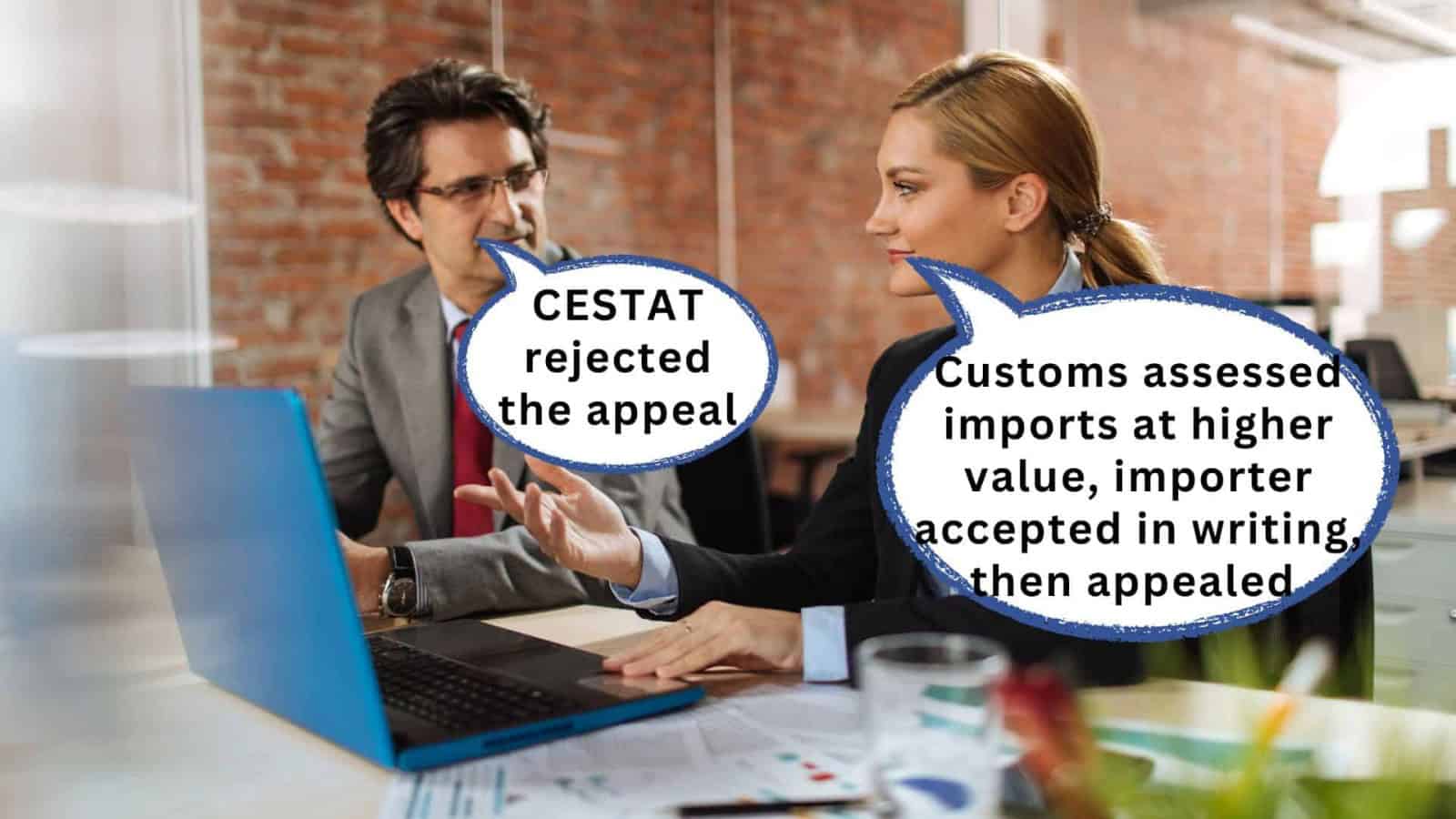
This case involves an appeal filed by M/s. Atlantis Trading Company against the re-valuation of imported induction cookers by the Customs authorities. The Customs authorities had rejected the declared value and re-determined a higher value based on NIDB data. The Customs, Excise and Service Tax Appellate Tribunal (CESTAT) allowed the appeal and upheld the declared value of the importer.
Case Name:
Atlantis Trading Company Vs Commissioner of Customs (CESTAT Chennai)
Key Takeaways:
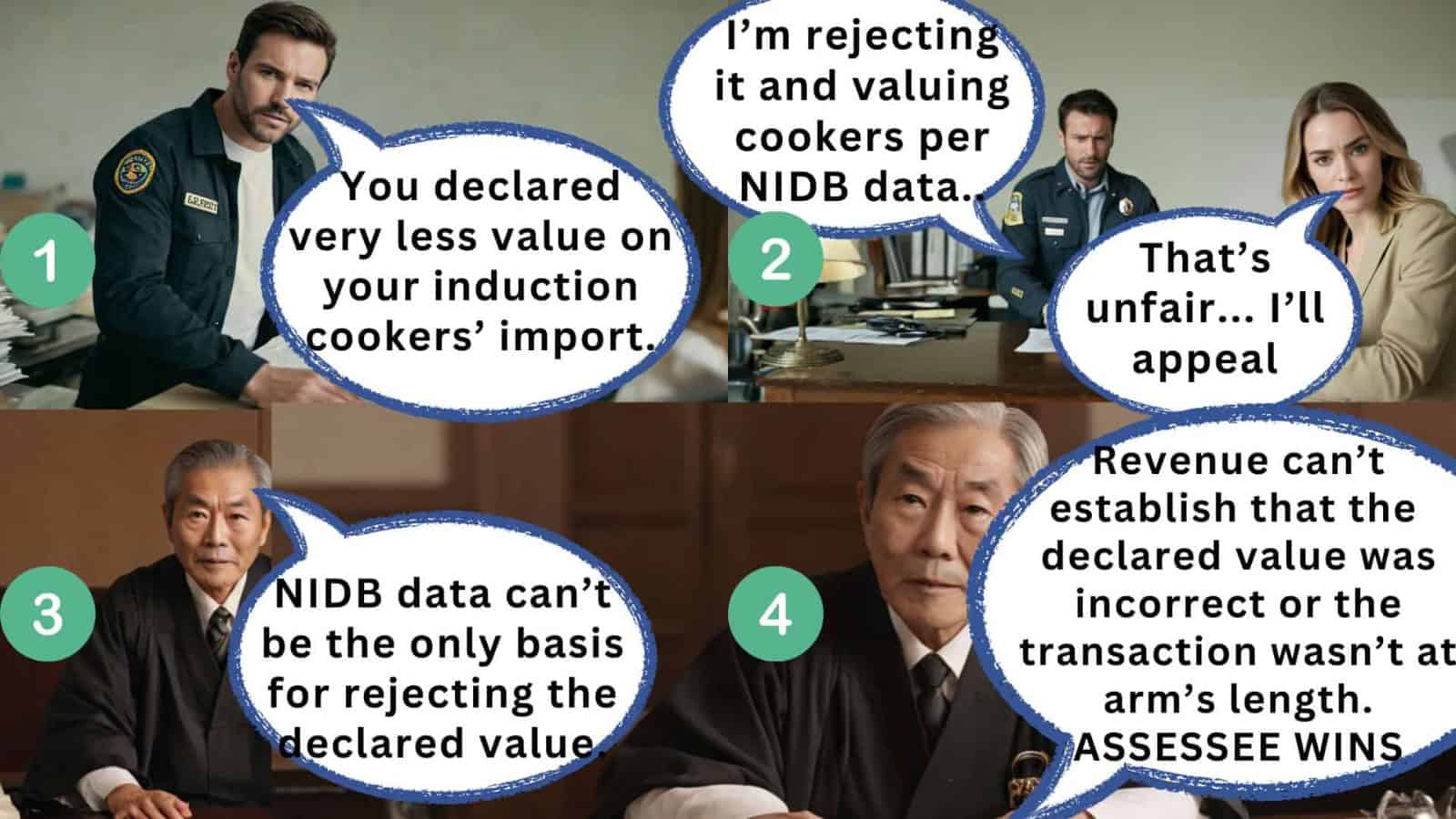
- The CESTAT held that NIDB data alone cannot be the basis for rejecting the declared value.
- The Revenue failed to establish that the declared value was incorrect or that the transaction was not at arm’s length.
- The CESTAT relied on its previous decisions and the Supreme Court’s judgment in Commissioner of Customs (Imports), Mumbai v. M/s. Ganpati Overseas, which held that the transaction value can be rejected only if the invoice price is proven to be incorrect.
Issue:
Whether the rejection of the declared value by the Revenue and the consequent re-determination of the value by the original authority were in order.
Facts:
- M/s. Atlantis Trading Company imported induction cookers from China and filed a Bill of Entry declaring the unit value at USD 14.00 and USD 13.50 for two different models.
- The Assistant Commissioner rejected the declared value based on NIDB data showing higher values for similar goods and re-determined the unit price at USD 20.70 under Rule 5 of the Customs Valuation (Determination of Value of Imported Goods) Rules, 2007.
- The Commissioner of Customs and Central Excise (Appeals) upheld the re-determined value.
Arguments:
The appellant argued that the NIDB data alone cannot be the basis for rejecting the declared value and that the Revenue failed to establish that the declared value was incorrect or that the transaction was not at arm’s length.
The Revenue relied on the NIDB data showing higher values for similar goods to justify the rejection of the declared value and the re-determination of the value.
Key Legal Precedents:
- M/s. Almaa Traders v. Commissioner of Customs (Export), Chennai [Final Order No. 40898 of 2023 dated 11.10.2023 in Customs Appeal No. 40935 of 2014 – CESTAT, Chennai]
- M/s. Shah B Impex v. Commissioner of Customs (Imports), Chennai [Final Order No. 40917 of 2023 dated 12.10.2023 in Customs Appeal No. 40823 of 2014 – CESTAT, Chennai]
- Commissioner of Customs (Imports), Mumbai v. M/s. Ganpati Overseas [Civil Appeal Nos. 4735-4736 of 2009 dated 06.10.2023]
Judgement:
The CESTAT allowed the appeal and set aside the impugned order, holding that the Revenue had not made out a case for rejecting the declared value and re-determining the same. The CESTAT relied on its previous decisions and the Supreme Court’s judgment in Commissioner of Customs (Imports), Mumbai v. M/s. Ganpati Overseas, which held that the transaction value can be rejected only if the invoice price is proven to be incorrect.
FAQs:
Q1: What is the significance of this case?
A1: This case reiterates the legal position that NIDB data alone cannot be the basis for rejecting the declared value, and the Revenue must establish that the invoice price is incorrect or that the transaction was not at arm’s length.
Q2: What is the impact of this decision on importers?
A2: This decision provides clarity and protection to importers against arbitrary rejection of declared values by Customs authorities based solely on NIDB data.
Q3: Can the Revenue appeal against this decision?
A3: Yes, the Revenue can file an appeal against this decision in a higher court if they wish to challenge the CESTAT’s ruling.
Q4: What is the legal reasoning behind the CESTAT’s decision?
A4: The CESTAT relied on its previous decisions and the Supreme Court’s judgment in Commissioner of Customs (Imports), Mumbai v. M/s. Ganpati Overseas, which held that the transaction value can be rejected only if the invoice price is proven to be incorrect. The Revenue failed to establish that the declared value was incorrect or that the transaction was not at arm’s length.
Q5: What are the implications of this case for future cases involving valuation disputes?
A5: This case reinforces the legal position that NIDB data alone cannot be the basis for rejecting the declared value, and the Revenue must provide substantial evidence to prove that the invoice price is incorrect or that the transaction was not at arm’s length.

This appeal is filed against the Order-in-Appeal No. 152/2013 dated 20.08.2013 passed by the Commissioner of Customs and Central Excise (Appeals), Tiruchirappalli. The assessee is aggrieved by the re-valuation of the impugned goods imported by it, by the Assistant Commissioner, vide Order-in Original No. 03/2013-A.C.(Imports) dated 27.03.2013.
2. Heard Dr. S. Krishnanandh, Ld. Advocate for the assessee and Shri Harendra Singh Pal, Ld. Assistant Commissioner for the Revenue.
3. Upon hearing both sides, we find that the only issue that is to be decided by us is: whether the rejection of the declared value by the Revenue is in order and consequent determination of the value by the original authority could be accepted?
4.1 The assessee had filed a Bill-of-Entry bearing No. 9236906 dated 06.02.2013 for the import of –
(i) 990 Pcs of “Uber Brand Induction Cooker with 1 PCT Free Spare Parts Model No. UB001IC (2000W)” and (ii) 1170 Pcs of “Uber Brand Induction Cooker with 1 PCT Free Spare Parts Model No. UB002IC (2000W)” and the country of origin was China.
4.2 The appellant had declared the unit value at USD 14.00 per piece CIF for the declared item “Uber Brand Induction Cooker with 1 PCT Free Spare Parts Model No. UB001IC (2000W)” and at USD 13.50 per piece for the declared item “Uber Brand Induction Cooker with 1 PCT Free Spare Parts Model No. UB002IC (2000W)”.
4.3 It appears that the Assistant Commissioner entertaining a doubt as regards the declared value by the importer, having looked into the NIDB data wherein similar goods appeared to have been cleared at a higher rate as depicted in the table under paragraph 4 of the Order-in-Original, chose to hold that the declared value was liable for rejection and that the same was required to be re-determined at USD 20.70 per piece under Rule 5 of the Customs Valuation (Determination of Value of Imported Goods) Rules, 2007. In adjudication, the original authority proceeded to reject the declared value and re-determined the unit price solely based on the NIDB data. Other than this, we do not find any findings as to whether the declared value of the appellant was false or incorrect, or that any contemporaneous/actual imports suggested any discrepancy in the declared value, etc.
5. Aggrieved by the said rejection and re-determination of the unit price, it appears that the appellant approached the first appellate authority, but however, the first authority also having rejected their appeal, thereby upholding the re-determined value by the original authority, the present appeal has been filed before this forum.
6. The issue in the present appeal lies on a very narrow compass. The reason for the Assistant Commissioner to reject the declared value is solely based on the NIDB data and other than this, we do not find any contemporaneous imports of similar goods declaring higher value having been referred to, by the said authority. Moreover, it is a fact borne on record that the appellant had tried to impress upon the Assistant Commissioner by furnishing imports of similar goods by various other importers, the value of which almost matched with that of the appellant before us, but however the same has not at all been considered by the said authority.
7.1 It is the settled position of law that NIDB data cannot be the only basis for rejection of the declared value, which has been reiterated by various CESTAT Benches, including the Chennai Bench, in the case of M/s. Almaa Traders v. Commissioner of Customs (Export), Chennai [Final Order No. 40898 of 2023 dated 11.10.2023 in Customs Appeal No. 40935 of 2014 – CESTAT, Chennai], wherein it was held as under: -
“7.3 Moreover, the officer has relied on alleged contemporaneous imports which were never put across to the appellant for rebuttal, but however, that such reliance on the contemporaneous imports itself has been doubted by the adjudicating authority when he holds that the value of the imported goods could not be determined under Rule 4 and Rule 5 due to variable factors like numerable types of descriptions, grades, country of origin, etc.; Rules 7 and 8 also could not be applied for want of quantifiable data at the place of exportation and importation respectively. By this, the approach of the assessing officer in comparing the import value with that of the contemporaneous imports stood diluted. In other words, on the one hand the officer says that the value of contemporaneous imports were higher, but on the other hand he refers to various factors like numerable types of descriptions, grades, country of origin, place of exportation and importation, etc., which would apply in equal force in respect of the value of the imported goods as well.
7.4 The quantity of import is much higher than the quantity of import in respect of the contemporaneous imports. Hence, so-called contemporaneous imports were in fact incomparables, due to which the rejection of the value of import as declared by the appellant is without any basis.
8. In view of the above, we are satisfied that the re-determination of the import value by the Revenue is without any basis and certainly not in accordance with the spirits of law, for which reasons the same deserves to be set aside.”
7.2 A similar view was also expressed by this Bench in the case of M/s. Shah B Impex v. Commissioner of Customs (Imports), Chennai [Final Order No. 40917 of 2023 dated 12.10.2023 in Customs Appeal No. 40823 of 2014 – CESTAT, Chennai], the relevant portion of which is reproduced below: -
“4.1 We have perused the table reproduced by the original authority at paragraph 6 of her order, but however, what is conspicuously missing is as to why and how the appellant had under-valued its imports. There is also no discussion as to the quantity of import, commercial level and other data insofar as the NIDB data referred to is concerned, nor do we find anywhere as to any discussion by the original authority as to how the same were comparable with the impugned goods on hand, imported by the appellant. There is no discussion also as to the quality, thickness, etc., in the goods referred to in the NIDB data.
4.2 We find that the Tribunal Benches across India have held that the NIDB data alone cannot be the basis for rejection of the transaction value. There is a reference to under-valuation way back in 2000, no specific reference to the appellant’s case, no reference ever made to the price being at arm’s length, nor is there any allegation that the transaction was between related parties. In the case on hand, the Revenue has not alleged anything other than relying on NIDB data.
4.3 Also, the Revenue has nowhere held that the transaction value declared by the appellant was incorrect or unbelievable, to reject the same. It is also the settled position of law that the transaction value cannot be rejected just because identical goods are imported at a higher price. For this, the Revenue has to first establish that the goods imported and contemporaneous goods are identical in the first place before proceeding further, which exercise has not at all been done by the Revenue in the case on hand. The Hon’ble Apex Court in its latest judgement in the case of Commissioner of Customs (Imports), Mumbai v. M/s. Ganpati Overseas [Civil Appeal Nos. 4735-4736 of 2009 dated 06.10.2023] has held that the legal position is that transaction value can be rejected if the invoice price is not found to be correct but it is for the Department to prove that the invoice price is not correct.”
8. We are therefore prima facie satisfied that the Revenue has not made out a case firstly, for the rejection of the declared value and secondly, no case is either made out justifying re-determination of the same. We find that the decisions/orders relied upon by the appellant support our above view, and hence, we hold that the adjudicating authority was clearly in error in rejecting the declared value and then re-determining the same; and hence, the impugned order is clearly unsustainable for the above reasons. Hence, we set aside the impugned order.
9. Consequently, the appeal is allowed with consequential benefits, if any, as per law.
(Order pronounced in the open court on 03.11.2023)
(M. AJIT KUMAR) (P. DINESHA)
MEMBER (TECHNICAL) MEMBER (JUDICIAL)
×