


Block Assessment Limited to Evidence from Search, High Court Rules


Full News

Block Assessment Limited to Evidence from Search, High Court Rules
Block Assessment Limited to Evidence from Search, High Court Rules
This case involves an appeal by the Revenue (Income Tax Department) against an order passed by the Income Tax Appellate Tribunal (ITAT) in favor of Pooja Forge Ltd. The dispute centered around additions made by the Assessing Officer in a block assessment, which the ITAT had deleted. The High Court upheld the ITAT's decision, ruling that block assessments can only be based on evidence found during a search or requisition of books and documents.
Get the full picture - access the original judgement of the court order here
Case Name:
Commissioner of Income Tax Vs Pooja Forge Ltd. (High Court of Delhi)
ITA 64/2001
Date: 17th November 2015
Key Takeaways:
1. Block assessments under Chapter XIV-B of the Income Tax Act are limited to undisclosed income detected during a search.
2. Block assessments are not substitutes for regular assessments but are additional to them.
3. Additions in block assessments must be based on evidence found during the search, not subsequent inquiries.
Issue:
Can additions in a block assessment be made based on information not directly unearthed during a search operation under the Income Tax Act?
Facts:
1. Pooja Forge Ltd. is engaged in manufacturing and trading high tensile fasteners.
2. A search and seizure operation was conducted on the company on September 29, 1995.
3. Based on seized material, proceedings were initiated under Section 158BC (of Income Tax Act, 1961) on January 11, 1996.
4. The company filed a block return on July 3, 1996, declaring 'nil' undisclosed income.
5. The Assessing Officer made several additions in the block assessment order dated September 27, 1996, totaling over Rs.3 crores.
6. The ITAT deleted these additions, stating they could only be made in a regular assessment, not in block assessment proceedings.
Arguments:
Revenue's Argument:
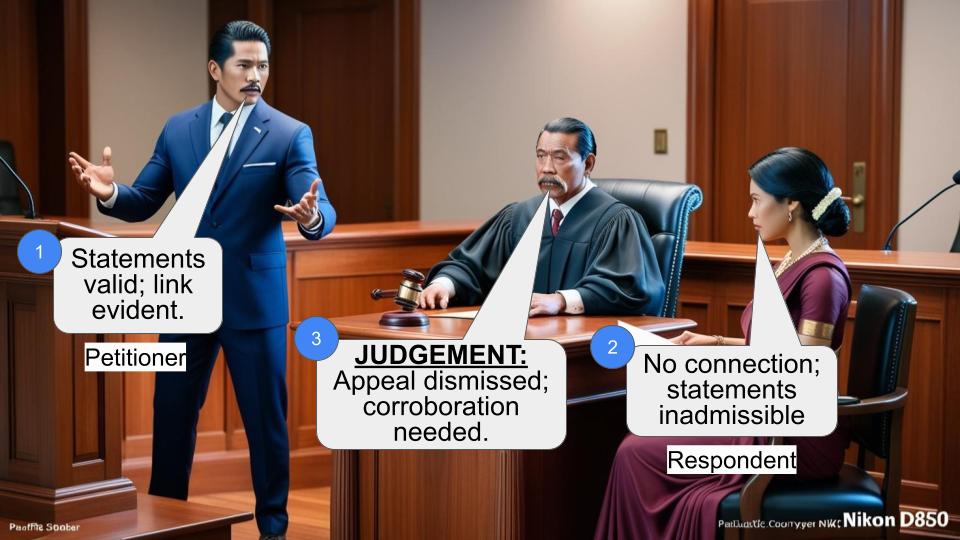
- The additions made by the Assessing Officer in the block assessment were valid and within the scope of block assessment proceedings.
Assessee's (Pooja Forge Ltd.) Argument:
- The additions were not based on material unearthed during the search but on subsequent inquiries, making them invalid for block assessment proceedings.
Key Legal Precedents:
1. CIT v. Ravi Kant Jain (2001) 250 ITR 141 (Del): This case established that block assessments under Chapter XIV-B are limited to undisclosed income detected as a result of a search.
2. CIT v. Jupiter Builders P. Ltd. 287 ITR 287 and CIT v. Bluechip Construction Co. (P) Ltd. 213 CTR 530: These cases followed the principle set in Ravi Kant Jain.
Judgement:
The High Court dismissed the Revenue's appeal and ruled in favor of Pooja Forge Ltd. The court held that:
1. The scope of block assessment is limited to materials unearthed during a search.
2. Block assessments are not substitutes for regular assessments but are additional to them.
3. The Revenue couldn't dispute that the additions were not based on material found during the search but on subsequent inquiries.
4. The ITAT's order deleting the additions was legally sound.
FAQs:
1. Q: What is a block assessment?
A: A block assessment is a special procedure under Chapter XIV-B of the Income Tax Act to assess undisclosed income detected during a search operation.
2. Q: Can regular assessment findings be included in a block assessment?
A: No, block assessments are limited to evidence found during the search or requisition of books and documents.
3. Q: What's the difference between a block assessment and a regular assessment?
A: A block assessment is specifically for undisclosed income found during a search, while a regular assessment is the normal process of assessing a taxpayer's income.
4. Q: Does this judgment affect all block assessments?
A: Yes, it reinforces the principle that block assessments must be based solely on evidence found during the search, not on subsequent inquiries.
5. Q: Can the Revenue appeal this decision further?
A: While the judgment doesn't mention it, the Revenue could potentially appeal to the Supreme Court if there are substantial questions of law involved.

1. This appeal by the Revenue under Section 260A (of Income Tax Act, 1961) (‘Act’) is against an order dated 19th December 2000 passed by the Income Tax Appellate Tribunal (‘ITAT’) in ITA No. 5556 (Del)/96 for the block period 1986-87 to 1996-97.
2. The Assessee is engaged in the manufacture and trading of high tensile fasteners. A search and seizure operation was conducted on 29th September 1995 on the Assessee and other group companies. On the basis of the material seized during the search, proceedings were initiated by the issue of notice to the Assessee under Section 158BC (of Income Tax Act, 1961) on 11th January 1996. The Assessee filed its block return on 3rd July 1996 declaring ‘nil’ undisclosed income. For Assessment Year (AY) 1995-96, the Assessee had filed a regular return of income on 30th November 1995 which was two months after the search but within the prescribed time. This return was processed under Section 143(1)(a) (of Income Tax Act, 1961).
3. The Assessing Officer (‘AO’) made the following additions in the block assessment order dated 27th September 1996:
(a) Rs.55,130 on account of the personal expenses which had been debited in the books of accounts of the Assessee by holding that it was not business expenditure.
(b) An addition of Rs.6,00,846 in respect of the alleged job work done by the sister concern of the Assessee on the ground that it was bogus expenditure.
(c) An addition of Rs.20,146 on account of the payment made to M/s. Madhvi International for the job work done for the period ending September 1995.
(d) An addition of Rs.2,49,74,935 being the expenses allegedly occurred on account of job work purportedly undertaken by the Assessee.
(e) An addition of Rs.46,22,172 being the expenses for lease rentals paid to the sister concern for taking of machinery on lease.
4. The ground on which the ITAT by the impugned order deleted the above additions was that the said additions could have been made only in a regular assessment and not in the block assessment proceedings since they did not arise from material unearthed during the course of search.
5. While admitting this appeal on 12th August 2002, the Court framed the following questions of law for consideration:
“1. Whether the ITAT has rightly interpreted the scope and jurisdiction of the Assessing Officer in the block assessment proceedings?
2. Whether the ITAT was right in law in deleting addition of Rs.20,146/- on alleged job work payment to Madhvi International, Rs.2,64,926/- on account of personal expenditure of directors on travelling, RS.6,00,846/- on account of alleged job work charges, RS.50,000/- on account of alleged share capital contributed by Mr. Shiv Shankar, Rs.2,49,74,975/- on account of Manisha Exports and Rs.46,22,172/- on account of disallowance of lease rental, holding that the said additions cannot be made in block assessment proceedings?”
6. Having heard learned counsel for the parties, the Court is satisfied that the principal question is no longer res integra and stands covered against the Revenue in a large number of judgments including CIT v. Ravi Kant Jain (2001) 250 ITR 141 (Del) in which inter alia it was held:
“The special procedure of Chapter XIV-B is intended to provide a mode of assessment of undisclosed income, which has been detected as a result of search. As the statutory provisions go to show, it is not intended to be a substitute for regular assessment. Its scope and ambit is limited in that sense to materials unearthed during search. It is in addition to the regular assessment already done or to be done. The assessment for the block period can only be done on the basis of evidence found as a result of search or requisition of books of account or documents and such other materials or information as are available with the Assessing Officer. Evidence found as a result of search is clearly relatable to sections 132 and 132A.”
7. The said decision has been subsequently followed in CIT v. Jupiter Builders P. Ltd. 287 ITR 287and CIT v. Bluechip Construction Co. (P) Ltd. 213 CTR 530.
8. Factually, the Revenue has not been able to dispute that the additions sought to be made by the AO were not on account of any material unearthed during the search but as a result of enquiry made subsequently. In the circumstances, the Court finds no legal infirmity in the order of the ITAT deleting the additions in question.
9. Consequently, the questions are answered in the affirmative i.e. in favour of the Assessee and against the Revenue.
10. The appeal is dismissed.
S. MURALIDHAR, J
VIBHU BAKHRU, J
NOVEMBER 17, 2015
×
Similar Ripples
Questions
Block Assessment Limited to Evidence from Search, High Court Rules
Write your CommentSimilar Posts


Generic
- Reportdata/3317.pdf
