


Court Dismisses Tax Appeal on Interest Earned from Government Grants


Full News

Court Dismisses Tax Appeal on Interest Earned from Government Grants
Court Dismisses Tax Appeal on Interest Earned from Government Grants
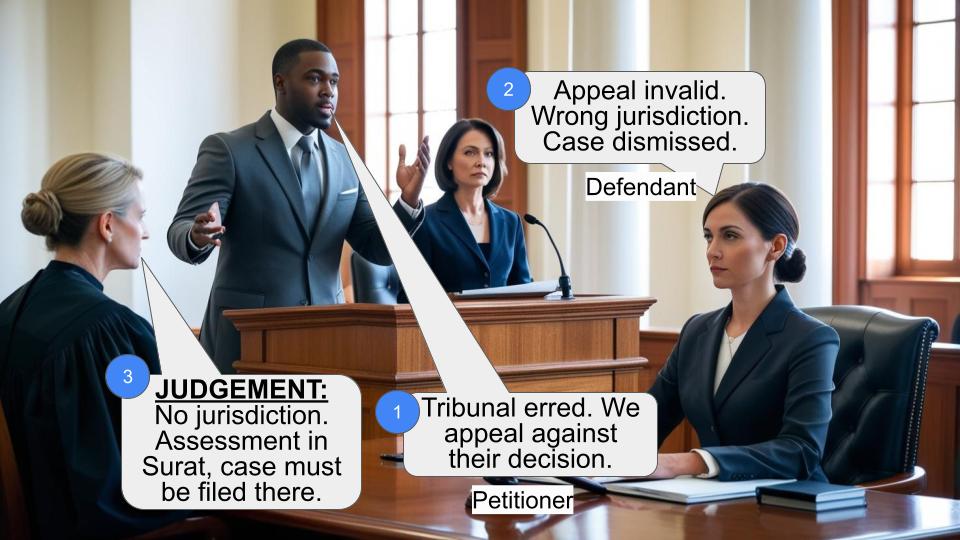
This is interesting case where the Income Tax Department (represented by the Principal Commissioner of Income Tax) took Punjab Police Housing Corporation Ltd. to court over some interest money. The tax folks thought this interest should be taxed, but the company disagreed. Long story short, the court sided with the company and dismissed the tax department's appeal. Let's dive into the details.
Get the full picture - access the original judgement of the court order here
Case Name:
Principal Commissioner of Income Tax vs M/s Punjab Police Housing Corporation Ltd. (High Court of Punjab & Haryana)
ITA No.326 of 2015 (O&M)
Date: 3rd February 2020
Key Takeaways:
1. Interest earned on unused government grants isn't automatically taxable income.
2. The purpose of the funds and how they're used matters more than the fact that interest was earned.
3. Government instructions on fund usage can override general tax assumptions.
4. Courts will look at the practical reality of fund usage rather than making assumptions based on lack of explicit instructions.
Issue:
The main question here was: Is the interest earned on unused government grants given to Punjab Police Housing Corporation Ltd. taxable as income?
Facts:
1. Punjab Police Housing Corporation Ltd. (let's call them PPHC) gets grants from the Punjab government for stuff like building houses for police officers.
2. Sometimes, they don't use all the money in a year, so they park it in a bank.
3. This parked money earns interest.
4. The Income Tax folks (Assessing Officer) said, "Hey, that interest is taxable income!"
5. But PPHC disagreed, and so did the Commissioner and the Income Tax Appellate Tribunal.
6. The tax department wasn't happy with this, so they appealed to the High Court.
Arguments:
Tax Department's Side:
1. PPHC never showed they returned any interest to the government.
2. The grant notification didn't say anything about interest.
3. PPHC isn't registered under Section 25 of the Companies Act, 1956.
4. Even for the government, this would be revenue.
5. This interest isn't just casual income.
PPHC's Side:
1. The interest is just an extension of the grant.
2. They can only use it for the original purpose or have to give it back.
3. Sometimes, they use the interest for other government projects when no new funds are given.
Key Legal Precedents:
The tax folks tried to use a case called "Commissioner of Income-Tax, Bombay City II Vs. Sitaldas Tirathdas, 1961 AIR 728". But the court said, "Nah, that's different. In that case, the person spent the interest however they wanted. That's not what's happening here."
Judgement:
The court basically said, "Nice try, tax department, but we're not buying it." They dismissed the appeal because:
1. The tax officer's findings were just guesses, not facts.
2. There's no proof PPHC used the interest money for whatever they wanted.
3. Just because the grant letter didn't mention interest doesn't mean it's automatically taxable.
4. The government has instructions about using interest from unspent funds for the same purposes.
FAQs:
Q1: Does this mean all interest earned on government grants is tax-free?
A1: Not necessarily. This case was specific to how PPHC used the funds and followed government instructions.
Q2: Why didn't the court care that PPHC never returned any interest?
A2: The court cared more about how the money was used, not whether it was physically returned.
Q3: What's the significance of Section 10(23BBA) (of Income Tax Act, 1961) mentioned in the case?
A3: The court actually said this wasn't relevant. PPHC never claimed exemption under this section, so it was just extra info that didn't affect the decision.
Q4: Could this decision apply to other organizations receiving government grants?
A4: Possibly, but each case would be judged on its own facts. The key is how the organization uses the interest earned.
Q5: What's the main lesson for government-funded organizations from this case?
A5: Keep clear records of how you use funds, including any interest earned. Follow government instructions on fund usage closely.

1. This appeal has been filed against the order of the Commissioner Income Tax and the Income Tax Appellate Tribunal setting aside the order of the Assessing Officer whereby the Assessing Officer held that the interest which had accrued to the Assessee was liable to tax.
2. The brief facts are that the Assessee is regularly given grants by the State of Punjab for various purposes including the construction of houses for police officials. It so happens that in a particular year the grant remains un-utilized and the money which is parked in the bank earns interest. As per the Assessing Officer this interest was exigible to tax whereas the Commissioner and the Tribunal held otherwise. The basis for the Tribunal's decision is that the amount of interest which accrues on any money parked in the bank would be deemed to be a further grant for For Subsequent orders see CWP-10043-2018, CWP-10499-2019, CWP-17378-2018 and 4 more. that particular purpose and can be used only for that purpose and in the event that it can not be used for that purpose the same has to be refunded back to the Government.
3. The primary grounds which weighed with the Assessing Officer to hold otherwise were, firstly that the Assessee was not able to show that it had ever returned the interest to the Government; secondly no such stipulation was there in the notification releasing the funds; thirdly the Assessee was not a Company registered under Section 25 of the Companies Act, 1956; fourthly that even in the hands of the Government it would be a revenue receipt and fifthly that the accrual of this interest can not be taken to be a casual income.
4. In our considered opinion, the findings of the Assessing Officer are conjectural. Instead of saying that the interest income has been utilized by the Assessee on its own free will, the Assessing Officer has inverted the law and has held that merely because the Assessee has never refunded any amount of interest to the Government it means it is its income.
5. On the other hand the Commissioner has found that certain funds are released to the State of Punjab by the Central Government and if those are un-utilized and interest accrues on them, the amount of interest is deducted by the Central Government while giving subsequent grant. The Commissioner further found that certain buildings which were required by the Punjab Government like the Cyber Police Cell had to be constructed by the Assessee out of the interest income because the Government did not release any funds for those purposes. The Tribunal also upheld the findings of the Government.
For Subsequent orders see CWP-10043-2018, CWP-10499-2019, CWP-17378-2018 and 4 more.
6. Before us the learned counsel for the appellant has vehemently argued that the absence of any instance where the interest income was ever returned to the Government and the absence of any stipulation to this effect in the letter releasing the various grants to the Assessee clearly show that the interest income belongs to the Assessee.
7. Counsel for the appellant has relied upon a judgment passed by the Supreme Court in Commissioner of Income-Tax, Bombay City II Vs. Sitaldas Tirathdas, 1961 AIR 728 but that case is not applicable because in that case what the Supreme Court had decided that if the interest is spent by the Assessee as per his own desire it would constitute income whereas in the present case this is not so.
8. The argument that there is no such stipulation in the letter releasing the grant does not lead to the automatic conclusion that the interest is income of the Assessee. It is not the case of the appellant that the books of the Assessee ever revealed the diversion of any interest income. Had that been so something could have been said. The other argument raised by the counsel for the appellant is that the Tribunal wrongly invoked Section 10(23BBA) (of Income Tax Act, 1961) and the invocation of that Section completely blind-sided the Tribunal into taking a wrong decision.
9. It would be pertinent to note that there is dispute raised by the counsel for the appellant against finding recorded by the Tribunal in para 11 of its order. The relevant portion is quoted below :-
“The assessee in the Paper Book filed on record has furnished the copy of notification issued by the Central Government for utilization of interest, placed at pages 22 and 23 of the Paper Book. As per the afore said notification For Subsequent orders see CWP-10043-2018, CWP-10499-2019, CWP-17378-2018 and 4 more. dated 17.3.1999, the interest earned on the amount deposited in the saving bank account out of funds not utilized under SJSRY scheme, are tobe distributed between all the components of the scheme on pro rata basis and the expenditure out of such interest income is to be applied accordingly. In view of the above said instructions of the Central Government, the assessee society is not the recipient of the aforesaid income arising on account of interest earned on deposits with banks.”
10. Learned senior counsel appearing for the respondents has stated that the Assessee never claimed any exemption under Section 10(23BBA) (of Income Tax Act, 1961) and in the circumstances, the only thing which can be held is that reference to Section 10(23BBA) (of Income Tax Act, 1961) by the Tribunal was surplusage and was not required in view of the basic finding of fact that the income which accrued to the Assessee from the funds of the Government which were released to it were not diverted by it and could not be diverted by to any other purpose and had to be used only for the purposes which the Government directed and in case the funds were not used the Government had the right to recall them.
11. Questions of law raised by the appellant does not arise. Consequently, the appeal is dismissed.
12. Since the main case has been dismissed, the pending Misc. Application, if any, also stands disposed of.
( AJAY TEWARI )
JUDGE
( AVNEESH JHINGAN )
JUDGE
×
Similar Ripples
Questions
Court Dismisses Tax Appeal on Interest Earned from Government Grants
Write your CommentSimilar Posts


Generic
- Reportdata/6077.pdf
