


Incriminating evidence needed for each year in Section 153A (of Income Tax Act,…


Full News
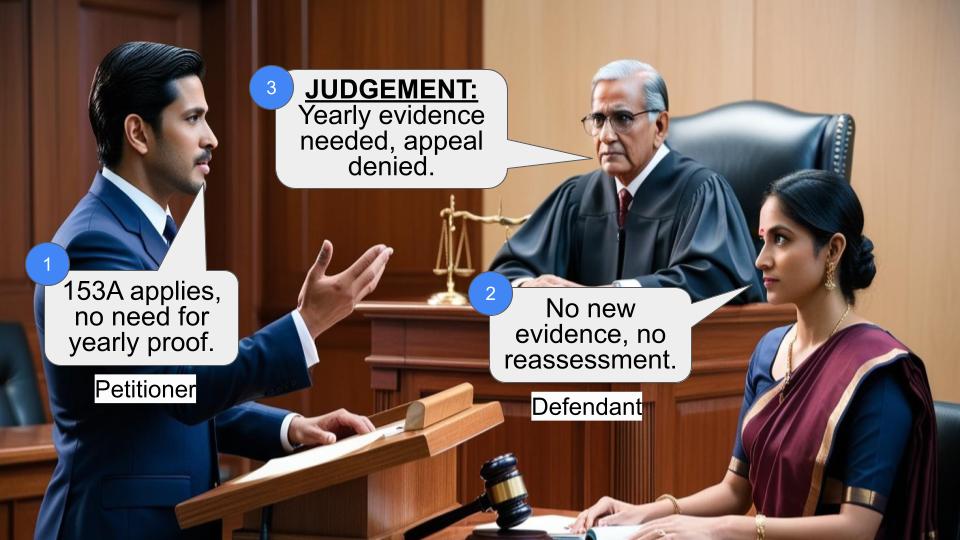
Incriminating evidence needed for each year in Section 153A (of Income Tax Act, 1961) assessments
Incriminating evidence needed for each year in Section 153A (of Income Tax Act, 1961) assessments
A case where the tax department (Revenue) appealed against a decision made by the Income Tax Appellate Tribunal (ITAT). The ITAT had ruled that for each year under assessment, there needs to be incriminating material found during a search to justify an assessment under Section 153A (of Income Tax Act, 1961). The High Court agreed with the ITAT and dismissed the Revenue's appeal.
Get the full picture - access the original judgement of the court order here
Case Name:
Principal Commissioner of Income Tax Vs Ms. Lata Jain (High Court of Delhi)
ITA 274/2016
Date: 6th May 2016
Key Takeaways:
1. For assessments under Section 153A (of Income Tax Act, 1961), there must be incriminating material found during a search for each specific year being assessed.
2. The court upheld the ITAT's decision, reinforcing the importance of evidence in tax reassessments.
3. This case clarifies the scope and limitations of the tax department's powers under Section 153A (of Income Tax Act, 1961).
Issue:
The main question here was: Is it necessary to have incriminating material recovered during a search for each specific year to conduct an assessment under Section 153A (of Income Tax Act, 1961)?
Facts:
1. The case involves Ms. Lata Jain (the Assessee) and the tax department.
2. It's about Assessment Years 1998-99 and 1999-2000.
3. Initially, assessments were done under Section 143(3) (of Income Tax Act, 1961).
4. Later, these assessments were reopened under Section 147 (of Income Tax Act, 1961), and reassessments were made.
5. During these proceedings, they looked at whether gold and silver utensils were capital assets or personal effects of the Assessee.
6. A search was conducted, but no incriminating material was found for the years in question.
Arguments:
The Revenue (tax department) argued that they could reassess under Section 153A (of Income Tax Act, 1961) even without new incriminating material. The Assessee, on the other hand, contended that without new evidence, such reassessment wasn't valid.
Key Legal Precedents:
The court relied on the case of CIT v. Kabul Chawla [2016] 380 ITR 573 (Delhi). This case seems to have established that incriminating material is necessary for each year under Section 153A (of Income Tax Act, 1961) assessments.
Judgement:
The High Court sided with the ITAT and the Assessee. They said:
1. There must be incriminating material found during the search for each year being assessed under Section 153A (of Income Tax Act, 1961).
2. The ITAT's order was legally sound.
3. No substantial question of law arose from this case.
So, they dismissed the Revenue's appeals.
FAQs:
1. Q: What's Section 153A (of Income Tax Act, 1961) all about?
A: It's a section of the Income Tax Act that allows for reassessment of past years when a search is conducted.
2. Q: Why is this judgment important?
A: It limits the tax department's power to reassess without new evidence, protecting taxpayers from arbitrary reassessments.
3. Q: Does this mean the tax department can never reassess without new evidence?
A: Not exactly. This ruling is specific to Section 153A (of Income Tax Act, 1961) assessments following a search.
4. Q: What counts as "incriminating material"?
A: The judgment doesn't specify, but generally, it would be evidence suggesting tax evasion or undisclosed income.
5. Q: Could this decision be overturned?
A: Potentially, if appealed to the Supreme Court. But for now, it's the law in Delhi.

CM No. 15007/2016 (for exemption) in ITA No. 276/2016
1. Exemption allowed subject to all just exceptions.
2. The application is disposed of.
3. These appeals by the Revenue are, under Section 260A (of Income Tax Act, 1961) („Act‟), against the common judgment dated 29th May 2015 passed by the Income Tax Appellate Tribunal („ITAT‟) in ITA Nos. 2140/Del/2008 and 2141/Del/2008 for Assessment Years („AYs‟) 1998-99 and 1999-2000.
4. By the impugned order, the ITAT dismissed the appeal of the Assessee and allowed the cross objections of the Assessee.
5. The short point involved is whether the ITAT was correct in concluding that there had to be incriminating material recovered during the search qua the Assessee in each of the years for the purposes of framing an assessment under Section 153A (of Income Tax Act, 1961)?
6. It is not in dispute that in respect of the Respondent Assessee for the AYs in question the initial assessment proceedings took place under Section 143(3) (of Income Tax Act, 1961). Thereafter they were sought to be reopened by issuing notice under Section 147 (of Income Tax Act, 1961) and re-assessment orders were passed under Section 147 (of Income Tax Act, 1961) read with Section 143(3) (of Income Tax Act, 1961). During both the aforementioned proceedings the question whether the gold and silver utensils were the capital assets or personal effects of the Assessee was examined. They were held not to be the personal effects.
7. It has been noticed by the ITAT in the impugned order that for the AYs in question no incriminating material qua the Assessee was found.
8. In that view of the matter, and in light of the decision of this Court in CIT v. Kabul Chawla [2016] 380 ITR 573 (Delhi), the Court is of the view that the impugned order of the ITAT suffers from no legal infirmity and no substantial question of law arises for determination.
9. The appeals are dismissed.”
S.MURALIDHAR, J
VIBHU BAKHRU, J
MAY 06, 2016
×
Similar Ripples
Questions
Incriminating evidence needed for each year in Section 153A (of Income Tax Act, 1961) assessments
Write your CommentSimilar Posts

Generic
- Reportdata/2852.pdf
