


Tax Appeal Dismissed: High Court Upholds ITAT's Rulings on Multiple Income Tax …





Full News
Tax Appeal Dismissed: High Court Upholds ITAT's Rulings on Multiple Income Tax Issues
Tax Appeal Dismissed: High Court Upholds ITAT's Rulings on Multiple Income Tax Issues
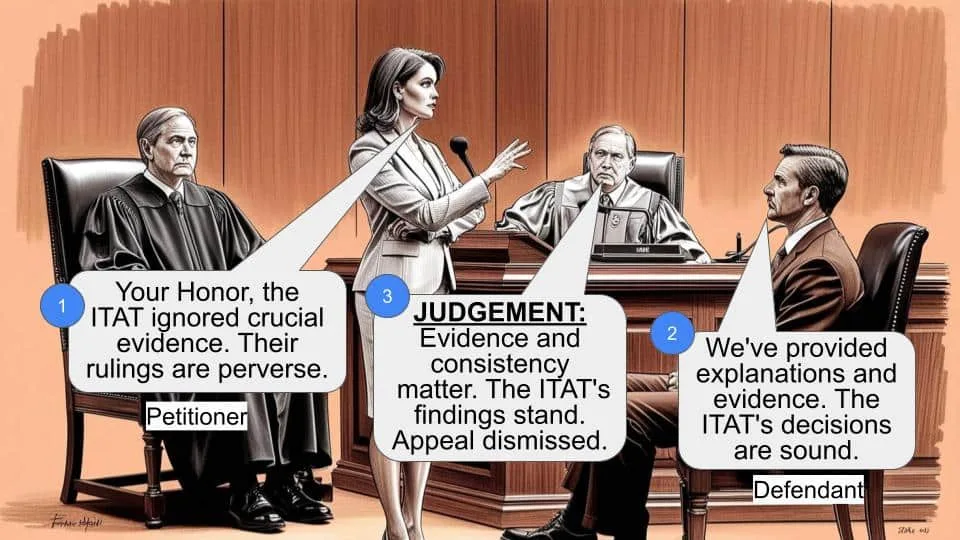
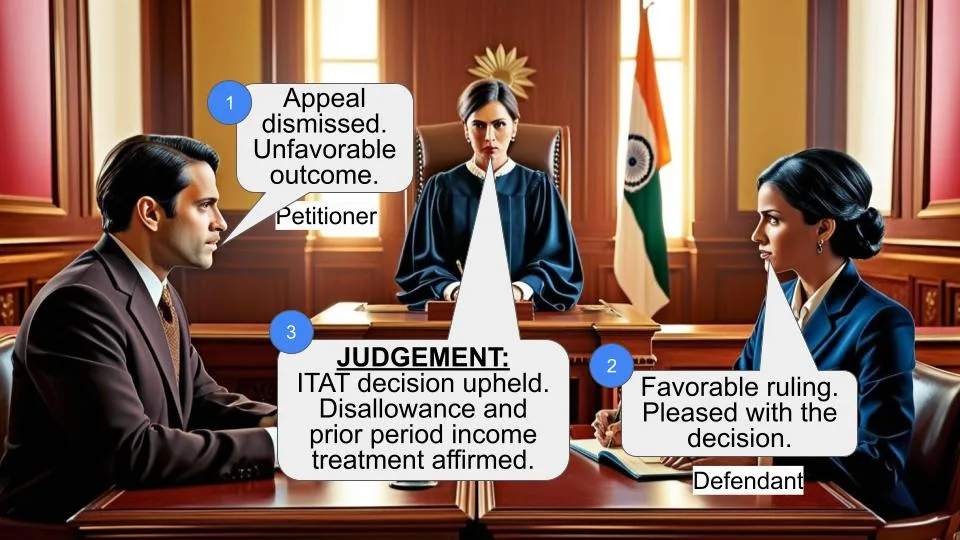
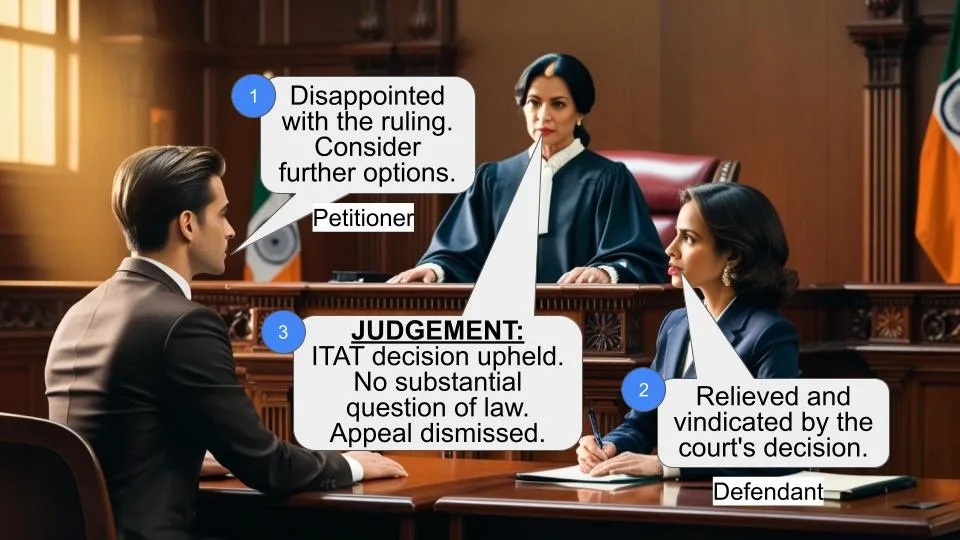
Where the Principal Commissioner of Income Tax (that's the tax department) filed an appeal against a taxpayer named Ajit Ramakant Phatarpekar. The tax department wasn't happy with some decisions made by the Income Tax Appellate Tribunal (ITAT) in favor of the taxpayer. But guess what? The High Court ended up dismissing the appeal, agreeing with the ITAT on all the issues. It's a win for the taxpayer!
Get the full picture - access the original judgement of the court order here
Case Name:
Principal Commissioner of Income Tax Vs Ajit Ramakant Phatarpekar (High Court of Bombay)
Tax Appeal No.22 of 2016
Date: 29th October 2020
Key Takeaways:
1. The court upheld the ITAT's decision on disallowance under Section 14A (of Income Tax Act, 1961), limiting it to the amount of exempt income.
2. Cash purchases of about 2% of total purchases were deemed legitimate.
3. The court emphasized the importance of consistency in tax assessments across years.
4. Transactions with sister concerns were scrutinized but ultimately accepted as genuine.
5. The court highlighted the need for the tax department to be consistent in its approach to similar issues across assessment years.
Issue:
The main question here was: Did the Income Tax Appellate Tribunal (ITAT) make any legal errors in its decisions on various income tax matters, including disallowances, cash purchases, trade creditors, and transactions with related parties?
Facts:
We've got a taxpayer who had some issues with the Income Tax Department. The department made some additions to the taxpayer's income, but the ITAT disagreed with most of these additions. The tax department wasn't happy about this, so they appealed to the High Court. The case involves several specific issues:
1. A disallowance under Section 14A (of Income Tax Act, 1961).
2. Cash purchases of about Rs.60 lakhs.
3. Some trade creditors that the tax department thought were suspicious.
4. A question about the valuation of closing stock.
5. Expenses paid to a sister concern for various services.
The ITAT had ruled in favor of the taxpayer on all these issues, and now the tax department wanted the High Court to take another look.
Arguments:
The tax department (represented by Ms. Razaq) argued:
1. The ITAT's findings were perverse and ignored important evidence.
2. The disallowance under Section 14A (of Income Tax Act, 1961) should have been higher.
3. The taxpayer didn't prove the genuineness of cash purchases.
4. The taxpayer didn't provide confirmations from trade creditors.
5. The closing stock was undervalued through journal entries with a sister concern.
6. The taxpayer didn't prove the genuineness of services from the sister concern.
The taxpayer (represented by Mr. Jain) argued:
1. The ITAT's decisions were reasonable and based on evidence.
2. The disallowance under Section 14A (of Income Tax Act, 1961) can't exceed the exempt income.
3. The cash purchases were a small percentage of total purchases and were explained.
4. The trade creditors issue was already settled in a previous year's
assessment.
5. The Revenue had accepted the services as genuine for tax purposes, so they can't dispute the stock valuation.
6. There was evidence that the sister concern was involved in the claimed activities.
Key Legal Precedents:
1. Nirved Traders Pvt. Ltd. vs. Dy. Commissioner of Income Tax:
This case established that disallowance under Section 14A (of Income Tax Act, 1961) can't exceed the exempt income earned in the assessment year.
2. Shree Choudhary Transport Co. vs. Income Tax Officer:
The tax department tried to use this case for the cash purchases issue, but the court found it wasn't relevant here.
3. CIT vs. Chase Bright Steel Ltd:
This case was used to support the deletion of additions related to trade creditors.
Judgement:
The High Court dismissed the tax department's appeal and agreed with the ITAT on all issues. Here's a quick breakdown:
1. On the Section 14A (of Income Tax Act, 1961) disallowance, the court said it can't exceed the exempt income, which was only about Rs.45,000 in this case.
2. The cash purchases were accepted as genuine, given they were only 2% of total purchases and the explanation provided was reasonable.
3. The trade creditors issue was resolved based on previous year's assessments and the Chase Bright Steel Ltd case.
4. The court found no issue with the closing stock valuation, saying the tax department can't accept services as genuine for tax purposes and then dispute the stock valuation.
5. The expenses paid to the sister concern were accepted as genuine, based on evidence and consistency with previous year's assessments.
The court emphasized that the ITAT's findings were not perverse and didn't warrant interference.
FAQs:
Q1: What's the significance of the Nirved Traders case?
A1: It set a precedent that disallowance under Section 14A (of Income Tax Act, 1961) can't be more than the exempt income earned in that year.
Q2: Why were the cash purchases accepted despite lack of detailed proof?
A2: They were a small percentage of total purchases, involved small amounts, and the explanation provided was considered reasonable.
Q3: What's the importance of consistency in tax assessments?
A3: The court emphasized that if the tax department accepts something in one year, they should generally maintain that stance in subsequent years unless there's a significant change.
Q4: How did the court view transactions with related parties?
A4: The court said these should be scrutinized carefully, but if there's evidence of genuine transactions, they should be accepted.
Q5: What's the main takeaway for taxpayers from this case?
A5: Consistent record-keeping, reasonable explanations for transactions, and relying on established legal precedents can be crucial in tax disputes.

Heard Ms. Amira Razaq, learned Standing Counsel for the Income Tax Department (Revenue) and Mr. Jitendra Jain, along with Mr. H.D. Naik for the Respondents (Assessees).
2. The learned Counsel for the parties agree that both these Appeals can be disposed of by a common Judgment and Order since the issues involved in both these Appeals are identical.
3. The learned Counsel for the parties, however, submit that Tax Appeal No.22/2016 may be treated as a lead Appeal.
4. This Appeal was admitted on 5th March 2019 on the following substantial questions of law.
“1. Whether the Income Tax Appellate Tribunal erred in law upholding the disallowance to the extent of Rs.65,000/- only and deleting the balance addition of Rs.24,06,566/- u/s 14A (of Income Tax Act, 1961) ?
2. Whether the Income Tax Appellate Tribunal erred in law upholding the order of Commissioner of Income Tax(A), in disallowing cash purchases without considering that onus is upon the assessee to prove the genuineness thereof?
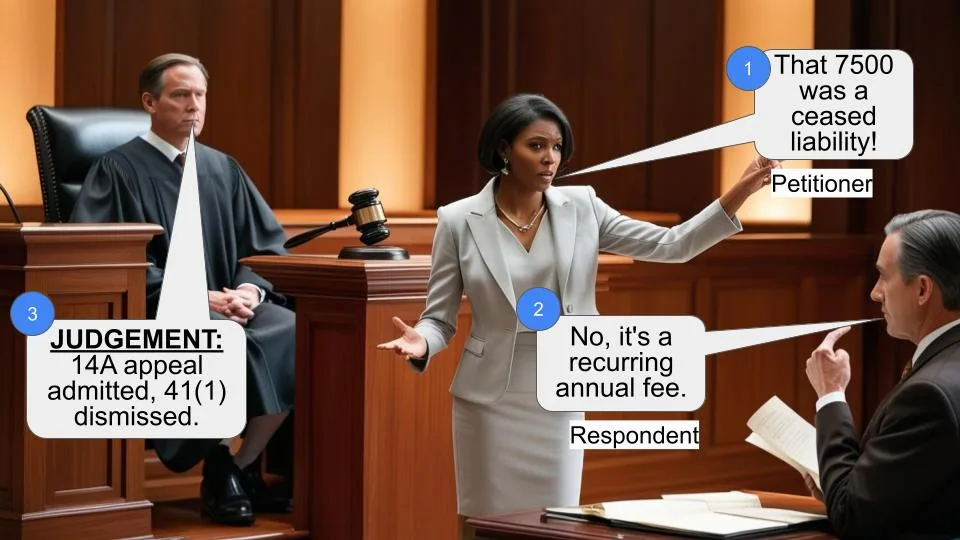
3. Whether the Income Tax Appellate Tribunal erred in law upholding the order of Commissioner of Income Tax(A), deleting additions made under 41(1) when assessee had not filed any confirmation of trade creditors and existence of liabilities?
4. Whether the Income Tax Appellate Tribunal erred in law upholding the order of Commissioner of Income Tax(A), in deleting additions of Rs.1,18,26,320/- on account of undervaluation of closing stock merely by passing journal entries ?
5. Whether the Income Tax Appellate Tribunal erred in law upholding the order of Commissioner in deleting additions towards staking and handling expenses and blending and screening charges, where assessee has failed to prove genuineness of rendering any service by sister concern?
5. Ms. Razaq, the learned Counsel for the Revenue submits that the findings recorded by the Income Tax Appellate Tribunal (ITAT) suffer from perversity. She submits that the relevant and vital material on record has been excluded from consideration. She, therefore, submits that the substantial questions of law, as framed, are required to be answered in favour of the Revenue and against the Assessees.
6. Ms. Razaq, the learned Counsel for the Revenue submits that the Assessing Officer (AO), based on the detailed reasoning and calculations, had concluded that a sum of Rs.4,71,566/- was required to be disallowed under Section 14A (of Income Tax Act, 1961) (IT Act). The Commissioner (Appeals) and the ITAT, by misconstruing the provisions of Section 14A (of Income Tax Act, 1961), have reduced this disallowance to only Rs.65,000/-, which is not proper.
7. Mr. Jain defends the orders made by the Commissioner (Appeals) and the ITAT based on the reasoning reflected therein. He points out that the total dividend income was only Rs.45,321/-. He relies on Nirved Traders Pvt. Ltd. vs. Dy. Commissioner of Income Tax, to submit that disallowance under Section14A (of Income Tax Act, 1961) cannot be more than the exempt income earned by the Assessee during the relevant assessment year.
8. Rival contentions now fall for our determination.
9. There is no perversity in the orders passed by the Commissioner (Appeals) and the ITAT on this issue. Besides in Nirved Traders Pvt. Ltd. (supra), this Court has held that disallowance under Section 14A (of Income Tax Act, 1961) cannot be more than the exempt income earned by the Assessee during the assessment year in question. In this case, there is no dispute that the dividend i.e. the exempt income earned by the Assessees during the relevant Assessment Year, was only Rs.45,371/-. Accordingly, the disallowance in this case could not have exceeded Rs.45,371/-. It is only because the Assessees voluntarily offered a disallowance to the extent of Rs.65,000/-, that the Commissioner (Appeals) made a disallowance to the extent of Rs.65,000/-. Thus, the first substantial question of law is required to be answered against the Revenue and in favour of the Assessees.
10. Ms. Razaq then submits that in this case, the cash purchases to the extent of Rs.60,28,080/- were made by the Assessees and despite the opportunity, there was no explanation forthcoming as to the details of the parties from whom such cash purchases were made. Mr. Razaq submits that onus to prove the genuineness of cash purchases, lies upon the Assessees and since the same was not discharged despite opportunities, this amount of Rs.60,28,080/- should have been added to the returned income of the Assessees. She relies on Shree Choudhary Transport Co. vs. Income Tax Officer in support of her contention.
11. Mr. Jain defends the impugned orders made by the Commissioner (Appeals) and the ITAT based upon the reasoning reflected therein. He points out that the decision in Shree Choudhary Transport Co. (supra) is not at all relevant to the issue in this matter.
12. On consideration of the rival contentions, again we are unable to agree with the contentions of Ms. Razaq. The record indicates that the total purchases of the Assessees during the relevant assessment year were in the range of Rs.29.97 crores. As against this, cash purchases were of Rs.60,20,080/- which corresponds to around 2% of the total purchases. The purchases were in a series of transactions, involving an amount of less than Rs.20,000/-. This is not a case where the books of account of the Assessees were rejected by the AO. The record also establishes that the Assessees obtained 'H' Form concerning these purchases.
13. The Assessees have also offered a plausible explanation that such purchases were from smaller traders or mining contractors who would collect residual iron ore spilled on land and then sold for a cheaper price based on on the spot cash payments.
14. Both, the Commissioner (Appeals) and the ITAT have recorded concurrent findings on the issue of cash purchases and it cannot be said that such findings suffer from perversity to warrant interference in this Appeal.
15. The decision in Shree Choudhary Transport Co. (supra) is distinguishable and concerns mainly the interpretation of Section 40(i)(ia) (of Income Tax Act, 1961). Since the fact position in the said decision is in no manner comparable, the said decision can be of no assistance to the Revenue in this matter.
16. Accordingly, the second substantial question of law is also required to be answered against the Revenue and in favour of the Assessee.
17. Ms. Razaq then submits that the Commissioner (Appeals) and the ITAT were not justified in deleting the addition made under Section 41(1) (of Income Tax Act, 1961), since despite opportunities no confirmations of trade creditors were produced on record by the Assessees. She submits that in absence of such confirmations, additions were correctly made by the AO and the same required no interference.
18. Mr. Jain defends the impugned orders based on the reasoning reflected therein. He relies on CIT vs. Chase Bright Steel Ltd in support of his contentions.
19. On considering the rival contentions, again, we find no good ground to interfere with the view taken by the Commissioner (Appeals) as also the ITAT on this issue. In the first place, the ITAT for the Assessment Year 2009-10 in respect of these very Assessees, has confirmed the deletion of a similar nature, relying upon a decision of this Court in Chase Bright Steel Ltd. (supra).
Admittedly, this order of the Tribunal was never challenged by the Revenue, and the view taken therein was accepted. Though indeed, the principle of res judicata will not be attracted in such matters, it is clear that in similar circumstances and overlapping facts, the view of the Tribunal was never questioned by the Revenue concerning these very Assessees. Accordingly, there is no case made out to answer this substantial question of law in favour of the Revenue.
20. In any case, even the reasonings of the Commissioner (Appeals) and the ITAT suffer from no perversity whatsoever. The view taken is consistent with the law laid down by this court in Chase Bright Steel Ltd (supra). There is material on record, which also suggests that the confirmations were indeed received and filed by the Assessees though, there are contradictory findings by the AO on this issue.
21. For all the aforesaid reasons, the third substantial question of law is required to be decided against the Revenue and in favour of the Assessee in this matter.
22. Ms. Razaq then submits that in this case, undervaluation of closing stock is done by merely passing journal entries in the name of the sister concern. She submits that dealings involving the transfer of funds to related parties are required to be scrutinized with care and caution. She submits that no such care and caution were applied by the Commissioner (Appeals) and the ITAT in the present matter. Accordingly, an amount of Rs.1,18,26,320/- was required to be added to the income of the Assessees.
23. Mr. Jain again defended the impugned orders made by the Commissioner (Appeals) and the ITAT based on the reasoning reflected therein. He points out that in this case, the Revenue has accepted the rendering of service as genuine and on such basis, even collected the tax. Having done this, it is not open to the Revenue to allege any undervaluation of closing stock.
24. Again, on consideration of the rival contentions, we detect neither any perversity in the concurrent findings of fact recorded by the Commissioner (Appeals) and the ITAT, nor can we say that the two authorities misconstrued the legal position in this regard. The Revenue, on one hand, cannot accept rendering of service as genuine and tax the transactions based on the same and the other hand, urge that there has been undervaluation of the closing stock and on such basis make additions to the returned income. Accordingly, even the fourth substantial question of law is required to be answered against the Revenue and in favour of the Assessees.
25. Ms. Razaq finally contends that the Commissioner (Appeals) and the ITAT erred in deleting the additions towards staking and handling expenses and blending and screening charges since the Assessees failed to establish the genuineness of such activities by their sister concern. She points out that in the first place the transactions with the sister concerns are required to be scrutinized with care and caution. Secondly, there was no evidence that the sister- concern was at all involved in such kind of activities. She submits that for these reasons, the fifth substantial question of law was required to be answered in favour of the Revenue and against the Assessees.
26. Mr. Jain points out that there is sufficient material on record which indicates that the sister- concern was indeed involved in such activities. He points out that in the preceding assessment year, this position had been accepted by the Revenue. He submits that the concurrent findings as to the genuineness recorded by the Commissioner (Appeals) and the ITAT suffer from no perversity and, therefore, warrant no interference.
27. Again, upon consideration of the rival contentions we agree with Mr. Jain that this is not a case of perversity in the matter of record of concurrent findings of fact.
28. The record very clearly indicates that the sister concern M/s. Karishma Goa Mineral Trading Pvt. Ltd. had rendered similar types of services to M/s. Karishma Global Mineral Exports Pvt. Ltd. during the assessment year 2010-11 and the said expenditure was never disallowed by the Revenue during the assessment of M/s. Karishma Global Mineral Exports Pvt. Ltd. even though such assessment was completed under Section 143(3) (of Income Tax Act, 1961). Therefore, there was a factual error on the part of the AO in holding that the sister- concern was never involved in this type of activity.
29. Secondly, we are satisfied that both Commissioner (Appeals) and the ITAT did scrutinize the transaction with required care and caution and only thereafter recorded the concurrent findings of fact. Therefore, even the fifth substantial question of law is required to be answered against the Revenue and in favour of the Assessees.
30. As a result, the substantial questions of law in these Appeals are required to be answered against the Revenue and in favour of the Assessee. Consequently, these appeals are liable to be dismissed and are hereby dismissed.
31. There shall be no order as to costs.
Dama Seshadri Naidu, J. M.S. Sonak, J.
×
Similar Ripples
Questions
Tax Appeal Dismissed: High Court Upholds ITAT's Rulings on Multiple Income Tax Issues
Write your CommentSimilar Posts
Generic
- Reportdata/6160.pdf
