High Court Orders Re-examination of Tribunal's Decision on Royalty Expenditure …


Full News

High Court Orders Re-examination of Tribunal's Decision on Royalty Expenditure Allocation
High Court Orders Re-examination of Tribunal's Decision on Royalty Expenditure Allocation
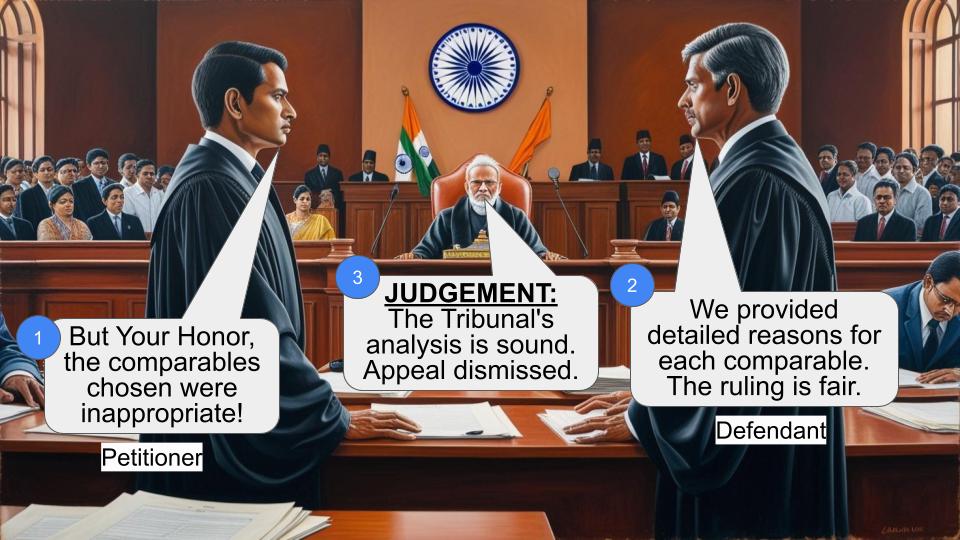
The High Court has remanded a case involving Montage Enterprises Pvt. Ltd. back to the Tribunal for re-examination. The Tribunal had reversed the findings of the Assessing Officer (AO) without proper discussion or explanation, leading to a dispute over the allocation of royalty expenses between the Jammu Unit and the Corporate Office. The High Court found that the Tribunal's decision lacked sufficient reasoning and required a fresh adjudication to determine whether the Jammu Unit utilized the technical know-how under the Memorandums of Understanding (MoUs).
Get the full picture - access the original judgement of the court order here.
Case Name:
Principal Commissioner of Income Tax vs. Montage Enterprises Pvt. Ltd. (High Court of Delhi)
ITA 892/2016
Key Takeaways
- The High Court found the Tribunal's reversal of the AO's findings to be unsustainable due to a lack of discussion and explanation.
- The case revolves around the allocation of royalty expenses and the corresponding deduction under Section 80-IB (of Income Tax Act, 1961), 1961.
- The High Court has remanded the case back to the Tribunal for a fresh adjudication on whether the Jammu Unit utilized the technical know-how provided under the MoUs.
- The Tribunal's decision on the cross-appeal by the Revenue regarding the netting of royalty received from royalty paid was also left undecided pending the outcome of the re-examination.
Issue
Did the Jammu Unit of Montage Enterprises Pvt. Ltd. utilize the technical know-how provided under the MoUs, and should the royalty expenses be allocated to the Jammu Unit or the Corporate Office for the purpose of deduction under Section 80-IB (of Income Tax Act, 1961), 1961?
Facts
- Montage Enterprises Pvt. Ltd. is part of the M/s Flex Group of companies, engaged in manufacturing, trading, and selling flexible packaging material.
- The company has three manufacturing units: Jammu, Malanpur, and Noida. The Jammu Unit's income is exempt under Section 80-IB (of Income Tax Act, 1961).
- The company entered into two MoUs with Ashok Chaturvedi for the payment of royalty for licensing rights regarding an improved sachet pouch.
- For the Assessment Year 2005-06, the royalty was treated as an expense by the Jammu Unit, reducing its profits. For the Assessment Year 2006-07, the royalty was treated as an expense by the Corporate Office, increasing the Jammu Unit's profits.
- The AO rejected the reallocation of expenses and maintained that the royalty expenses should be attributed to the Jammu Unit.
- The Commissioner of Income Tax (Appeals) affirmed the AO's findings but allowed netting of royalty received from royalty paid.
- The Tribunal reversed the AO's findings without proper discussion, leading to the High Court's intervention.
Arguments
Respondent-Assessee (Montage Enterprises Pvt. Ltd.)
- Claimed that the technical know-how under the MoUs was not utilized by the Jammu Unit and was sub-licensed to M/s Flex Industries Ltd.
- Argued that the royalty expenses should be allocated to the Corporate Office, not the Jammu Unit.
Revenue
- Argued that the technical know-how was utilized by the Jammu Unit, and the royalty expenses should be attributed to the Jammu Unit.
- Contended that the Tribunal's decision lacked proper reasoning and discussion.
Key Legal Precedents
- Zandu Pharmaceuticals Works Ltd. vs. Commissioner of Income Tax, City-VII [2013] 350 ITR 366 (BOM):
The expression "derived from" requires a direct nexus between the profits and gains for an industrial undertaking to justify and claim deduction.
- Commissioner of Income Tax, Karnataka vs. Sterling Foods, Mangalore (1999) 237 ITR 579 (SC):
There must be a direct nexus between an industrial undertaking and the expenses sought to be apportioned/attributed to the said undertaking.
Judgement
The High Court remanded the case back to the Tribunal for re-examination on whether the Jammu Unit utilized the technical know-how provided under the MoUs. The Tribunal's decision on the cross-appeal by the Revenue regarding the netting of royalty received from royalty paid was also left undecided pending the outcome of the re-examination. The substantial questions of law were answered partly in favor of the Revenue and against the respondent-assessee.
FAQs
Q1. What was the main issue in this case?
A1. The main issue was whether the Jammu Unit utilized the technical know-how provided under the MoUs and whether the royalty expenses should be allocated to the Jammu Unit or the Corporate Office for the purpose of deduction under Section 80-IB (of Income Tax Act, 1961), 1961.
Q2. Why did the High Court remand the case back to the Tribunal?
A2. The High Court found that the Tribunal had reversed the AO's findings without proper discussion and explanation, making the decision unsustainable. The case was remanded for a fresh adjudication to determine the utilization of the technical know-how by the Jammu Unit.
Q3. What is the significance of the case?
A3. The case highlights the importance of proper reasoning and discussion in judicial decisions, especially when reversing findings of lower authorities. It also underscores the need for a direct nexus between expenses and the industrial undertaking for claiming deductions under tax laws.
Q4. What will happen next?
A4. The Tribunal will re-examine the case to determine whether the Jammu Unit utilized the technical know-how under the MoUs. Depending on the outcome, the Tribunal will also decide on the cross-appeal by the Revenue regarding the netting of royalty received from royalty paid.

These appeals filed by the Revenue under Section 260A (of Income Tax Act, 1961) („the Act‟ for short) impugn the order dated 31.05.2016 of the Income Tax Appellate Tribunal („Tribunal‟ for short) in the case of Montage Enterprises Pvt. Ltd. („respondent- assessee‟ for short). The appeals pertain to the Assessment Years 2005- 06 and 2006-07.
2. The appeals were admitted for hearing vide order dated 06.11.2017 on the following substantial questions of law:-
“1. Whether assessee was right in reallocating expenditure/income on account of royalty from Jammu Unit to Corporate Division?
2. If the answer to the above is in the affirmative in favour of the Revenue, the further question which arises is whether the Assessee was entitled to deduction under Section 80-IB (of Income Tax Act, 1961), 1961 in respect of sub-licence fee (ITA 892/2016 &894/2016)?”
3. The respondent-assessee is part of the M/s Flex Group of companies and was engaged in the business of manufacturing, trading and sale of flexible packaging material.
4. The respondent-assessee had three manufacturing units situated at Jammu, Malanpur and Noida. The income of the Jammu Unit was exempted under Section 80-IB (of Income Tax Act, 1961). However the income from units at Malanpur and Noida was not exempted.
5. The respondent-assessee and Ashok Chaturvedi, Managing Director, had entered into two Memorandum of Understandings dated 14.07.2004 and 05.08.2004 (hereinafter called „MoU‟ for short) for payment of royalty at the rate of Rs.50 lakhs per month to latter for licensing rights regarding “improved sachet pouch with improved additional gusset either on one or both sides of the sachet pouch with a scoring line in the form of laser cut”.
6. For the Assessment Year 2005-06, royalty of Rs.4.25 crores paid to Ashok Chaturvedi at the rate of Rs.50 lakhs per month from July, 2004 to March, 2005 was treated as expenditure incurred by the Jammu Unit. This had the effect of decreasing or reducing the profits of the Jammu Unit under Section 80-IB (of Income Tax Act, 1961).
7. In Assessment Year 2006-07, royalty of Rs. 6 crores paid to Ashok Chaturvedi at the rate of Rs.50 lakhs per month was treated by the respondent-assessee as expenditure incurred by the Corporate Office and not as expenditure incurred by the Jammu Unit. This had correspondingly increased or enhanced the profits of the Jammu Unit under Section 80-IB (of Income Tax Act, 1961).
8. In the returns of income for the Assessment Years 2005-06 and 2006-07 filed on 31.10.2005 and 29.11.2006 the respondent-assessee had claimed deduction of Rs.9.27 crores and Rs.9.24 crores under Section 80-IB (of Income Tax Act, 1961) with respect to the Jammu Unit. Returns and deduction under Section 80-IB (of Income Tax Act, 1961), notwithstanding the difference in treatment of royalty paid, were duly supported by report in form No. 10CCB issued by a chartered accountant.
9. Search and seizure operations were conducted in cases of M/s Flex Group on 23.02.2006. Thereafter, the cases of M/s Flex Group including the case of the respondent-assessee, were centralised. Subsequently, notice dated 23.08.2006 under Section 153A (of Income Tax Act, 1961) was issued to the respondent-assessee to file their returns of income.
10. In the return of income for Assessment Year 2005-06 under Section 153A (of Income Tax Act, 1961) filed on 06.10.2006, the respondent-assessee had revised and enhanced the deduction claimed under Section 80-IB (of Income Tax Act, 1961) in respect of Jammu Unit, by not treating royalty of Rs.4.25 crores as payment made by Jammu Unit, but as expenditure incurred by the Corporate Office. A revised Form 10CCB by the chartered accountant with respect to the Jammu Unit was enclosed.
11. During the course of the proceedings for the Assessment Year 2005-06 pursuant to notice under Section 153A (of Income Tax Act, 1961), the respondent-assessee had claimed that as they could not use the technical know-how under the MoUs, they had sub-licensed the same to their sister company, M/s Flex Industries Ltd. for consideration of Rs.1.96 crores per annum. It was claimed that the pouches manufactured at the Jammu Unit had not used and utilized the known- how and rights acquired under the MoUs. Respondent-assessee had set off/reduced Rs.1.96 crores received from M/s Flex Industries Ltd. from the royalty of Rs. 4.25 crores paid to Ashok Chaturvedi. The net licence fee/royalty paid to Ashok Chaturvedi of Rs.2.28 crores was declared and shown as expenditure incurred by the Corporate Office.
12. The Assessing Officer vide order dated 28.12.2007 rejected the change/alteration while computing the deduction under Section 80-IB (of Income Tax Act, 1961) with respect to the Jammu Unit, recording the following reasons and grounds:-
“10. On perusal of the details, it is noticed that the figure of payment of Rs. 228.22 lacs which has been shifted from Jammu to Corporate unit under the head other manufacturing expenses, has been arrived at as under:-
Royalty paid Rs.4,25,00,000/- (to Sh. Ashok Chaturvedi) @ Rs. 50 lacs per month for the period 15-7-2004 to 31-3-2005
Less: Royalty received (from M/s Flex Industries Ltd.) Rs.1,96,77,419/-
@ Rs. 25 lacs per month for the period 5-8-2004 to 31-3-2005
Net amount Rs. 2,28,22,581/-
10.1 The assessee has debited the net figure of royalty expenses of Rs. 2.28 crores to Corporate unit by shifting it from Jammu unit. However, he has completely ignored the corresponding income component and not a single income has been credited to the Corporate unit. It is to be seen from above that Rs. 2.28 crores is only a netted amount. Thus, the assessee has entirely concealed the income of the Corporate unit in the subsequently produced P & L account of this unit.
10.2 In the light of the above, and to ·undo the manipulation and misrepresentation of figures by the assessee, the P & L account of Corporate unit has to be rearranged in the following manner:-
Royalty income shifted from Jammu unit Rs. 1,96,77,419/-
Less: Expenses:
i. Royalty payment shifted from Jammu unit Rs. 4,25,00,000/-
ii. Expenses shifted from Jammu unit Rs. 77,21,000/-
iii. Other expenses Rs. 51,20,000/-
(-) Rs. 3,56,63,581
10.3 Further, it is evident that the assessee has not only shifted the taxable income from Jammu unit to Corporate unit, but has also claimed unwarranted and ineligible expenses against this income. The assessee in his various replies and during the discussions in the course of assessment proceedings has stated that the licence fee/royalty received {from M/s Flex Industries ltd., FIL) and paid {to Sh. Ashok Chaturvedi) pertain to the know how and technology for the production of improved sachet pouch with additional gusset either on one or both sides. It has also been found that this improved sachet pouch is being produced only at the Jammu unit of the assessee company. Further, on perusal of the agreements in respect of licence fee received and royalty paid, it is noticed that these agreements are clearly directly linked with the plant located at Bari Brahman, Jammu of the assessee company. Thus, both the receipt and income components of licence fee/royalty undoubtedly pertain to the Jammu unit.
10-.4 The assessee has shifted the income from licence fee received from M/s FIL pertaining to the Jammu unit to the Corporate unit merely to increase the eligible deduction. This income of Jammu unit is liable to be considered in the P & L account of the Jammu unit and is to be considered as income not derived from the industrial undertaking on which deduction u/s 80 (of Income Tax Act, 1961)-18 is not allowable.
10.5 The assessee company has manufactured and sold improved sachet pouches only at its ·Jammu unit and there is no rationale for shifting the expenses of Rs. 4,25,00,000/- on account of royalty paid relating to such production at Jammu unit to the Corporate unit where there is no production of any kind. The assessee does not manufacture the kind of pouch for which royalty payment agreement has been made with Sh. Ashok Chaturvedi at any other unit except at Jammu. Jammu unit has shown total sales of Rs. 101.50 crores during the year under consideration. Yet, nothing has been debited to the unit on account of royalty expenses despite the fact that the very production and existence of this unit depends upon the technology received in lieu of the payment of royalty to Sh. Ashok Chaturvedi. Hence, the reply of the assessee that payment of royalty may also relate to the Corporate unit is merely conjectural or notional in nature and devoid of any merit. The ploy of the assessee in diverting the expenses directly pertaining to the Jammu unit to the Corporate unit is with the sole motive of enhancing the quantum of eligible profits of Jammu unit. Therefore, the amount of royalty paid of Rs. 4,25,00,000/- shifted to the Corporate unit is to be considered as the actual expenditure incurred at the Jammu unit. The licence fees paid by the Jammu unit of the assessee is basically for utilizing the technical know how for manufacturing. Any sub-licencing income earned is merely incidental in nature and no portion of expenses on licence fee/royalty can be said to have been incurred for such earning.
10.6 Further, it is also seen, that apart from the royalty expense the assessee has also shifted Rs. 77,21, 000/- on account of other expenses actually incurred by the Jammu unit to Corporate unit. These expenses also do not have any relevance for earning royalty income. The assessee has offered no explanation for the unwarranted shifting of these expenses subsequently to Corporate unit.
10.7 The later plucking out of certain expenses from Jammu and planting them into the -Corporate unit is merely a simulated shifting of figures affecting the profit figures of the Jammu unit. Therefore, the assessee is not allowed to divert expenses of Rs.4,25,00,000/- plus Rs. 77,21,000/- to the subsequently created Corporate unit because these expenses are directly attributable to the business activities at the Jammu unit which is evident from the sales figures of the Jammu unit and the assessee company as a whole. Further, remaining expenses of Rs. 51,20,000/- as shown above has also no co-relation with the royalty income and the same will be divided amongst Malanpur, Noida and Jammu units in the ratio of turnover. The assessee is liable to initiation of penalty proceedings u/s 271(1)(c) (of Income Tax Act, 1961) on this count as the assessee company has deliberately concealed his income and furnished inaccurate particulars of such income by manipulation of the profit of Jammu unit.”
13. Perusal of the Assessment Order dated 28.12.2007 for the Assessment Year 2005-06 would show that as per the Assessing Officer expenditure in the form of salary/wages, administration/selling expenditure and other manufacturing expenditure amounting to Rs. 3.56 crores attributable to the Jammu Unit, had been transferred as expenditure payable to the Corporate Office. Further, the Assessing Officer held that the service tax liability on licence fee/royalty was expenditure incurred by the Jammu Unit and should be taken into consideration for computing deduction under Section 80-IB (of Income Tax Act, 1961) for Jammu Unit.
14. The Commissioner of Income Tax (Appeals) vide order dated 16.02.2010, substantially affirmed the finding of the Assessing Officer. He however allowed netting of Rs.1.96 crores from the expenditure of Rs.4.25 crores while computing deduction under Section 80-IB (of Income Tax Act, 1961) with respect to the Jammu Unit. The reasoning given by the Commissioner of Income Tax (Appeals) reads as under:-
“5.4 In view of the decision of Hon'ble ITAT, it is clear that the provisions of section 153A (of Income Tax Act, 1961) are for the benefit of the Revenue. The appellant cannot be permitted to convert the reassessment proceedings into an appeal or revision in disguise and seek relief in respect of items not claimed in the original assessment proceedings. The perusal of the regular return of income filed for this year makes it clear that the royalty is claimed as the income and expense of the Jammu unit whereas in the return filed in pursuance to notice u/s 153A (of Income Tax Act, 1961), the income, expenditure and other expenses of Rs.77,21 ,000/- have been shifted to the Corporate unit. The action of the appellant is contrary to the provisions· of the Act and not allowable as discussed in the aforesaid decision. In view of the decision of the Hon'ble ITAT as discussed, the ground raised by the appellant is dismissed. 5.5. It is further observed from the assessment order that the A.O. had not considered the royalty income as part of the gross total income to be taken into consideration while working out the deduction u/s 80-IB (of Income Tax Act, 1961), whereas the entire royalty of Rs. 4,25,00,000/- is debited to the profit & loss account of the Jammu unit. The A.O. is directed to debit the net expenditure on royalty to the profit and loss account after deducting the income from the royalty while calculating the deduction u/s 80-IB (of Income Tax Act, 1961).”
15. The Commissioner of Income Tax (Appeals) was also of the view that the Assessing Officer was correct and justified in holding that respondent-assessee cannot increase/enhance the deduction under Section 80-IB (of Income Tax Act, 1961) in a return filed under Section 153A (of Income Tax Act, 1961). Figure and the amount claimed in the return filed under Section 139 (of Income Tax Act, 1961), would be the outer limit/figure on which deduction could be claimed. The reason being that Section 153A (of Income Tax Act, 1961) proceeding are for the benefit of the Revenue and not to grant additional benefit to the assesse beyond what was claimed in original return filed under Section 139 (of Income Tax Act, 1961).
16. The return of income filed by respondent-assessee for the Assessment Year 2006-07 was also taken up for scrutiny assessment. By the Assessment Order dated 31.12.2007 for similar reasons, the Assessing Officer held that the royalty of Rs.6 crores paid to Ashok Chaturvedi should be treated as expenditure incurred by the Jammu Unit and not by the Corporate Office. The Assessing Officer also disallowed netting of Rs.2.25 crores received as licence/royalty fee from M/s Flex Industries Limited observing that this was not income derived from and covered under Section 80-IB (of Income Tax Act, 1961). Service tax liability on royalty was accordingly treated as expenditure attributable to the Jammu Unit.
17. The Commissioner of Income Tax (Appeals) vide order dated 16.02.2010 for identical reasons as in the order passed for Assessment Year 2005-06, held that royalty of Rs.6 crores paid to Ashok Chaturvedi was expenditure incurred by the Jammu Unit, albeit allowed set off/netting of Rs.2.25 crores paid by M/s Flex Industries Limited for computation of deduction for the Jammu Unit under Section 80-IB (of Income Tax Act, 1961).
18. Cross appeals by the Revenue and the respondent-assessee in respect of deduction under Section 80-IB (of Income Tax Act, 1961) have been disposed of by the impugned order passed by the Tribunal allowing and accepting the stand of the respondent-assessee and dismissing the appeal filed by the Revenue for the following reasons:-
“5. The revenue in its appeal has raised that the netting of royalty income as directed by the Ld. CIT( A) is not proper. As both these grounds of assessee as well as revenue are interlinked with each other, they are disposed of together for the sake of convenience.
5.1. There is no dispute that the assessee is entitled to the benefit of the provisions of section 80 (of Income Tax Act, 1961) IB of the act which provides that, where the gross total income of an assessee includes any profits and gains derived from an industrial undertaking, there shall be allowed, in computing the total income of the assessee, a deduction from such profits and gruns, an amount specified ·therein. Further while computing the profits and gains of the concemed undertaking, only expenses relating thereto can be deducted. In other words the expenses must be incurred, for and on behalf of the concerned undertaking. The expenses attributable to any other unit or the head office expenses which have no relevance to the industrial undertaking, cannot be deducted in respect of the said undertaking while computing the profits and gains of the undertaking.
5.2 It is not the case of the revenue that the technical know-how obtained by the assessee by way of licence has benefited assessee, in any manner whatsoever. It is also not the case of the revenue that the assessee has manufactured the sachet with the assistance of Jammu unit. However it is important to note that the assessee had obtained the licence of the technical know-how of manufacturing the sachet for Jammu unit, as the assessee had installed the plant and machinery for utilization of that technical know-how at Jammu unit. However due to some unforeseen reasons the assessee could not use the technical know-how neither at Jammu unit nor at any other units. As submitted by the Ld.AR, the assessee has commercially exploited the same and has earned. Rs. 1.96 crores for the year under consideration, by subletting the technical know-how to an outside party.”
19. Thereafter, the Tribunal referred the judgment passed by the Bombay High Court in Zandu Pharmaceuticals Works Ltd. vs. Commissioner of Income Tax, City-VII [2013] 350 ITR 366 (BOM) holding that the expression “derived from” has been explained by the Supreme Court in Commissioner of Income Tax, Karnataka vs. Sterling Foods, Mangalore (1999) 237 ITR 579 (SC) to mean that there should be a direct nexus between the profits and gains for an industrial undertaking to justify and claim deduction. Secondly, there must be a direct nexus between an industrial undertaking and that the expenses which are sought to be apportioned/attributed to the said undertaking. Expenses which relate to another unit or a sister company cannot be taken for consideration for computing the deduction.
20. We note that the Tribunal in paragraph 5.2 of the impugned order has observed and held that “however due to some unforeseen reasons the assessee could not use the technical know-how neither at Jammu Unit nor at any other units.” This finding of the Tribunal is without considering the findings recorded by the Assessing Officer. The Assessing Officer with reference to the nature of the sachet pouches manufactured at the Jammu Unit had held that the respondent-assessee had manufactured and produced the sachet pouches using the technical know-how provided in terms of the MoUs. The Tribunal reversed the said finding without any discussion and explanation to arrive at a completely contrary view accepting the contention of the respondent-assessee. No reason and ground have been recorded why the finding of the Assessing Officer was incorrect or wrong.
21. Accordingly, we are of the opinion that the matter requires re- examination by the Tribunal on the question, whether the Jammu Unit had utilized the technical know-how provided to the respondent- assessee company under the MoUs. Till this core and important aspect and question is decided, we cannot proceed and decide, the other question whether the expenditure on royalty was incurred by the Jammu Unit or the Corporate Office. 22. In view of the aforesaid finding in the appeal filed by the Assessee, the Tribunal did not decide the cross appeal filed by the Revenue challenging order passed by Commissioner of Income Tax (Appeals), allowing netting of royalty received from royalty paid for computation of deduction under Section 80-IB (of Income Tax Act, 1961). As we have remanded the issue of deduction under Section 80-IB (of Income Tax Act, 1961), it will be open to the Assessee to press their cross appeal before the Tribunal in case of an adverse finding against the assessee on the first issue.
23. The substantial questions of law are accordingly answered partly in favour of the Revenue and against the respondent-assessee. We have not given and expressed any firm opinion on merits as an order of remand to the Tribunal has been issued for fresh adjudication. In the factual matrix, there would be no order as to costs.
24. To cut short delay, parties are directed to appear before the Tribunal on 15.10.2018 when a date of hearing would be fixed.
SANJIV KHANNA, J
CHANDER SHEKHAR, J
SEPTEMBER 06, 2018
×