Court Dismisses Petition Challenging Income Tax Search During Disclosure Scheme


Full News

Court Dismisses Petition Challenging Income Tax Search During Disclosure Scheme
Court Dismisses Petition Challenging Income Tax Search During Disclosure Scheme
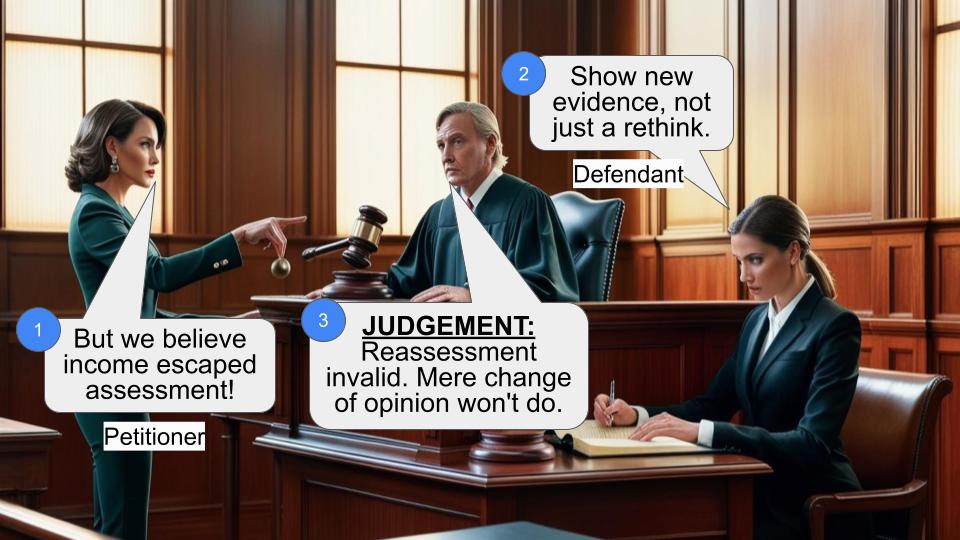
Surendra Pal Singh Sahni tried to challenge some income tax search proceedings that happened during a special disclosure scheme. Basically, he wanted the court to cancel the search and everything that came after it. But, spoiler alert, the court wasn't having it and dismissed his petition.
Get the full picture - access the original judgement of the court order here
Case Name:
Surendra Pal Singh Sahni vs Director General of Income Tax (Investigation) (High Court of Rajasthan)
S.B. Civil Writ Petition No.3421/2017
Date: 9th March 2017
Key Takeaways:
1. The Income Declaration Scheme 2016 didn't stop regular income tax proceedings.
2. If you're searched under Section 132 (of Income Tax Act, 1961) before making a disclosure, you can't benefit from the scheme.
3. The timing of disclosure is crucial - it needs to be before any search or notice.
Issue:
The main question here is: Can income tax search proceedings conducted during the Income Declaration Scheme 2016 be quashed, and can the petitioner still benefit from the scheme after being searched?
Facts:
1. The Income Declaration Scheme 2016 was running from June 1 to September 30, 2016.
2. On June 28/30, 2016, the tax department searched Sahni's premises under Section 132 (of Income Tax Act, 1961).
3. After this search, Sahni tried to make a disclosure under the scheme.
4. The Principal Commissioner of Income Tax, Kota, rejected his application.
5. Sahni filed a writ petition against this rejection (which was still pending).
6. Meanwhile, the tax department started proceedings under Section 153A (of Income Tax Act, 1961).
Arguments:
Sahni's side argued:
1. The scheme was meant to benefit people, so the tax department shouldn't have conducted searches during this period.
2. Even if searched, he should still be allowed to benefit from the scheme.
3. Not allowing this would defeat the purpose of the scheme.
The tax department's side (implied from the judgment):
1. The scheme had specific exclusions, including cases where searches were conducted.
2. Regular tax laws weren't suspended during the scheme period.
Key Legal Precedents:
Interestingly, this judgment doesn't cite any specific legal precedents. Instead, it relies heavily on the interpretation of the Income Declaration Scheme 2016, particularly Clause (e) of Paragraph 196 of the scheme.
Judgement:
The court sided with the tax department and dismissed Sahni's petition. Here's why:
1. Clause (e) of Paragraph 196 of the scheme clearly states that it doesn't apply to undisclosed income where a search under Section 132 (of Income Tax Act, 1961) or 132A has been conducted.
2. Sahni was searched on June 30, 2016, during the scheme period, but before he made any disclosure.
3. The scheme doesn't override regular tax laws or keep them in abeyance .
4. If Sahni had made his disclosure before the search, things might have been different.
FAQs:
1. Q: Could Sahni have benefited from the scheme if he disclosed earlier?
A: Yes, if he had made his disclosure before the search on June 30, 2016, he might have been eligible.
2. Q: Did the Income Declaration Scheme 2016 suspend regular tax laws?
A: No, the court clarified that regular tax laws were not kept in abeyance during the scheme period.
3. Q: What's the significance of Section 132 (of Income Tax Act, 1961) and 153A of the Income Tax Act?
A: Section 132 (of Income Tax Act, 1961) deals with search and seizure operations, while Section 153A (of Income Tax Act, 1961) relates to assessment in case of search or requisition.
4. Q: Can you still benefit from such schemes after being searched?
A: Generally, no. The scheme specifically excludes cases where searches have been conducted before disclosure.
5. Q: What's the main lesson from this case?
A: Timing is crucial in tax matters. If you're considering disclosure under a special scheme, it's best to do it early before any potential searches or notices.

By this writ petition, a direction is sought for quashing of the search proceedings under Section 132 (of Income Tax Act, 1961) (for short “the Act of 1961”), Panchnama dated 30th June, 2016 and consequential proceedings.
Learned counsel submits that Income Declaration Scheme, 2016 (for short “the Scheme of 2016”) was launched by the respondents which was between 1st June, 2016 till 30th September, 2016. The assessee was given option to make disclosure during the intervening period and avail the benefit. The petitioner made disclosure but his case has not been considered under the Scheme of 2016, rather, his application was dismissed by the Principal Commissioner of Income Tax, Kota.
The petitioner maintained a writ petition and is pending. During pendency of the writ petition, respondents are now proceeding in pursuance of search and even notice under Section 153A (of Income Tax Act, 1961) has also been given. It is submitted that when beneficial scheme has been launched and till it was available, the respondents were under an obligation not to effect Section 132 (of Income Tax Act, 1961) during the intervening period. If at all any search is made under Section 132 (of Income Tax Act, 1961), it should not debar any person to take benefit of the Scheme 2016. If search comes in the way of the petitioner then very purpose of the Scheme of 2016 gets frustrated and otherwise exclusion of the person to whom scheme would not apply, does not allow proceedings against those who have made disclosure under the Scheme of 2016. In view of the above, the search proceedings against the petitioner deserve to be set aside.
I have considered the submission made by learned counsel for petitioner and perused the record. The petitioner has made reference of the Scheme of 2016 to seek benefit and also to state that no proceedings under Section 132 (of Income Tax Act, 1961) followed by proceedings under Section 153A (of Income Tax Act, 1961) could have been initiated during the currency of the Scheme of 2016 between 1st June, 2016 till 30th September, 2016. The petitioner’s premises was searched on 28th/30th June, 2016 which was during the currency of the scheme.
I find that scheme itself makes reference for those on whom it would not apply. The relevant Para 196 of the Scheme of 2016 is reproduced hereunder: 196. The provisions of this Scheme Shall not apply-
(a) to any person in respect of whom an order of detention has been made under the Conservation of Foreign Exchange and Prevention of Smuggling Activities Act, 1974 (52 of 1974):
Provided that-
(i) such order of detention, being an order to which the provisions of section 9 (of Income Tax Act, 1961) or section 12A of the said Act do not apply, has not been revoked on the report of the Advisory Board under section 8 of the said Act or before the receipt of the report of the Advisory Board; or
(ii) such order of detention, being an order to which the provisions of section 9 of the said Act apply, has not been revoked before the expiry of the time for, or on the basis of, the review under sub-section (3) of section 9 (of Income Tax Act, 1961), or on the report of the Advisory Board under section 8 (of Income Tax Act, 1961), read with sub-section (2) of section 9 of the said Act; or
(iii) such order of detention, being an order to which the provisions of section 12A of the said Act apply, has not been revoked before the expiry of the time for, or on the basis of, the first review under sub-section (3) of that section, or on the basis of the report of the Advisory Board under section 8 (of Income Tax Act, 1961), read with sub-section (6) of section 12A (of Income Tax Act, 1961), of the said Act; or
(iv) such order of detention has not been set aside by a court of competent jurisdiction;
(b) in relation to prosecution for any offence punishable under Chapter IX or Chapter XVII of the Indian Penal Code (45 of 1860), the Narcotic Drugs and Psychotropic Substances Act, 1985 (61 of 1985) the Unlawful Activities (Prevention) Act, 1967 (37 of 1967) and the Prevention of Corruption Act, 1988 (49 of 1988);
(c) to any person notified under section 3 of the Special Court (Trial of Offences Relating to Transactions in Securities) Act, 1992 (27 of 1992);
(d) in relation to any undisclosed foreign income and asset which is chargeable to tax under the Black Money (Undisclosed Foreign Income and Assets) and Imposition of Tax Act, 2015 (22 of 2015);
(e) in relation to any undisclosed income chargeable to tax under the Income-tax Act for any previous year relevant to an assessment year prior to the assessment year beginning on the 1st day of April, 2017-
(i) where a notice under section 142 (of Income Tax Act, 1961) or sub-section (2) of section 143 (of Income Tax Act, 1961) or section 148 (of Income Tax Act, 1961) or section 153A (of Income Tax Act, 1961) or section 153C (of Income Tax Act, 1961) has been issued in respect of such assessment year and the proceeding is pending before the Assessing Officer; or
(ii) Where a search has been conducted under section 132 (of Income Tax Act, 1961) or requisition has been made under section 132A (of Income Tax Act, 1961) or a survey has been carried out under section 133A of the Income- tax Act in a previous year and a notice under sub-section (2) of section 143 (of Income Tax Act, 1961) for the assessment year relevant to such previous year or a notice under section 153A (of Income Tax Act, 1961) or under section 153C of the said Act for an assessment year relevant to any previous year prior to such previous year has not been issued and the time for issuance of such notice has not expired; or
(iii) where any information has been received by the competent authority under an agreement entered into by the Central Government under section 90 (of Income Tax Act, 1961) or section 90A (of Income Tax Act, 1961) in respect of such undisclosed asset.”
The perusal of Clause (e) reveals that it would not apply in relation to any undisclosed income chargeable to tax under the Income Tax Act for any previous year relevant to an assessment year prior to 1st day of April, 2017 where search/proceedings under Section 132 (of Income Tax Act, 1961) and 132A of the Act of 1961 have been undertaken. It would not apply even on a notice under Section 153A (of Income Tax Act, 1961) apart from many other provisions. In the instant case, search proceedings were conducted on 30th June, 2016 and it was during the currency of the Scheme of 2016. Till search was conducted under Section 132 (of Income Tax Act, 1961), the petitioner did not make disclosure/declaration under the Scheme of 2016. It is subsequent to the search proceedings under Section 132 (of Income Tax Act, 1961). As per para quoted above, the petitioner is not entitled to seek benefit of the Scheme of 2016. The position would have been different if declaration under the Scheme of 2016 would have been made earlier to proceedings under Section 132 (of Income Tax Act, 1961). It is not that relevant provisions of the Income Tax Act were kept in abeyance during currency of the Scheme of 2016, rather, there exists no provision under the scheme and otherwise scheme cannot override provisions of law so as to keep it in abeyance.
Taking into consideration the aforesaid, I do not find any ground to cause interference in the search and subsequent proceedings. The writ petition is, accordingly, dismissed.
(M.N. BHANDARI)J.
×