


No Incriminating Evidence, No Income Additions: Court Rules in Favor of Assessee


Full News

No Incriminating Evidence, No Income Additions: Court Rules in Favor of Assessee
No Incriminating Evidence, No Income Additions: Court Rules in Favor of Assessee
In a case involving the Principal Commissioner of Income Tax and Allied Perfumers Pvt. Ltd., the court ruled that no additions could be made to the assessee’s income as no incriminating material was found during a search. The Income Tax Appellate Tribunal (ITAT) quashed the assessment orders, emphasizing that the absence of incriminating evidence invalidated the Revenue’s claims.
Get the full picture - access the original judgement of the court order here
Case Name:
Principal Commissioner of Income Tax & Anr. Vs. Allied Perfumers Pvt. Ltd. & Anr. (High Court of Delhi)
ITA 391/2019
Date: 14th December 2020
Key Takeaways:
- The court emphasized that without incriminating material found during a search, additions to income cannot be justified.
- The decision reinforces the legal principle that assessments under Section 153C (of Income Tax Act, 1961) require concrete evidence.
- The ruling aligns with previous judgments, notably the case of “Commissioner of Income Tax Vs. Kabul Chawla.”
Issue
Can the Revenue make additions to an assessee’s income without any incriminating material found during a search?
Facts
- The case involves the Surya Vinayak Group, with a search conducted on March 21, 2007.
- The group was accused of taking accommodation entries by paying cash to entry operators.
- Despite a satisfaction note, no incriminating material was found against Allied Perfumers Pvt. Ltd. during the search.
- The Assessing Officer issued notices under Section 153C (of Income Tax Act, 1961), but the ITAT found no basis for income additions.
Arguments
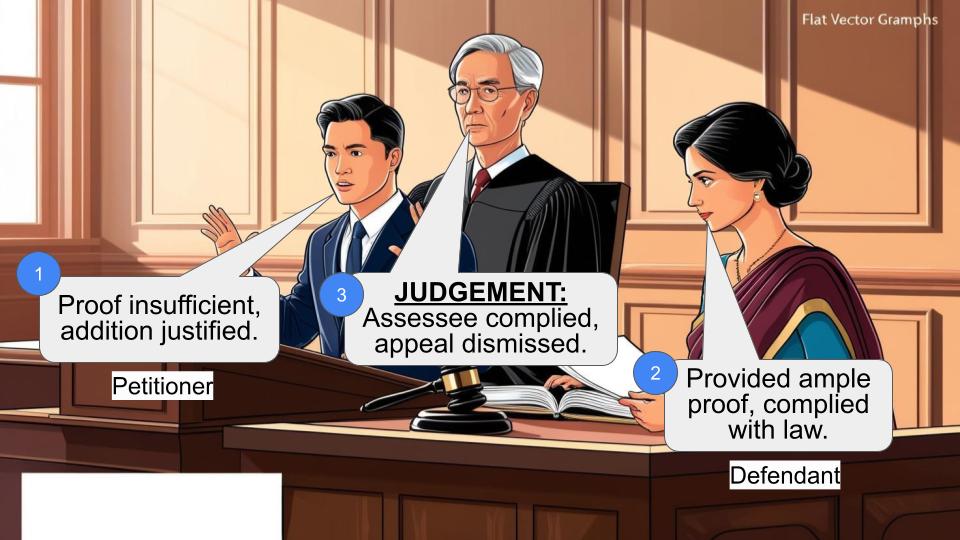
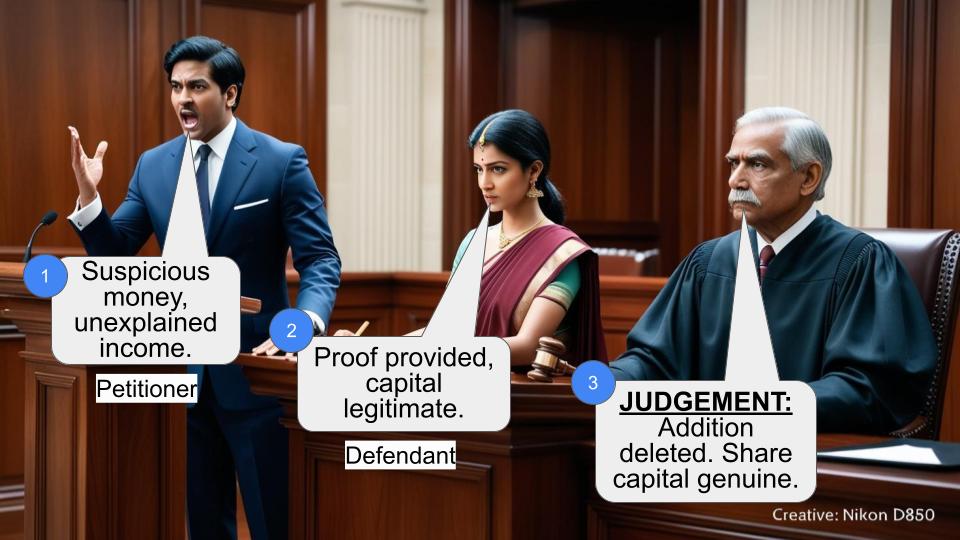
- Revenue’s Argument: The Revenue contended that incriminating documents were found, justifying the issuance of notices under Section 153C (of Income Tax Act, 1961).
- Assessee’s Argument: The assessee argued that no incriminating material was found, making the assessment and subsequent income additions invalid.
Key Legal Precedents
- Commissioner of Income Tax Vs. Kabul Chawla (2016) 380 ITR 573 (Del.): This case established that without incriminating evidence, assessments under Section 153C (of Income Tax Act, 1961) are not valid.
- Commissioner of Income Tax- III, Pune vs. Sinhgad Technical Educational Society (2017) 84 taxmann.com 290 (SC): Reinforced the need for concrete evidence in such assessments.
Judgement
The court ruled in favor of the assessee, Allied Perfumers Pvt. Ltd., quashing the assessment orders. The ITAT found that the Revenue’s actions were based on conjectures without any incriminating material, thus making the additions unsustainable in law.
FAQs
Q1: What does this ruling mean for other similar cases?
A1: It sets a precedent that without incriminating evidence, the Revenue cannot make additions to an assessee’s income under Section 153C (of Income Tax Act, 1961).
Q2: Why was the Revenue’s argument rejected?
A2: The court found no reference to any incriminating material in the assessment order, making the Revenue’s claims baseless.
Q3: How does this affect the assessee?
A3: The assessee, Allied Perfumers Pvt. Ltd., is not liable for the additional income tax as the court ruled in their favor.

CM APPL. 17945/2019 (exemption) in ITA 391/2019
1. Allowed, subject to all just exceptions.
2. The application stands disposed of.
CM APPL. 17946/2019 (condonation of delay in re-filing) in ITA
391/2019
CM APPL. 17378/2019 (condonation of delay in re-filing) in ITA
380/2019
3. There is a delay of 296 days in re-filing the appeals. For the reasons stated in the applications, the delay is condoned.
4. The applications stand disposed of.
ITA 391/2019 & ITA 380/2019
5. The present appeals filed under Section 260A (of Income Tax Act, 1961)
[hereinafter referred to as the ‘Act’], are directed against the common order
dated 07.12.2017 passed by the Income Tax Appellate Tribunal [hereinafter
referred to as ‘ITAT’] in ITA No. 3171/DEL/2011 & ITA No.
3172/DEL/2012 along with corresponding cross objections bearing CO. No.
275/DEL/2011, & CO. No. 274/DEL/2011, for Assessment Years
[hereinafter referred to as ‘AY’] 2001-02 and AY 2002-03 respectively.
6. Considering the fact that the appeals arise from a common impugned order
and raise identical questions of law, the same are being decided by way of this
common order. The brief factual matrix giving rise to the present appeals is
that the assessee is one of the group companies of M/s Surya Vinayak
Industries Ltd. It filed the return of income [hereinafter referred to as ‘ROI’]
for AY 2001-02 & 2002-03, declaring incomes of Rs. 17,47,261/- and Rs.
36,27,660/- respectively which were duly processed under Section 143(1) (of Income Tax Act, 1961) of
the Act.
7. On 21.03.2007, a search and seizure operation was conducted, under
Section 132 (of Income Tax Act, 1961) in respect of Surya Vinayak Group of cases. The
Assessing Officer noticed that, the aforesaid group is headed by Sh. Sanjay
Jain and his brother Sh. Rajiv Jain. The main allegation against this group was
that they had taken a large number of accommodation entries in various group
companies by paying cash to various entry operators. Thus, on 29.09.2008,
after recording a satisfaction note, notice under Section 153C (of Income Tax Act, 1961) was
issued to the assessee requiring it to file the ROI in the prescribed form. In
response thereto, the assessee submitted that the previous returns declared be
deemed as the ROI in response to notice under Section 153C (of Income Tax Act, 1961).
Thereafter, assessment orders were framed under Section 153 (of Income Tax Act, 1961)/143(3) of the
Act, determining total incomes of Rs. 3,64,74,420/- and Rs. 2,28,13,060/- for
AY 2001-02 and AY 2002-03 respectively.
8. Aggrieved with the aforesaid assessments, the assessee filed an appeal
before the CIT(A) challenging the order of the Assessing Officer, on the
ground that no addition could be made in absence of any incriminating
material found during the course of search. The said appeals were allowed in
favour of the assessee on merits and the additions made by the Assessing
Officer under Section 68 (of Income Tax Act, 1961) were deleted. However, CIT(A) dismissed
the challenge as regards the issue of validity of assessment under Section
153A/143(3) of the Act.
9. Revenue then preferred an appeal before the ITAT, impugning the order of
CIT(A). In the said proceedings, Assessee filed cross objections and
contended that, the assessment order [hereinafter referred to as ‘AO’] framed
under Section 153A (of Income Tax Act, 1961)/143(3) of the Act was illegal, as consequent upon the
search action under Section 132 (of Income Tax Act, 1961), nothing incriminating was found against the
assessee, and therefore re-visiting the prior settled issues was not permissible.
The ITAT allowed the cross objections of the assessee and quashed the AO
following the decision of this Court in the case of Commissioner of Income
Tax Vs. Kabul Chawla, (2016) 380 ITR 573 (Del.). The Revenue has thus
preferred the present appeals, assailing the aforesaid impugned order of the
ITAT.
10. Mr. Abhishek Maratha, learned senior standing counsel appearing on
behalf of the Revenue contends that the ITAT has failed to take note that in
the instant cases, incriminating documents belonging to the assessee were
found and seized during the course of search under Section 132 (of Income Tax Act, 1961).
Thus, after recording of the satisfaction note, notice under Section 153C (of Income Tax Act, 1961) was
issued by the Assessing Officer. Therefore, this does not happen to be a case
wherein no documents were found during search operation. To support his
submissions, Mr. Maratha refers to paragraph 1.3 of the AO. The same is
reproduced as follows:
“1.3 After recording satisfaction note, a notice u/s 153C (of Income Tax Act, 1961) was issued on
29.09.2008 to the assessee requiring it to file the return of income in
the prescribed form.”
11. Mr. Maratha, therefore, submits that the observations of the ITAT are
incorrect and the assumption of jurisdiction by the Assessing Officer, based
on incriminating documents seized during the search, was valid and lawful.
12. We have duly considered the contentions advance by Mr. Maratha,
however, are unable to agree with him. The ITAT, after perusing the relevant
records, including the orders passed by the Revenue Authorities, observed as
follows:
10.“...We find that the additions made by the AO are beyond the scope
of section 153C (of Income Tax Act, 1961), because no incriminating
material or evidence had been found during the course of search so as
to doubt the transactions. It was noted that in the entire assessment
order, the AO has not referred to any seized material or other material
for the year under consideration having being found during the
course of search in the case of assessee, leave alone the question of
any incriminating material for the year under appeal. We also find
that the case laws cited by the Ld. CIT(DR) are not relevant to the
present case. Therefore, in our considered opinion, the action of the
AO is based upon conjectures and surmises and hence, the additions
made is not sustainable in the eyes of law, because this issue in dispute
is now no more res-integra, in view of the decision dated 29.08.2017
of the Hon'ble Supreme Court of India in the case of Commissioner
of Income Tax- III, Pune vs. Sinhgad Technical Educational Society
reported in (2017) 84 taxmann.com 290 (SC) as well as the decisions
of the Hon'ble Delhi High Court passed in the case Commissioner of
Income Tax vs. Kabul Chawla reported (2016) 380 ITR 573 (Del.) and
in the case of Principal Commissioner of Income Tax (Central) -2 vs.
Index Securities (P) Ltd.
11. Respectfully following the precedents as aforesaid, as aforesaid, we
quash the assessment made u/s.153(C) (of Income Tax Act, 1961)/143(3) of the I.T. Act, 1961 and
decide the legal issue in favour of the Assessee and accordingly, allow
the Cross Objection filed by the assessee.
12. Following the consistent view taken in the assessment year 2001-02
in the Assessee’s Cross objection, as aforesaid, th another Cross
objection filed by the Assessee relating to assessment years 2002-03
also stand allowed.”
( Emphasis supplied)
13. Upon reading of the aforesaid extracted portion of the impugned order,
it is clearly discernable that the ITAT has given a finding of fact that the
assessments make no reference to the seized material or any other material for
the years under consideration, that was found during the course of search, in
the case of the assessee. Mr. Maratha is also unable to point out any
incriminating material related to the assessee which could justify the action of
the Revenue. Merely because a satisfaction note has been recorded, cannot
lead us to reach to this conclusion, especially when the Revenue has not laid
any foundation to support their contention. In the factual background as
explained above, the assumption of jurisdiction under Section 153C (of Income Tax Act, 1961) cannot be
sustained in view of the decision of this Court in the case of Kabul Chawla
(Supra).
14. In view of the foregoing, we find no question of law, much less substantial
question of law, that calls for a consideration. Accordingly, the present
appeals are dismissed.
SANJEEV NARULA, J.
MANMOHAN, J.
DECEMBER 14, 2020
×
Similar Ripples
Questions
No Incriminating Evidence, No Income Additions: Court Rules in Favor of Assessee
Write your CommentSimilar Posts

Generic
- Reportdata/6400.pdf
