


Settlement Commission's Rejection Upheld: Full Disclosure Lacking in Tax Case



Full News
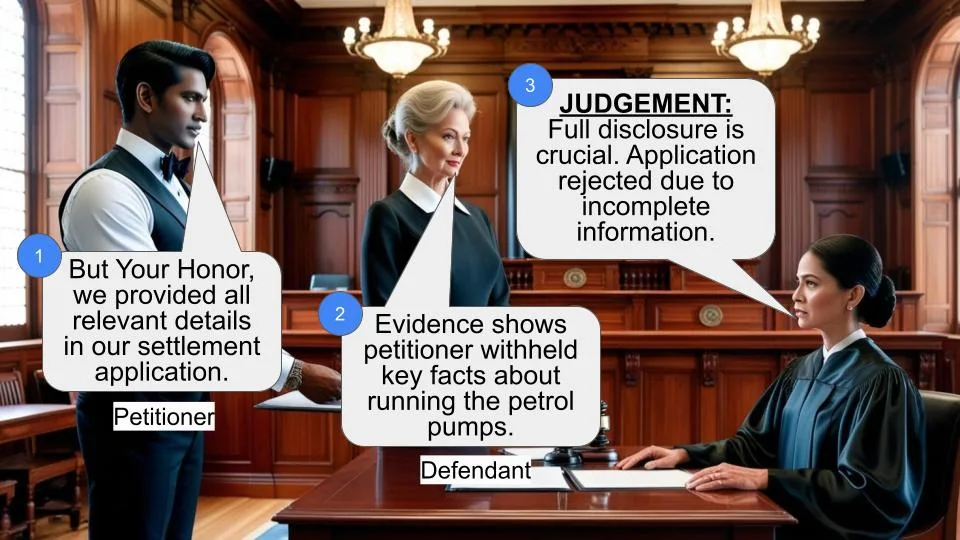
Settlement Commission's Rejection Upheld: Full Disclosure Lacking in Tax Case
Settlement Commission's Rejection Upheld: Full Disclosure Lacking in Tax Case
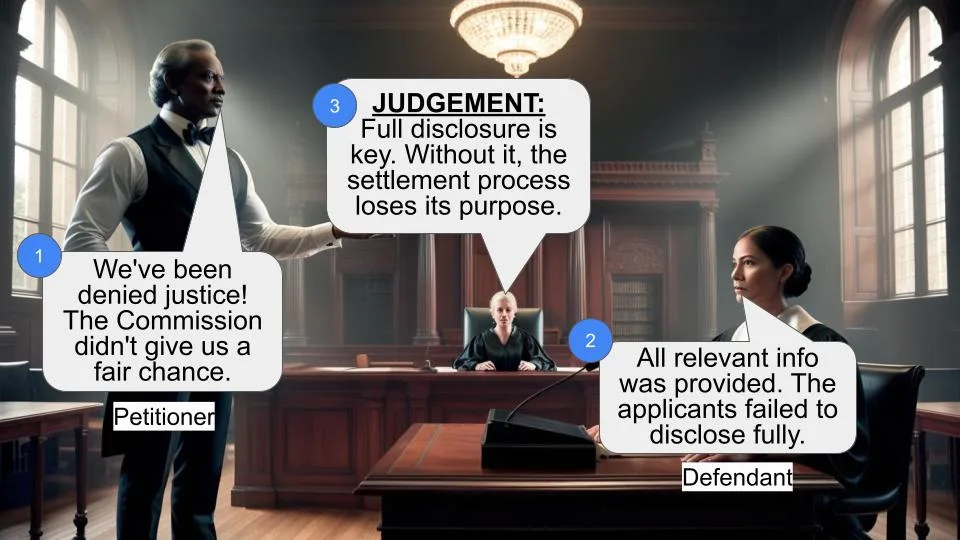
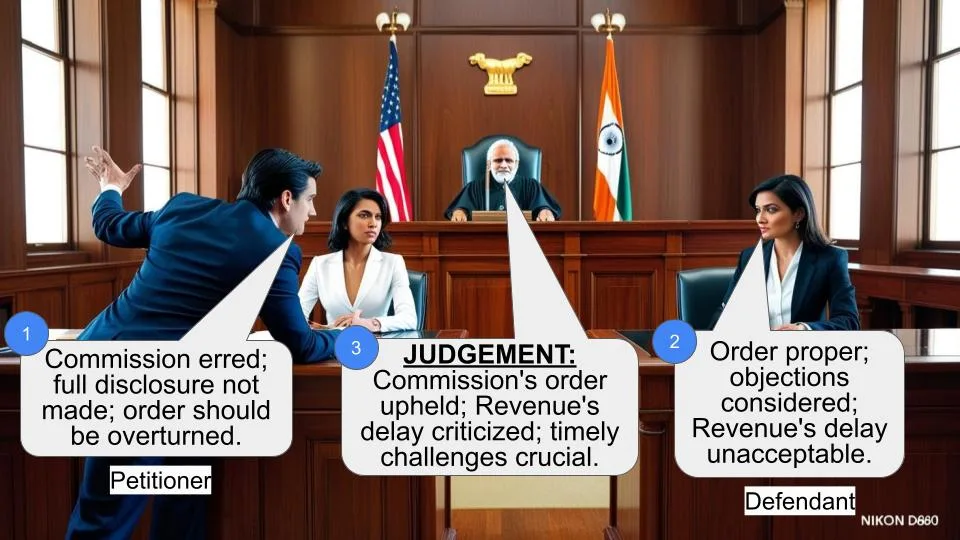
This case involves a petitioner challenging orders from the Income Tax Settlement Commission and the Income Tax Department. The Settlement Commission rejected the petitioner's application due to lack of full disclosure and unsatisfactory addressing of search-related issues. The court upheld the Commission's decision but partially allowed the petition regarding a special audit order.
Get the full picture - access the original judgement of the court order here
Case Name:
Purachandra J. Rao VS Income Tax Settlement Commission & Ors (High Court of Bombay)
Writ Petition No.2534 of 2006
Date: 14th January 2008
Key Takeaways:
1. The Settlement Commission's rejection of an application due to lack of full disclosure was upheld.
2. The court emphasized the importance of true and complete disclosure in settlement applications.
3. The court's reluctance to interfere with reasoned orders of the Settlement Commission.
4. The necessity of providing a hearing before ordering a special audit under Section 142(2A) (of Income Tax Act, 1961).
Issue:
Did the Settlement Commission err in rejecting the petitioner's application, and was the subsequent order for a special audit legally valid?
Facts:
1. The petitioner filed an application with the Income Tax Settlement Commission.
2. The Commission rejected the application on 9.6.2006 under Section 245D(1) (of Income Tax Act, 1961).
3. Subsequently, on 2.8.2006, an order for a special audit was passed under Section 142(2A) (of Income Tax Act, 1961).
4. The petitioner had disclosed income as a managing agent of two petrol pumps.
5. Investigations revealed that the petitioner was actually running the petrol pumps and paying commission to license holders.
Arguments:
Petitioner's arguments:
1. The application was rejected on two grounds: no complexity of investigation and lack of full and true disclosure.
2. The special audit was ordered without giving the petitioner a hearing.
3. If a special audit was required due to complexity of accounts, it implies complexity of investigation, contradicting the Commission's order.
Respondent's arguments:
1. The Settlement Commission rightly rejected the application as there was no true and full disclosure.
Key Legal Precedents:
The petitioner cited the case of Centurion Bank of Punjab Ltd., v. Income-tax Settlement Commission & Ors. reported in [2007] 290 ITR 555 (Bom). However, the court did not elaborate on how this precedent was applied in the current case.
Judgement:
1. The court upheld the Settlement Commission's order, stating that it was not a case of "no reasons" and therefore did not warrant interference.
2. Regarding the special audit order, the court quashed and set aside the order dated 2.8.2006, directing the respondent to pass a fresh order after giving the petitioner an opportunity for a hearing.
FAQs:
Q1: Why did the court uphold the Settlement Commission's decision?
A1: The court found that the Commission had provided clear reasons for rejecting the application, including lack of full disclosure and unsatisfactory addressing of search-related issues. This wasn't a case of "no reasons," so the court saw no need to interfere.
Q2: What was the issue with the petitioner's disclosure about the petrol pumps?
A2: The petitioner had disclosed income as a managing agent of two petrol pumps, but investigations revealed that he was actually running the pumps and paying commission to license holders, which was not fully disclosed.
Q3: Why was the special audit order quashed?
A3: The special audit order was quashed because it was issued without giving the petitioner an opportunity for a hearing, which is required by law.
Q4: Does this judgment set any new legal precedents?
A4: While this judgment doesn't appear to set new precedents, it reinforces the importance of full and true disclosure in settlement applications and the need for proper hearings before ordering special audits.
Q5: What happens next regarding the special audit?
A5: The matter has been referred back to the respondent (Income Tax Department) to pass a fresh order after giving the petitioner an opportunity for a hearing.

1. Petitioner has moved this Court seeking to challenge the order dated 9.6.2006 passed by the Settlement Commission under Section 245D(1) (of Income Tax Act, 1961) and the order dated 2.8.2006 under Section 142(2A) (of Income Tax Act, 1961).
2. In so far as the order of the Settlement Commission is concerned, learned Counsel submits that the application was rejected on two counts. Firstly that there was no complexity of investigation and secondly there was no full and true disclosure.
3. In so far as 2nd order dated 2.8.2006, it is submitted that the special audit has been ordered considering the complexity of accounts. This was done without giving an hearing to the petitioner as required by Law. Apart from that it is submitted that once the authority had come to the conclusion that a special audit is required on complexity of account, the natural corollary is that this will include expression complexity of investigation, consequently order of the settlement commission is liable to be set aside. Our attention was invited to the judgment of this Court in Centurion Bank of Punjab Ltd., v. Income-tax Settlement Commission & Ors. reported in [2007] 290 ITR 555 (Bom).
4. On the other hand, on behalf of the respondent learned Counsel submits that settlement commission has rightly rejected the application of the petitioner as there was no true and full disclosure.
5. We have heard learned Counsel for the parties. The settlement commission in the impugned order at paragraph-9 firstly held that they do not see any complexity of investigation in resolving the disputes. In so far as full and true disclosure, it held, that both the quantum and the manner of the disclosure do not pass the test of being full and true. It is also held that the issues emerging out of the search are not satisfactorily addressed while making the disclosure, after having carefully gone through the legal submissions and paper book.
6. We find from the report of the Commissioner and the application made by the petitioner herein that he had disclosed income as managing agent of two petrol pumps. On investigation, it had come on record that the petitioner was not managing the petrol pump but infact, was running the same and paying commission to the licence holders therein. It is this material which was before the settlement commission.
7. In the instant case it is clearly set out that the issues emerging out of the search are not satisfactorily addressed. In our opinion, this cannot be said to be the case of "No reasons". We are therefore, of the opinion that in so far as challenge to the order of the commission, this would not be a fit case where we should exercise our extra ordinary jurisdiction.
8. In so far as consequential order dated 2.8.2006 under Section 142(2A) (of Income Tax Act, 1961), learned Counsel fairly conceded that they would give hearing to the petitioner. In the light of that, order dated 2.8.2006 is quashed and set aside. The matter is referred back to the respondent no.2 to pass fresh order after giving the petitioner an opportunity of hearing.
9. Rule made partly absolute accordingly with no order as to costs.
(R.S.MOHITE,J) (F.I.REBELLO,J)
×
Questions
Settlement Commission's Rejection Upheld: Full Disclosure Lacking in Tax Case
Write your CommentSimilar Posts

Generic
- Reportdata/5015.pdf
