Tax Tribunal’s Ruling on Section 153C (of Income Tax Act, 1961) Assessments Par…





Full News
Tax Tribunal’s Ruling on Section 153C (of Income Tax Act, 1961) Assessments Partially Overturned by High Court
Tax Tribunal’s Ruling on Section 153C (of Income Tax Act, 1961) Assessments Partially Overturned by High Court
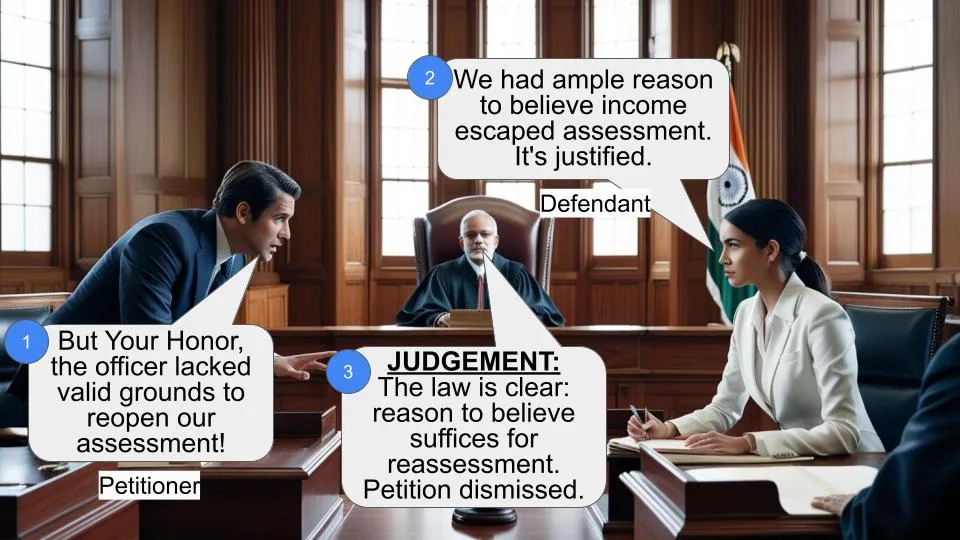
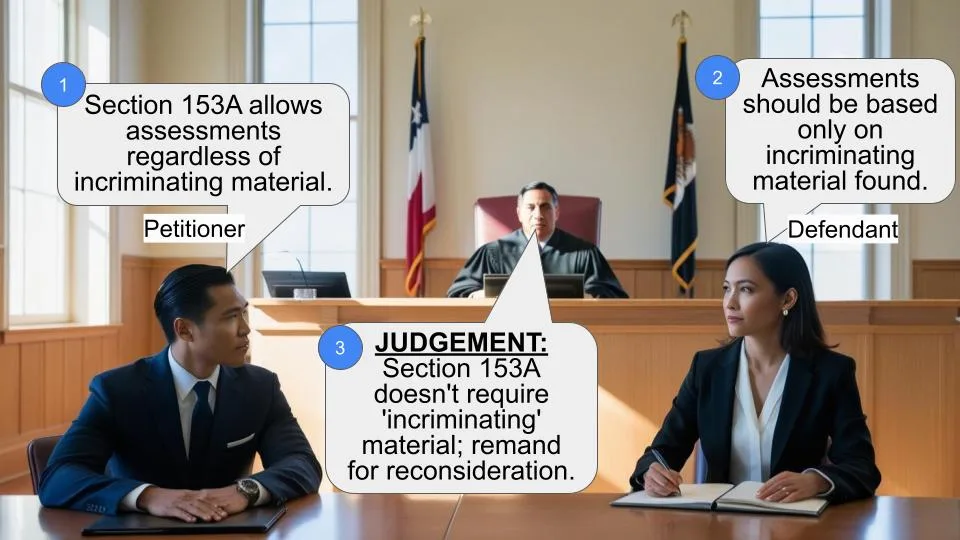
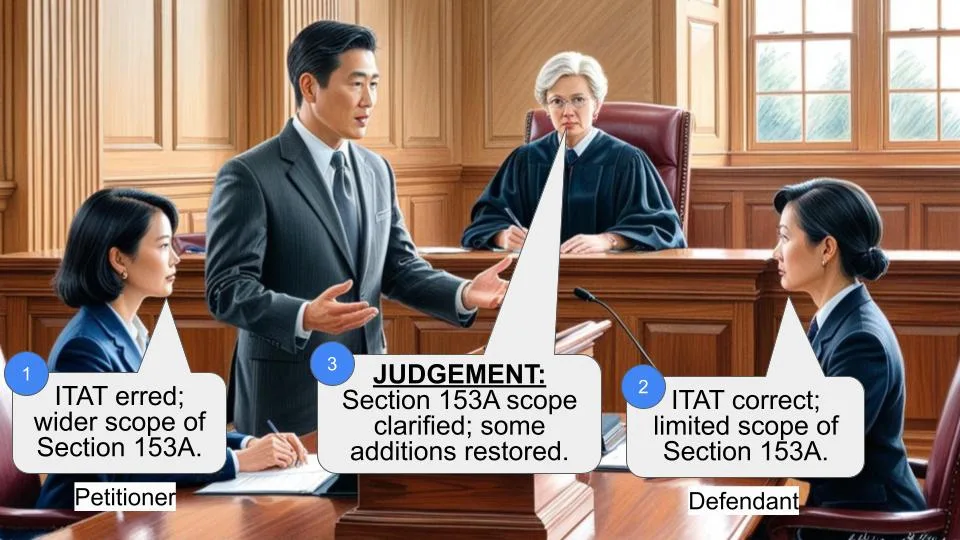
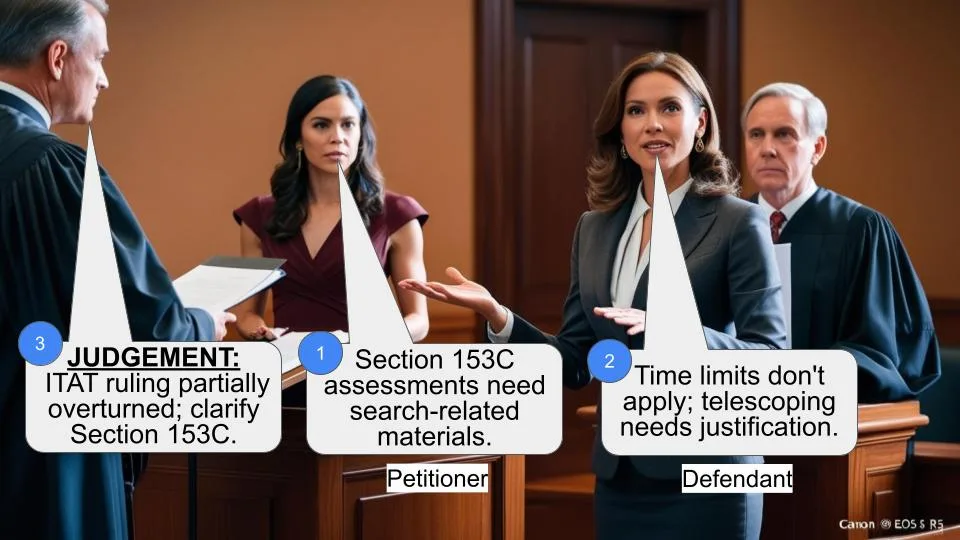
This case involves appeals filed by the Revenue (Income Tax Department) against a common order passed by the Income Tax Appellate Tribunal (ITAT) concerning assessments under Section 153C (of Income Tax Act, 1961) for multiple assessment years. The High Court partially upheld and partially overturned the Tribunal’s decision, clarifying the scope of Section 153C (of Income Tax Act, 1961) assessments and the applicability of certain procedural requirements.
Get the full picture - access the original judgement of the court order here
Case Name:
Commissioner of Income Tax vs Promy Kuriakose (High Court of Kerala)
ITA. No. 296 of 2013
Date: 14th July 2016
Key Takeaways:
- Section 153C (of Income Tax Act, 1961) assessments require the recovery of incriminating materials during a search or requisition.
- The time limit prescribed in the proviso to Section 143(2) (of Income Tax Act, 1961) does not apply to Section 153C (of Income Tax Act, 1961) assessments.
- The court emphasized the importance of providing proper reasoning when allowing or disallowing telescoping of additions.
Issue:
Can assessments under Section 153C (of Income Tax Act, 1961) be made without recovering incriminating materials during a search, and does the time limit in the proviso to Section 143(2) (of Income Tax Act, 1961) apply to such assessments?
Facts:
- A search under Section 132 (of Income Tax Act, 1961) was conducted on 13.02.2007 on P.A. Kuriakose and Paulson P. Varkey group.
- Large-scale suppression of sales was found in M/s. Matha Enterprises, a concern of the group.
- The assessee, a family member of P.A. Kuriakose and Paulson P. Varkey, was subject to proceedings under Section 153C (of Income Tax Act, 1961).
- Assessments were completed for assessment years 2001-02 to 2007-08.
- The Tribunal allowed some appeals and partially allowed others filed by the assessee.
Arguments:
Revenue’s arguments:
- Assessments under Section 153C (of Income Tax Act, 1961) can be made even without recovering incriminating materials.
- The time limit in the proviso to Section 143(2) (of Income Tax Act, 1961) doesn’t apply to Section 153C (of Income Tax Act, 1961) assessments.
- Telescoping of investment should not be allowed in certain cases.
Assessee’s arguments:
- Section 153C (of Income Tax Act, 1961) assessments require recovery of incriminating materials.
- The time limit in the proviso to Section 143(2) (of Income Tax Act, 1961) applies to Section 153C (of Income Tax Act, 1961) assessments.
- Telescoping of investment was correctly allowed by the first appellate authority.
Key Legal Precedents:
- Ashok Chaddha v. Income-Tax Officer [(2011) 337 ITR 138]: Held that notice under Section 143(2) (of Income Tax Act, 1961) is not mandatory for assessments under Section 153A (of Income Tax Act, 1961).
- Tarsem Singla v. Deputy Commissioner of Income Tax [(2016) 385 ITR 138]: Reiterated the position in Ashok Chaddha case.
- R. Dalmia v. CIT [1999] 236 ITR 480 (SC): Discussed in the context of applicability of Section 143(2) (of Income Tax Act, 1961) to reassessments under Section 147 (of Income Tax Act, 1961).
Judgement:
- The court upheld the Tribunal’s finding that Section 153C (of Income Tax Act, 1961) assessments require recovery of incriminating materials during a search.
- The court overturned the Tribunal’s decision regarding the applicability of the time limit in the proviso to Section 143(2) (of Income Tax Act, 1961) to Section 153C (of Income Tax Act, 1961) assessments.
- The court set aside the Tribunal’s order allowing telescoping of investment for lack of proper reasoning.
- The matter was remitted back to the Tribunal for reconsideration on certain points.
FAQs:
Q: What is Section 153C (of Income Tax Act, 1961)?
A: Section 153C (of Income Tax Act, 1961) deals with assessment of income of persons other than those who were subject to search under Section 132 (of Income Tax Act, 1961) or requisition under Section 132A (of Income Tax Act, 1961).
Q: What is telescoping in the context of this case?
A: Telescoping refers to adjusting or offsetting certain additions against other income or investments to avoid double taxation.
Q: Why did the court remit the matter back to the Tribunal?
A: The court remitted the matter for reconsideration of certain issues, particularly the reasoning behind allowing telescoping of investments.
Q: Does this judgment change how Section 153C (of Income Tax Act, 1961) assessments will be conducted?
A: Yes, it clarifies that incriminating materials must be recovered during a search for Section 153C (of Income Tax Act, 1961) assessments, but the time limit in Section 143(2) (of Income Tax Act, 1961) doesn’t apply to these assessments.
Q: What is the significance of the non-obstante clause in Sections 153A and 153C?
A: The non-obstante clause indicates that these sections override certain other provisions of the Income Tax Act, giving them special status in search-related assessments.

1. Among these appeals which are filed by the Revenue, ITA. Nos.309/13, 315/13 and 301/13 are concerning the assessment years 2001-02, 2003-04 and 2004-05 respectively and ITA.Nos.296/13 and 314/13 are concerning the assessment year 2005-06. In these appeals, the Revenue is challenging the common order passed by the Tribunal, by which, out of the six appeals filed by the assessee concerning the assessment years 2001-02 and 2003-04 to 2007-08, appeals for assessment years 2001-02, 2003-04, 2004-05 and 2005-06 were allowed, appeals for assessment years 2006-07 and 2007-08 were partly allowed and the two appeals filed by the Revenue concerning the assessment years 2004-05 and 2005-06 were dismissed.
2.Briefly stated, facts of the case are that there was a search under section 132 (of Income Tax Act, 1961) on 13.2.2007 in the case of one P.A.Kuriakose and Paulson P.Varkey group, which is stated to be mainly engaged in hotel and jewellery business. In the course of search in M/s.Matha Enterprises, a concern of the aforesaid group, large scale suppression of sale was found. It was also found that M/s.P.A.Kuriakose Jewellers and M/s.Matha Enterprises had introduced loans and credits in the name of the family members. The respondent assessee is one of the family members of P.A.Kuriakose and Paulson P.Varkey.
3.Based on the aforesaid search, proceedings under section 153C (of Income Tax Act, 1961) were initiated against the assessee and assessments under section 153A (of Income Tax Act, 1961) read with section 153C (of Income Tax Act, 1961) and 143(2) were completed for the assessment years 2001-02 to 2007-08. The assessee filed appeals which were partly allowed by the first appellate authority. Aggrieved by the orders passed by the first appellate authority, the assessee filed I.T.A.Nos.423/10, 424/10, 370/11, 371/11, 425/11 and 426/11 concerning the assessment years 2001-02 to 2007-08. The Revenue also filed ITA.Nos.345/11 and 346/11 challenging the first appellate authority's order for the assessment years 2004-05 and 2005-06 respectively. By the common order passed, the Tribunal allowed the appeals filed by the assessee for the assessment years 2001-02, 2003-04, 2004-05 and 2005-06 and the appeals for the assessment years 2006-07 and 2007-08 were partly allowed. The appeals filed by the Revenue were dismissed. It is in this background, the Revenue has filed these appeals and the questions of law framed in ITA.314/13, which are common in nature, are the following:
“1. Whether the ITAT is right in law in holding that no assessment can be made u/s.153C (of Income Tax Act, 1961) in the absence of search material for that particular year?
2. Whether the ITAT is right in holding that notice u/s.143(2) (of Income Tax Act, 1961) cannot be issued after the expiry of 12 months from the date of original returns filed, without noticing the fact that the returns filed in response to notice u/s.153C (of Income Tax Act, 1961) are to be treated as a return required to be furnished u/s.139 (of Income Tax Act, 1961)?
3. Whether, on the facts and in the circumstances of the case and considering the materials seized is not the assessment order valid and in accordance with law?”
4.We heard the senior counsel for the Revenue and the learned counsel appearing for the assessee.
5. The first issue on which considerable arguments were addressed by both sides is regarding the finding of the Tribunal in the impugned order on the scope of assessment under section 153C (of Income Tax Act, 1961). In so far as this issue is concerned, the Tribunal itself has posed a question whether there can be an addition in the proceedings under section 153C (of Income Tax Act, 1961) in the absence of search material. On this issue, the Tribunal referred to various precedents and concluded that to sustain an addition in an assessment under section 153C (of Income Tax Act, 1961), materials should be recovered in the search. Learned senior counsel for the Revenue impugned this finding of the Tribunal mainly making reference to the judgment of this Court in ITA.169/15 and connected cases and according to him, even in the absence of recovery of incriminating materials, an assessment under section 153C (of Income Tax Act, 1961) read with section 153A (of Income Tax Act, 1961) is liable to be sustained.
6.This contention, which was refuted by the learned counsel for the assessee, can be answered in the light of the statutory provisions itself. Section 153C(1) (of Income Tax Act, 1961) alone, being relevant, read as follows:
“153C. Assessment of income of any other person- (1) Notwithstanding anything contained in section 139 (of Income Tax Act, 1961), section 147 (of Income Tax Act, 1961), section 148 (of Income Tax Act, 1961), section 149 (of Income Tax Act, 1961), section 151 (of Income Tax Act, 1961) and section 153 (of Income Tax Act, 1961), where the Assessing Officer is satisfied that any money, bullion, jewellery or other valuable article or thing or books of account or documents seized or requisitioned belongs or belong to a person other than the person referred to in section 153A (of Income Tax Act, 1961), then the books of account or documents or assets seized or requisitioned shall be handed over to the Assessing Officer having jurisdiction over such other person and that Assessing Officer shall proceed against each such other person and issue such other person notice and assess or reassess income such other person in accordance with the provisions of section 153A (of Income Tax Act, 1961): Provided that in case of such other person, the reference to the date of initiation of the search under section 132 (of Income Tax Act, 1961) or making of requisition under section 132A (of Income Tax Act, 1961) in the second proviso to section 153A (of Income Tax Act, 1961) shall be construed as reference to the date of receiving the books of account or documents or assets seized or requisitioned by the Assessing Officer having jurisdiction over such other person.”
7.Reading of this provision shows that it begins with a non obstante clause excluding the sections mentioned therein and as per this section, where the Assessing Officer is satisfied that any money, bullion, jewellery or other valuable article or thing or books of account or documents seized in a branch under section 132 (of Income Tax Act, 1961) or requisitioned under section 132A (of Income Tax Act, 1961), belongs or belong to a person other than the person referred to in section 153A (of Income Tax Act, 1961), then the books of account or documents or assets seized or requisitioned shall be handed over to the Assessing Officer having jurisdiction over such other person and the jurisdictional Assessing Officer shall proceed against such other person and issue such person notice and assess or reassess the income of such other person in accordance with the provisions of section 153A (of Income Tax Act, 1961).
8. Section 153A (of Income Tax Act, 1961), together with its proviso, read thus: “153A. Assessment in case of search or requisition- Notwithstanding anything contained in section 139 (of Income Tax Act, 1961), section 147 (of Income Tax Act, 1961), section 148 (of Income Tax Act, 1961), section 149 (of Income Tax Act, 1961), section 151 (of Income Tax Act, 1961) and section 153 (of Income Tax Act, 1961), in the case of a person where a search is initiated under section 132 (of Income Tax Act, 1961) or books of account, other documents or any assets are requisitioned under section 132A (of Income Tax Act, 1961) after the 31st day of May, 2003, the Assessing Officer shall-
(a) issue notice to such person requiring him to furnish within such period, as may be specified in the notice, the return of income in respect of each assessment year falling within six assessment years referred to in cause (b), in the prescribed form and verified in the prescribed manner and setting forth such other particulars as may be prescribed and the provisions of this Act shall, so far as may be, apply accordingly as if such return were a return required to be furnished under section 139 (of Income Tax Act, 1961):
(b) assess or reassess the total income of six assessment years immediately preceding the assessment year relevant to the previous year in which such search is conducted or requisition is made:
provided that the Assessing Officer shall assess or reassess the total income in respect of each assessment year falling within such six assessment years:
Provided further that assessment or reassessment, if any, relating to any assessment year falling within the period of six assessment years referred to in this section pending on the date of initiation of the search under section 132 (of Income Tax Act, 1961) or making of requisition under section 132A (of Income Tax Act, 1961), as the case may be, shall abate.”
9.This provision also starts with a non obstante clause excluding the provisions that are excluded in section 153C (of Income Tax Act, 1961) and it authorises the Assessing Officer to issue notice to the other person mentioned in section 153C (of Income Tax Act, 1961), requiring him to furnish within such period as may be specified in the notice, the return of income in respect of each assessment year falling within six assessment years referred to in clause (b), in the prescribed form and verified in the prescribed manner and setting forth such other particulars as may be prescribed.
10.A comparative analysis of the provisions contained in sections 153A and 153C reveal that jurisdiction under section 153C (of Income Tax Act, 1961) can be invoked by the Assessing Officer only when money, bullion, jewellery or other valuable article or thing or books of account or documents are seized or requisitioned and it is found that the seized or requisitioned articles belongs or belong to a person other than the person referred to in section 153A (of Income Tax Act, 1961). In such a case, the Assessing Officer shall hand over the books of account or documents or assets seized or requisitioned to the Assessing Officer having jurisdiction over such other person. Thereupon, it is for the Assessing Officer having jurisdiction to proceed against such other person by issuing notice and complete assessments or re-assessments as the case may be, in accordance with section 153A (of Income Tax Act, 1961). Therefore, the fundamental jurisdictional requirement for invoking the powers under section 153C (of Income Tax Act, 1961) is the seizure or requisitioning of books of account or documents or assets which belong to a person other than the person referred to in section 153A (of Income Tax Act, 1961). Otherwise, the Assessing Officer has no jurisdiction at all to proceed under section 153C (of Income Tax Act, 1961). Therefore, the conclusion of the Tribunal that in the absence of search material, proceedings under section 153C (of Income Tax Act, 1961) cannot be initiated by the Assessing Officer, which finding is consistent with the precedents referred to by the Tribunal itself, does not spell out any illegality.
11.In so far as the judgment of this court in ITA.169/15 and connected cases is concerned, that judgment was rendered in the context of an assessment under section 153A (of Income Tax Act, 1961) simplicitor and not an assessment under section 153C (of Income Tax Act, 1961) read with section 153A (of Income Tax Act, 1961). Therefore, we do not find any relevance to the judgment in ITA.159/15 and connected cases in so far as these appeals are concerned.
12.However, after concluding on the necessity of the recovery of materials on search or requisitioning for initiating proceedings under section 153C (of Income Tax Act, 1961), it is seen that the Tribunal has found that in the search, sale deed dated 27.10.2000 and balance sheet as on 31.3.2005 were found. It was therefore that, after clarifying the legal requirements for an assessment under section 153C (of Income Tax Act, 1961), the Tribunal went into the merits of the issues raised and decided the appeals.
13.The second issue that was considered by the Tribunal is on the scope of the proviso to section 143(2) (of Income Tax Act, 1961). This proviso states that no notice under clause (2) of section 143 (of Income Tax Act, 1961) shall be served on the assessee after the expiry of 12 months from the month in which the return is furnished. The Tribunal found that the return of income for the assessment years 2001-02, 2003-04, 2004-05 and 2005-06 were filed on 30.7.2001, 28.11.2003, 27.7.2004 and 1.2.2006 respectively. The Tribunal took note of the fact that search was made only on 13.2.2007 and that by that time, 12 months' period had already expired from the date of filing of returns for the assessment years 2001-02, 2003-04, 2004-05 and that even for the assessment year 2005- 06, the period expired on 31.3.2007. On that basis, the Tribunal held that for the assessment year 2001- 02, 2003-04, 2004-05 and 2005-06, the assessment proceedings are terminated/concluded by operation of law and were not pending. Therefore, according to the Tribunal, for these assessment years, the income disclosed in the regular returns before the date of search cannot be re-assessed under section 153C (of Income Tax Act, 1961) after the search.
14.Learned senior counsel for the Revenue contended that this conclusion of the Tribunal relying on the proviso to section 143(2) (of Income Tax Act, 1961) is not only against the statutory provisions but is also opposed to the principles laid down in the judgment of the Delhi High Court in Ashok Chaddha v. Income-Tax Officer [(2011) 337 ITR 138] and the Panjab and Haryana High Court in Tarsem Singla v. Deputy Commissioner of Income Tax [(2016) 385 ITR 138]. This contention was contradicted by the learned counsel appearing for the assessee and according to him, the terms of the proviso are plain and clear and that therefore, the time limit prescribed in the proviso should apply even to an assessment under section 153C (of Income Tax Act, 1961).
15.We have considered the submissions made. It is true that proviso section 143(2) (of Income Tax Act, 1961), as it stood at the relevant time, mandated that no notice under clause (2) of section 143 (of Income Tax Act, 1961) shall be served on the assessee after the expiry of 12 months from the end of the month in which the return is furnished. In this context, the first question is whether this provision is applicable at all to assessments completed under section 153C (of Income Tax Act, 1961). We have already extracted sections 153C(1) and also section 153A (of Income Tax Act, 1961) in the earlier part of this judgment. We have also taken note of the fact that both these provisions start with a non obstante clauses, excluding among others, section 149 (of Income Tax Act, 1961) in its totality. If that be so, the legislative intention is plain and clear that the restrictive provisions contained in section 149 (of Income Tax Act, 1961) are excluded to an assessment that is completed under section 153C (of Income Tax Act, 1961). This precisely is the view taken by the Delhi High Court in its judgment in Ashok Chaddha (supra), where it has been held thus:
“9. There is no specific provision in the Act requiring the assessment made under section 153A (of Income Tax Act, 1961) to be after issue of notice under section 143(2) (of Income Tax Act, 1961). Learned counsel for the assessee places heavy reliance on the judgment of the hon'ble Supreme Court in Hotel Blue Moon [2010] 321 ITR 362 (SC) wherein it was held that where an assessment has to be completed under section 143(3) (of Income Tax Act, 1961) read with section 158BC (of Income Tax Act, 1961), notice under section 143(2) (of Income Tax Act, 1961) must be issued and omission to do so cannot be a procedural irregularity and the same is not curable. It is to be noted that the abovesaid judgment was in the context of section 158BC (of Income Tax Act, 1961). Clause (b) of section 158BC (of Income Tax Act, 1961) expressly provides that “the Assessing Officer shall proceed to determine the undisclosed income of the block period in the manner laid down in section 158BB (of Income Tax Act, 1961) and the provisions of section 142 (of Income Tax Act, 1961), sub- sections (2) and (3) of section 143 (of Income Tax Act, 1961), section 144 (of Income Tax Act, 1961) and section 145 (of Income Tax Act, 1961) shall, so far as may be, apply. This is not the position under section 153A (of Income Tax Act, 1961). The law laid down in Hotel Blue Moon [2010] 321 ITR 362 (SC), is thus not applicable to the facts of the present case.
10. The decision of Lunar Diamonds Ltd. [2006] ITR 1 (Delhi), Vardhman Estate [2006] 287 ITR 368 (Delhi) and Bhan Textiles P. Ltd. [2006] 287 ITR 370 (Delhi) relied upon by learned counsel for the assessee related to the requirement of service of notice upon the assessee within a prescribed time and thus not applicable to be present case. The case of Pawan Gupta [2009] 318 ITR 322 (Delhi) related to a mandatory issue of notice under section 143(2) (of Income Tax Act, 1961) in the case of regular assessment as also on block assessment. This being not a case of assessment based on search under section 153A (of Income Tax Act, 1961), the same is not applicable to the present case. In the case of Raj Kumar Chawla [2005] 277 ITR (AT) 225 (Delhi) {SB} relied upon by learned counsel for the assessee was that of the Tribunal, wherein, a view was taken that if a return filed under section 148 (of Income Tax Act, 1961) is sought to be scrutinized, the compliance with the provision contained in the proviso under section 143(2) (of Income Tax Act, 1961) is mandatory. The issue of requirement of notice under section 143(2) (of Income Tax Act, 1961) for an assessment under section 147 (of Income Tax Act, 1961) came up for consideration before this court recently in CIT v. Madhya Bharat Energy Corporation Ltd. (I.T.A.No.590 of 2008, decided on July 11, 2011) [2011] 337 ITR 389 (Delhi). In that case also, this court has held that in the absence of any specific provision under section 147 (of Income Tax Act, 1961), the issuance of notice under section 143(2) (of Income Tax Act, 1961) cannot be held to be a mandatory requirement.
11. It is also to be noted that section 143A (of Income Tax Act, 1961) provides for the procedure for assessment in case of search or requisition. Sub-section (1) starts with a non obstante clause stating that it was “notwithstanding” anything contained in sections 147, 148 and 149, etc. Clause (a) thereof provides for issuance of notice to the person searched under section 132 (of Income Tax Act, 1961) or where documents, etc., are requisitioned under section 132A (of Income Tax Act, 1961), to furnish a return of income. This clause nowhere prescribes for issuance of notice under section 143(2) (of Income Tax Act, 1961). Learned counsel for the assessee/appellant sought to contend that the words, “so far as may be applicable” made it mandatory for issuance of notice under section 143(2) (of Income Tax Act, 1961) since the return filed in response to a notice under section 153A (of Income Tax Act, 1961) was to be treated as one under section 139 (of Income Tax Act, 1961). Learned counsel relies upon R.Dalmia v. CIT [1999] 236 ITR 480 (SC) wherein the question of issue of notice under section 143(2) (of Income Tax Act, 1961) was examined with reference to section 148 (of Income Tax Act, 1961) by the Supreme Court in the context of section 147 (of Income Tax Act, 1961). The apex court held as under (page 488):
“As to the argument based upon sections 144A, 246 and 263, we do not doubt that assessments under section 143 (of Income Tax Act, 1961) and assessments and reassessments under section 147 (of Income Tax Act, 1961) are different, but in making assessment and reassessments under section 147 (of Income Tax Act, 1961) the procedure laid down in sections subsequent to section 139 (of Income Tax Act, 1961), including that laid down by section 144B (of Income Tax Act, 1961), has to be followed.” 12. The case of R.Dalmia v. CIT [1999] 236 ITR 480 (SC) primarily was with regard to the applicability of section 144B (of Income Tax Act, 1961) and section 153 (of Income Tax Act, 1961) (since omitted with effect from April 1, 1989) to the assessment made under sections 147 (of Income Tax Act, 1961) and 148 (of Income Tax Act, 1961) and thus cannot be said to be the decision laying down the law regarding the mandatory issue of notice under section 143(2) (of Income Tax Act, 1961).
13. The words “so far as may be” in clause (a) of sub-section (1) of section 153A (of Income Tax Act, 1961) could not be interpreted that the issue of notice under section 143(2) (of Income Tax Act, 1961) was mandatory in case of assessment under section 153A (of Income Tax Act, 1961). The use of the words “so far as may be” cannot be stretched to the extent of mandatory issue of notice under section 143(2) (of Income Tax Act, 1961). As is noted, a specific notice was required to be issued under clause (a) of sub-section (1) of section 153A (of Income Tax Act, 1961) calling upon the persons searched or requisitioned to file return. That being so, no further notice under section 143(2) (of Income Tax Act, 1961) could be contemplated for assessment under section 153A (of Income Tax Act, 1961).”
16. Following the judgment in Ashok Chaddha (supra), the Punjab & Haryana High Court in Tarsem Singla (supra) also reiterated the same legal position. Obviously therefore, there is no requirement of a notice under section 143(2) (of Income Tax Act, 1961) for completing an assessment under section 153C (of Income Tax Act, 1961) and if that be so, the question of time limit prescribed under the proviso to section 143(2) (of Income Tax Act, 1961) does not have any relevance for assessments under section 153C (of Income Tax Act, 1961). Therefore, that finding of the Tribunal that the assessments for the years 2001-02, 2003-04, 2004-05 and 2005-06 are terminated/concluded by operation of law and that the assessee cannot be re-assessed under section 153C (of Income Tax Act, 1961) is untenable and is set aside.
17.The third issue debated before us was regarding the finding of the Tribunal with respect to ITA.346/11 concerning the assessment year 2005-06, against which, ITA.296/13 has been filed by the Revenue. The issue raised in this appeal is with regard to telescoping of investment of `22,87,818/- in the unaccounted profit of the partnership firm.
According to the Revenue, taxability of the firm was considered after allowing all deductions in the hands of the firm as per the Act and the unaccounted profit so computed may or may not have been received by the partners and that the benefit received by the partner over and above declared profit from the partnership business is taxable in the hands of the partners and therefore, the benefit received by the partners cannot be telescoped. In that basis, the Revenue impugned the correctness of the telescoping allowed by the first appellate authority.
18.The Tribunal considered the rival submissions and concluded the issue in paragraph 31 of its order thus:
“31. We have considered the rival submissions on either side and also perused the material available on record. Admittedly, the document SSA-29 discloses capital contribution by the assessee to the firm M/s P.A.Kuriakose Jewelleries. It is also an admitted fact that unaccounted income was determined in the hands of M/s.P.A.Kuriakode Jewellers on the basis of material found during the course of search operation. Therefore, there is an obvious nexus between the investment shown in the balance-sheet found during the course of search operation and the unaccounted income determined in the hands of M/s.P.A.Kuriakose Jewellers. This is what exactly held by Punjab & Haryana High Court in Grover Fabrics (India) (P) Ltd (supra). Therefore, this Tribunal is of the considered opinion that the CIT(A) has rightly telescoped the addition made by the assessing officer. This Tribunal do not find any infirmity in the order of the lower authority. Accordingly, the order of the CIT(A) is confirmed.”
19.Having considered the conclusion of the Tribunal, we are constrained to hold that though the Tribunal took note of the rival submissions, without giving any valid reasons, it confirmed the order of the Commissioner of Income Tax (Appeals) allowing telescoping. We are, therefore, unable to sustain the order of the Tribunal impugned in ITA.296/13, concerning the assessment year 2005-06.
20.The other issues that are considered by the Tribunal are with respect to addition of gift, agricultural income and the addition of on-money said to have been received on sale of land. However, the findings of the Tribunal on these issues are basically factual and the Revenue has not framed any question of law in this regard.
21.In the light of the above, answering the question of law concerning section 153C (of Income Tax Act, 1961) in favour of the assessee and other questions viz., applicability of the proviso to section 143(2) (of Income Tax Act, 1961) and telescoping, in favour of the Revenue, and setting aside the orders of the Tribunal to the extent indicated above, these appeals are disposed of. The matter is remitted to the Tribunal which shall dispose of the appeals after hearing both sides.
Sd/-
ANTONY DOMINIC,
Judge.
Sd/-
DAMA SESHADRI NAIDU,
Judge.
×