


Court Rules Hotel Renovation Expenses as Revenue Expenditure, Not Capital


Full News

Court Rules Hotel Renovation Expenses as Revenue Expenditure, Not Capital
Court Rules Hotel Renovation Expenses as Revenue Expenditure, Not Capital
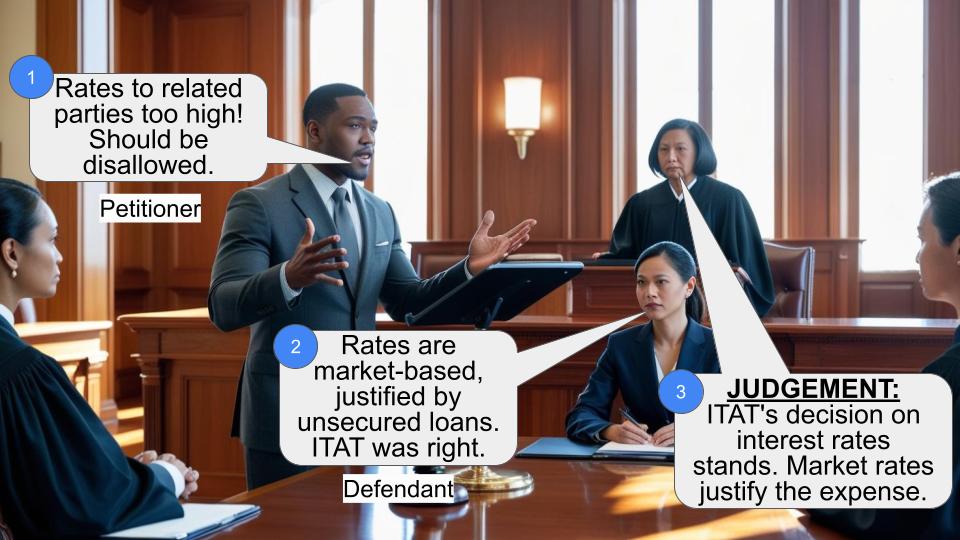
This case involves the Commissioner of Income Tax (appellant) and Cama Hotels Ltd. (respondent). The dispute centered around whether expenses incurred for renovating hotel rooms and facilities should be treated as revenue or capital expenditure. The High Court ruled in favor of the hotel, classifying the expenses as revenue expenditure.
Get the full picture - access the original judgement of the court order here
Case Name:
Commissioner of Income Tax Vs Cama Hotels Ltd. (High Court of Gujarat)
Income Tax Reference No. 11 of 2005
Date: 2nd December 2014
Key Takeaways:
- Renovation expenses for hotel rooms and facilities can be classified as revenue expenditure.
- The nature of the advantage in a commercial sense is crucial in determining whether an expense is capital or revenue.
- Expenditure that facilitates business operations without altering fixed capital is typically considered revenue expenditure.
Issue:
Should the expenses incurred by Cama Hotels Ltd. for renovating hotel rooms, conference halls, and other facilities be treated as revenue expenditure or capital expenditure for tax purposes?
Facts:
- Cama Hotels Ltd. has been running a Four Star Hotel in Khanpur, Ahmedabad for 30 years.
- The company incurred expenses of Rs.11,66,033/- and Rs.38,62,972/- for Assessment Years 1991-92 and 1992-93 respectively for renovating hotel rooms, coffee shop, and conference hall.
- The assessee (Cama Hotels) treated this as deferred revenue expenditure to be spread over nine years.
- The Assessing Officer initially classified these expenses as capital expenditure and disallowed them.
- The Commissioner of Income Tax (Appeals) upheld the Assessing Officer’s decision.
- The Tribunal, however, ruled in favor of the assessee, treating the expenses as revenue expenditure.
Arguments:
Appellant (Revenue):
- Argued that hotel renovation is capital expenditure, citing cases like Ballimal Naval Kishore and Another v. Commissioner of Income Tax.
- Contended that total renovation, including new machinery and fittings, should be considered capital expenditure.
Respondent (Assessee):
- Claimed that hotel renovation expenses are revenue in nature.
- Relied on decisions like Empire Jute Co. Ltd. v. CIT and Comfort Living Hotels P. Ltd. v. Commissioner of Income Tax to support their stance.
Key Legal Precedents:
- Empire Jute Co. Ltd. v. CIT (124 ITR 1 (SC)):
- Expenditure may be revenue even if it provides an enduring benefit.
- The nature of the advantage in a commercial sense is crucial.
- If the advantage facilitates business operations without altering fixed capital, it’s revenue expenditure.
2. Comfort Living Hotels P. Ltd. v. Commissioner of Income Tax ([2014] 363 ITR 182):
- Held that hotel renovation expenses are revenue in nature.
3. Ballimal Naval Kishore and Another v. Commissioner of Income Tax (224 ITR 414):
- Total renovation of a theatre, including new machinery and fittings, was considered capital expenditure.
Judgement:
The High Court ruled in favor of the assessee (Cama Hotels Ltd.), concluding that:
- The expenses incurred for renovating hotel rooms, conference halls, etc., should be treated as revenue expenditure.
- The court distinguished this case from Ballimal Naval Kishore, noting that hotel renovation leads to growth of commercial activities and is enduring in nature.
- The court relied on the principles established in Empire Jute Co. Ltd. and Comfort Living Hotels P. Ltd. cases to reach this conclusion.
FAQs:
Q: What’s the main difference between revenue and capital expenditure?
A: Revenue expenditure is related to the day-to-day running of a business, while capital expenditure is an investment in long-term assets.
Q: Why did the court rule in favor of the hotel in this case?
A: The court considered that the renovation facilitated the hotel’s commercial activities without altering its fixed capital, aligning with the principles established in previous cases.
Q: Does this ruling apply to all types of renovation expenses?
A: Not necessarily. The court distinguishes between different types of renovations. For instance, total renovation including new machinery might still be considered capital expenditure.
Q: What impact does this ruling have on the hotel industry?
A: This ruling may allow hotels to claim renovation expenses as revenue expenditure, potentially reducing their tax liability in the short term.
Q: How does the “test of enduring benefit” apply in this case?
A: The court noted that even if an expense provides an enduring benefit, it may still be considered revenue expenditure if it merely facilitates business operations without altering the fixed capital structure.

1. By way of this reference, the Tribunal has referred the following questions of law to this Court for consideration:-
1. Whether, the Appellate Tribunal is right in law and on facts in deleting the disallowance of Rs.11,66,033/- being expenditure incurred to renovate the hotel rooms, conference hall etc. ?
2. Whether, the Appellate Tribunal is right in law and on facts in directing the Assessing Officer to allow depreciation of Swimming Pool treating it as a plant ?”
2. The facts in brief are that the respondent-assessee is a company running a Four Star Hotel at Khanpur, Ahmedabad for last thirty years. During the examination of the accounts, the Assessing Officer noted that the assessee had incurred expenditure of Rs.11,66,033/- and Rs.38,62,972/- for the Assessment Year 1991-92 and 1992-93 respectively on account of what is claimed as an expenditure incurred to renovate the hotel room and fresh Cofee shop, conference hall etc. As stated above, the expenditure was incurred in both the years under consideration.
The assessee treated this expenditure as differed revenue expenditure in next nine years excluding both the year in question. The Assessing Officer went through the details of the expenses claimed and came to a conclusion that the expenditure was capital expenditure and the same was totally disallowable. The assessee also claimed depreciation for Swimming pool. However, the Assessing Officer rejected the claim of the assessee.
2.1. Against the order of the Assessing officer, the assessee filed an appeal before the commissioner of Income Tax (Appeals). The CIT(A) dismissed the said appeal and confirmed the view of the Assessing Officer. The Tribunal however, held that the amount was incurred to renovate the hotel rooms, conference hall etc and should be treated as a revenue expenditure. The Tribunal also allowed the assessee’s claim for depreciation on swimming pool treating the same as part of plant. Pursuant to the order of the Tribunal, the revenue filed reference under Section 256(1) (of Income Tax Act, 1961), which has led to filing of the present reference application.
3. Mr. Mehta, learned counsel for the appellant-revenue has contended that the renovation of the hotel is a nature of capital expenditure. In support of his contention, he relied upon the decision of the Apex Court in the case of Ballimal Naval Kishore and Another v. Commissioner of Income Tax, reported in 224 ITR 414, wherein it is held that the facts of the case made it evident that what the appellant did, was not mere repairs but a total renovation of the threatre. New Machinery, new furniture, new sanitary fittings and new electrical wiring were installed besides extensively repairing the structure of the building. As against the sum of Rs.17,000/- for which the appellant purchased the factory in 1937, the expenditure incurred in the relevant year was in the region of Rs.1,20,000/-. By no stretch of imagination could the said repairs qualify as “current repairs” within the meaning of Section 10(2)(v) (of Income Tax Act, 1961). This was a case of total renovation and the expenditure in question had rightly been held by the High Court to be capital in nature.
3.1. He also relied upon the decision of the Punjab and Haryana High Court in the case of Bony Rubber Co. (P.) Ltd. v. Commissioner of Income Tax, Faridabad, reported in [2012] 12 taxmann.com 159, wherein it has been held that repairs of building is in the nature of a capital expenditure.
3.2. So far as the the issue No.2, is concerned, learned counsel for the appellant relied upon the decision of this court rendered in ITR No.26 of 1995 on 05.12.2005 and also the decision rendered in Tax Appeal No.1394 of 2006.
3.3. By making such submissions, learned counsel for the appellant-revenue has contended that both the questions referred in this reference is requires to be answered in favour of the appellant-revenue.
4. On the other hand, learned counsel for the respondent-assessee has submitted that the renovation of a hotel is a nature of revenue expenditure not a capital expenditure. In support of his contention, he relied upon the decision of the Apex Court in the the case of Empire Jute Co. Ltd. v. CIT reported in 124 ITR 1 (SC) and the decision of the Delhi High Court in the case of Comfort Living Hotels P. Ltd. v. commissioner of Income Tax, reported in [2014] 363 ITR 182.
5. We have heard learned advocates for the parties and perused the material on record. The Apex Court in the case of Empire Jute Co. Ltd. (supra) held that there may be cases where expenditure, even if incurred for obtaining an advantage of enduring benefit, may nonetheless, be on revenue account and the test of enduring benefit may break down. It is not every advantage of enduring nature acquired by an assessee that brings the case within the principle laid down in this test. It is further held that what is material to consider is the nature of the advantage in a commercial sense and it is only where the advantage is in the capital field that the expenditure would be disallowable on an application of this test. If the advantage merely facilitates the assessee’s trading operation or enabling the management to conduct the assessee’s business to be carried on more efficiently or more profitably while leaving the fixed capital untouched, the expenditure would be on revenue account, even though the advantage may endure of an indefinite future.
6. The Delhi High Court also relying upon the decision of the Empire Jute (supra), has held that the renovation of hotel is in the nature of revenue expenditure and not a capital expenditure.
7. In the case of Ballimal Naval Kishore and Another(supra), relied upon by learned advocate for the appellant, the expenses were incurred for the purpose of renovating the threatre which included purchase of new machinery, new furniture, new sanitary fittings and new electrical wiring. However, in the present case the assessee is running a hotel and the expenses in question were incurred for the purpose of renovating the hotel rooms, conference hall etc., which is enduring in nature, leading to growth of commercial activities. Therefore, the decision of Ballimal Naval Kishore and Another(supra), will not apply to the facts of the present case as in this case the test applied in Empire Jute Co. Ltd (supra) and Taj Hotels case are satisfied by the respondent.
8. Considering the aforesaid decisions in the case of Empire Jute Co. Ltd. (supra) and Comfort Living Hotels P. Ltd. (supra), we are of the opinion that the expenditure incurred by the assessee is in the nature of revenue expenditure. Therefore, the question No.1 is required to be answered in favour of the respondent-assessee and against the appellant-revenue.
9. So far as the question No.2 is concerned, the same is already concluded by the decision of this Court in Tax appeal No.26 of 1995 and Tax Appeal No.1394 of 1994. Paragraph Nos. 4, 5 and 6 read as under:-
4. We have heard learned counsel for both the sides. The appeal was admitted vide order dated 28.06.2007, which reads as under:
Heard the learned counsel for the appellant.
The appeal is admitted in terms of the following questions:-
(A) Whether the Appellate Tribunal is right in law and on facts in confirming the order passed by the CIT (A) holding that the assessee was entitled to depreciation on swimming pool at the rate of 33.33% treating it as plant and machinery? Issue notice to the other side. Paper book be filed within three months. List the appeal for final hearing after three months.
5. The issue raised in this appeal is already concluded by a decision of this Court rendered in Tax Appeal No.26 of 1995 decided on 05.12.2005. The relevant paragraphs No.3 to 5 of the said order reads under:
3. Mr.M.J.Shah, learned advocate appearing on behalf of the respondent-assessee, has conceded to the position that in so far as question No.1 is concerned, it stands answered against the assessee in light of decision in case of Commissioner of Income-tax Vs. Anand Theatres, [2000] 244 ITR 192(SC).
4. Hence, question No.1 is answered in the negative i.e. in favour of the Revenue and against the assessee.
5. Similarly, Mrs.M.M.Bhatt, learned Standing Counsel appearing on behalf of the applicant-Revenue, has accepted the position that issue raised by question No.2 stands answered against the Revenue by decision rendered by the Apex Court in the case of Allied Motors (P.) Ltd. Vs. Commissioner of Income-tax, [1997] 224 ITR 677 (SC).
6. Since the issue is already concluded vide the judgment rendered in the above decision, we are not assigning elaborate reasons for disposing this appeal. Accordingly, the question of law is answered in negative i.e. in favour of the Revenue and against the assessee. The appeal is allowed accordingly.”
10. Considering the aforesaid decisions, we are of the opinion that the question No.2 is required to be answered in favour of the appellant-revenue and against the respondent- assessee.
11. In view of the above, the question No.1 raised in this appeal is answered in favour of the assessee and against the revenue. The question No.2 is answered in favour of the revenue and against the assessee. The present appeal stands partly allowed. The order of the Tribunal is modified to the aforesaid extent.
(K.S.JHAVERI, J.)
(K.J.THAKER, J)
×
Similar Ripples
Questions
Court Rules Hotel Renovation Expenses as Revenue Expenditure, Not Capital
Write your CommentSimilar Posts


Generic
- Reportdata/3268.pdf
