


Tax exemption granted to temple trust after 34-year delay, revenue appeal dismi…


Full News

Tax exemption granted to temple trust after 34-year delay, revenue appeal dismissed
Tax exemption granted to temple trust after 34-year delay, revenue appeal dismissed
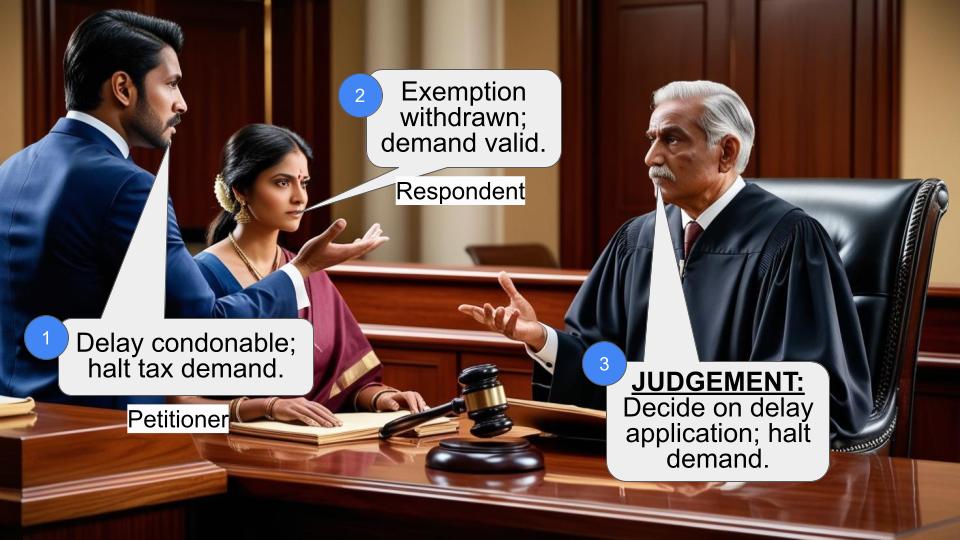
It's about a temple trust called Shree Durga Mata Mandir that applied for tax exemption after operating for 34 years. The tax authorities initially denied their application, but the Income Tax Appellate Tribunal (ITAT) overturned that decision. The revenue department wasn't happy with this and appealed to the High Court, but guess what? The High Court sided with the temple trust and dismissed the appeal.
Get the full picture - access the original judgement of the court order here
Case Name:
Commissioner of Income Tax (Exemptions) Vs M/s Shree Durga Mata Mandir (High Court of Punjab & Haryana)
ITA No. 153 of 2019
Date: 2nd March 2020
Key Takeaways:
1. Delay in applying for tax exemption doesn't automatically disqualify an organization.
2. Religious institutions like temples are generally considered charitable, even without explicit proof of activities.
3. The court emphasized the importance of actual charitable work over technical issues in documentation.
4. Accumulation of funds isn't problematic if used for the organization's stated purposes.
Issue:
The main question here was: Should the Shree Durga Mata Mandir be granted tax exemption under Section 12AA (of Income Tax Act, 1961), despite applying after 34 years of operation and having some technical issues with their application?
Facts:
- Shree Durga Mata Mandir has been operating since February 1983
- They applied for tax exemption under Section 12A (of Income Tax Act, 1961) on September 16, 2016
- The Commissioner of Income Tax (Exemptions) rejected their application on March 30, 2017
- The temple trust appealed this decision, and the Income Tax Appellate Tribunal (ITAT) allowed their appeal on September 7, 2018
- The revenue department then appealed this decision to the High Court
Arguments:
The revenue department had several objections:
1. The trust applied for registration after 34 years without explaining the delay
2. The trust's objectives were too generic and didn't align with charitable purposes under Section 2(15) (of Income Tax Act, 1961)
3. The dissolution clause was added after the application and wasn't properly registered
4. Only a small portion of receipts were spent on charitable activities
5. Large amounts of corpus funds remained unexplained
The temple trust argued:
1. They're a religious body maintaining a temple, which is inherently charitable
2. They added a dissolution clause to their Memorandum of Association
3. Their corpus funds come from donations and are used for temple maintenance and activities
Key Legal Precedents:
The judgment mentions a case from the Allahabad High Court: CIT, Meerut Vs. M/s A.R. Trust, Meerut (Appeal No. 112 of 2013). This case suggested that the Tribunal should have sent the case back for re-examination rather than directly granting registration . However, the current judgment doesn't seem to follow this precedent.
Judgement:
The High Court dismissed the revenue department's appeal. They found that:
1. There was no evidence that the trust wasn't working towards its aims and objectives
2. The trust was indeed engaged in maintaining the temple
3. There was no allegation that funds were being used for purposes other than the trust's objectives
4. The findings of the ITAT were not erroneous or perverse
The court concluded that no substantial question of law arose from the case.
FAQs:
1. Q: Does applying late for tax exemption automatically disqualify an organization?
A: Not necessarily. In this case, the 34-year delay didn't prevent the trust from getting exemption.
2. Q: Are all religious institutions automatically considered charitable?
A: While not automatic, the court seemed to view temple maintenance as inherently charitable.
3. Q: Is accumulating large funds a problem for charitable organizations?
A: Not if the funds are being used for the organization's stated purposes, as was the case here.
4. Q: What's the significance of a dissolution clause?
A: It's important for legal compliance, but the court prioritized actual charitable work over this technicality.
5. Q: Can the revenue department appeal this decision further?
A: Technically, they could appeal to the Supreme Court, but given the High Court's strong dismissal, it might be unlikely.

The revenue is in appeal under Section 260A (of Income Tax Act, 1961) (for short, 'the Act') against the order dated 7.9.2018 passed by the Income Tax Appellate Tribunal, Chandigarh (for short, 'the Tribunal') claiming following substantial questions of law:
“(i) Whether on the facts and circumstances of the case the ITAT is correct in directing the registration to be accorded instead of reverting it back for re-examination in the light of judgement of the Hon'ble Allahabad High Court in appeal No. 112 of 2013 in the case of CIT, Meerut Vs. M/s A. R. Trust, Meerut, wherein it was held that the Tribunal could have ordered for setting aside the order of Registering Authority refusing registration but it could not have directed for registration straight away in as much as there has to be satisfaction recorded by the Registering Authority which was lacking?
(ii) Whether on the facts and circumstances of the cased and in law, the Hon'ble ITAT is correct in ignoring the fact that the assessee society had sought registration u/s 12AA (of Income Tax Act, 1961) after 34 years of its operation whereas no cogent reason for the application not having been made for the last 34 years was submitted to this office?
(iii) Whether on the facts and circumstances of the case, the order of the Hon'ble ITAT is correct in holding that the CIT(E) has not made any specific finding or the observation in his order that the assessee society is not working towards achieving its aims and objectives whereas in the CIT(E)'s order, there are clearly findings that most of the objects seemingly are generic in nature and don't get covered by the various limbs of charitable purposes envisaged in section 2(15) (of Income Tax Act, 1961)?
(iv) Whether on the facts and circumstances of the case, the Hon'ble ITAT is correct in merely holding that the dissolution clause has been added and disregarding the view of the CIT(E) that not only the same has been incorporated after the application was made but also the resolution has not been accepted and registered by the office of Registrar of firms and Societies as a part of the registered document under the Registration Act 1860. Mere passing of a resolution to the effect doesn't make the paper legally tenable and admissible in proceedings. To that extent, the MoA of the society is impinged by a lack of dissolution clause?
(v) Whether on the facts and circumstances of the case, the order of the Hon'ble ITAT is correct in ignoring the fact that a small portion of the receipt has been shown to be spent on charitable activities which regrettably cannot be corroborated with that of the aims and objects of the society in absence of any evidence on records as no other proof have been submitted for the charitable activities conducted by the society?
(vi) Whether on the facts and circumstances of the case and in law, the Hon'ble ITAT is right in ignoring the fact that such a large amount of corpus fund and accumulated assets remained unexplained and the corpus funds have received without written instructions. Moreover in the absence of instructions the amount doesn't get cover by the provisions of section 11 (of Income Tax Act, 1961) and 12 of the Act?
(vii) Whether on the facts and circumstances of the case, the order of the Appellate Tribunal is contrary to the evidence and material on the record of the case and therefore, perverse?”
The brief facts are that the respondent-society is in operation since February, 1983 having following aims and objects:
“(a) to take steps to acquire land for construction of a temple
(b) to celebrate important religious festivals and hold functions
to honour the memory of great men of thought and action;
(c) to arrange public disclosure on subjects connected with ancient Indian heritage;
(d) to maintain communal harmony by extending active cooperation to the people of various faiths in accordance with great spiritual heritage of India and her secular structure and also to promote better understanding among the people of various beliefs;
(e) the Sabha is strictly not political.” Application for registration under Section 12A (of Income Tax Act, 1961) was filed on 16.9.2016. The Commissioner of Income Tax (Exemptions) rejected the application vide order dated 30.3.2017 mainly on the ground that registration was applied for almost after 34 years for coming into existence; there was no dissolution clause in the Memorandum of Association and the assessee-society had huge corpus as compared to the amount used. Aggrieved of the rejection of application, appeal was preferred. The Tribunal allowed the appeal on 7.9.2018. The relevant portion of the order of the Tribunal is quoted below:
“5. We have heard the Ld. Representative of the parties and also have gone through the records. In our view, the registration to the assessee society has been wrongly denied by the Ld. CIT(E). There is no specific finding or the observation of the Ld. CIT(E) in the order that the assessee society is not working towards achieving its aims and objectives. The assessee society is a religious body and is engaged in the maintenance of Shree Durga Mata Mandir at Manimajra. Such type of religious Mandirs are not private property of any individual or any society, hence, the property of such entities cannot be taken over or distributed among the members of the society. So far as the absence of dissolution clause, it was brought in the knowledge of the CIT(E) that the assessee society subsequently passed a resolution whereby a Dissolution clause have been added to the Memorandum of Association of the society. So far as the accumulation of corpus funds etc. is concerned, it was explained to the Ld. CIT(E) that corpus fund has been made out of the donations received from the members and the devotees of Shree Durga Mata Mandir for maintenance of mandir and purchase of new property and that the said receipts were duly accounted for and that the institution was established wholly for religious purposes. It has been further explained that the corpus fund has been further applied for building of new hall/religious activities and functions, staff salary and langar activities (free food). That the corpus fund of Rs. 1,31,23,853/- as on March 31, 2017 has been duly utilized for temple premises, furnishing and fittings and on utensils.
6. It is evident that the assessee society is engaged in maintenance of Mandir. There is no allegation that the Corpus fund or the surplus accumulated funds are being used for the purpose other than the aims and objects of the assessee society. The corpus as well as accumulated surplus as is claimed is being used for maintenance and development of Shree Durga Mata Mandir which is a religious place visited by the devotees and open to all.”
Learned counsel for the appellant is not able to dispute that there is nothing on record to show that the assessee was not working for achieving its aims and objects or that the accumulated funds were used for purposes other than aims and objects. He has not been able to show that the findings recorded by the Tribunal quoted above are erroneous much less perverse. In such circumstances, no question of law much less substantial question of law arises. No interference is called for in the order of the Tribunal.
The appeal is dismissed.
×
Similar Ripples
Questions
Tax exemption granted to temple trust after 34-year delay, revenue appeal dismissed
Write your CommentSimilar Posts


Generic
- Reportdata/6272.pdf
