


Court Rejects Penalty for Incorrect Tax Deduction Claim, Citing Lack of "Inaccu…




Full News

Court Rejects Penalty for Incorrect Tax Deduction Claim, Citing Lack of "Inaccurate Particulars"
Court Rejects Penalty for Incorrect Tax Deduction Claim, Citing Lack of "Inaccurate Particulars"
This case involves the Commissioner of Income Tax (appellant) and Arvind Footwear Pvt. Ltd. (respondent). The dispute centered around whether a penalty could be imposed under section 271(1)(c) (of Income Tax Act, 1961) for claiming a deduction under section 80IB (of Income Tax Act, 1961) on duty drawback amounts. The High Court dismissed the appeal, ruling in favor of the assessee (Arvind Footwear Pvt. Ltd.).
Case Name**: Commissioner Of Income Tax VS Arvind Footwear Pvt.Ltd.
**Key Takeaways**:
1. Mere claiming of an unsustainable deduction doesn't amount to furnishing inaccurate particulars.
2. Penalty under section 271(1)(c) (of Income Tax Act, 1961) cannot be imposed solely for making a claim that is not sustainable in law.
3. The court emphasized the importance of considering the prevailing legal opinions at the time of filing returns.
**Issue**:
Can a penalty be imposed under section 271(1)(c) (of Income Tax Act, 1961) merely because an assessee claimed a deduction under section 80IB (of Income Tax Act, 1961) on duty drawback amounts, when there was a difference of opinion prevalent at the relevant time?
**Facts**:
1. Arvind Footwear Pvt. Ltd. filed a return for the assessment year 2006-2007, claiming a deduction under section 80IB (of Income Tax Act, 1961) on incentives received as duty drawback.
2. The Assessing Officer completed the assessment on 26.8.2008 and disallowed the deduction under section 80IB (of Income Tax Act, 1961).
3. A penalty order was issued on 2.12.2010 under section 271(1)(c) (of Income Tax Act, 1961).
4. The assessee appealed against the penalty order, which was allowed by the CIT(A) on 2.2.2011.
5. The Department filed an appeal against this order, which was dismissed by the Tribunal.
**Arguments**:
Department's Argument:
- The claim for deduction under section 80IB (of Income Tax Act, 1961) was incorrect.
- The Supreme Court merely clarified the existing law in the Liberty India case, and the law was always as clarified by the Apex Court.
- This was a fit case where penalty was rightly imposed.
Assessee's Argument (implied):
- There were two different opinions available at the relevant time regarding the allowability of deduction under section 80IB (of Income Tax Act, 1961) on duty drawback amounts.
- The Supreme Court clarified the law only after the return was filed.
- Mere making of a claim that is not sustainable in law doesn't amount to furnishing inaccurate particulars.
**Key Legal Precedents**:
1. Liberty India versus Commissioner of Income Tax (2009) 28 DTR (SC) 173; 317 ITR 218 (SC): Clarified that receipts from DEPB/DDB are not profits derived from industrial undertaking but are an independent source of income.
2. Commissioner of Income Tax versus Reliance Petro Products Pvt. Ltd. (2010) 322 ITR 158 (SC): Laid down that mere making of a claim which is not sustainable in law doesn't amount to furnishing inaccurate particulars regarding the income of the assessee.
**Judgement**:
The High Court dismissed the appeal, ruling in favor of the assessee. Key points of the judgment:
1. The Tribunal correctly noted that there was a difference of opinion at the time when the return was filed by the assessee.
2. The Supreme Court clarified the law in Liberty India versus Commissioner of Income Tax subsequent to the filing of the return.
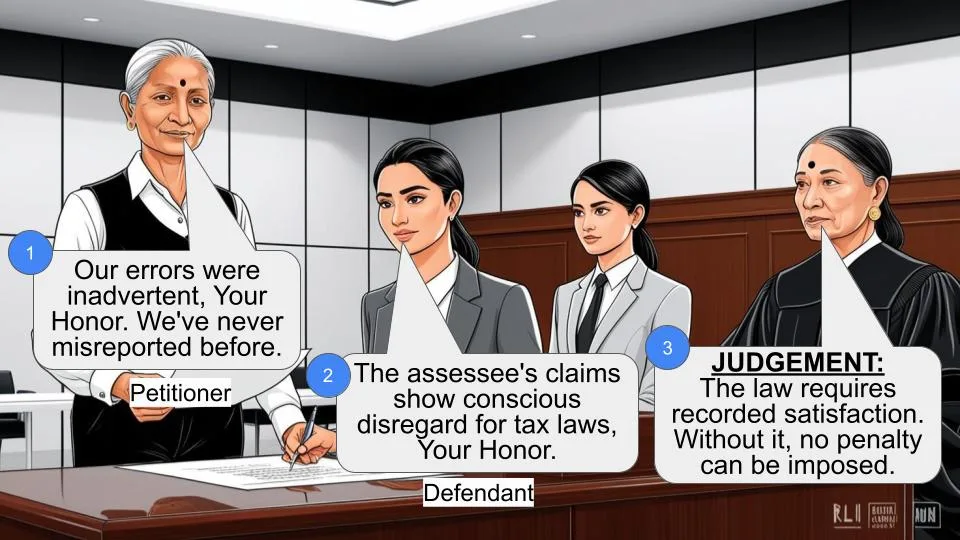
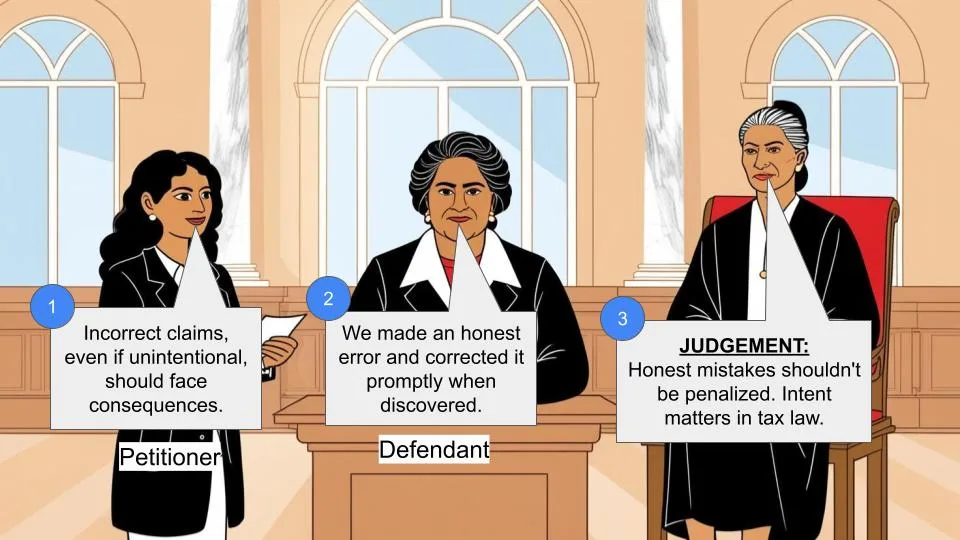
3. Mere making of a claim, which is not sustainable in law, by itself, does not amount to furnishing inaccurate particulars regarding the income of the assessee.
4. The case is fully covered by the judgment of the Apex Court in Commissioner of Income Tax versus Reliance Petro Products Pvt. Ltd.
**FAQs**:
1. Q: What is the significance of this judgment?
A: It clarifies that taxpayers cannot be penalized merely for making unsustainable claims if there was a difference of legal opinion at the time of filing returns.
2. Q: Does this mean taxpayers can make any claim without fear of penalty?
A: No, the judgment specifically addresses situations where there was a genuine difference of legal opinion at the time of filing. It doesn't protect deliberately false claims.
3. Q: How does this judgment impact the interpretation of "furnishing inaccurate particulars"?
A: It narrows the scope of what can be considered "inaccurate particulars," emphasizing that unsustainable claims alone don't meet this criterion.
4. Q: What should taxpayers take away from this case?
A: While it's important to be accurate in tax filings, this judgment provides some protection for taxpayers who make claims based on reasonable interpretations of the law at the time of filing.
5. Q: How might this judgment affect future tax penalty cases?
A: It may lead to more careful consideration of the legal landscape at the time of filing when assessing penalties, rather than applying later legal clarifications retroactively.

Heard Shri Shambhu Chopra, learned standing counsel for the appellant. This appeal under section 260-A (of Income Tax Act, 1961) has been filed against the order of the Income Tax Appellate Tribunal dated 17.11.2011 in ITA No. 263/LKW/2011.
The assessee in his return with regard to assessment year 2006-2007 has claimed deduction under section 80 (of Income Tax Act, 1961) IB of the Act on the amounts of incentives by way of duty draw back for treating them as profits derived from industrial undertaking.
The Assessing Officer completed the assessment order vide his order dated 26.8.2008 and did not allow the deduction under section 80 (of Income Tax Act, 1961) IB of the Act. A penalty order was issued on 2.12.2010 under section 271(1)(c) (of Income Tax Act, 1961). The judgment of the Apex Court in Liberty India versus Commissioner of Income Tax 225 CTR 233(2009) has been relied and referred to while passing the penalty order where the Apex Court has laid down that duty draw back/DEPB are incentives which flow from the schemes framed by the Central Government, hence the incentives/profits are not profits derived from the eligible business and therefore duty draw back received/DEPB benefits do not form part of net profit of the industrial undertaking for the purposes of Sections 80 IA & IB.
The appeal was filed by the assessee against the order which was partly allowed by the order dated 4.3.2010. Against the order of penalty, appeal was filed being Appeal No. CIT(A)II/285/DCIT-6/10-11 which was allowed by the judgment and order dated 2.2.2011. Against the appellate order, the Department filed the appeal which has been dismissed by the Tribunal.
The learned counsel for the Department in support of his appeal contended that claim for deduction under section 80 (of Income Tax Act, 1961) IB was incorrect. He submits that Supreme Court has only clarified the law in Liberty India versus Commissioner of Income Tax (Supra) and the law was always as has been clarified by the Apex Court and this was a fit case where penalty was rightly imposed. He submits that the Tribunal relied on the judgment of the Liberty India versus Commissioner of Income Tax (Supra) and the order of the Tribunal deserves to be set aside.
We have considered the submissions of Shri Shambhu Chopra, learned standing counsel for the appellant and perused the record. The Tribunal while dismissing the appeal of the Department has made following observations in paragraph 6:
"6. Heard parties with reference to material on record and case law brought to our notice. The appellant has made a claim of deduction u/s 80 (of Income Tax Act, 1961) IB of the Act on the basis of two different opinions available at the relevant time with regard to allowability of deduction under section 80 (of Income Tax Act, 1961) IB of the Act on the amounts of incentives by way of duty draw back for treating them as profits derived from the industrial undertaking. The Apex Court, subsequent to the date of filing the return of income by the assessee in the case of Liberty India versus CIT (2009) 28 DTR (SC) 173; 317 ITR 218 (SC) 173:317 ITR 218 (SC) clarified the law that receipts from DEPB/DDB are not profits derived from industrial undertaking but are independent source of income. Such a claim of deduction made on the amount of these incentives was not sustainable in law at the time when the return was filed by the assessee. The Apex in the case of CIT vs.Reliance Petroleum Products (P) Ltd. (2010) 322 ITR 158 (SC) has laid down that a mere making of a claim which is not sustainable in law, but itself, will not amount to furnishing of inaccurate particulars regarding the income of the assessee. In that view of the matter, the finding reached by the learned CIT(A) cannot be said to be perverse. Cancellation of penalty by him is found justified requiring no indulgence of this Tribunal. We, therefore, reject the grounds raised in appeal. "
The Tribunal has relied on the judgment of the Apex Court in Commissioner of Income Tax versus Reliance Petro Products Pvt. Ltd.(2010) 322 ITR 158 (SC) wherein the Apex Court while considering the provisions of 271(1)(c) of the Act pertaining to penalty has laid down the following:
"We have already seen the meaning of the word "particulars" in the earlier part of this judgment. Reading the words in conjunction, they must mean the details supplied in the return, which are not accurate, not exact or correct, not according to truth or erroneous. We must hasten to add here that in this case, there is no finding that any details supplied by the assessee in its return were found to be incorrect or erroneous or false. Such not being the case, there would be no question of inviting the penalty under section 271(1)(c) (of Income Tax Act, 1961). A mere making of the claim, which is not sustainable in law, by itself, will not amount to furnishing inaccurate particulars regarding the the income of the assessee. Such claim made in the return cannot amount to the inaccurate particulars.”
It has been noted in the order of the Tribunal that there was a difference of opinion at the time when return was filed by the assessee. The mere fact that claim of deduction under section 80 (of Income Tax Act, 1961) IB of the Act could not have been made a basis for imposing penalty, is not correct. It is not denied that the Apex Court clarified the law in Liberty India versus Commissioner of Income Tax (Supra) subsequent to filing of the return. The Apex Court in Commissioner of Income Tax versus Reliance Petro Products Pvt. Ltd. (Supra) has laid down that mere making of the claim, which is not sustainable in law, by itself, will not amount to furnishing inaccurate particulars regarding the income of the assessee. Such claim made in the return cannot amount to the inaccurate particulars. The present is a case which is fully covered by the judgment of the Apex Court in Commissioner of Income Tax versus Reliance Petro Products Pvt. Ltd. (Supra).
We do not find any error in the order of the Tribunal dismissing the appeal of the Department. No substantial question of law is involved in the appeal for consideration. The appeal is dismissed.
(Prakash Krishna,J) (Ashok Bhushan,J)
×
Similar Ripples
Questions
Court Rejects Penalty for Incorrect Tax Deduction Claim, Citing Lack of "Inaccurate Particulars"
Write your CommentSimilar Posts

Generic
- Reportdata/5929.pdf
